What a Carbon Steel Conveyor Bracket Does
A carbon steel conveyor bracket is the structural element that holds a conveyor idler roller in position under or over the conveyor belt. It carries the roller, fixes the trough angle, and keeps the belt profile stable along the run. In a quarry, a cement plant, or a coal handling line, these brackets are usually the least visible part of the conveyor, yet they determine how evenly the belt is supported and how quickly a worn roller can be replaced.
The same component is also called a carbon steel conveyor frame bracket or steel idler support bracket. Both names describe the same product: a fabricated steel part, usually supplied as a pair or as a complete cross member, drilled to accept the roller shaft and bolted to the conveyor stringer.
How the Bracket Is Built
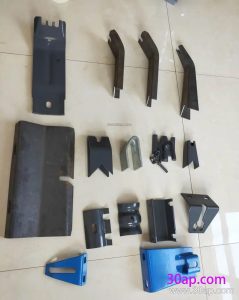
Most units are made from angle steel, channel steel, or folded steel plate. The choice depends on load and span. A light bracket for a B650 belt on a small sand and gravel line may use folded plate, while a heavy-duty bracket on a B1600 belt in an iron ore plant is more likely to use channel steel with reinforced gussets.
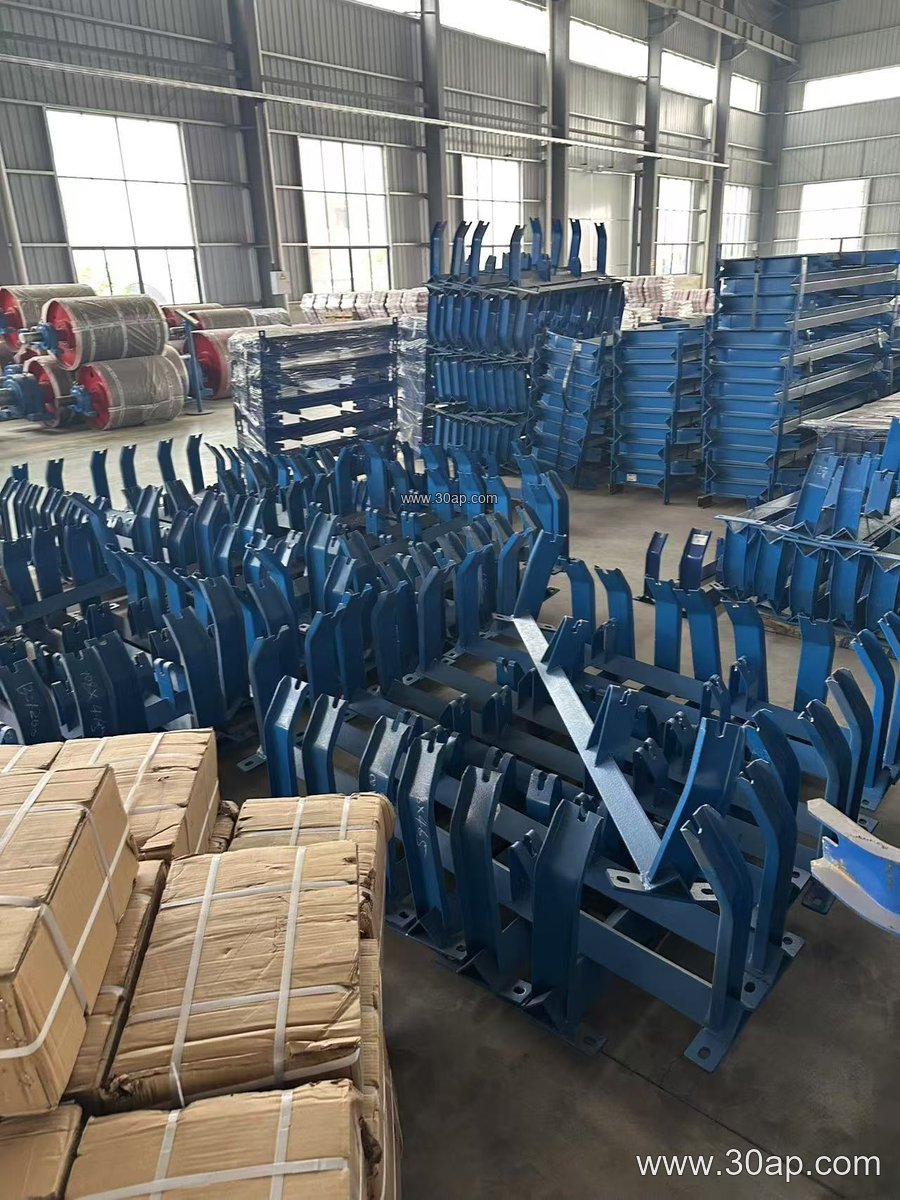
Typical construction details include:
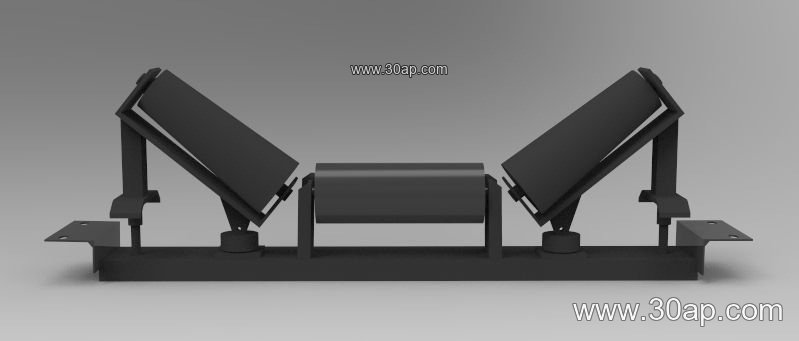
- Slotted or drilled mounting holes that allow small alignment adjustments during installation
- Welded roller seats or bolt-on cradles, depending on the design
- Reinforcing ribs at the corners where the vertical leg meets the cross beam
- Surface treatment such as painting or galvanizing to suit dusty or damp conditions
Mounting hole spacing and cross beam length change with belt width and trough angle, so they are normally confirmed from the drawing rather than treated as a fixed value.
Common Bracket Types and Where They Sit
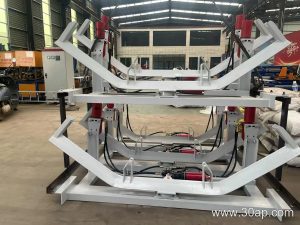
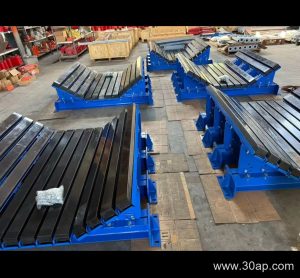
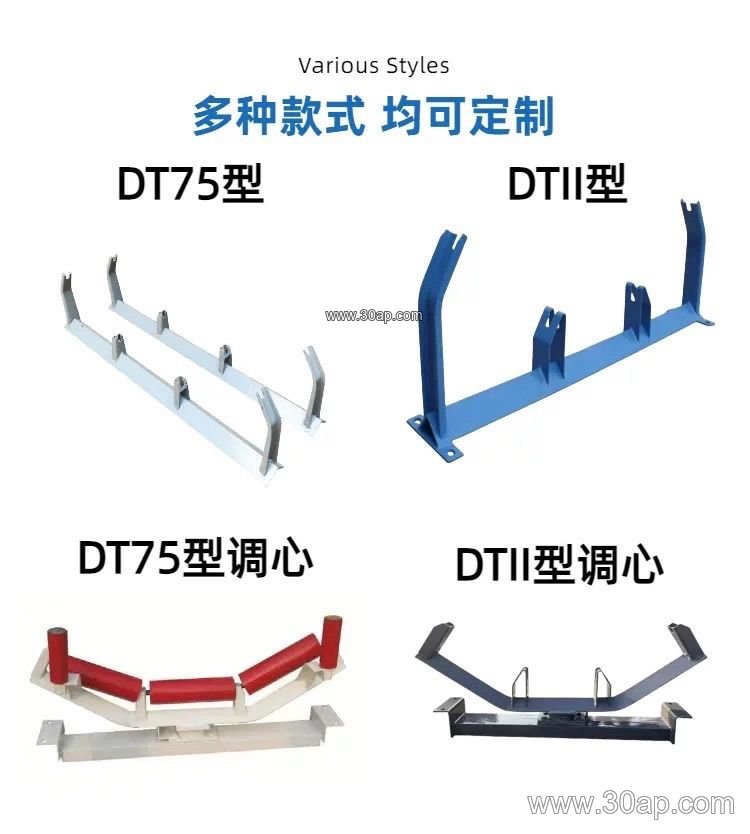
The type of bracket follows the job the roller has to do. Trough brackets support the carrying side and set the trough angle. Transition brackets sit near the head or tail pulley, where the belt changes from flat to troughed. Return brackets hold the rollers under the returning belt, and V-shaped return brackets help centre it. Impact brackets carry buffer rollers at the loading point, while self-aligning brackets work with training rollers to correct belt drift.
Fixed and adjustable versions are both available. An adjustable bracket can be set to common trough angles such as 20, 30, 35, or 45 degrees, which is useful when a plant handles more than one material or wants to fine-tune belt capacity later. A fixed bracket is simpler and usually chosen where the conveyor profile is already settled.
Matching Bracket, Belt, and Roller
Belt width and roller diameter are related but not locked together. A B800 belt may run with Ø89 or Ø108 rollers depending on load and speed, and a B1200 conveyor might use Ø133 or Ø159. The bracket must match the chosen roller diameter, the trough angle, and the belt width, so these three values are usually confirmed together.
| Belt width | Typical trough angle | Typical roller diameter | Bracket note |
|---|---|---|---|
| B500 | 20–30 degrees | Ø89 | Light folded or angle steel |
| B650 | 30 degrees | Ø89–Ø108 | Fixed or adjustable |
| B800 | 30–35 degrees | Ø108 | Common in sand and gravel lines |
| B1000 | 35 degrees | Ø108–Ø133 | Check mounting hole spacing |
| B1200 | 35–45 degrees | Ø133 | Channel steel often preferred |
| B1400 | 35–45 degrees | Ø133–Ø159 | Reinforced cross beam |
| B1600–B2000 | 35–45 degrees | Ø159–Ø194 | Heavy-duty design |
These figures are common references, not universal rules. Final values are set by the conveyor design.
Buying Points to Confirm
Before ordering, confirm the belt width, trough angle, roller diameter, and mounting hole pattern. Ask whether the bracket is fixed or adjustable, and whether it is for the carrying side, return side, or a transition zone. Check the steel section and surface treatment against the site conditions, since a wet coal washing plant and a dry cement plant put different demands on the same part. Finally, confirm that spare brackets match the existing stringer bolt pattern so that replacement does not require redrilling.