The Belt That Keeps a Sand Line Moving
A sand making plant conveyor belt is the continuous rubber or fabric-reinforced loop that carries crushed stone, manufactured sand, and screened aggregate between the crusher, the sand maker, the vibrating screen, and the stockpile. In a sand and gravel yard the belt is rarely the most expensive item, but it is usually the busiest. It works under abrasive dust, occasional moisture, and steady impact from material falling off the previous stage. Choosing it well, and matching it to the pulleys and idler rollers on the same frame, keeps the whole line predictable.
The accurate equivalent name for this product is a sand production line conveyor belt — the same belt, described by the duty it performs rather than the plant it sits in.
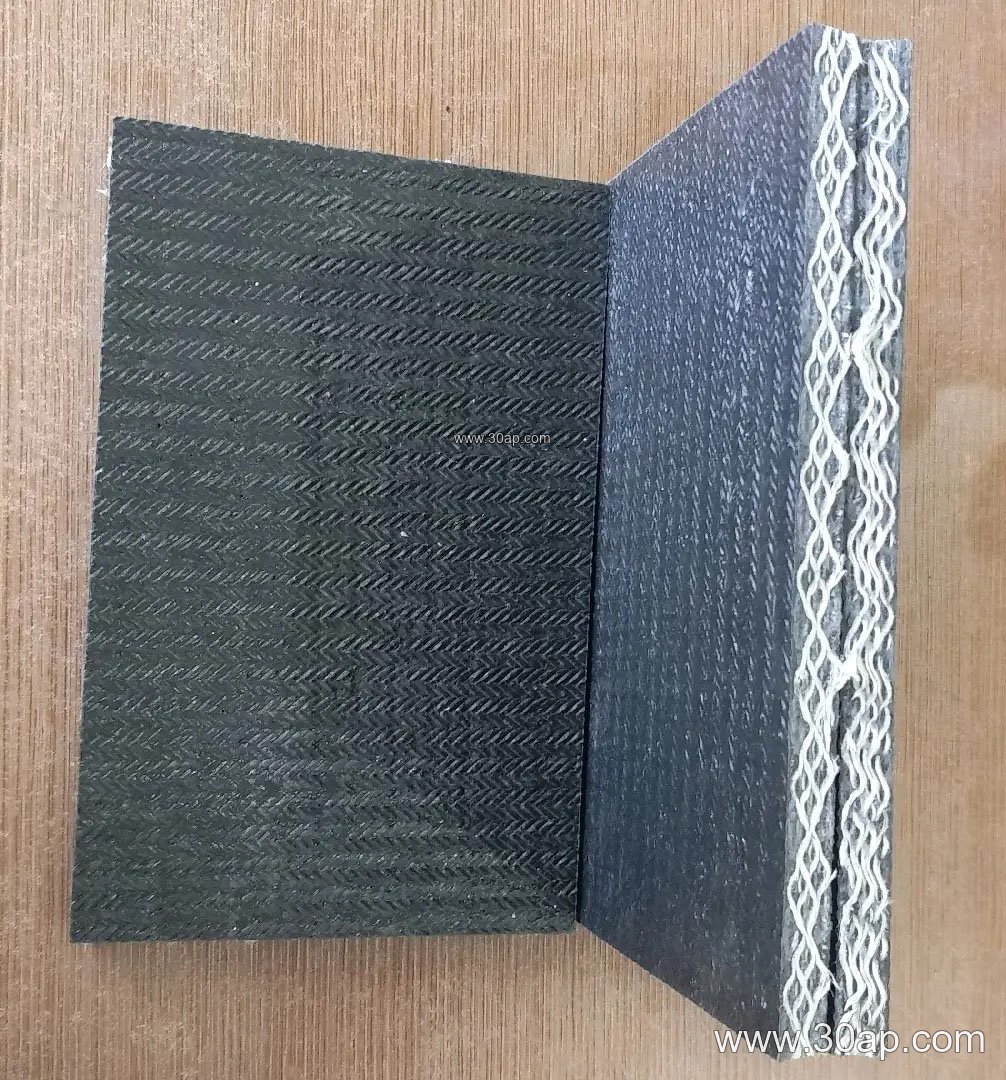
Construction and the Parts Around It
The belt itself is a carcass of woven fabric or steel cord covered on both faces with rubber. In sand making service the carcass is usually multi-ply, and the top cover is thicker than the bottom because the carrying side takes the wear. A typical build for this duty looks like this:
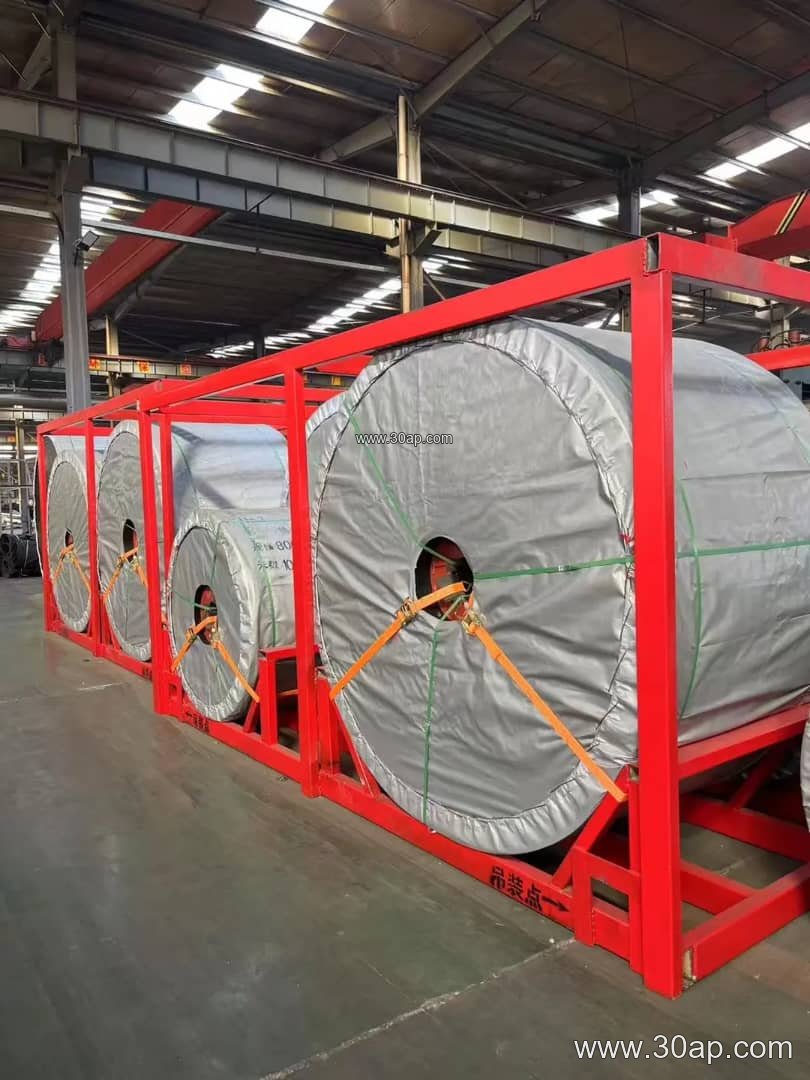
| Element | Common options | Notes |
|---|---|---|
| Carcass type | EP conveyor belt, NN nylon conveyor belt, steel cord | EP and NN are the usual choices for medium belts in a sand plant |
| Strength grade | EP200 to EP1000 typical; higher grades for long lifts | Selected from tension, not habit |
| Belt width | B500, B650, B800, B1000, B1200 | Width follows throughput and lump size |
| Cover thickness | 4+2 mm, 5+2 mm, 6+2 mm | Heavier top cover for abrasive sand |
| Ply count | 2 to 6 layers | More plies for higher tension |
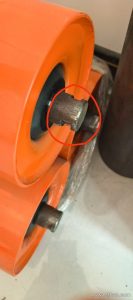
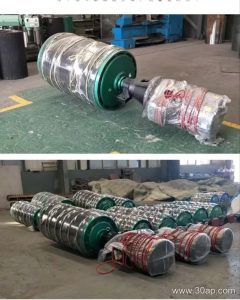
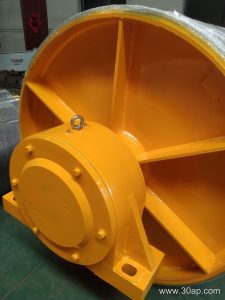
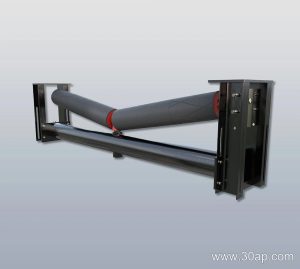
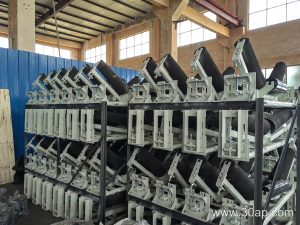
The belt does not work alone. A drive pulley pulls it, a tail pulley returns it, and bend pulleys route it around the take-up. Carrying idler rollers support the loaded strand, return rollers hold up the empty side, and conveyor brackets fix the whole assembly to the steel structure. On a inclined transfer in a quarry or cement plant, the trough angle of the idlers and the belt width must suit each other so the load stays centered.
Where It Runs in the Plant
In a sand making circuit the belt appears at several points. A feed belt brings 0–40 mm material from the primary crusher to the sand maker. A discharge belt returns oversize from the screen to the crusher for another pass. A product belt carries finished 0–5 mm sand to the stockpile, sometimes with a tripper. In a coal preparation plant or a power station the same belt family handles ROM coal and limestone, though the cover compound changes. Mines and metallurgical plants use similar layouts with heavier grades.
Dust is the constant companion. Fine sand lodges in the idler roller seals and grinds them flat, so spillage control at the transfer points matters as much as the belt specification.
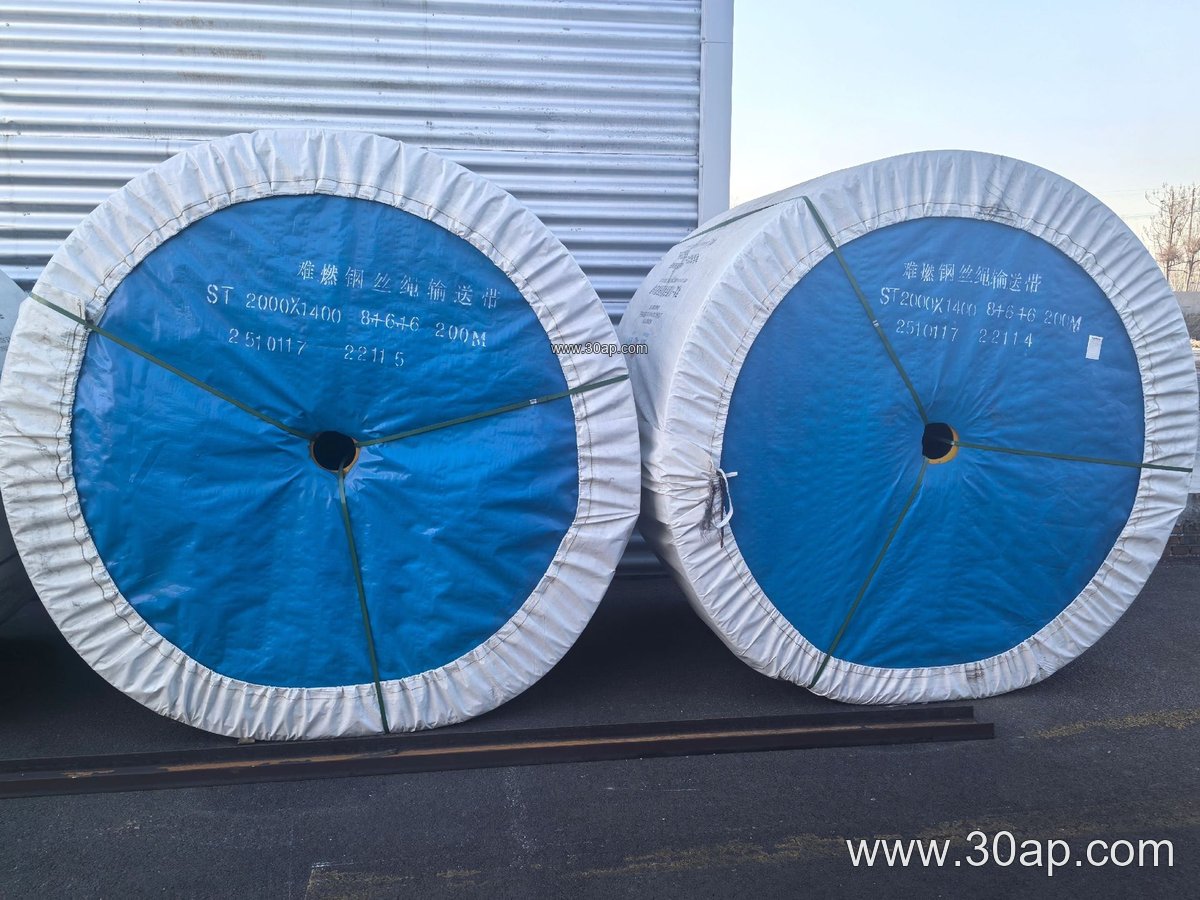
Surface Forms and Special Duties
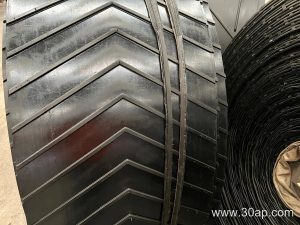
For steep inclines, a patterned cover helps. Chevron or herringbone profiles, and in some layouts a corrugated sidewall belt, keep material from sliding back. Where the sand is hot from a dryer, a heat-resistant cover is used. Oil-resistant and alkali-resistant compounds appear in cement and chemical-adjacent plants. Flame-retardant and antistatic grades are common underground in coal mines. Cold-resistant covers suit northern yards that run through winter. None of these replaces the base belt — they are cover and profile choices applied to the same product.
What a Buyer Should Check
- Tension and grade. Work out the running tension from the load, incline, and length, then pick the strength grade with margin. Do not size by width alone — a wide belt can still be under-strength.
- Cover thickness against abrasion. Sand is aggressive. A 6+2 mm cover usually outlasts a 4+2 mm one on the same transfer, though the carcass must carry the extra weight.
- Pulley and idler match. Belt width, pulley face width, and idler trough angle should be designed together. A belt width does not dictate one pulley diameter; the drive pulley diameter follows tension, carcass, and torque.
- Joint method. Vulcanized splices give a smoother run than mechanical fasteners on high-tension belts.
- Environment. Confirm dust, moisture, temperature, and any flame or antistatic requirement before fixing the compound.
Ordering a sand making plant conveyor belt is mostly a matter of matching the carcass and cover to the real duty, then making sure the pulleys, idler rollers, and brackets on the frame are sized for the same belt. Get those three aligned and the line runs quietly through the shift.