What a Conveyor Support Bracket Does on the Line
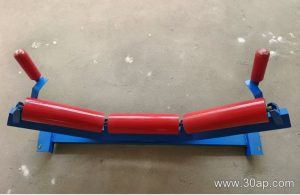
A conveyor support bracket is the steel interface between the idler roller and the conveyor frame. It sets the roller at the right height, holds the correct trough angle, and keeps spacing consistent along the carrying and return runs. In a quarry, a coal preparation plant, or a cement kiln feed line, these brackets are the parts that turn a length of belting into a stable, tracked conveyor. Without them, the conveyor belt would sag between stringers and the load would spill.
The bracket is not the pulley. Drive, tail, and bend pulleys do a different job at the ends and corners of the system, and they are not interchangeable with support brackets. A bracket carries idlers; a conveyor pulley drives or redirects the belt.
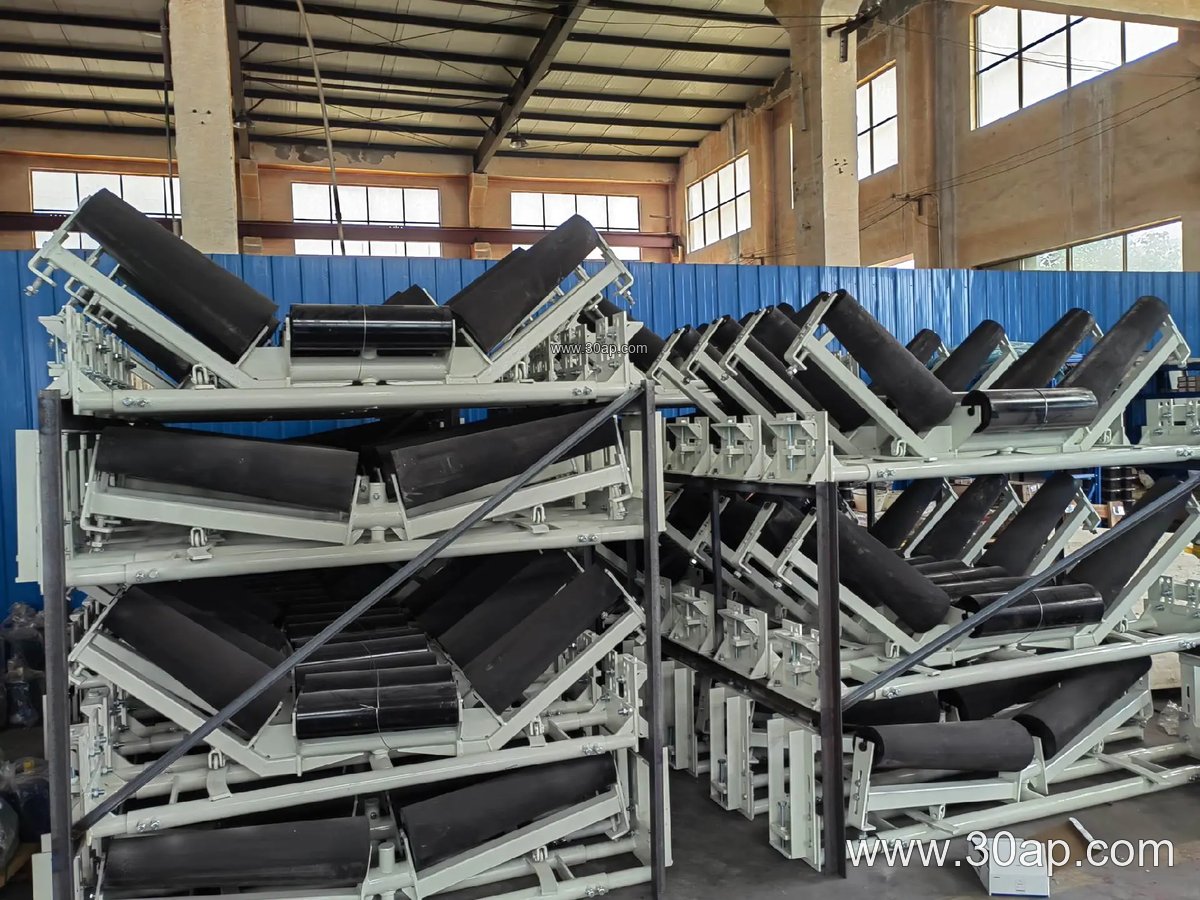
Construction and Common Frame Materials
Most brackets are fabricated from angle steel, channel steel, or folded steel plate. The shape depends on where the bracket sits and how much load it carries. A carrying-side bracket usually has two or three mounting slots or holes to locate the idler shafts, while a return-side bracket holds a single roller or a pair of rollers in a V arrangement.
Welds should be continuous at load-bearing joints, and hole spacing must match the idler shaft centers. Because hole spacing and beam length change with belt width and trough angle, a buyer should treat them as design values rather than fixed numbers.
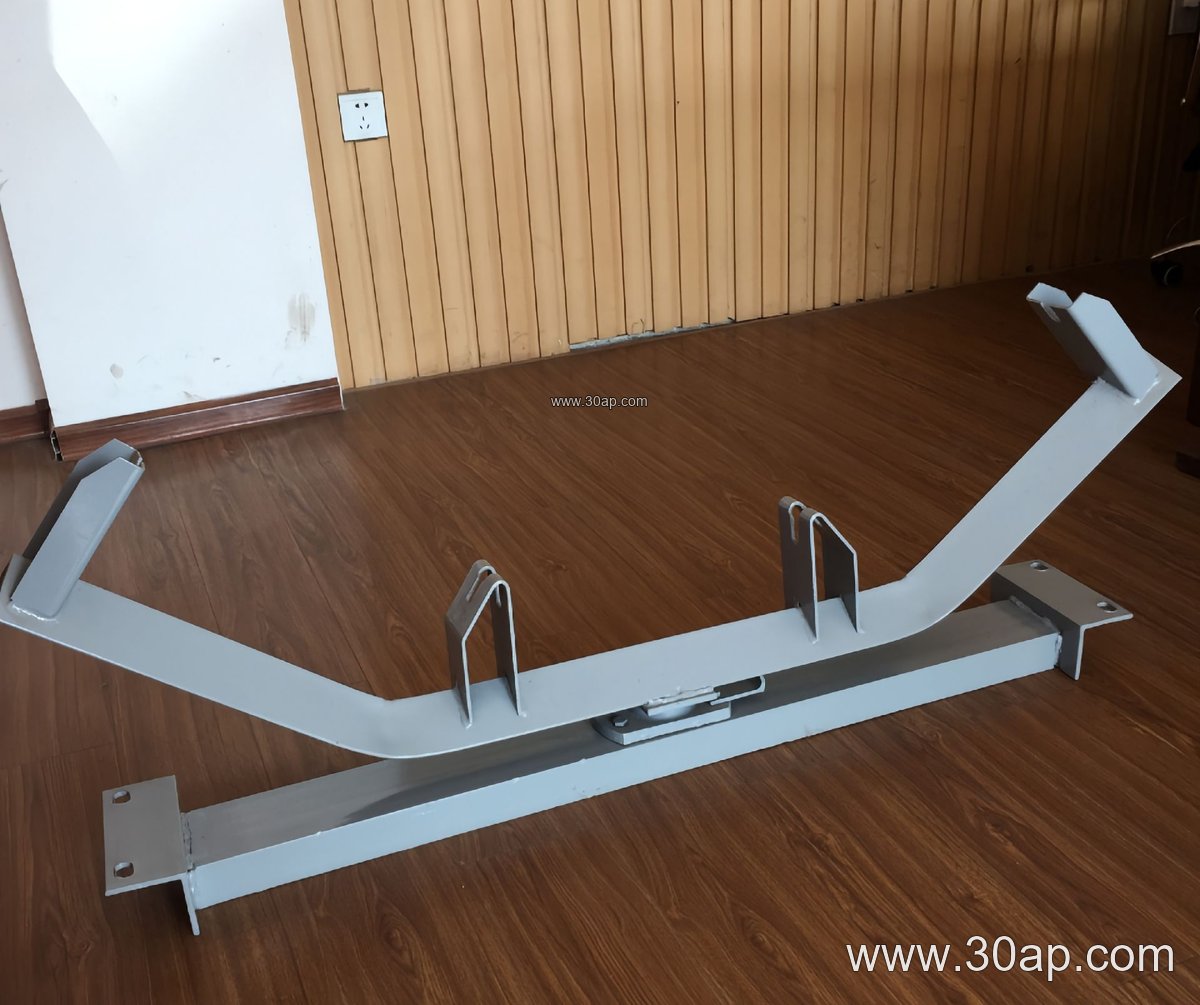
Where These Brackets Appear
Support brackets are used wherever a conveyor belt runs over idlers. Typical sites include stone crushing and screening plants, iron ore and limestone mines, and power station coal handling. They also appear in port bulk terminals, steel sintering lines, and batching plants. In each case the bracket keeps the idler roller square to the belt path so the belt tracks straight and the load stays centered.
Types and Where Each One Fits
- Trough bracket (carrying side): supports two or three idlers to form the belt trough.
- Transition bracket: used near pulleys where the belt changes from flat to troughed.
- Return bracket and V-return bracket: support the empty belt run.
- Impact bracket: carries impact idlers under the loading point.
- Self-aligning and forward-leaning brackets: help correct belt drift; forward lean is commonly about 1.5 to 2 degrees.
- Adjustable bracket: allows the trough angle to be changed on site.
Fixed and adjustable brackets differ mainly in how the idler positions are set. A fixed bracket is welded or bolted to one angle, while an adjustable one lets maintenance staff match the trough to the belt and load.
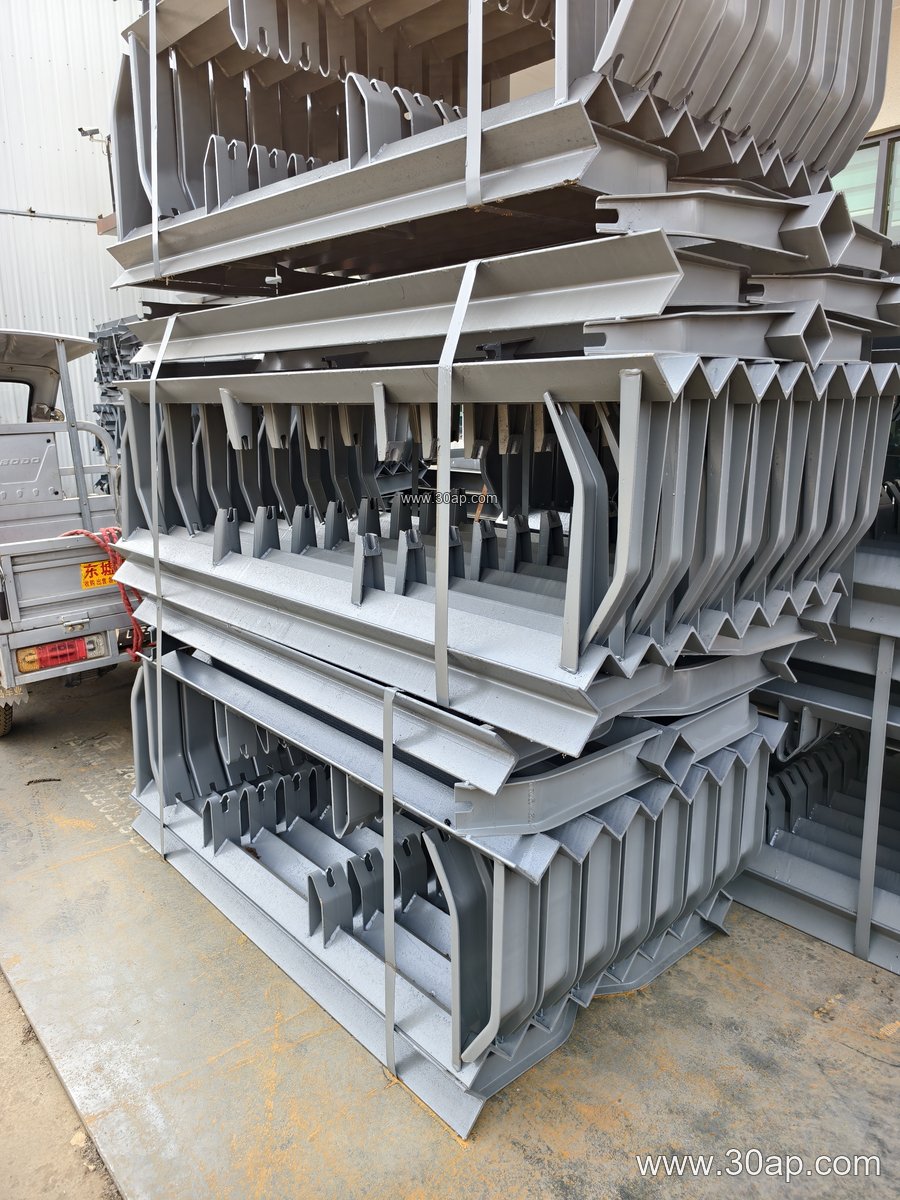
Matching Belt Width, Trough Angle, and Roller Diameter
Bracket selection follows the belt width, the required trough angle, and the idler roller diameter. These are related but not locked together: a given belt width can work with more than one trough angle or roller size, depending on load and speed. Common reference combinations look like this:
| Belt width | Trough angle | Roller diameter |
|---|---|---|
| B500 | 20 degrees | Ø89 |
| B650 | 30 degrees | Ø89 |
| B800 | 35 degrees | Ø108 |
| B1000 | 35 degrees | Ø108 |
| B1200 | 45 degrees | Ø133 |
| B1400 | 35 degrees | Ø133 |
| B1600 | 45 degrees | Ø159 |
| B1800 | 35 degrees | Ø159 |
| B2000 | 45 degrees | Ø194 |
| B2200 | 35 degrees | Ø194 |
These are common reference values, not universal rules. The final bracket drawing should be confirmed against the idler shaft size, frame spacing, and load calculation for the specific conveyor.
Buyer Checklist Before Ordering
- Confirm belt width and the intended trough angle, since both change the bracket geometry.
- Match the bracket hole pattern to the actual idler roller shaft diameter.
- State whether the bracket is for the carrying run, return run, or transition zone.
- Ask for the mounting hole spacing and beam length as drawing values, not catalog guesses.
- For dusty or wet sites such as coal plants and quarries, confirm that the bracket drains and does not trap material.
Installed correctly and checked during routine idler inspection, a conveyor support bracket is a low-cost part that protects the conveyor belt, keeps the conveyor pulley aligned with the frame, and reduces spillage across the whole line.