What a Steel Plant Conveyor Belt Has to Handle
A steel plant conveyor belt operates in one of the harshest material handling environments found in heavy industry. Sinter, coke, iron ore, limestone, mill scale, slag and finished product billets all move through the plant on belt conveyors, often at elevated temperatures and with sharp, abrasive edges. Unlike a general-purpose belt in a sand and gravel yard or a cement plant, the belt in a steel mill must survive heat, impact, abrasion and occasional flame exposure without losing carcass strength.
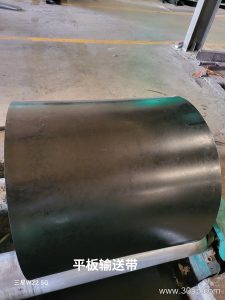
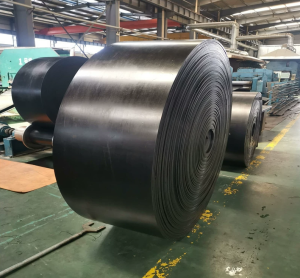
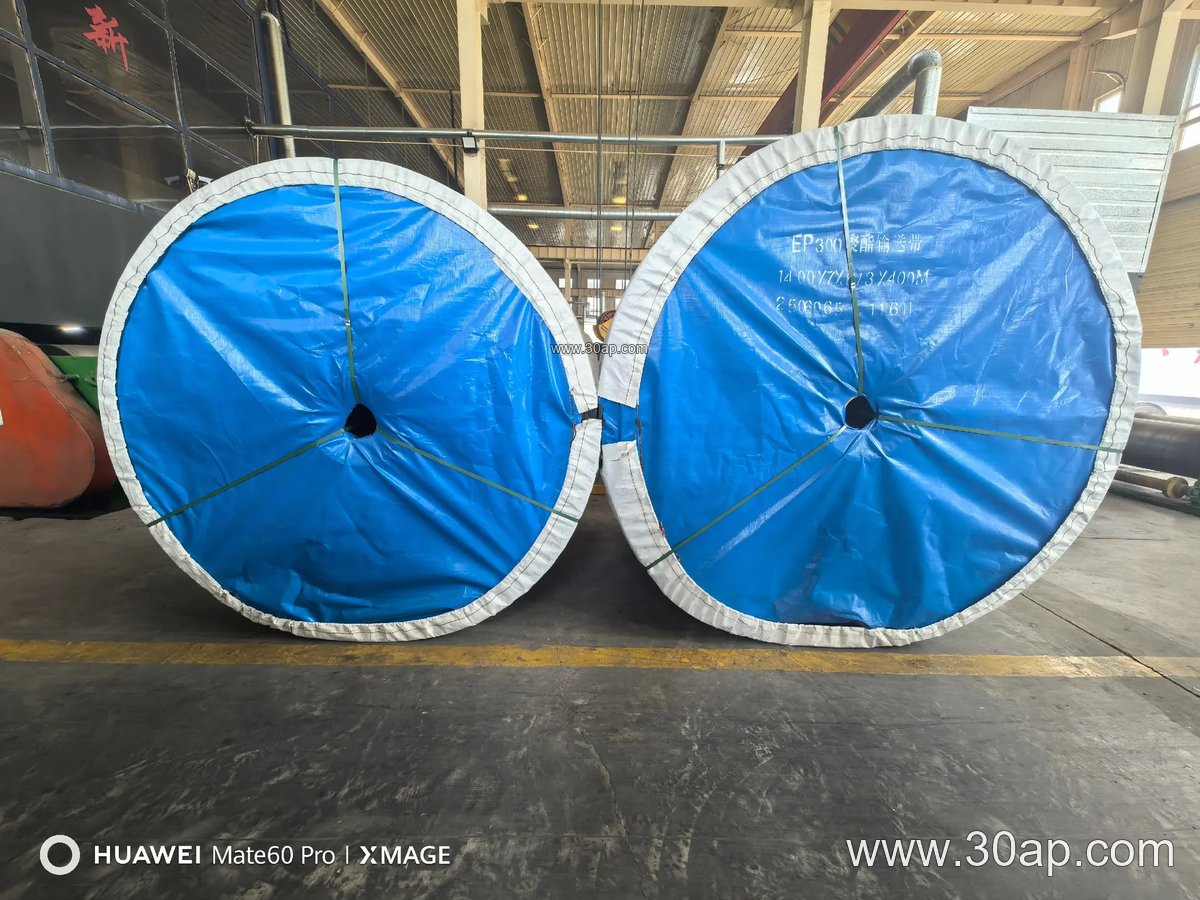
The product is a heavy-duty rubber conveyor belt built around a fabric or steel cord carcass, covered on both faces with rubber compounds selected for the duty. The same belt type appears across the sinter plant, blast furnace charging lines, coke handling, raw material stockyards and the power plant that serves the site.
Construction of the Belt
The carcass carries the tension. Common constructions include EP (polyester-cotton) fabric, NN nylon fabric and steel cord. A steel cord belt is usually chosen for the longest, highest-tension runs such as the main ore transport from the stockyard to the furnace area, while EP and NN belts cover most in-plant lines and transfer points.
Cover rubber grade matters as much as the carcass. Heat-resistant compounds are standard near sinter and coke, abrasion-resistant covers handle ore and limestone, and flame-retardant antistatic grades are common in coal handling and enclosed galleries. Oil-resistant covers appear where lubricants or oily scrap are present.
Typical reference data
The figures below are common reference values, not a supply promise. Actual construction is confirmed by design for each conveyor.
| Item | Common reference range |
|---|---|
| Belt type | EP, NN nylon, steel cord, heat resistant, abrasion resistant, flame retardant, oil resistant |
| Strength grades | EP200, EP315, EP400, EP500, EP630, EP800, EP1000, EP1250, EP1600, EP2000 |
| Belt width | B500, B650, B800, B1000, B1200, B1400, B1600, B1800, B2000 |
| Cover thickness | 3+1.5 mm, 4+2 mm, 5+2 mm, 6+2 mm, 8+3 mm |
| Carcass plies | Usually 2 to 6 layers for fabric belts |
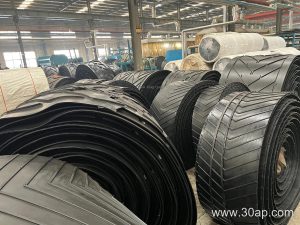
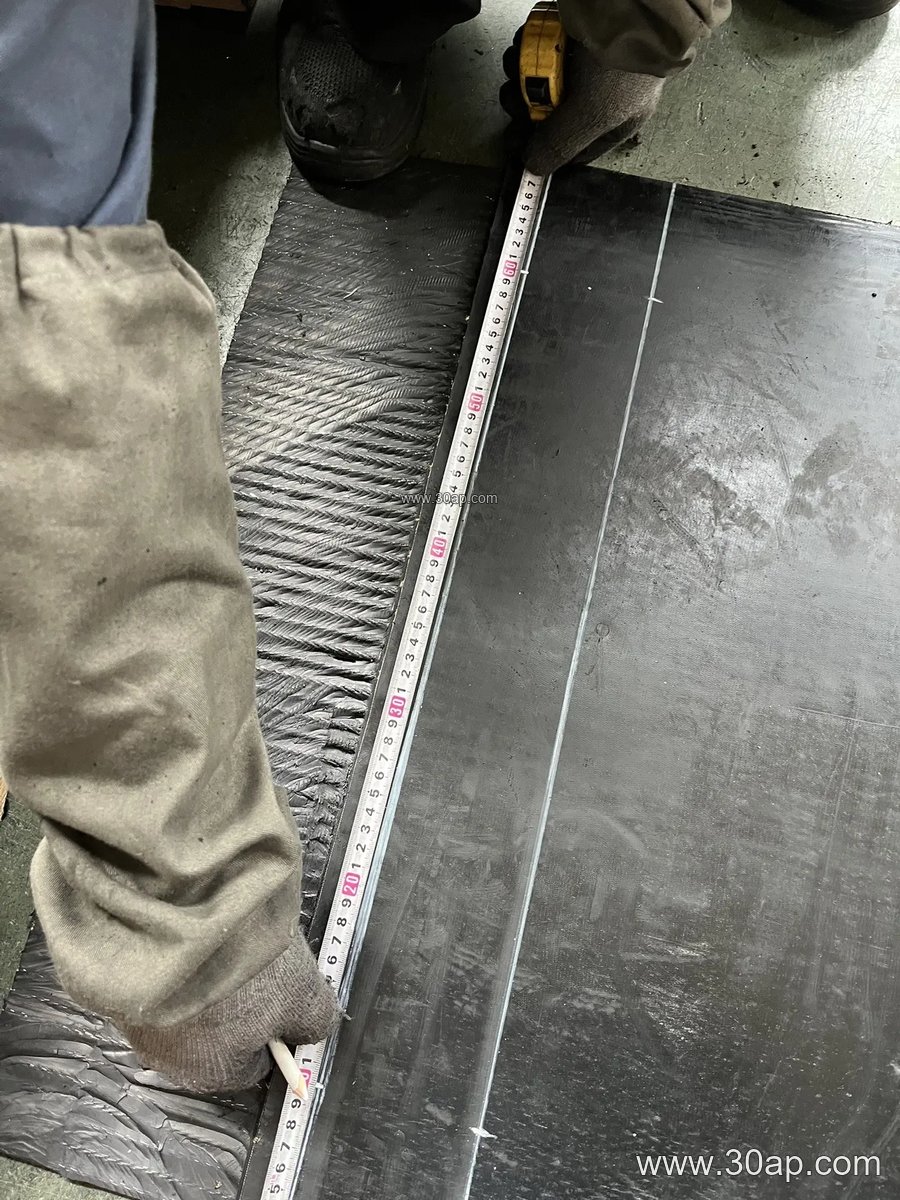
Surface forms such as plain, patterned or chevron covers, and sidewall belts, are selected where incline angle or material spillage requires them. A chevron cover is useful on inclined sinter or coke lines; a plain cover suits horizontal runs.
Where It Works in the Plant
- Raw material yard – iron ore, pellet and limestone receiving lines, often B1200 to B1600 with abrasion-resistant covers.
- Sinter plant – hot sinter and return fines, requiring heat-resistant belt grades.
- Coke handling – coke breeze and coal, frequently flame-retardant and antistatic.
- Blast furnace charging – high-tension steel cord belts on long inclines.
- Slag and mill scale – short, impact-heavy belts with thick top covers.
- Power plant and utility coal yard – enclosed galleries with fire-safety requirements.
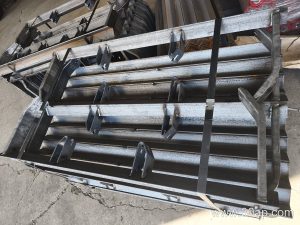
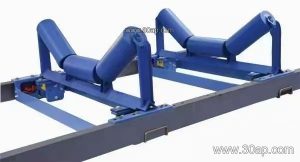
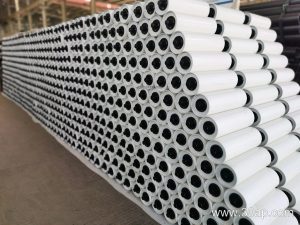
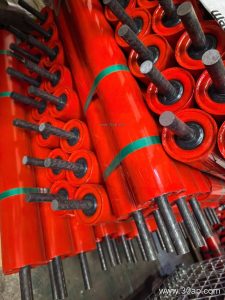
Each line also depends on its conveyor pulley, idler roller, conveyor bracket and frame. The belt is only one part of the system, and matching belt width and tension rating to the pulley and idler layout is part of the design work.
What a Buyer Should Check
Start with the duty: material type, lump size, temperature, incline and whether the gallery is enclosed. Confirm the required strength grade and cover thickness against the actual tension and impact load rather than copying a neighbouring line. Ask for the carcass type, number of plies, cover compound and surface form in writing.
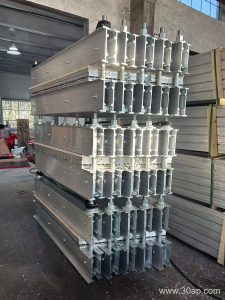
Check splice method and edge condition, because a steel plant belt often fails at the joint before the carcass is worn out. Confirm that the belt width suits the existing conveyor pulley and idler roller arrangement, and that the conveyor bracket and frame can carry the belt weight and tension. Keep spare belt sections and splicing material on site for hot lines.
Finally, review storage and handling. Heat-resistant and flame-retardant belts should be kept away from direct sunlight, oil and sharp edges before installation, and the installation team should verify pulley alignment so the belt tracks correctly from the first run.