What a Trough Idler Bracket Does
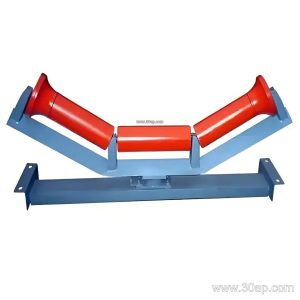
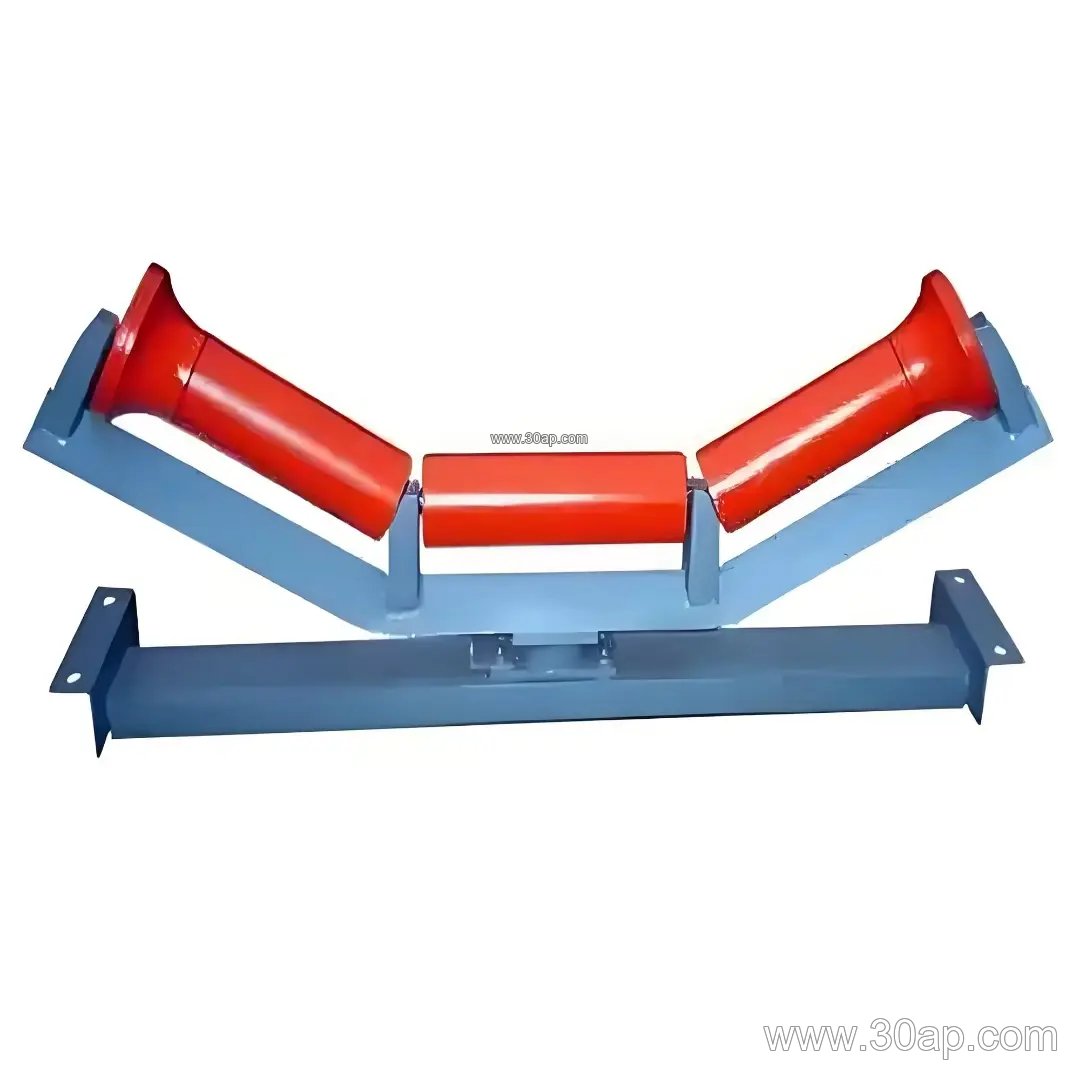
A trough idler bracket is the steel support that holds the three-roll trough set under the carrying side of a conveyor belt. In daily plant talk it is often shortened to trough bracket or simply bracket, but the function stays the same: it positions the side rollers at an angle so the belt forms a trough and keeps bulk material centered. Without a stable bracket, the idler roller cannot hold its line, and the conveyor belt starts to wander, spill, or wear unevenly.
This part is common in quarry lines, coal washing plants, cement plants, and power station coal handling, where dusty, heavy loads punish weak supports.
How the Bracket Is Built
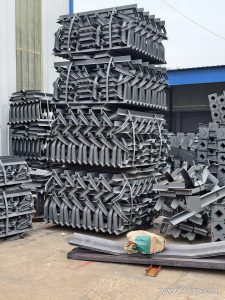
Most trough idler brackets are made from angle steel, channel steel, or folded steel plate. The frame has mounting slots or holes for the center roller and two angled side arms. Welded gussets and stiffening ribs keep the arms from spreading under load. Surface treatment is usually painting or galvanizing, chosen for the site conditions.
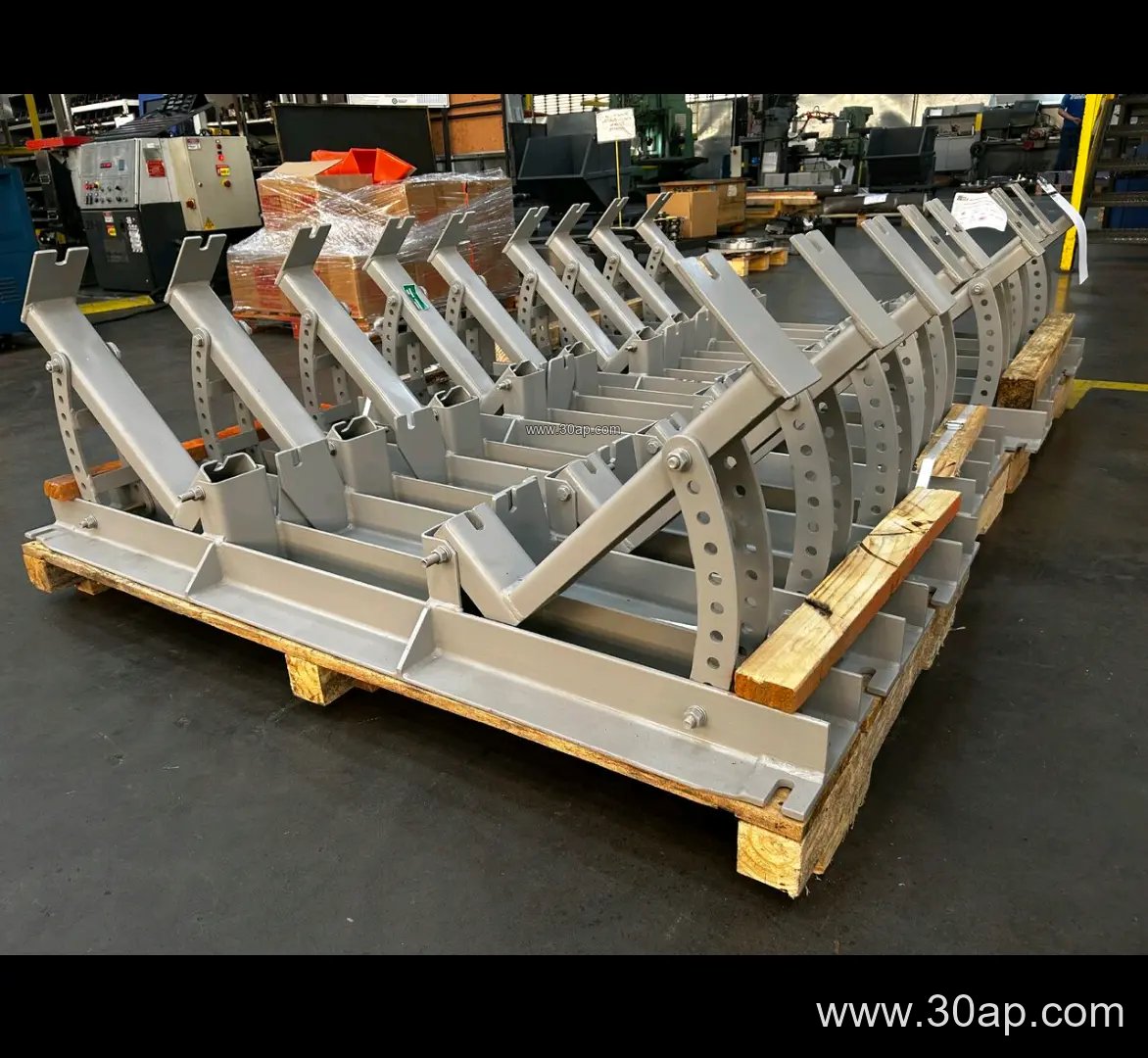
- Center roll seat: keeps the middle idler roller level
- Side arms: set the trough angle, commonly 20, 30, 35, or 45 degrees
- Mounting feet: bolt to the conveyor stringer or frame
- Optional forward tilt: about 1.5 to 2 degrees for self-aligning behavior
The hole spacing and crossbeam length change with belt width and trough angle, so they are set by design rather than treated as a fixed number.
Common Sizes and Reference Data
The table below shows typical combinations seen in catalogues and project drawings. These are reference values only; final selection follows the conveyor design.
| Belt width | Trough angle | Idler diameter | Typical use |
|---|---|---|---|
| B500 | 20 degrees | Ø89 | Light sand and aggregate lines |
| B650 | 30 degrees | Ø89 | Small quarry and mixing plant conveyors |
| B800 | 35 degrees | Ø108 | General bulk handling |
| B1000 | 35 degrees | Ø108 or Ø133 | Cement and coal transport |
| B1200 | 45 degrees | Ø133 | Heavy ore and sinter lines |
| B1400 | 45 degrees | Ø133 or Ø159 | Large tonnage plants |
| B1600 | 35 or 45 degrees | Ø159 | Mine and port conveyors |
| B1800 to B2200 | 35 or 45 degrees | Ø159 or Ø194 | High capacity bulk systems |
A wide belt does not force one trough angle or one roller size; the combination depends on capacity, material, and belt stiffness. The same B1200 frame may carry different roller diameters if the design calls for it.
Where It Fits on the Conveyor
On the carrying run, the trough idler bracket sits between the conveyor stringers and carries the loaded belt. It is often compared with the return bracket, which supports the empty belt underneath. The two are not interchangeable: the return side usually uses a flat or V-shaped arrangement, while the carrying side needs the trough shape. A transition bracket may appear near the head or tail pulley to ease the belt from flat to troughed, and an impact bracket may be used under the loading point, but these are separate subtypes with their own jobs.
Near a drive pulley or bend pulley, the belt line changes direction, so the bracket layout must follow the drawing rather than a general rule.
Buyer Checklist
- Confirm belt width, trough angle, and idler roller diameter before ordering.
- Check the mounting hole spacing against the existing stringer.
- Ask for material and finish, especially for wet or corrosive sites.
- Decide whether fixed or adjustable brackets suit the belt training needs.
- Match the bracket to the conveyor bracket family used elsewhere on the line for easier spares.
For a coal plant or a limestone quarry, a correctly matched trough idler bracket keeps the idler roller aligned, protects the conveyor belt, and reduces downtime. Confirm dimensions against the current drawing, and treat catalogue sizes as a starting point rather than a promise.