What a Heavy-Duty Steel Conveyor Bracket Does
A heavy-duty steel conveyor bracket is the load-bearing frame that holds the idlers under a moving conveyor belt. In a quarry, a limestone mine or a cement plant, the belt carries rock, clinker and dust all day, so the bracket must keep the rollers at the right height, angle and spacing. It is a structural part, not a wear part, and it decides how evenly the belt is supported from the loading point to the discharge end.
This bracket is often called a heavy-duty steel idler support frame or a heavy-gauge conveyor idler bracket. The names point to the same item. Drive pulleys, tail pulleys and bend pulleys are different components and are not covered here; they are mentioned only to separate them from the bracket that carries the idlers.
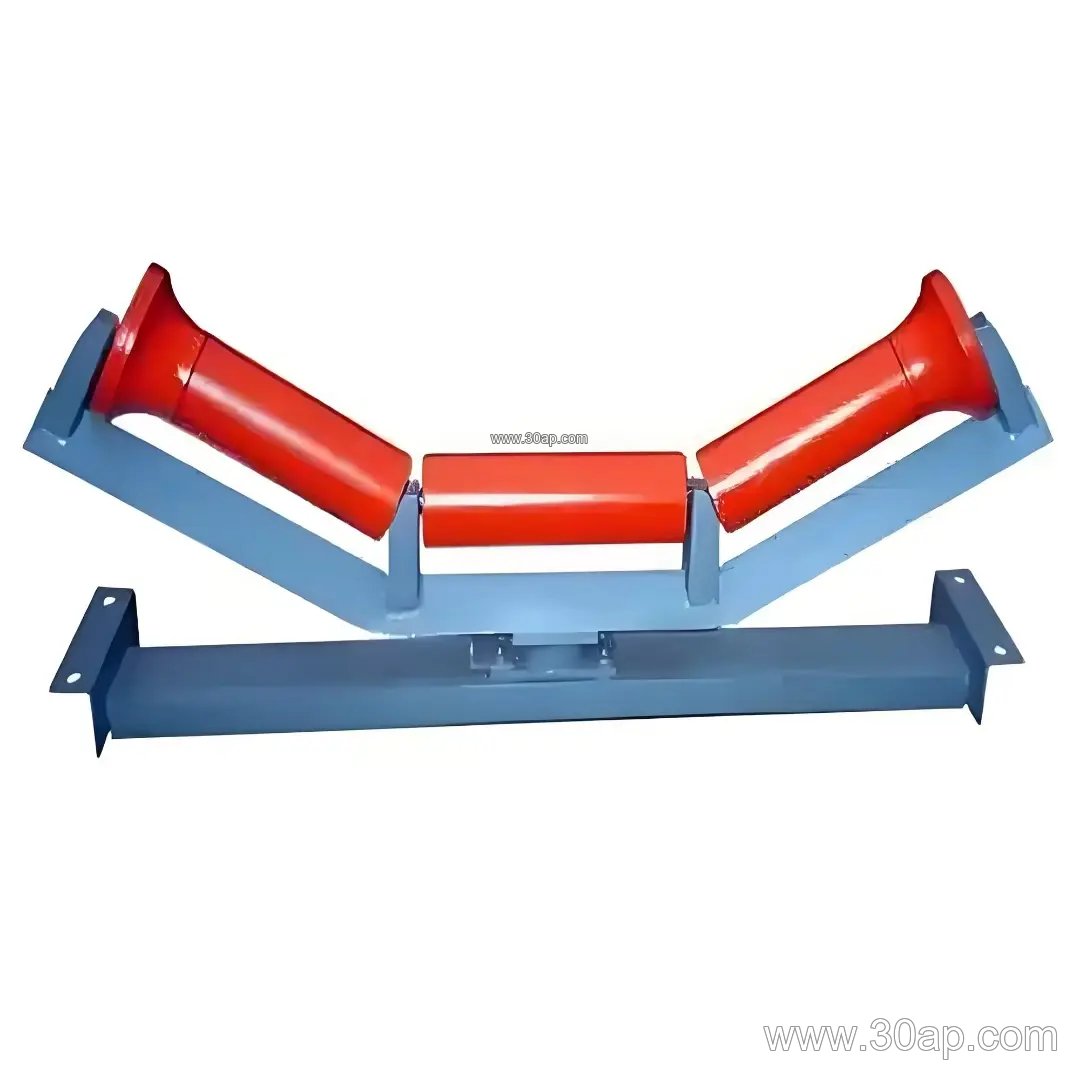
How It Is Built
Most units are fabricated from angle steel, channel steel or folded steel plate. Thicker sections are chosen where impact loads are high, such as under a crusher outlet or a transfer chute. Welds at the crossbeam and the mounting feet matter as much as the steel thickness, because vibration loosens poor joints first.
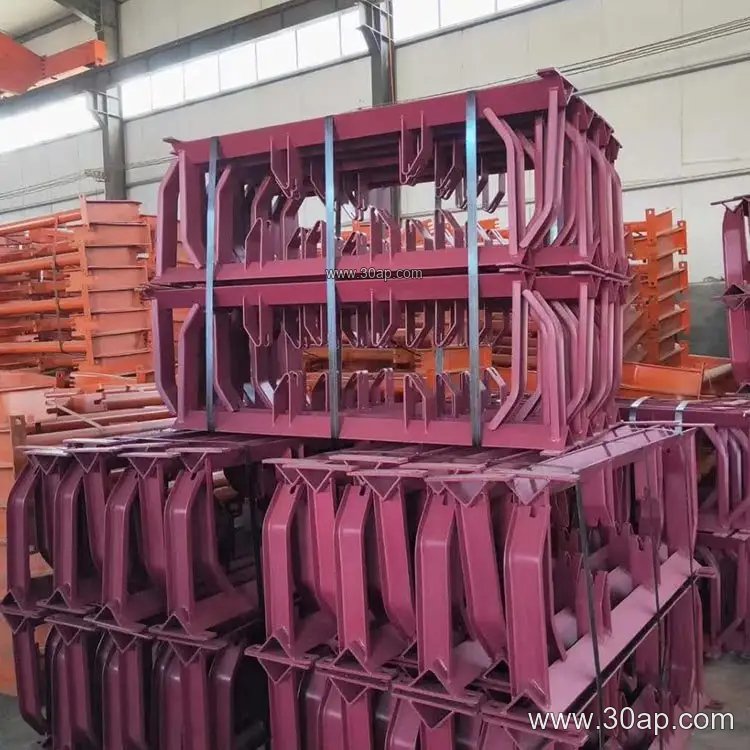
- Crossbeam and end supports formed from channel or folded plate
- Mounting slots or holes that position each idler roller
- Fixed or adjustable trough angles depending on the design
- Coating or galvanizing for damp tunnels, washdown areas and coastal ports
An adjustable bracket usually lets the trough angle move between common settings such as 20, 30, 35 and 45 degrees, while a fixed bracket is welded at one angle. Troughing brackets, transition brackets, return brackets and V-return brackets are different subtypes, each with its own position along the conveyor.
Typical Sizes and Reference Data
Belt width and roller diameter are the first two numbers a buyer needs. Common belt widths run from B500 to B2200, and common idler diameters include Ø89, Ø108, Ø133, Ø159 and Ø194. These are reference ranges, not fixed pairings: a B800 belt may run with Ø108 rollers on one conveyor and a different diameter on another, depending on speed, load and design. Mounting hole spacing and crossbeam length change with belt width and trough angle, so they are set by the conveyor design rather than by a single universal value.
| Reference item | Common range |
|---|---|
| Belt width | B500, B650, B800, B1000, B1200, B1400, B1600, B1800, B2000, B2200 |
| Trough angle | 20°, 30°, 35°, 45° (adjustable versions can be reset) |
| Idler diameter | Ø89, Ø108, Ø133, Ø159, Ø194 |
| Forward tilt (where used) | about 1.5° to 2° |
| Material | Angle steel, channel steel, folded steel plate |
Where It Fits on the Line
In a sand and gravel line, troughing brackets support the carrying side through the crushing and screening section. In a coal washing plant, return brackets hold the belt on the way back, and V-return brackets help keep the belt centered. Power plant coal handling and steel plant sinter lines use similar frames, but dust and heat push buyers toward heavier sections and better surface protection.
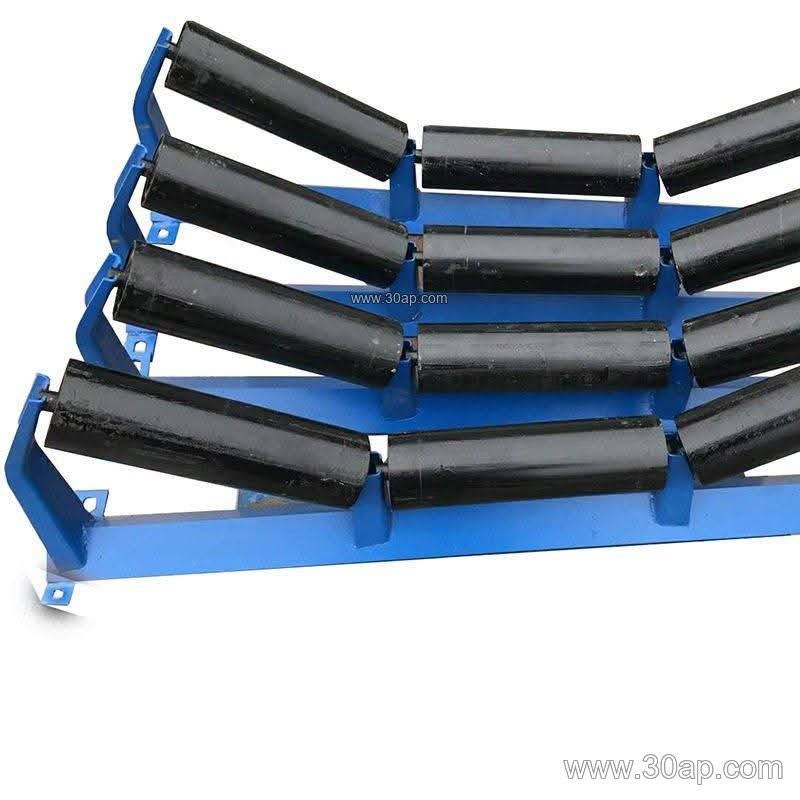
The bracket works with the conveyor belt, the idler roller and the conveyor pulley, but it does not replace any of them. A worn idler can be swapped quickly only if the bracket itself is straight, well aligned and firmly anchored.
What to Check Before Ordering
- Confirm belt width, trough angle and roller diameter together, not one at a time.
- Ask whether the bracket is fixed or adjustable, and how the angle is locked.
- Check steel section and weld quality for the impact zone under the chute.
- Match mounting dimensions to the existing conveyor frame, since these vary by design.
- Choose coating based on site conditions such as washdown, humidity or abrasive dust.
- Plan periodic checks for loose bolts, bent crossbeams and roller seating.
A heavy-duty steel conveyor bracket is a simple part with a large effect on belt life. Get the fit, the angle and the steel right, and the idlers and the belt will run straighter for longer.