What a Construction Industry Conveyor Belt Is
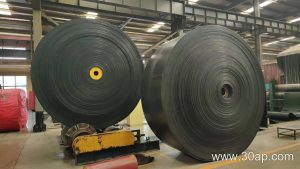
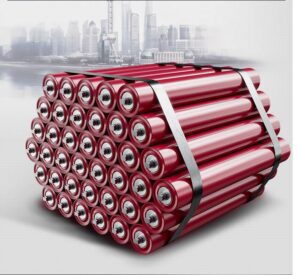
A construction industry conveyor belt is the load-carrying element of a belt conveyor used to move sand, gravel, crushed stone, cement, coal, ore and other bulk materials around a quarry, concrete plant, cement works, power station or mine site. It is a continuous loop of rubber or PVC-based material, tensioned between a head pulley and a tail pulley, supported along its length by idler rollers and held in alignment by conveyor brackets and frames. In short, it is the rubber surface that does the hauling, while the conveyor pulley, idler roller and structure do the guiding and support.
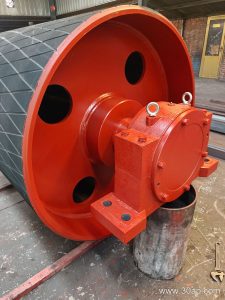
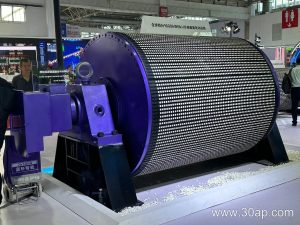
The same product also appears under the name conveyor belt for the construction industry. These two expressions describe one item; they are not different products. Pulleys, by contrast, are separate components: a drive pulley, a tail pulley and a bend pulley each perform a distinct job and are not interchangeable names for one another.
How the Belt Is Built
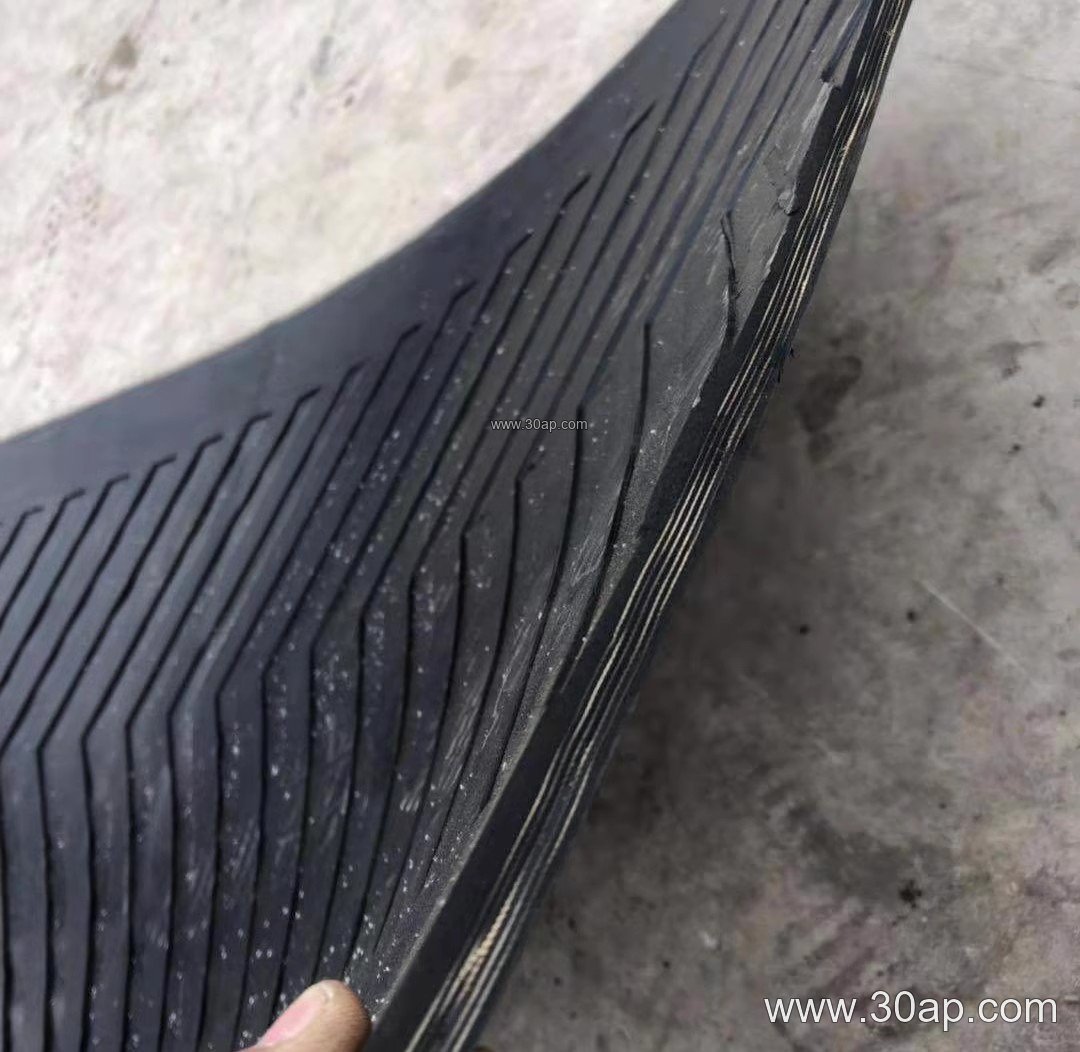
Most construction belts are composite structures. A carcass carries the tension, and rubber covers protect it from abrasion, impact and the weather.
- Carcass: EP (polyester-cotton) or NN (nylon-nylon) fabric plies are common; steel cord construction is used for long, high-tension runs.
- Covers: top and bottom rubber layers, usually expressed as a pair such as 4+2 mm or 6+2 mm; the top cover takes the wear.
- Edges: cut edges or moulded edges depending on the manufacturer and the duty.
Typical carcass builds range from 2 to 6 plies. Cover thickness is stated as top plus bottom, for example 3+1.5, 4+2, 5+2, 6+2 or 8+3 mm, and is chosen according to lump size and abrasion rather than to a single fixed rule.
Common Types and Where They Fit
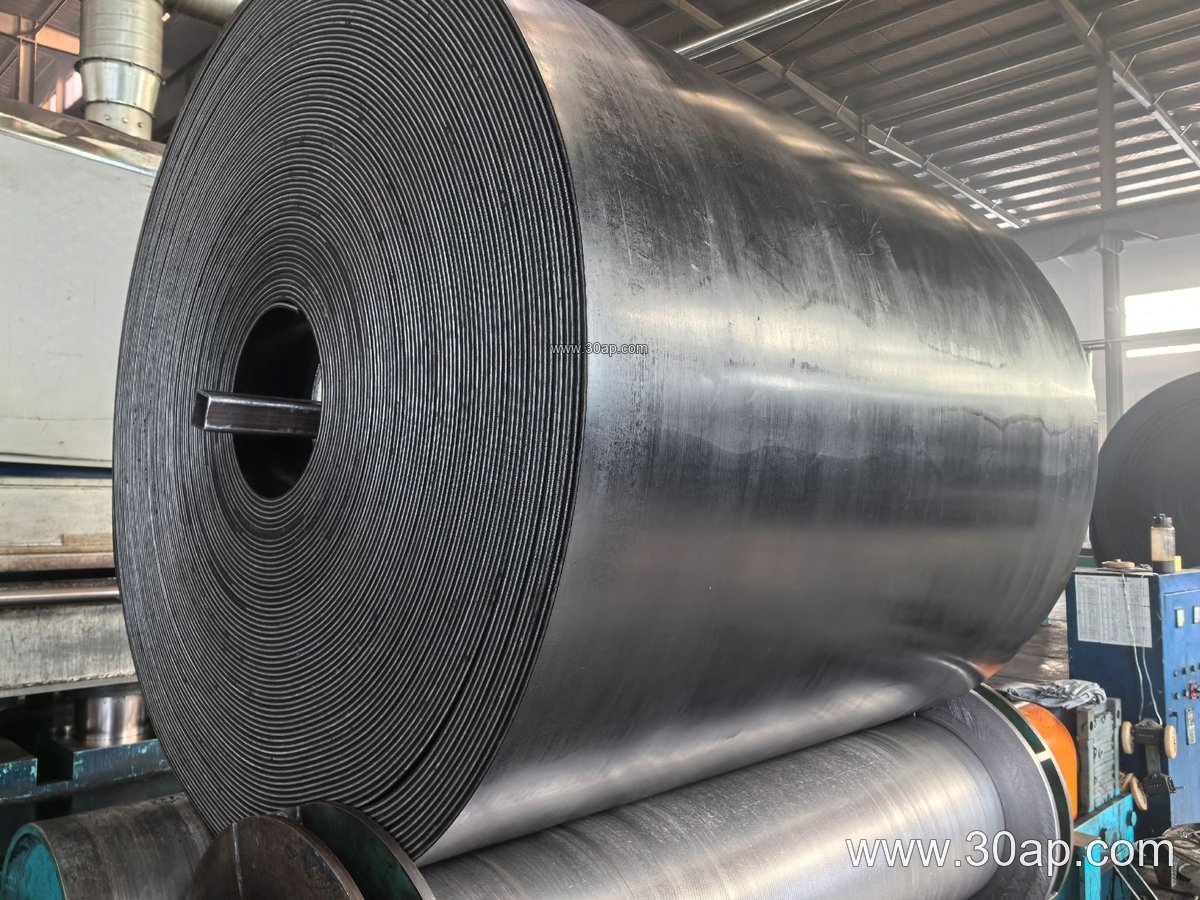
Construction sites are harsh, so the belt type should follow the duty:
- EP conveyor belt for general sand, gravel and aggregate hauling.
- NN nylon conveyor belt where flexibility and impact resistance matter.
- Steel cord conveyor belt for long-distance, high-capacity lines at mines and cement plants.
- PVC or PVG conveyor belt for lighter duties and, in the PVG case, flame-retardant underground work.
- Special covers: wear-resistant, heat-resistant, oil-resistant, flame-retardant, antistatic, cold-resistant and acid-alkali resistant grades.
- Surface forms: patterned or chevron (herringbone) belts for steep inclines, and corrugated sidewall belts for confined, steep conveying.
A bend pulley may be added to change direction on a long line, and a snub or take-up pulley helps control tension, but none of these replaces the belt itself.
Reference Dimensions
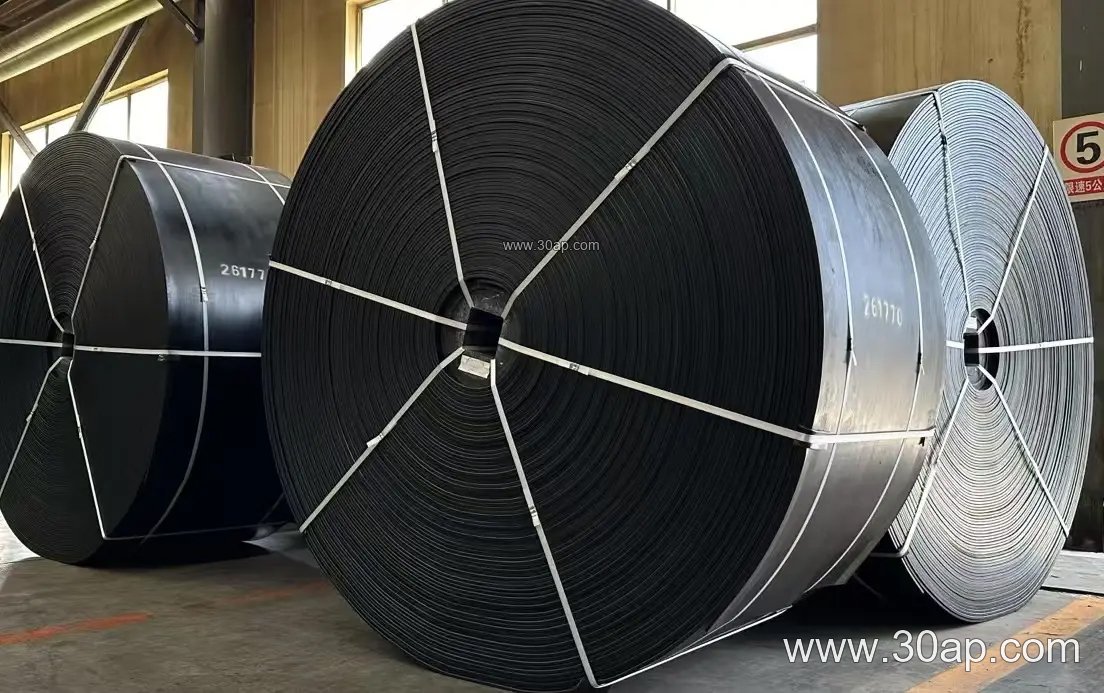
The values below are common reference data, not universal specifications. Actual supply depends on the manufacturer and on the conveyor design.
| Parameter | Common reference values |
|---|---|
| Belt width | B500, B650, B800, B1000, B1200, B1400, B1600, B1800, B2000 |
| Strength grade | EP200, EP315, EP400, EP500, EP630, EP800, EP1000, EP1250, EP1600, EP2000 |
| Cover thickness | 3+1.5, 4+2, 5+2, 6+2, 8+3 mm |
| Carcass plies | 2 to 6 layers, typically |
Belt width and pulley diameter are matched by the conveyor designer, not by a fixed table; a given width does not lock the machine to one pulley size. Shaft diameter is calculated from the load and the pulley, not read from the belt width alone.
Buyer Checklist
- State the material, lump size, tonnage per hour and incline so the strength grade and surface form can be chosen.
- Describe the environment: dust, heat, oil, cold or flame risk decides the cover compound.
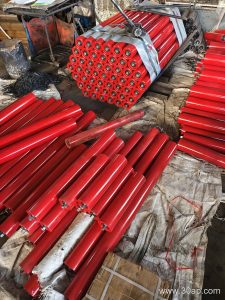
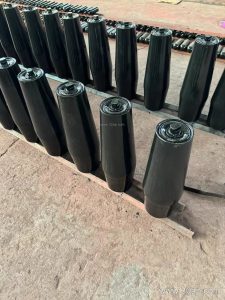
- Confirm the pulley and idler roller arrangement, since belt tracking depends on them.
- Ask for the cover thickness and ply count in writing, and keep spare belt, idler roller and pulley parts consistent with the original design.
- Plan splicing, cleaning and inspection routines; most belt damage starts at the loading point or the tail pulley.
Handled well, a construction industry conveyor belt keeps aggregate, cement and ore moving with less spillage and fewer stoppages, provided the belt, idler roller, conveyor pulley and brackets are treated as one system rather than as unrelated parts.