What a Guide Idler Bracket Does on a Conveyor
A guide idler bracket is the mounting component that holds a guide idler in a fixed, accurate position relative to the conveyor belt. In practice, the same part is often called a guide roller bracket or an alignment idler bracket, and it belongs to the wider family of conveyor brackets that support the idler roller assemblies along the carrying and return sides of a conveyor structure. Its job is simple to describe but important in service: keep the guide idler square to the belt path so the roller can do its alignment work without fighting the frame.
In a quarry transfer house or a coal handling plant, a small mounting error at one bracket can show up as belt edge wear several metres away. That is why the guide idler bracket is usually treated as a locating part rather than a generic support piece.
Construction and Mounting Details
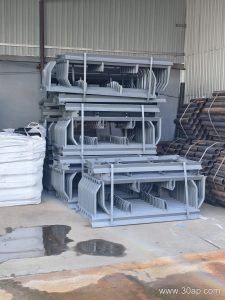
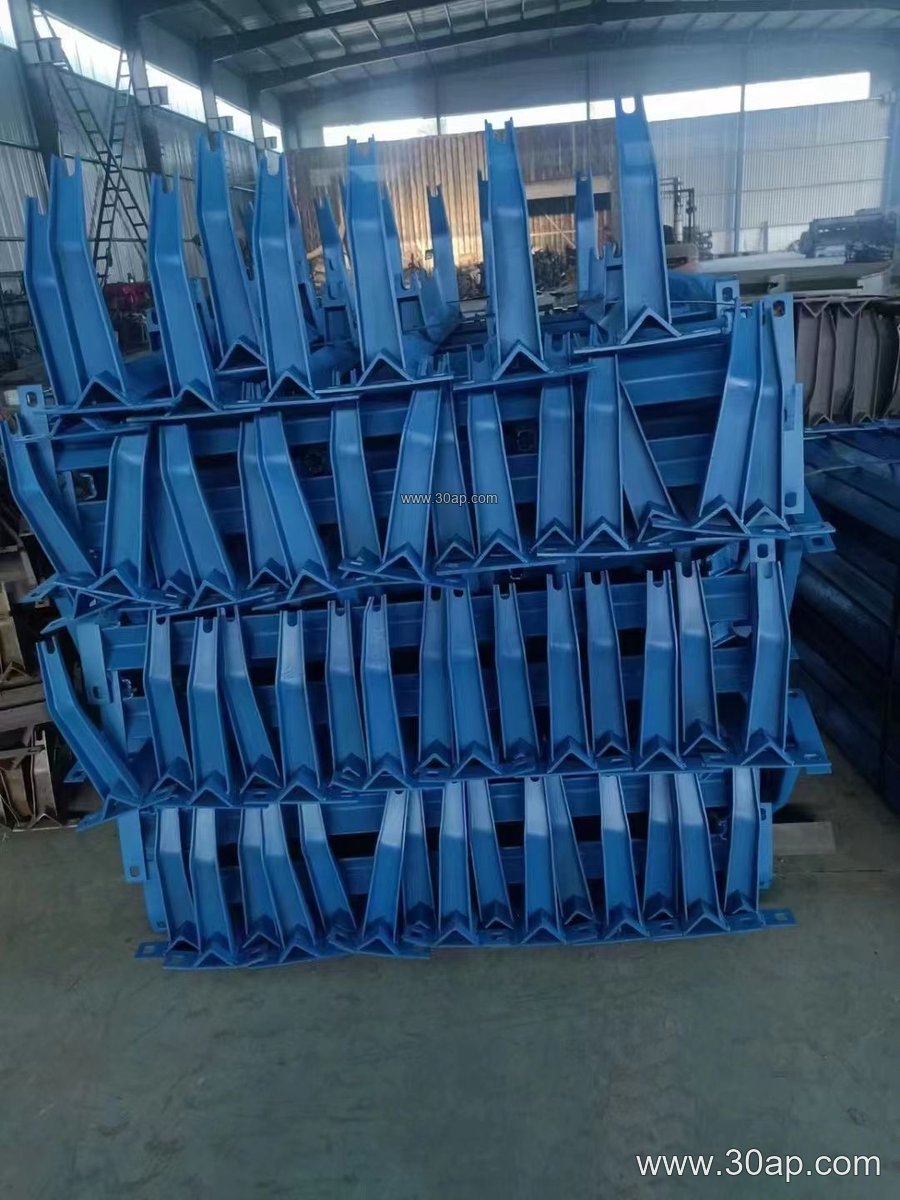
Most designs are fabricated from angle steel, channel steel, or folded steel plate, with slotted holes or stepped mounting positions so the guide idler can be set squarely during installation. The bracket is bolted to the conveyor stringer or to a cross beam, and the idler shaft is then clamped into the bracket seat. Common workshop practice includes:
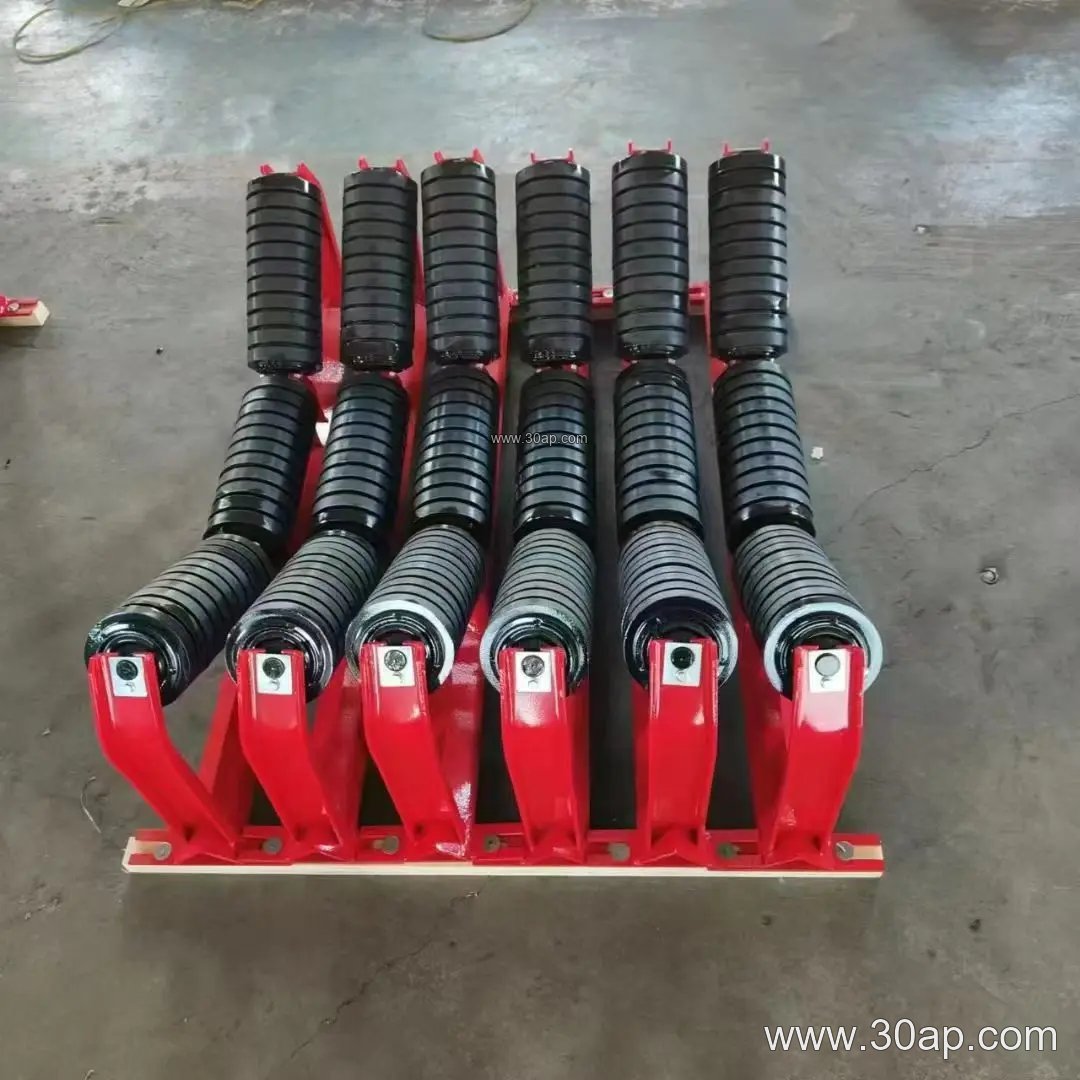
- Slotted fixing holes to allow fine lateral adjustment during belt tracking.
- Reinforced gussets or folded edges where the bracket meets the main frame.
- Galvanised or painted finish for dusty and humid service conditions.
- Matched pairs supplied as left and right hands for symmetrical mounting.
Installation hole spacing and cross beam length are not universal. They change with belt width, trough angle, and the idler diameter selected, so the bracket drawing should always be confirmed against the conveyor layout rather than assumed from a catalogue number.
Where Guide Idler Brackets Are Used
These brackets appear wherever belt tracking needs positive control: near the head and tail transition zones, ahead of loading points, and on long runs where the belt tends to drift. Typical sites include sand and gravel lines, limestone mines, cement plants, and power station coal conveying systems. In a tunnel spoil removal conveyor, a guide idler bracket is often fitted close to the discharge so the belt stays centred before it reaches the conveyor pulley.
A useful comparison is the self-aligning bracket, which allows the idler to pivot and steer the belt automatically. The guide version holds the idler in a defined position instead, so the two are chosen for different correction strategies and should not be swapped without checking the tracking plan.
Matching the Bracket to Belt Width and Idler Size
Bracket selection follows the belt and idler combination, not the other way round. The table below shows reference combinations that are commonly seen; they are examples for discussion, not fixed rules, and final values are confirmed by the conveyor design.
| Belt width | Trough angle | Idler diameter | Typical bracket role |
|---|---|---|---|
| B500 | 20 degrees | Ø89 | Light duty guide support |
| B650 | 30 degrees | Ø89 | Small transfer conveyors |
| B800 | 35 degrees | Ø108 | General guide idler mounting |
| B1000 | 35 degrees | Ø108 | Aggregate and cement lines |
| B1200 | 45 degrees | Ø133 | Heavy trough, wide belt |
| B1400 | 45 degrees | Ø159 | Mine and power plant duty |
| B1600 | 35 degrees | Ø159 | High capacity main lines |
| B1800 | 45 degrees | Ø194 | Large tonnage installations |
Note that one belt width can work with several trough angles and idler diameters. A B800 belt, for instance, may run at 30 or 35 degrees with Ø108 or Ø133 idlers depending on load and speed. Do not assume that a single belt width locks the bracket to one shaft size; the shaft diameter follows the idler selection and the load calculation.
Buyer Checklist
Before ordering, confirm the belt width, trough angle, idler diameter, mounting hole pitch, and the hand of the bracket. Ask whether the bracket is fixed or adjustable, since adjustable versions can be set between common trough angles such as 20, 30, 35, and 45 degrees. State the environment, because dusty coal or cement service may call for a different finish from a clean grain silo installation. Finally, check that the guide idler bracket drawing matches the existing conveyor bracket and stringer holes, and keep a spare pair on site so a damaged unit can be replaced without stopping the belt for long.