What the Feed-End Pulley Does
The feed-end pulley is the drum at the loading end of a belt conveyor. Its job is to support and guide the conveyor belt as material is dropped onto the belt. In many layouts this position is also called the tail pulley, but feed-end pulley is the more specific name when the loading point is the focus. It is not a drive pulley, not a bend pulley, and not a snub pulley. Those are separate functions with different mechanical demands.
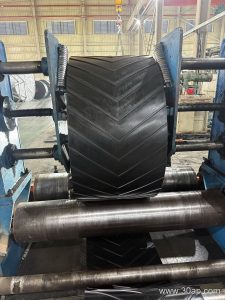
At a quarry, a limestone mine, or a cement plant, the feed-end pulley often sits under a hopper or a chute. The belt receives stone, clinker, or aggregate, and the pulley must keep the belt tracking straight while absorbing the impact and tension coming from the load. In a coal preparation plant or a power station coal yard, the same pulley helps the belt run true before it enters the carrying run.
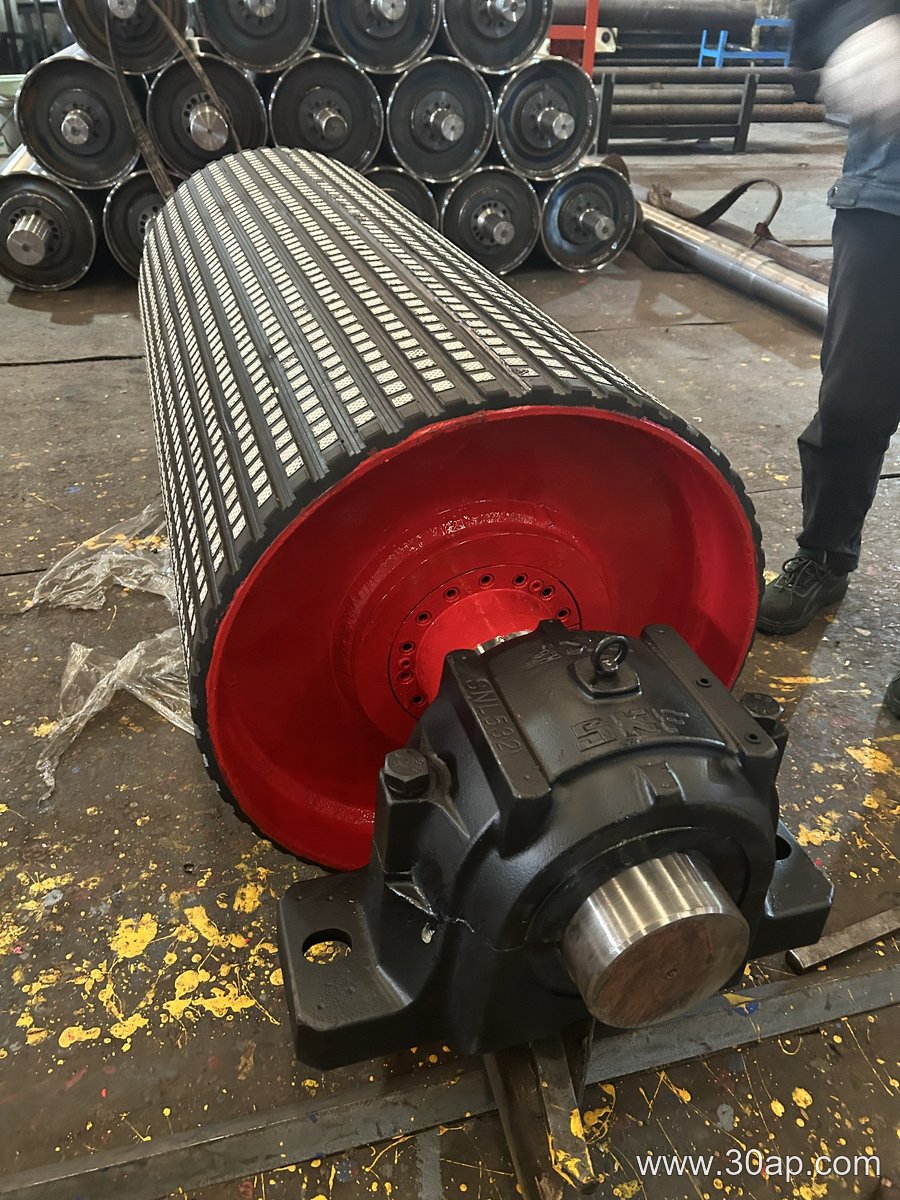
Construction and Key Parts
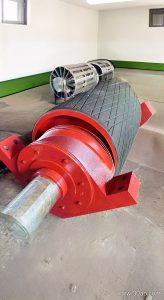
A typical feed-end pulley is built around a cylindrical shell, two end discs, a shaft, and bearing housings. The shell can be seamless steel tube or fabricated from rolled plate. The shaft is sized by torque and load, not by belt width alone. Common shaft diameters include Ø50, Ø60, Ø70, Ø80, Ø90, Ø100, Ø120, Ø140, Ø160, Ø180, and Ø200 mm. The bearing type and housing are matched to the duty and the conveyor bracket arrangement.
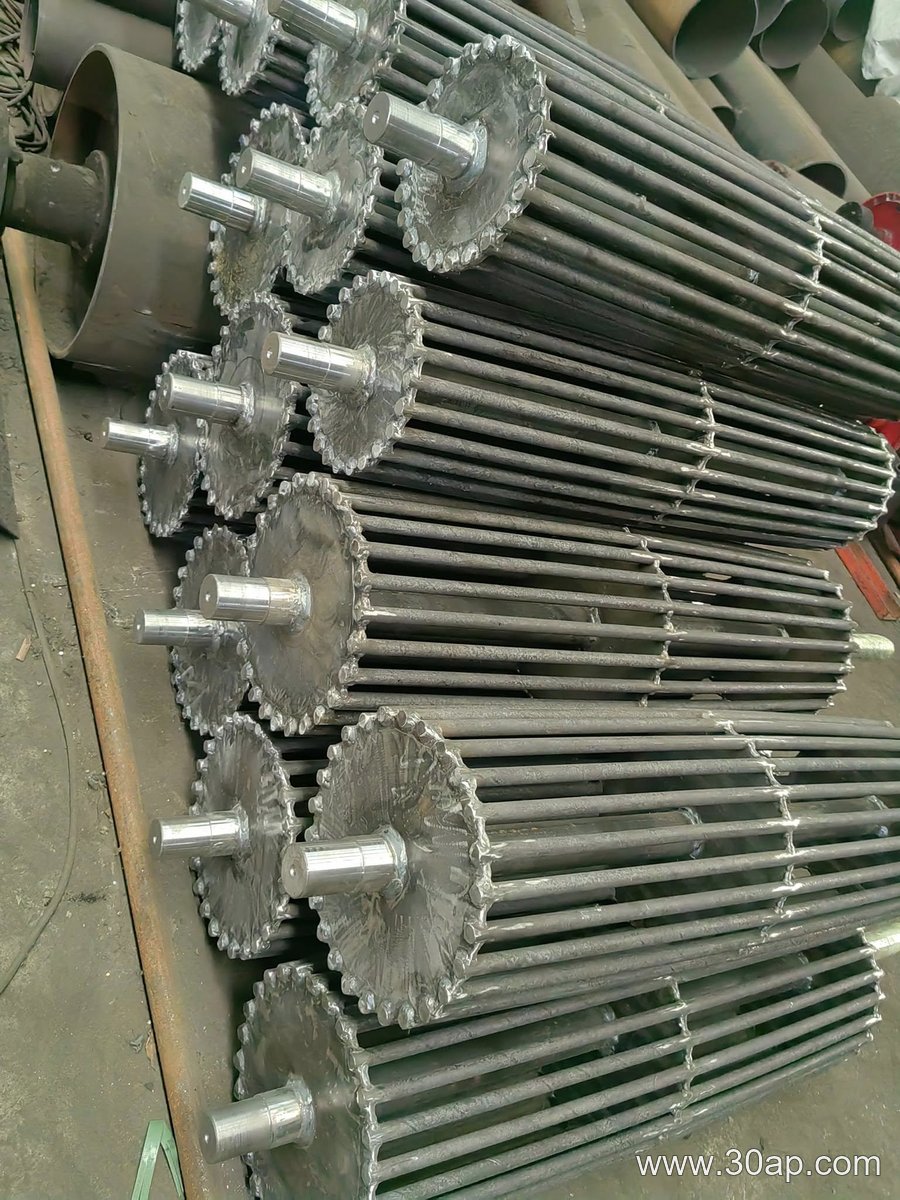
Surface finish matters at the feed end. A plain finish is used when the belt is clean and the load is light. Rubber lagging is common when the pulley needs extra grip or protection from abrasive material. Available surface forms include plain, cast rubber, cold-bonded rubber, hot vulcanized rubber, diamond lagging, herringbone lagging, ceramic lagging, and flat rubber. Lagging thickness is often 8, 10, 12, 15, or 20 mm. The choice depends on material size, moisture, and how much slip control is needed.
Common Sizes and Configurations
Feed-end pulleys are made in many diameters and face widths. Face width is usually wider than the belt to keep the conveyor belt centered. For example, a B400 belt may use a pulley face around 500 mm, a B800 belt around 950 mm, and a B1200 belt around 1400 mm. Diameter is selected by belt tension, wrap angle, and the space available at the loading station. A few common combinations are B800 × Ø500, B1200 × Ø1000, and B1400 × Ø800. These are examples, not fixed rules. One belt width can work with more than one pulley diameter.
| Belt Width | Typical Face Width | Example Diameter |
|---|---|---|
| B400 | About 500 mm | Ø200 to Ø400 |
| B650 | About 750 mm | Ø250 to Ø500 |
| B800 | About 950 mm | Ø315 to Ø630 |
| B1000 | About 1150 mm | Ø400 to Ø800 |
| B1200 | About 1400 mm | Ø500 to Ø1000 |
| B1400 | About 1600 mm | Ø630 to Ø1250 |
| B1600 | About 1800 mm | Ø800 to Ø1400 |
| B1800 | About 2000 mm | Ø1000 to Ø1600 |
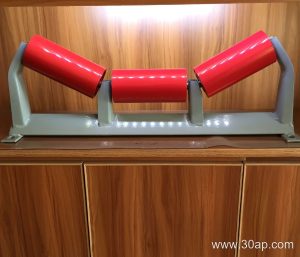
For a drive pulley, the diameter is often larger because it transmits power. A bend pulley may be smaller because it only changes belt direction. The feed-end pulley sits between these roles in some plants, so its size is always project-specific. A conveyor pulley is not an idler roller. An idler roller supports the belt along the carrying run, while the feed-end pulley turns at the loading point and carries full belt tension.
Where It Is Used
You will find the feed-end pulley in sand and gravel lines, crushing and screening plants, iron ore and copper ore handling, tunnel muck removal, fertilizer bulk handling, and grain silos. In a concrete mixing station it may sit at the head of a short conveyor that feeds a batching hopper. In a steel plant or sinter plant it helps move raw materials onto the main belt. The working environment often includes dust, moisture, and heavy lumps. That is why the pulley shell, shaft, and lagging are chosen together with the conveyor belt and the conveyor bracket.
What a Buyer Should Know
Before ordering a feed-end pulley, confirm the belt width, the required face width, the shaft diameter, the bearing type, and the lagging surface. Ask whether the pulley will be welded or bolted, and whether it needs a crowned face for tracking. State the material being conveyed, the lump size, and the loading height. Do not assume a standard shaft diameter from belt width alone. Torque and radial load decide the shaft. Also remember that a tail pulley, a tension pulley, and a snub pulley are different positions. They may look similar, but they are not interchangeable. For a reliable quotation, share the conveyor layout, the belt speed, and the tension at the feed end. That helps the supplier match the pulley to the real duty.