What a Four-Roll Idler Bracket Does
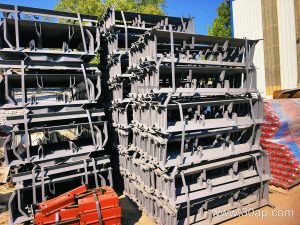
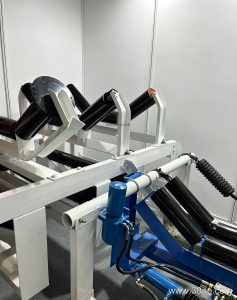
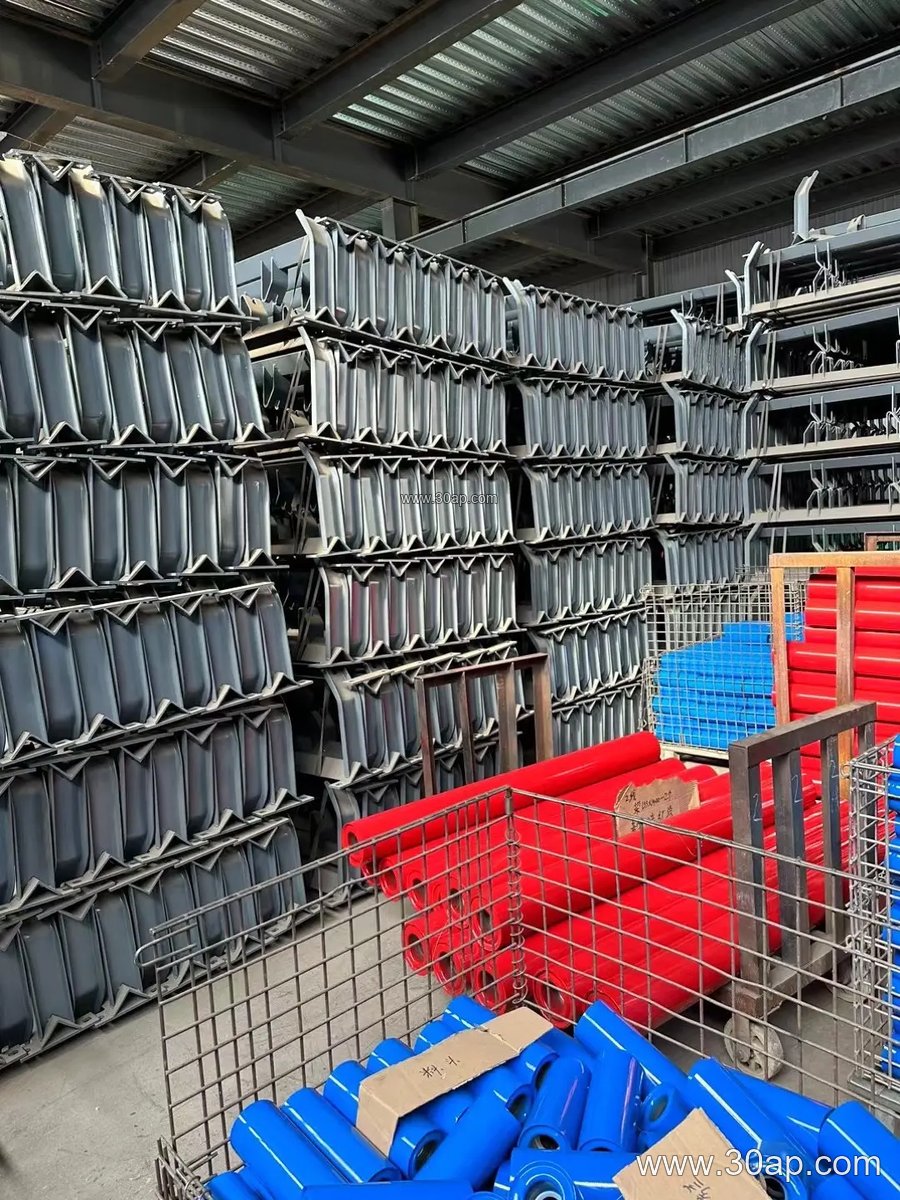
A four-roll idler bracket is the steel support that holds four idler rollers under the carrying side of a conveyor belt. Instead of the usual three-roll trough set, it spreads the belt across four rolls, which gives extra support on wide belts and heavy loads. In a quarry, a coal washing plant or a cement kiln feed line, this bracket helps keep the belt profile stable so material stays centered. The same assembly is also called a four-roller troughing bracket or a four-roll carrying bracket, and these names describe the same product.
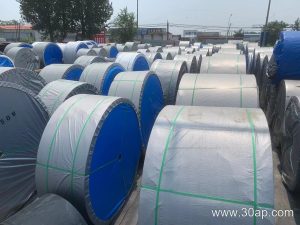
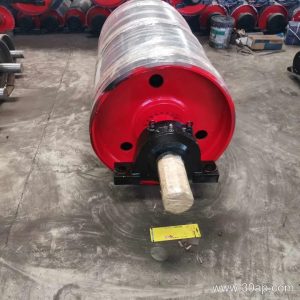
The bracket works together with the conveyor belt, the idler rollers and the conveyor pulley at each end of the line. The bracket itself does not drive anything; it only positions the rolls and transfers load to the conveyor frame.
How the Bracket Is Built
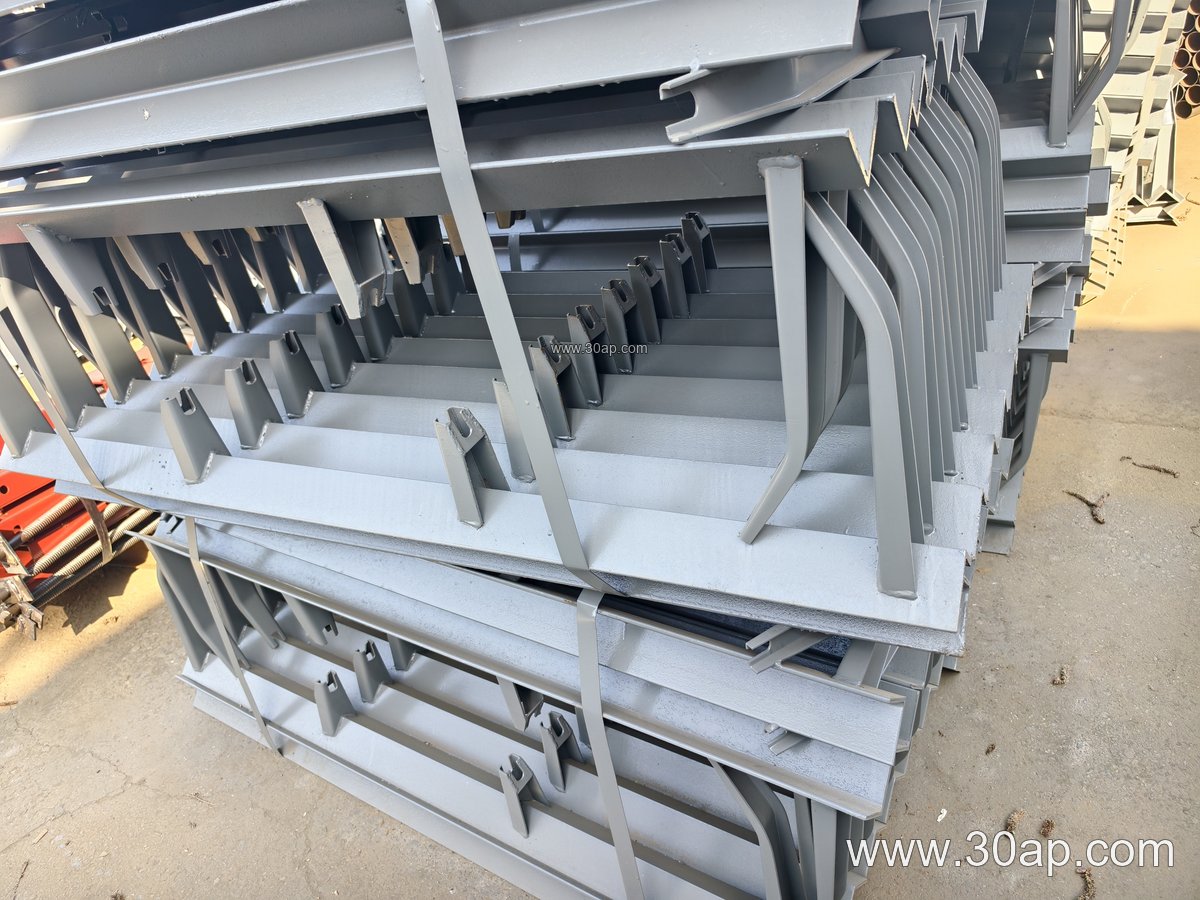
Most four-roll idler brackets are made from angle steel, channel steel or folded steel plate. The frame is welded into a shape that holds two outer rolls at a steeper angle and two inner rolls at a shallower angle, forming a wide trough. Mounting holes are drilled to match the conveyor frame, and the roll seats are spaced so the rollers sit evenly under the belt.
Because the bracket carries four rolls, the load per roll is lower than in a three-roll set. This can be useful on wide belts and on lines where lump size is large, such as a primary crushing station or a sinter plant. The trade-off is more parts to inspect and a slightly heavier frame.
Where It Fits on the Conveyor
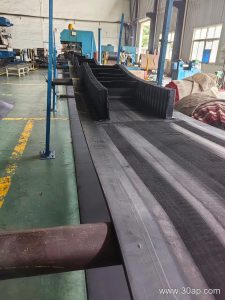
The four-roll bracket is normally used on the carrying side. It is common on wide belts in ports, steel plants and limestone mines where the belt needs a broad, stable trough. It is not a replacement for a bend pulley, a drive pulley or a tail pulley; those are separate components that change belt direction or transmit power. On the return side, a simpler flat bracket or a V-return bracket usually does the job.
For comparison, a three-roll troughing bracket is lighter and cheaper and suits many standard belts, while a four-roll design is chosen when belt width and load call for more support. A buffer bracket with impact rolls is another option near loading points, but it serves a different purpose.
Common Reference Sizes
The table below lists typical reference values. Actual mounting hole spacing and beam length follow belt width, trough angle and frame design, so they are set by the project drawing rather than by a fixed number.
- Belt width: B500, B650, B800, B1000, B1200, B1400, B1600, B1800, B2000, B2200
- Trough angle: 20 degrees, 30 degrees, 35 degrees, 45 degrees
- Roller diameter: Ø89, Ø108, Ø133, Ø159, Ø194
- Material: angle steel, channel steel, folded steel plate
Useful combinations are often written as B800, 35 degrees, Ø108 or B1200, 45 degrees, Ø133. These are examples, not fixed rules. A wide belt can run with more than one trough angle and more than one roller diameter, depending on belt stiffness, material and frame height.
What Buyers Should Check
Before ordering, confirm the belt width and the planned trough angle, then match the roller diameter to the idler roller series already used on the line. Check the frame mounting pattern, the overall height and the distance between roll seats. Ask whether the bracket is fixed or adjustable; an adjustable bracket can be set between common trough angles, which helps when a plant handles different materials. For dusty sites such as a coal yard or a grain silo, confirm that the roll seats allow easy roller replacement without removing the whole bracket.
Also review the steel thickness and the welding quality, since a four-roll bracket carries a wide belt and should stay square under load. Keep a small stock of spare brackets and rollers so a damaged unit in a sand and gravel line or a power plant coal conveyor can be replaced quickly.