What a Q355 Conveyor Bracket Does on the Line
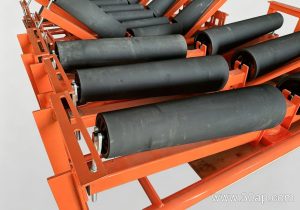
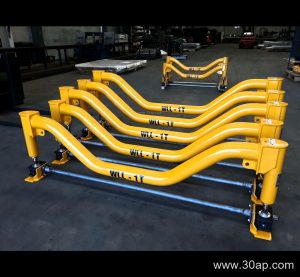
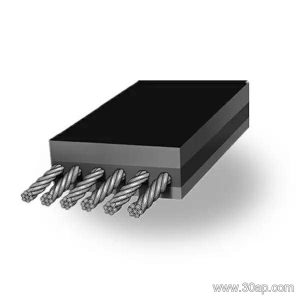
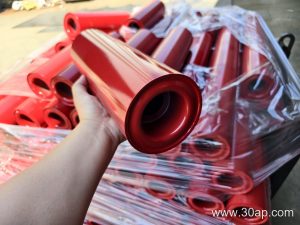
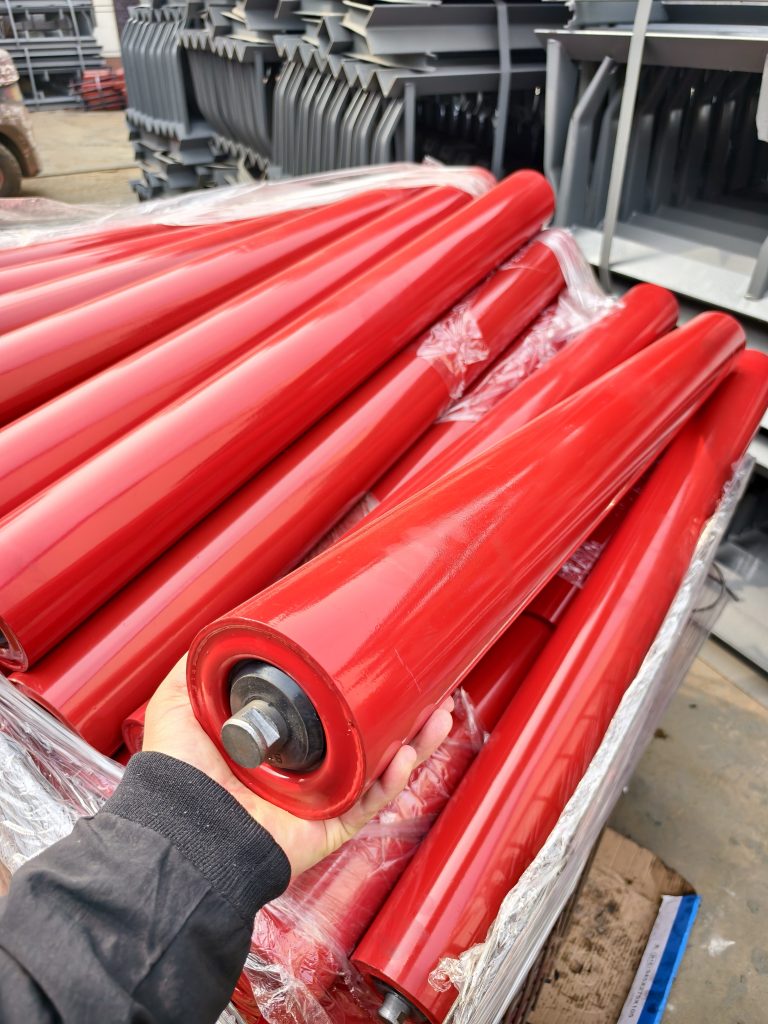
A Q355 Conveyor Bracket is the steel support that holds idler rollers in the correct position under or over a conveyor belt. The bracket carries the roller load, keeps the belt profile steady, and transfers vibration and impact into the conveyor frame. Because Q355 is a low-alloy structural steel with good strength and weldability, the same bracket design suits demanding settings such as a limestone quarry, a coal washing plant, or a power station coal yard. In practice, the Q355 conveyor bracket is often simply called a conveyor bracket or roller support frame, and it works together with the conveyor belt, idler roller, and conveyor pulley to keep material moving.
Construction and Common Forms
Most brackets are fabricated from angle steel, channel steel, or folded steel plate, then drilled or punched for roller shafts and frame bolts. Welded joints should be clean and square so the roller sits level. A powder-coated or painted finish is common for moderate corrosion exposure.
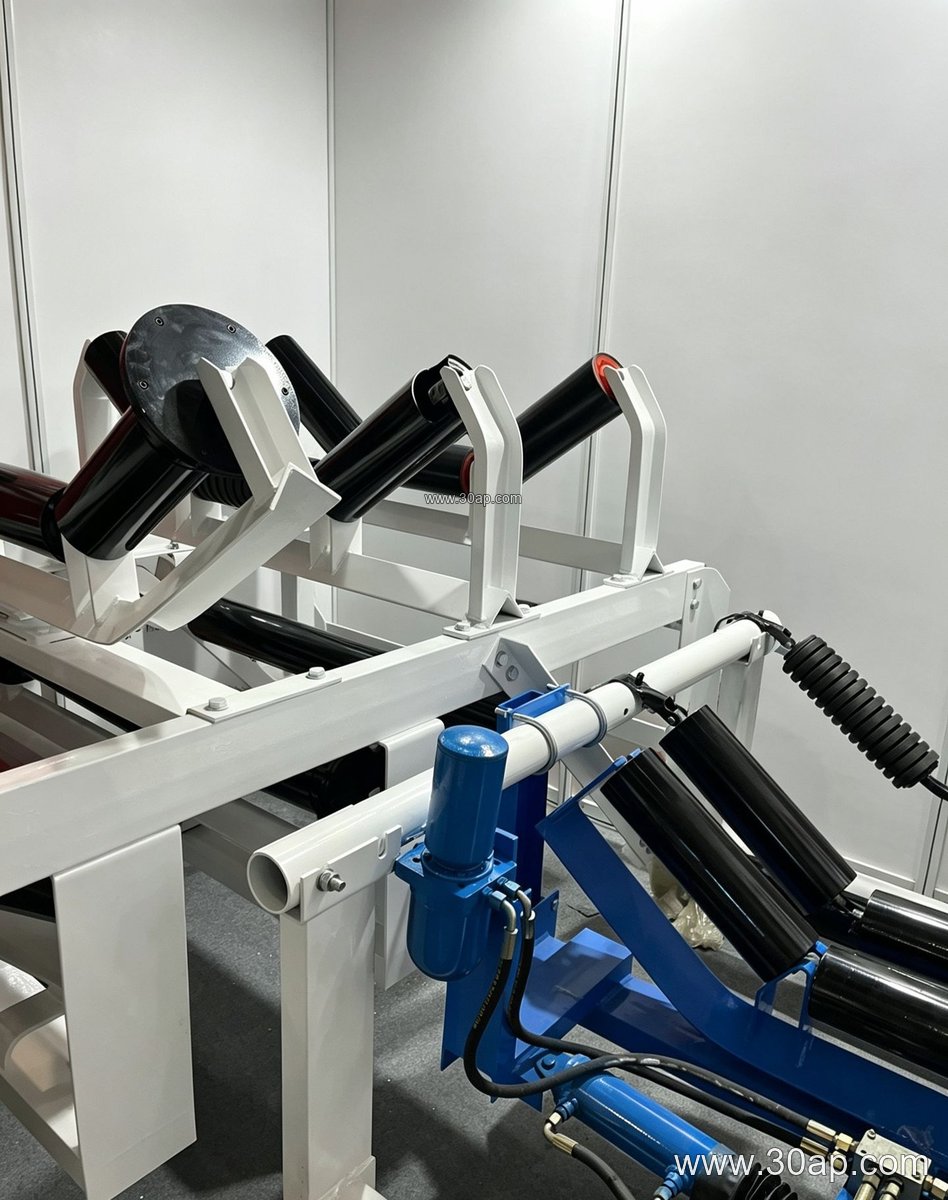
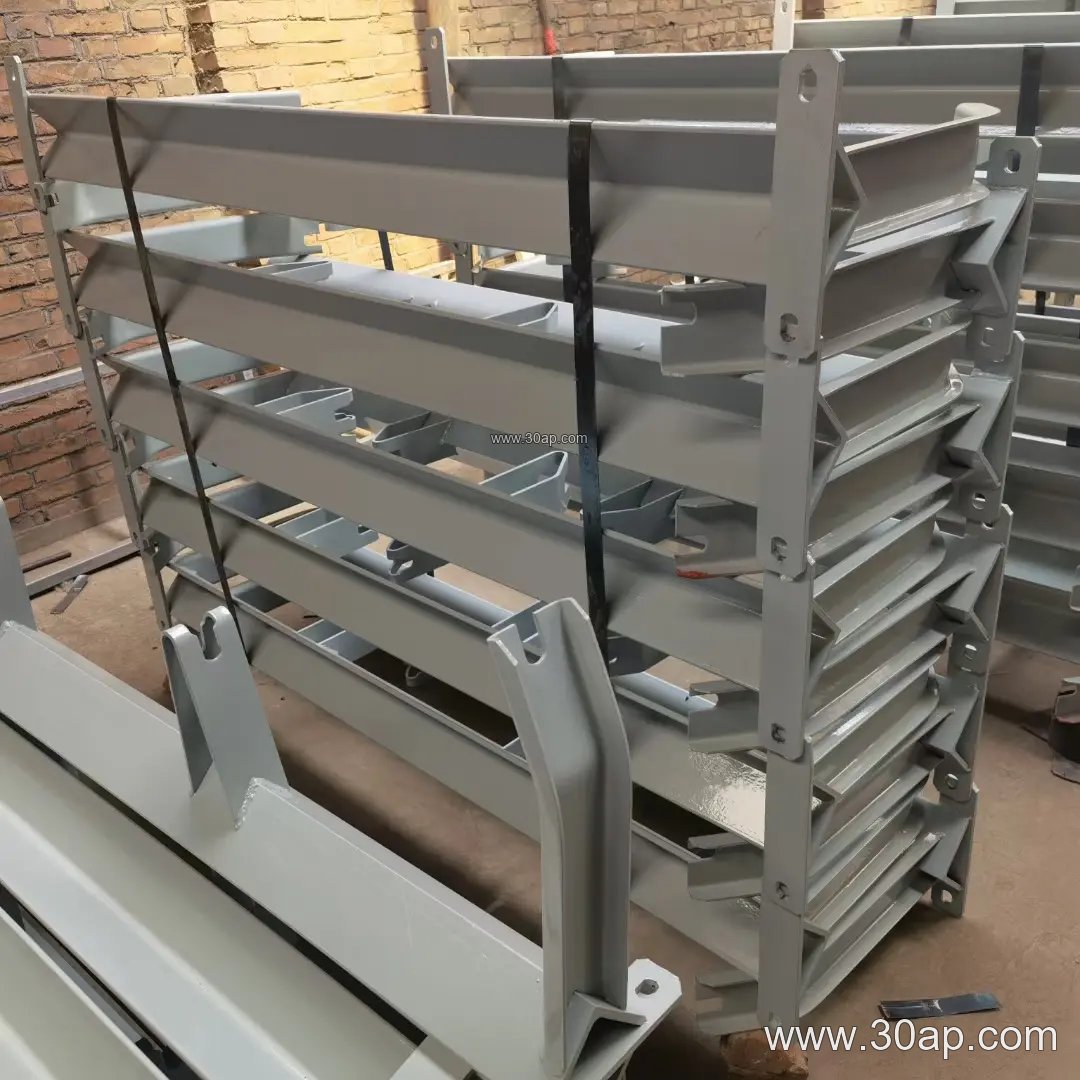
The main forms used on a typical conveyor are:
- Troughing and upper trough brackets that set the belt into a trough shape
- Transition brackets placed near pulleys to ease the belt from flat to troughed
- Return brackets, including flat return and V-return designs
- Impact brackets with cushioning for loading points
- Self-aligning and forward-leaning brackets for belt tracking
- Adjustable brackets that allow the trough angle to be changed
Sizes, Angles, and Roller Matching
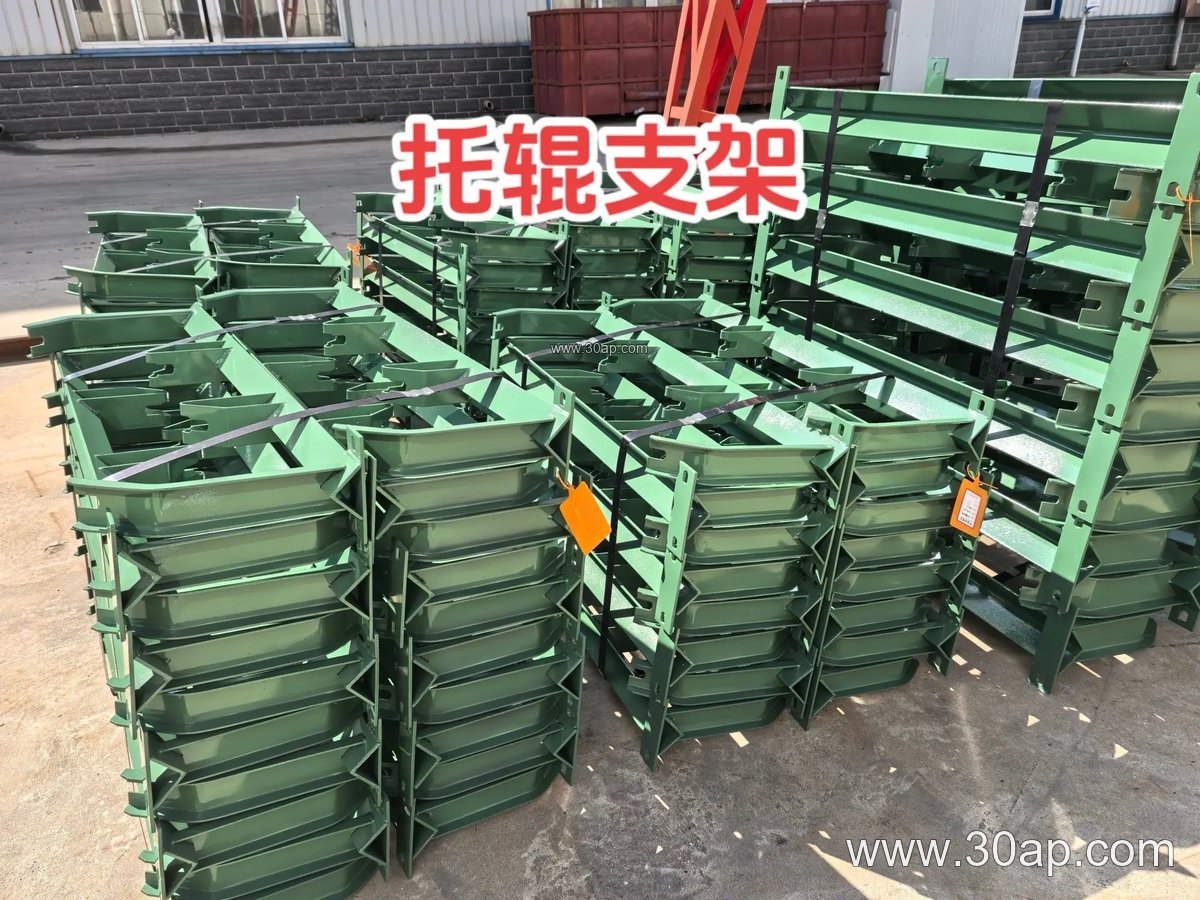
Bracket dimensions follow belt width, trough angle, and roller diameter, so there is no single universal size. The table below shows reference combinations that appear in general design work; actual hole spacing and beam length are set by the conveyor design.
| Belt width | Trough angle | Typical roller diameter | Bracket note |
|---|---|---|---|
| B500 | 20 or 30 degrees | Ø89 | Compact light-duty frame |
| B650 | 30 degrees | Ø89 or Ø108 | Common in small aggregate lines |
| B800 | 35 degrees | Ø108 | General bulk handling |
| B1000 | 35 or 45 degrees | Ø108 or Ø133 | Higher belt load |
| B1200 | 45 degrees | Ø133 | Heavier trough frame |
| B1400 | 35 or 45 degrees | Ø133 or Ø159 | Mine and plant duty |
| B1600 to B2200 | 35 to 45 degrees | Ø159 or Ø194 | Wide, high-capacity belts |
Trough angles of 20, 30, 35, and 45 degrees are all used, and adjustable brackets can move between these settings. Forward-leaning brackets usually sit at about 1.5 to 2 degrees. A wider belt does not lock the design to one angle or one roller size; the engineer balances material lump size, belt speed, and load.
Where It Fits in a Conveyor
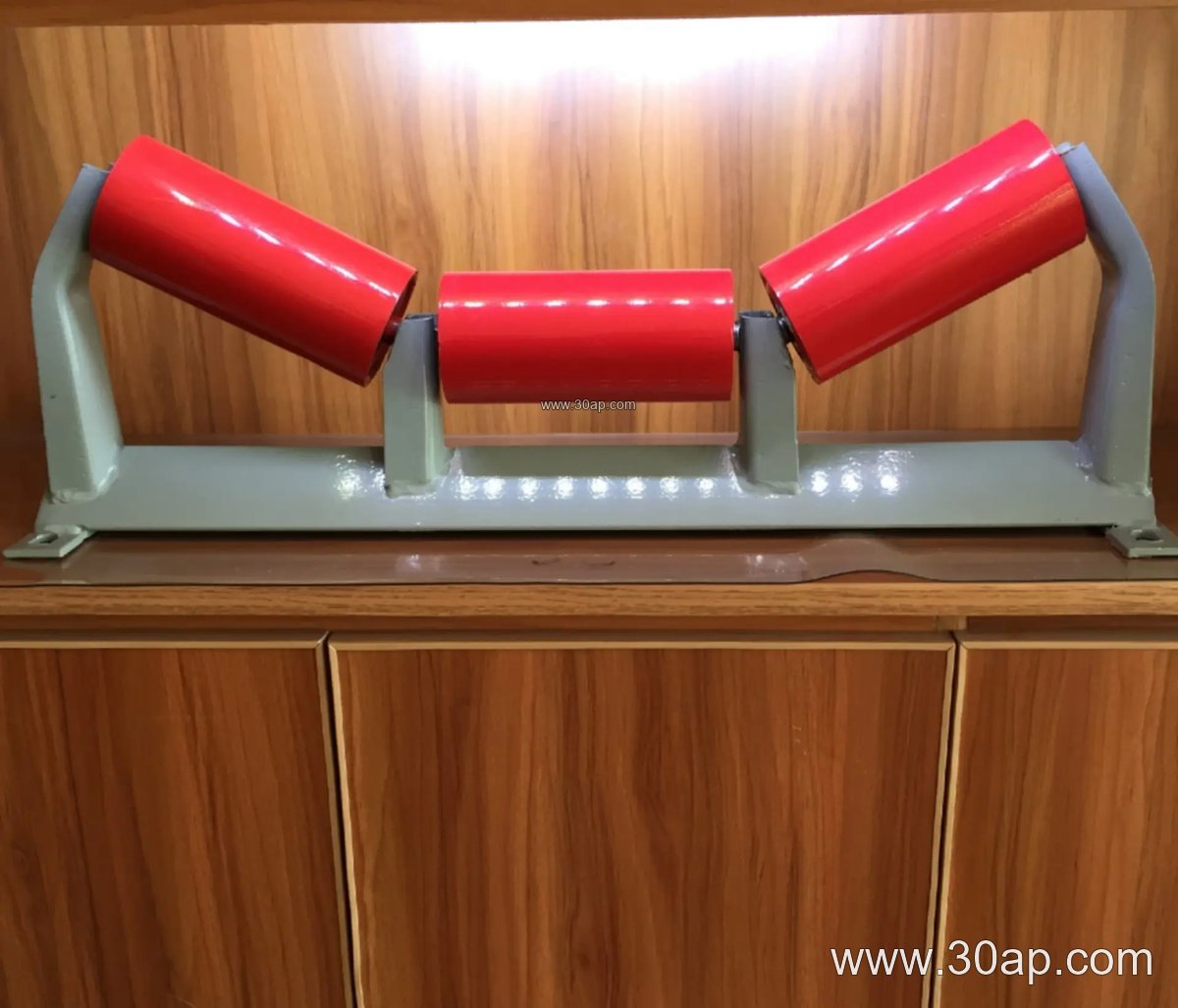
On a crushing and screening line, trough brackets support the carrying run while return brackets hold the empty belt. Near the head and tail, transition brackets prevent sharp bending as the belt leaves a conveyor pulley. In a tunnel spoil line or a fertilizer plant, self-aligning brackets help correct minor belt drift before it damages the edge. Impact brackets are usually placed below the loading chute, where falling material hits the belt hardest.
Brackets are fixed to the conveyor frame by bolts, so the frame stringer spacing must match the bracket beam. Drive, tail, and bend pulleys are separate components and are not replaced by a bracket; they work with the bracket-supported belt path.
Buyer Checklist
- Confirm belt width, trough angle, and roller diameter, for example B800, 35 degrees, Ø108.
- State whether the bracket is fixed or adjustable, and whether it is upper, return, impact, or self-aligning.
- Check mounting hole distance and beam length against the existing frame.
- Ask about steel grade and surface treatment; Q355 should be identifiable in the drawing or mill certificate.
- Match bracket load rating to the idler roller and material weight, not to belt width alone.
A well-chosen Q355 conveyor bracket keeps rollers aligned, extends belt life, and reduces downtime in dust, moisture, and heavy-load service.