What a Trough Idler Does on a Conveyor
A trough idler is the carrying-side roller assembly that shapes a flat conveyor belt into a trough. By supporting the belt on two or three rolls set at an angle, it keeps bulk material centered and reduces spillage. The same product is often called a troughing idler or troughed carrying idler, and those names describe the same component. It is not a drive pulley, a tail pulley, or a bend pulley; those are different parts of the conveyor with separate duties.
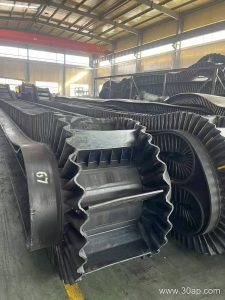
In a quarry, a cement plant, or a coal handling line, the trough idler sits between the loading point and the discharge. The belt rides on the rolls, and the trough shape holds the load. A flat belt can carry material, but on a long overland conveyor or a stockyard line, the troughing effect matters for capacity and belt training.
How the Assembly Is Built
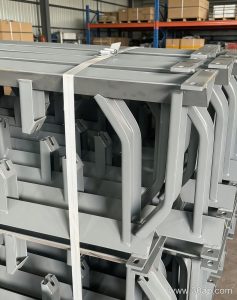
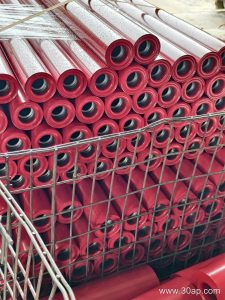
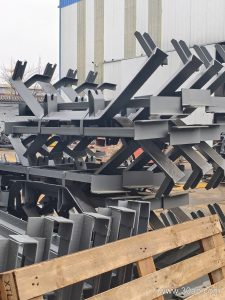
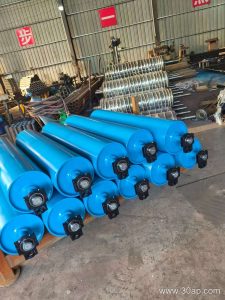
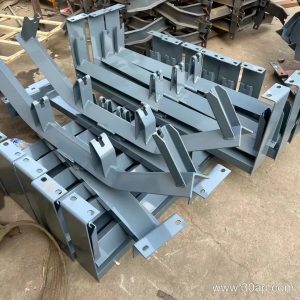
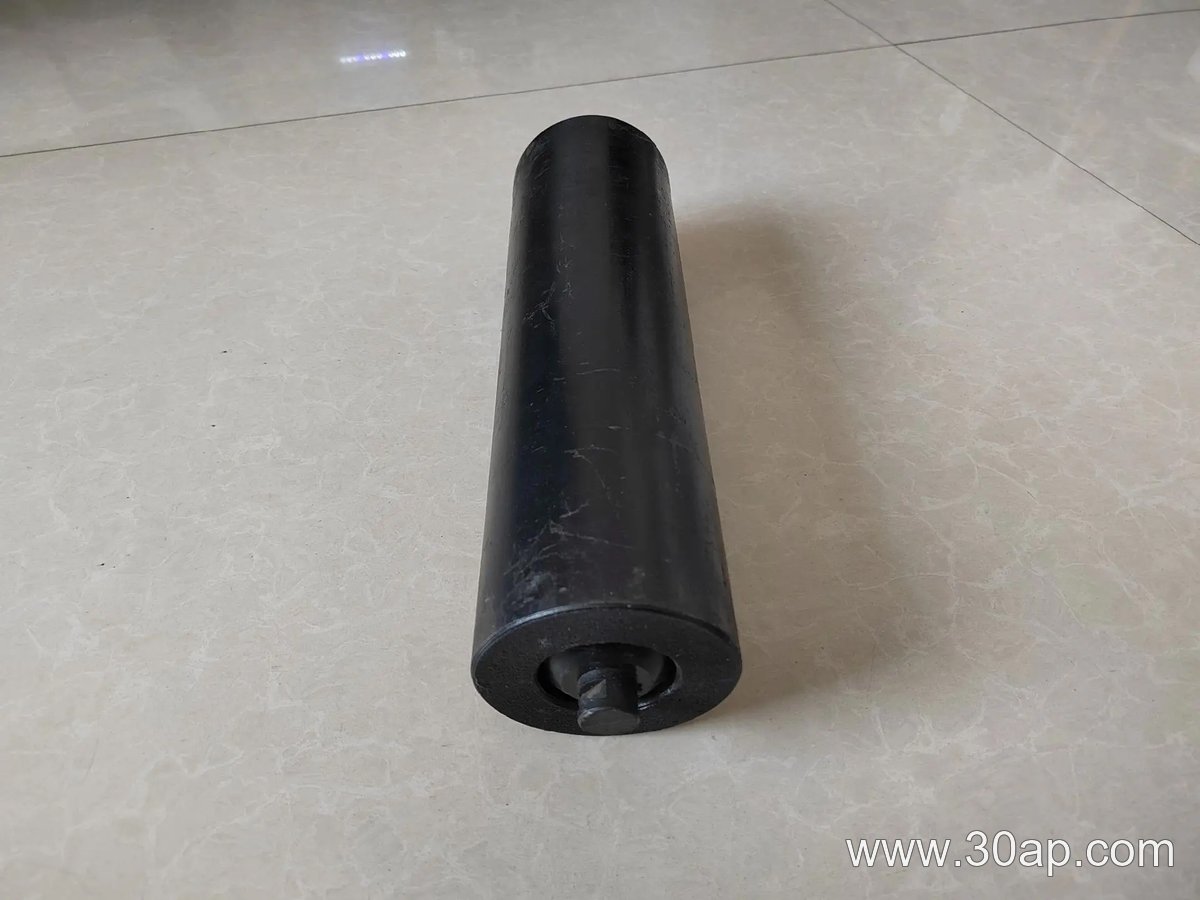
A typical trough idler group has two or three rolls mounted in a frame, often held by a conveyor bracket. Each roll contains a shell, a shaft, bearing housings, and seals. Common roller diameters include Ø63, Ø76, Ø89, Ø102, Ø108, Ø127, Ø133, Ø159, Ø178, Ø194, and Ø219. The roll length changes with belt width, trough angle, and the number of rolls in the group. For a three-roll troughing set, common roll lengths are roughly 200 mm for B500, 250 mm for B650, 315 mm for B800, 380 mm for B1000, 465 mm for B1200, 530 mm for B1400, 600 mm for B1600, 670 mm for B1800, and 750 mm for B2000. These are examples, not fixed pairings; side rolls and center rolls can differ.
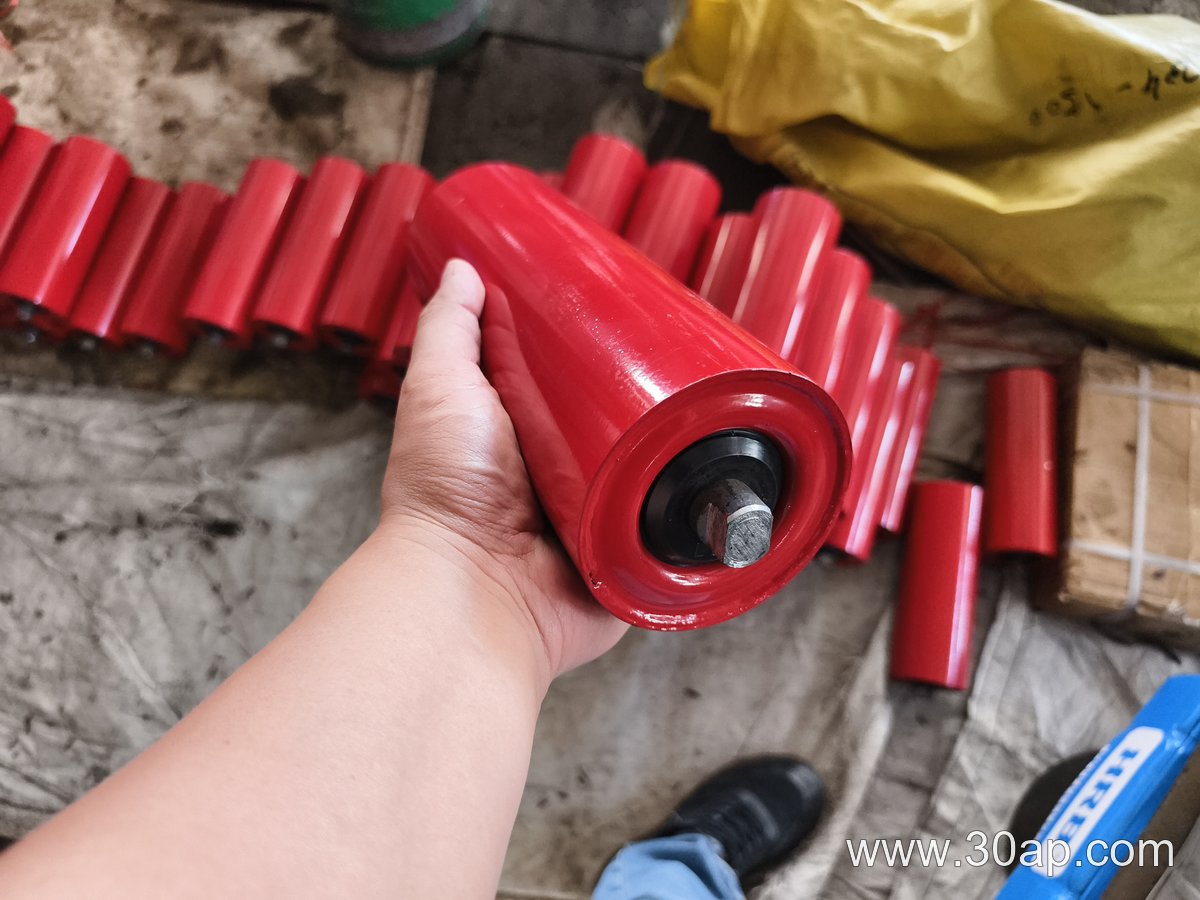
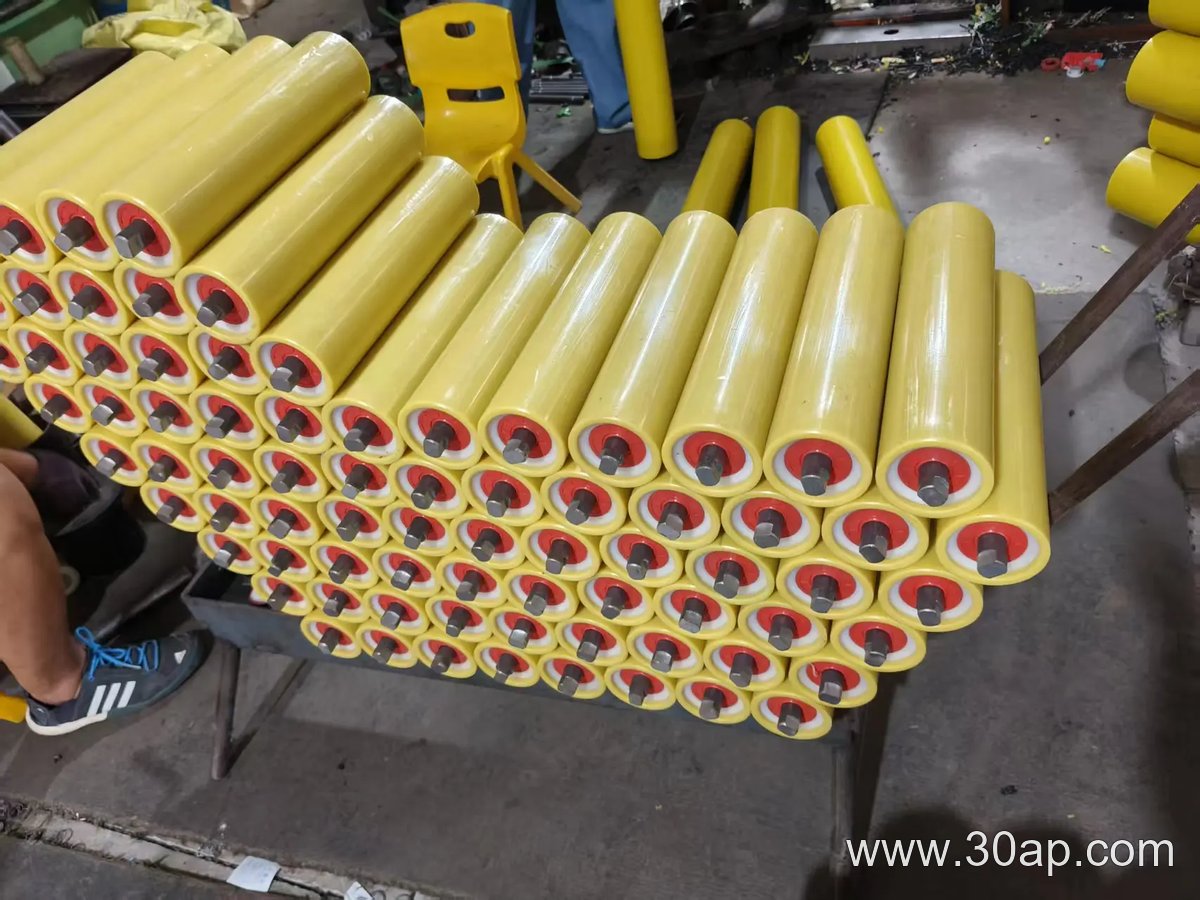
The trough angle is usually 20, 30, 35, or 45 degrees. A 20-degree set is gentler on the belt, while a 45-degree set can hold a deeper load in a confined space. Some troughing rolls are forward-tilted by about 1.5 to 2 degrees to help center the belt. Roll surfaces may be steel tube, nylon, ceramic, or rubber rings. Bearings such as 6204, 6205, 6305, 6306, 6308, and 6310 appear in different roll sizes, but a given bearing is not tied to one diameter.
Where Trough Idlers Fit in the Line
Trough idlers are used wherever a conveyor belt carries bulk material. In an iron ore or copper mine, they support the load through long flights. In a limestone quarry or sand and gravel line, they keep aggregate moving after crushing and screening. In a power plant coal yard, a cement kiln feed line, or a fertilizer plant, the same carrying idler principle applies. The idler roller turns with the belt, so its seals and bearings must keep dust and fines out.
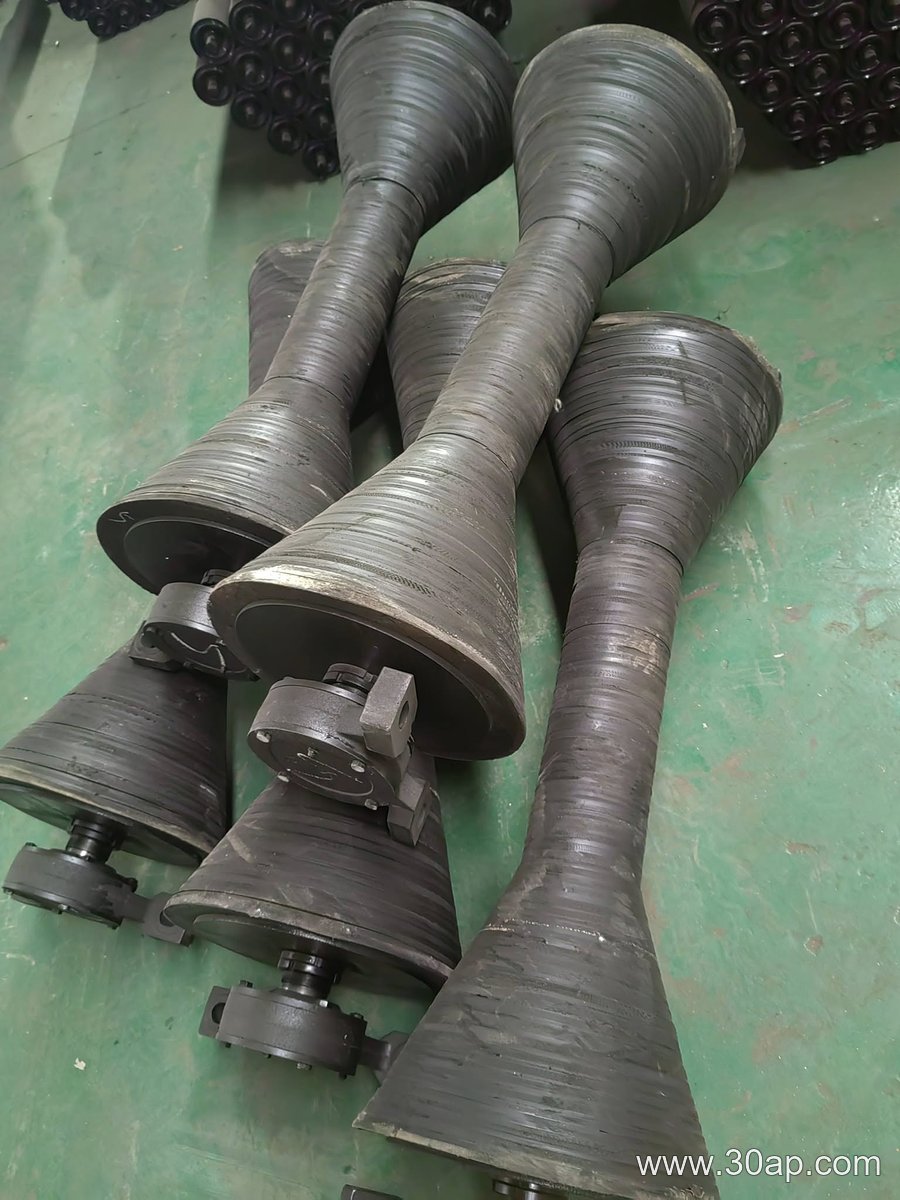
Other idler types appear in the same conveyor but do different jobs. A return idler supports the empty belt on the way back. An impact idler or rubber-ring buffer idler sits under the loading chute to absorb shock. A spiral idler or self-aligning idler is used where sticky material or belt misalignment is a concern. Those are comparisons, not replacements for the troughing idler on the carrying side.
Specification Points for Buyers
When specifying a trough idler, match the roll diameter, roll length, trough angle, and frame to the conveyor design. Belt width alone does not set the pulley diameter or shaft diameter; the full conveyor layout does. A buyer should also consider the material, the belt speed, the load, and the environment. The table below lists common reference values.
| Item | Common options |
|---|---|
| Roll diameter | Ø63, Ø76, Ø89, Ø102, Ø108, Ø127, Ø133, Ø159, Ø178, Ø194, Ø219 |
| Belt width | B400, B500, B650, B800, B1000, B1200, B1400, B1600, B1800, B2000, B2200, B2400 |
| Trough angle | 20°, 30°, 35°, 45° |
| Roll surface | steel tube, nylon, ceramic, rubber ring |
| Bearing | 6204, 6205, 6305, 6306, 6308, 6310 |
| Group form | single roll, two-roll troughing, three-roll troughing |
Sealing and bearing quality often decide service life. In a dusty coal plant or a wet sand and gravel operation, a well-sealed idler roller lasts longer and keeps the belt running true. A worn trough idler can cause belt edge damage, material spillage, and extra motor load. Regular inspection of the rolls, brackets, and frames helps avoid unplanned stops.
Selection and Maintenance Notes
Choose the trough angle and roll arrangement to suit the material and the belt. A three-roll troughing set is common for wider belts and higher capacities. For narrower belts or lighter duties, a two-roll or single-roll arrangement may be used. Keep the idler spacing in line with the belt tension and load; too much spacing can sag the belt between idlers, while too little adds cost and drag. Check that the conveyor bracket and frame match the roll dimensions before installation. If the belt tracks poorly, inspect the troughing idlers first, then check the pulleys and the loading point. A trough idler is a simple part, but it has a direct effect on belt life, spillage, and energy use in mines, cement plants, power stations, and aggregate yards.