What an EP400 Conveyor Belt Is
An EP400 conveyor belt is a fabric-reinforced rubber belt built on polyester-polyamide (EP) carcass plies. The number 400 refers to the nominal tensile strength class of the carcass, commonly expressed as 400 N/mm per ply. In practice, an EP400 belt sits in the middle of the EP range, above EP200 and EP315 and below EP500, EP630 and EP800. That position makes it a practical choice for medium-duty conveying lines where abrasion resistance and stable tracking matter more than extreme tensile loads.
The product is also referred to as an EP400 rubber conveyor belt or polyester-polyamide conveyor belt. These are equivalent names for the same item and should not be confused with other carcass types such as NN nylon belts or steel cord belts, which behave differently under impact and elongation.
How the Belt Is Built
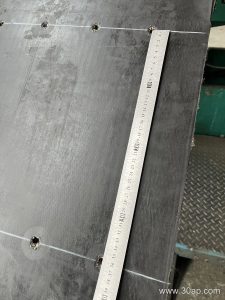
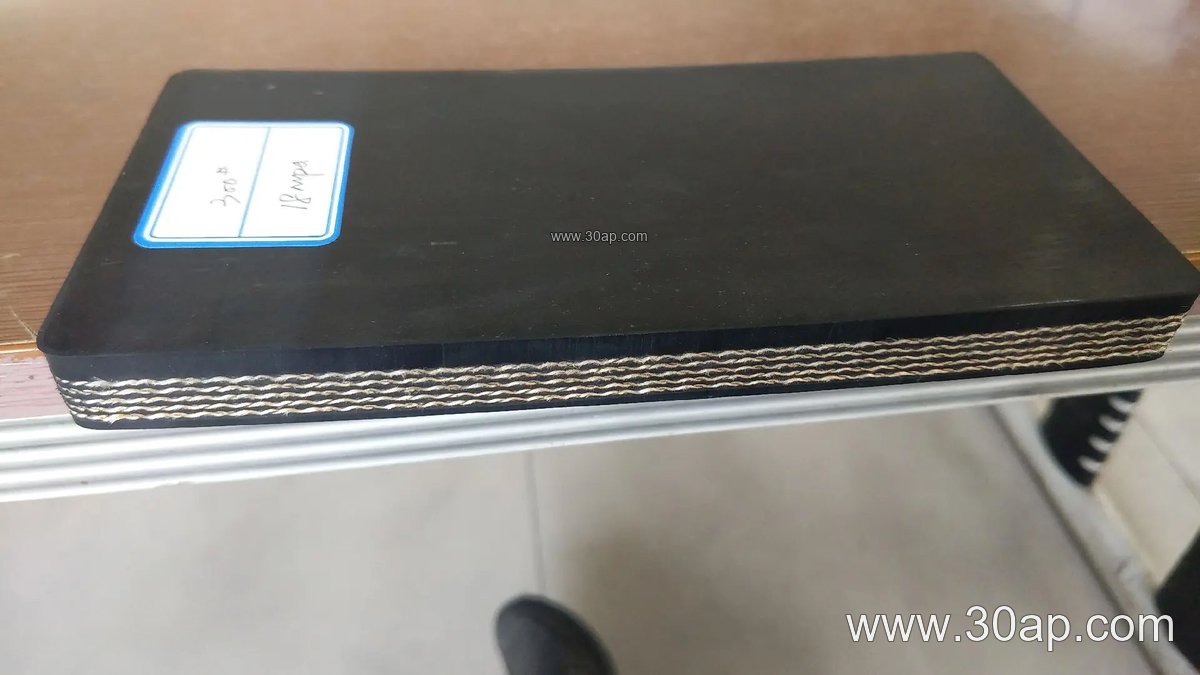
The carcass usually contains 2 to 6 EP fabric plies, with the ply count selected according to the required strength and the pulley and idler roller layout. Rubber covers sit on the top and bottom faces. Common cover combinations include 3+1.5 mm, 4+2 mm, 5+2 mm, 6+2 mm and 8+3 mm. The first figure is the top cover, which faces the material; the second is the bottom cover, which runs against the idlers.
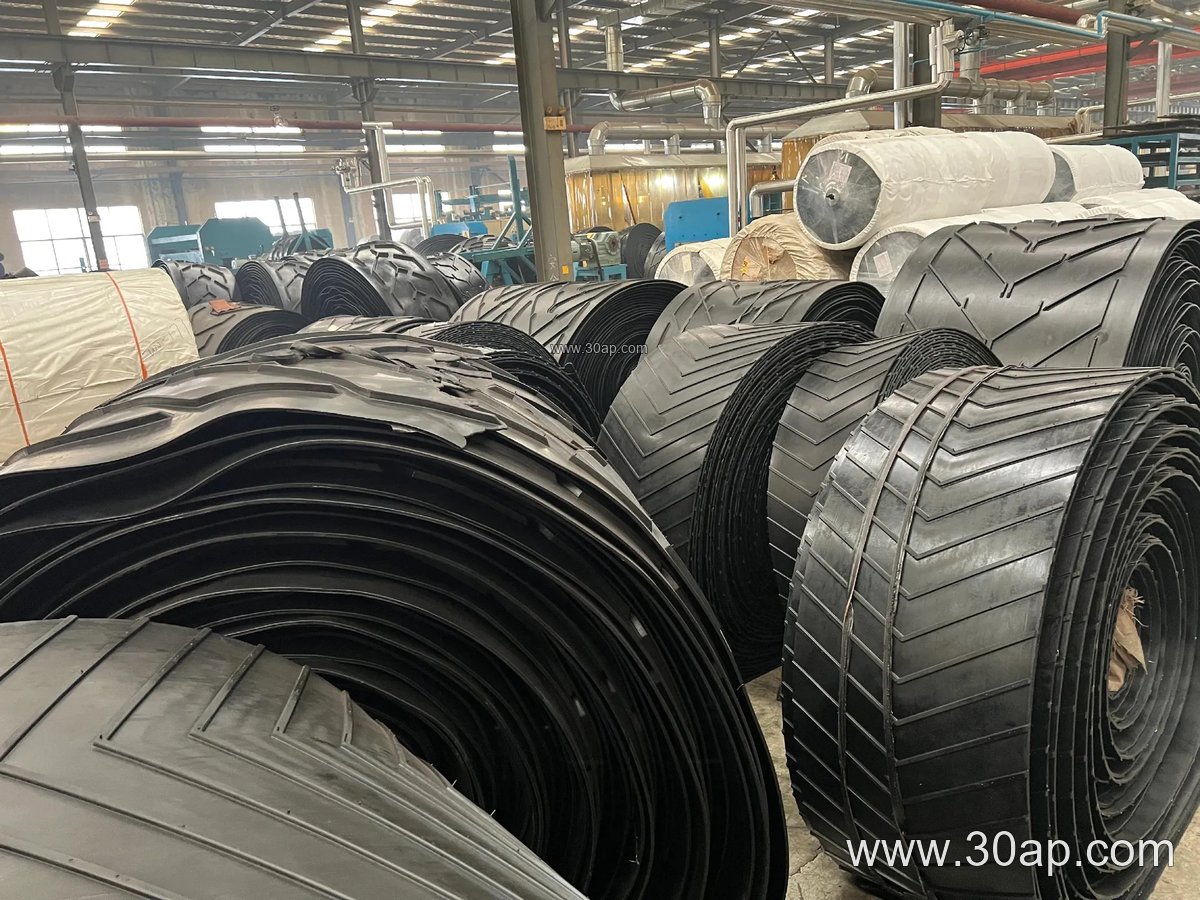
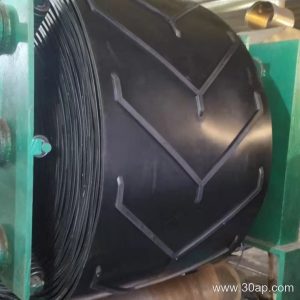
Cover compound choice matters as much as thickness. Standard abrasion-resistant rubber suits sand, gravel and crushed stone. Heat-resistant grades are used in cement and power plant service, oil-resistant grades around oily materials, and flame-retardant antistatic grades in coal mines and other enclosed areas where fire risk must be controlled. Surface forms such as plain, patterned, chevron (人字纹) and corrugated sidewall are available for different inclines and material containment needs.
Typical Sizes and Reference Data
The table below lists reference values only. Actual availability depends on the manufacturer, and the final specification should follow the conveyor design.
| Parameter | Common reference values |
|---|---|
| Strength class | EP400 (within the EP200 to EP2000 range) |
| Belt width | B500, B650, B800, B1000, B1200, B1400, B1600, B1800, B2000 |
| Carcass plies | 2 to 6 |
| Cover thickness | 3+1.5, 4+2, 5+2, 6+2, 8+3 mm |
| Surface form | Plain, patterned, chevron, corrugated sidewall |
Do not assume that a given belt width fixes a particular pulley diameter or shaft size. Those values are determined by the conveyor designer using belt tension, wrap angle and pulley load, not by width alone.
Where EP400 Belts Are Used
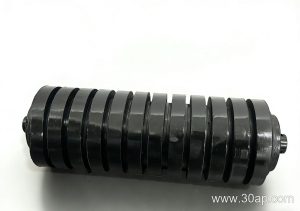
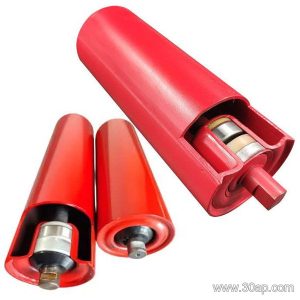
Medium-duty conveying in mining, sand and gravel plants, cement works, power stations and general bulk handling are typical applications. An EP400 belt may carry limestone, clinker, coal, aggregate or packaged material on a troughed conveyor supported by idler rollers. It also appears on stackers, loading points and short transfer conveyors where a heavier class would be unnecessary.
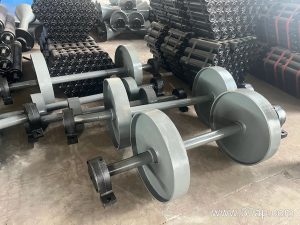
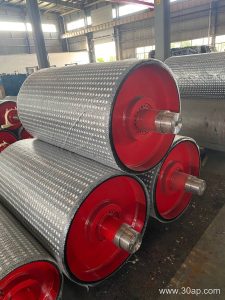
The belt works with a conveyor pulley at the head and tail, and with bend pulleys on routes that need direction changes. These pulley types are not interchangeable: a drive pulley transmits torque, a tail pulley returns the belt, and a bend pulley only changes direction. Each is mounted through a conveyor bracket suited to the frame.
What Buyers Should Check
- Confirm the required strength class against the calculated belt tension, not against a rule of thumb.
- Match cover grade to the material: abrasive, hot, oily, or flame-retardant service.
- State the belt width, ply count and cover thickness clearly on the order.
- Check pulley diameters and idler roller spacing with the conveyor designer so belt flexing stays within limits.
- For inclined routes, consider chevron or corrugated sidewall forms to prevent material rollback.
- Ask for the manufacturer’s data sheet for the exact EP400 construction offered, since ply and cover values vary between suppliers.
Installation and Maintenance Notes
Correct alignment at the tail pulley and proper idler roller adjustment reduce edge wear. Keep the belt tension within the design range, inspect splices regularly, and remove sharp debris from the loading point. In coal or cement plants, check that the chosen flame-retardant or heat-resistant grade still matches the operating conditions after any process change. With reasonable care, an EP400 conveyor belt serves as a dependable middle-range option across many bulk handling duties.