What a Surface Belt Conveyor Idler Does on the Line
A surface belt conveyor idler is the rotating roller assembly that supports the conveyor belt and the material load along the carrying run. In a quarry, a coal preparation plant, or a cement plant, these idlers sit between the head and tail pulleys and keep the belt in a stable trough shape. The term surface idler usually points to the carrying-side rollers that contact the belt cover directly, as opposed to return idlers that support the empty strand. The same product is often called a carrying idler or troughing idler, and those names describe the same role on the conveyor.
Construction and Common Surface Forms
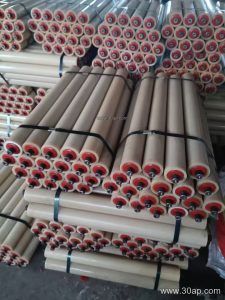
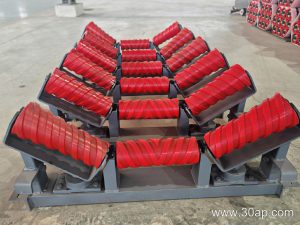
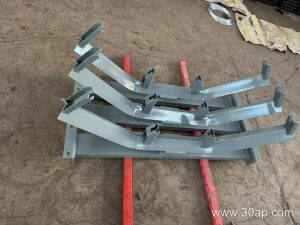
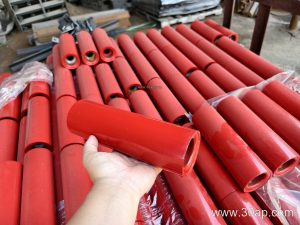
A typical surface idler is built from a steel tube shell, a shaft, bearing housings, and seals. The shell can be plain steel, nylon-coated, ceramic-covered, or fitted with rubber rings. Rubber-ring impact idlers are a separate subtype used at transfer points; they are not a replacement for standard carrying idlers but can be compared when shock loading is a concern. Bearing sizes commonly include 6204, 6205, 6305, 6306, 6308, and 6310, selected according to load and speed rather than matched to one roller diameter.
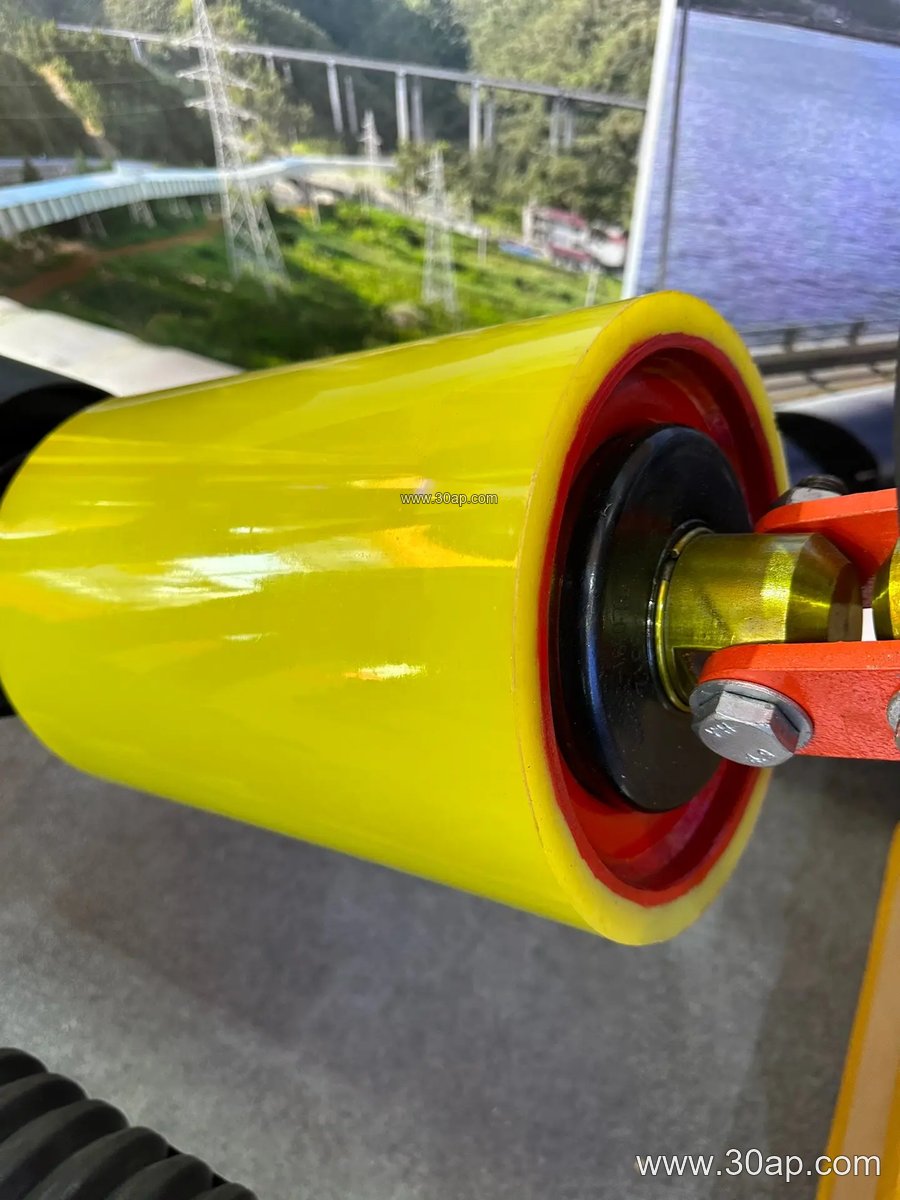
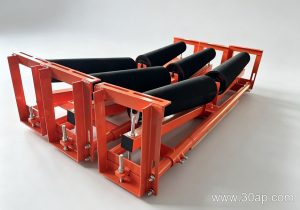
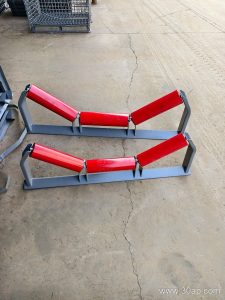
Roller diameters commonly range from Ø63 to Ø219, and belt widths from B400 to B2400. These are reference ranges, not fixed rules. A B800 belt may use a different roller diameter in a three-roll troughing set than in a single-roll flat set, and the roll length changes with trough angle and frame design. For example, a three-roll troughing set on B800 often uses a roll length near 315 mm, while B1000 may use about 380 mm. Side rolls and center rolls can differ, so final dimensions should come from the conveyor design.
Where Surface Idlers Are Used
In a limestone mine or a sand and gravel line, surface belt conveyor idlers carry crushed rock through primary and secondary crushing. In a power plant coal yard, they support the conveyor belt that feeds the boiler. In a cement plant, they handle clinker and raw meal on inclined sections. The trough angle matters here: 20, 30, 35, and 45 degrees are common, and a deeper trough helps contain bulk material on high-capacity lines. Forward tilt of about 1.5 to 2 degrees is sometimes used on training idlers to help center the belt, but it is not a universal setting for every carrying idler.
Selection Notes for Buyers
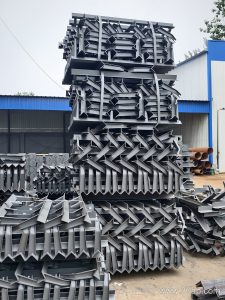
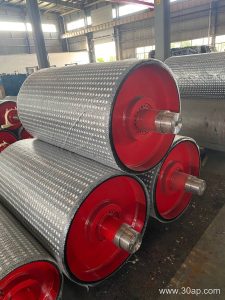
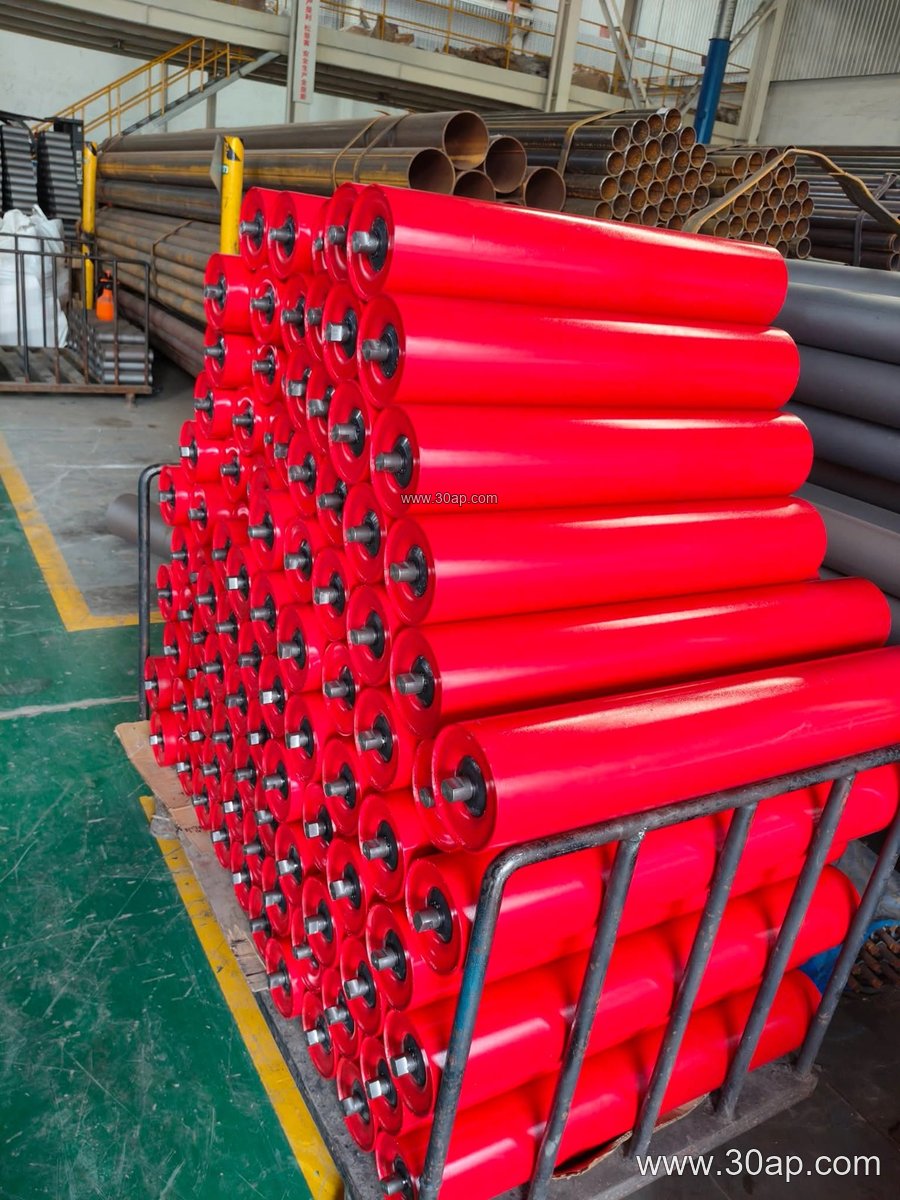
Buyers should match the idler to belt width, load, speed, and environment rather than choosing by roller diameter alone. Dusty or wet conditions call for attention to seal design and bearing protection. In a tunnel spoil line or a fertilizer plant, corrosion resistance may matter more than in a dry aggregate yard. The conveyor bracket and frame must align with the chosen troughing set, and the conveyor pulley at the drive and tail ends should be specified separately. Drive pulleys, tail pulleys, and bend pulleys are not interchangeable with idlers.
| Parameter | Common reference values |
|---|---|
| Roller diameter | Ø63, Ø76, Ø89, Ø102, Ø108, Ø127, Ø133, Ø159, Ø178, Ø194, Ø219 |
| Belt width | B400, B500, B650, B800, B1000, B1200, B1400, B1600, B1800, B2000, B2200, B2400 |
| Trough angle | 20°, 30°, 35°, 45° |
| Roll surface | Steel tube, nylon, ceramic, rubber ring |
| Bearing | 6204, 6205, 6305, 6306, 6308, 6310 |
Maintenance and Daily Checks
Check for seized rollers, worn shells, and loose brackets. A noisy idler roller often signals bearing wear, while a belt that wanders may need a training idler rather than a standard carrying roller. Keep the conveyor belt clean and avoid over-tensioning. In a steel plant sinter line or a concrete batching plant, regular inspection of the surface idler set prevents belt edge damage and reduces downtime.