What an 1800mm Wide Conveyor Belt Is
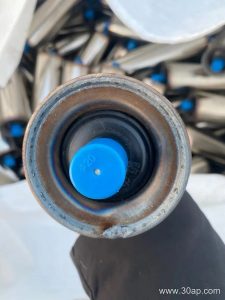
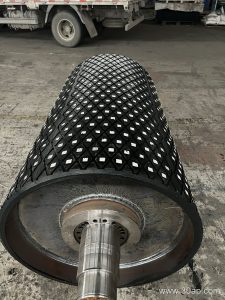
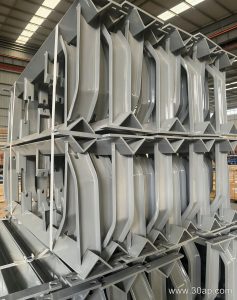
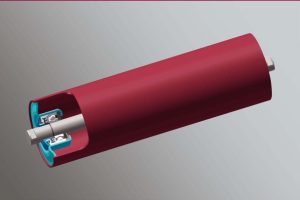
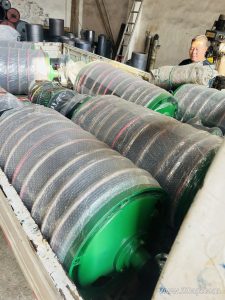
An 1800mm wide conveyor belt is a heavy duty belting product with a nominal width of B1800. In metric terms this is a 1.8 meter wide belt. Because of its large surface area, it is usually selected for bulk material transport where high tonnage and wide loading profiles are expected. The belt itself is only one part of the system. It runs over a conveyor pulley at the head, a tail pulley at the loading end, and bend pulleys that guide the belt through the return path. Idler rollers support the belt along the carrying side, while conveyor brackets hold the rollers and pulleys in alignment.
A common equivalent name for the same product is a 1800 mm wide conveyor belt. The two expressions describe the same belt width and should not be confused with drive pulleys, tail pulleys, or bend pulleys, which are different components with different jobs.
Construction and Common Specifications
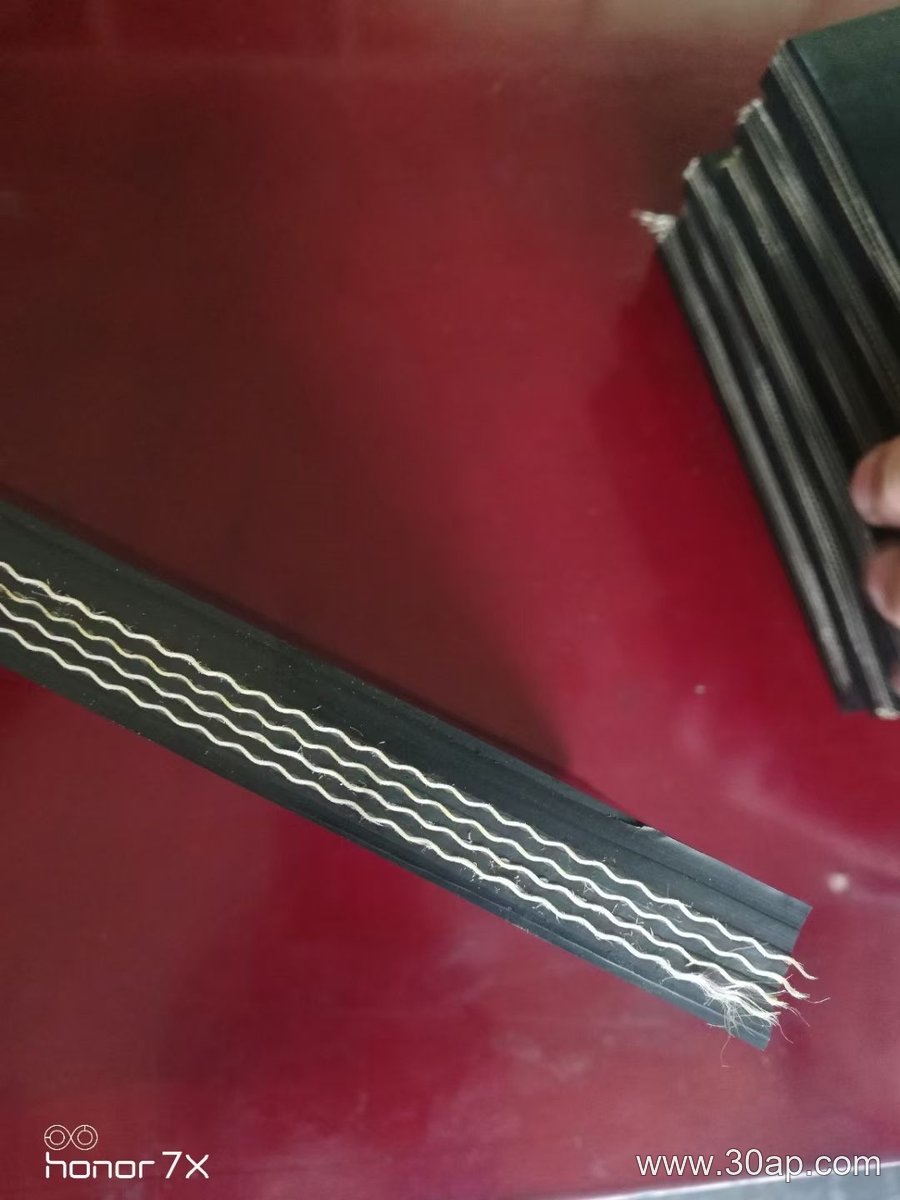
Like other fabric reinforced belts, an 1800mm wide conveyor belt is built from a carcass and rubber covers. The carcass may use EP fabric, NN nylon, or steel cord depending on the required tensile strength. Common strength grades include EP200, EP315, EP400, EP500, EP630, EP800, EP1000, EP1250, EP1600, and EP2000. These values are reference grades rather than a fixed rule for every application.
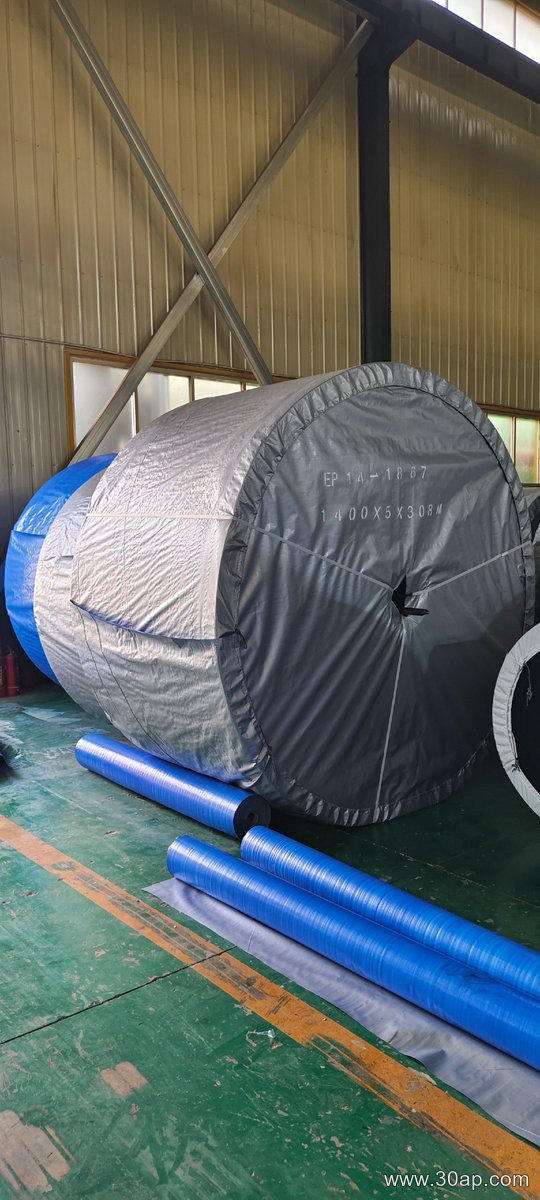
Cover rubber is usually specified as a top and bottom thickness, such as 3+1.5 mm, 4+2 mm, 5+2 mm, 6+2 mm, or 8+3 mm. The carcass may have 2 to 6 fabric plies. For special conditions, the cover compound can be selected for abrasion resistance, heat resistance, oil resistance, flame retardancy, antistatic behavior, cold resistance, or acid and alkali resistance. Surface forms such as patterned, chevron, or corrugated sidewall belts are also available when the duty requires them. These are options, not mandatory features of every 1800mm belt.
Where This Belt Width Fits
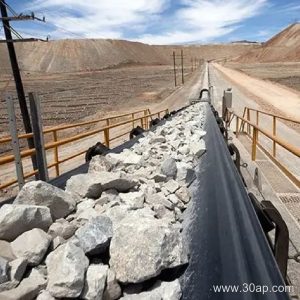
A belt this wide is often found in mining, coal preparation, port loading, steel plants, power stations, and large crushing or screening circuits. It suits high capacity flows of ore, coal, aggregate, sand, gravel, and similar bulk materials. In these systems, the belt works together with idler rollers, a conveyor pulley, and a conveyor bracket assembly that keeps the structure stable.
When a narrower belt is compared, for example a B1000 or B1200 unit, the 1800mm version can carry a wider material bed and reduce the number of parallel lines needed for the same throughput. That comparison is about width and capacity, not about replacing one belt type with another. The drive pulley, tail pulley, and bend pulley still have separate roles, and none of them should be treated as interchangeable names.
Selection Points for Buyers
- Confirm the actual belt width and whether the system is designed for B1800.
- Check the required tensile grade, such as EP630 or EP1000, against the load and center distance.
- Match the cover thickness and compound to the material being carried.
- Review pulley diameters and shaft sizes with the conveyor designer rather than assuming a fixed match from belt width alone.
- Check idler roller spacing and conveyor bracket condition to avoid edge damage and mistracking.
Installation and Maintenance Notes
An 1800mm wide conveyor belt is heavy and stiff, so handling during installation matters. The belt should be pulled evenly and aligned before splicing. Once running, inspectors should watch for edge wear, cover gouges, and material build up on idler rollers. A misaligned bend pulley or a worn conveyor pulley can cause tracking problems that are often mistaken for belt defects. Regular checks of the tail pulley and conveyor bracket fasteners help keep the belt centered.
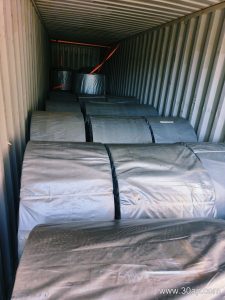
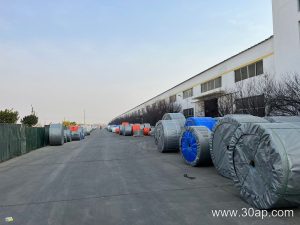
Storage also matters. Rolls should be kept on a dry, level surface and away from direct sunlight, ozone sources, and sharp objects. For long term storage, rotate the roll occasionally to prevent flat spots.
Final Thoughts
The 1800mm wide conveyor belt is a high capacity belting option for demanding bulk handling. Its performance depends on correct belt grade, cover selection, pulley sizing, and maintenance practice. Buyers should treat the width as one design input among many, not as a guarantee of a specific pulley diameter or shaft size. Working with the conveyor designer and the belt supplier is the most reliable way to get a belt that fits the duty.