What a Rotating Self-Aligning Idler Does
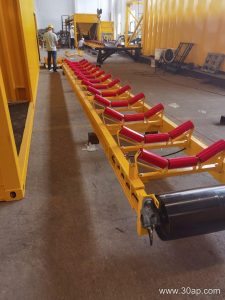
A rotating self-aligning idler is a carrying or return roller that pivots about a vertical axis to steer a wandering conveyor belt back toward the centerline. Instead of being bolted in a fixed position, the roller or roller set sits in a swivel frame. When the belt drifts sideways, it contacts the roller at an angle, and the resulting force turns the frame slightly. That small rotation changes the direction of the roller’s surface motion, nudging the belt back on track. The same product is often called a self-tracking idler or self-centering roller, and in some catalogs a swivel-type training idler.
This is not the same as a drive pulley, tail pulley, or bend pulley. Those are large drums that transmit power or change belt direction at the ends or bends of a conveyor. A rotating self-aligning idler is a small-diameter roller that supports the belt along its run and corrects misalignment.
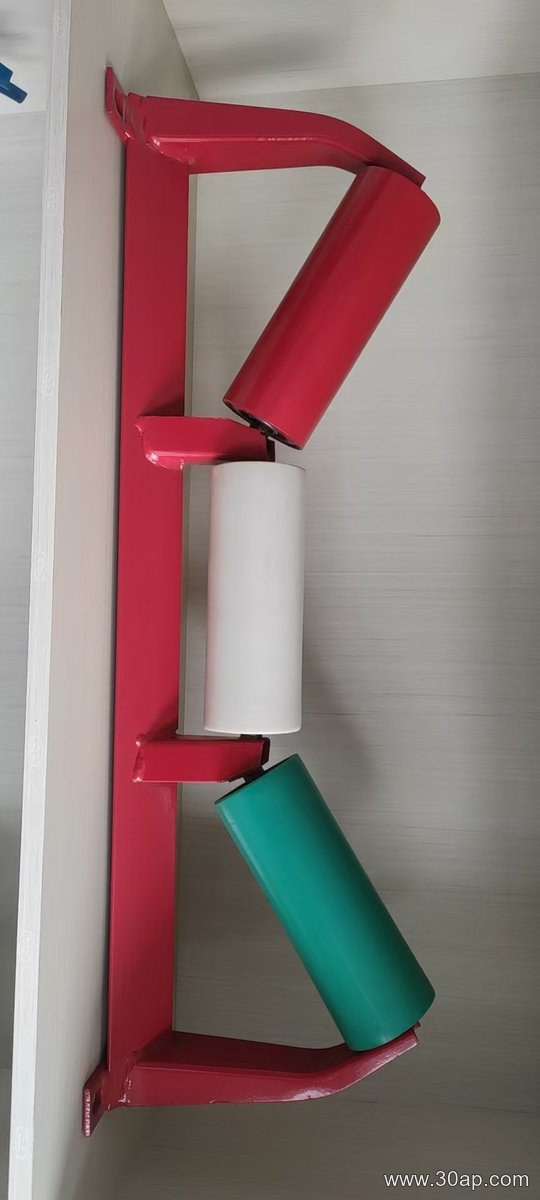
How the Assembly Is Built
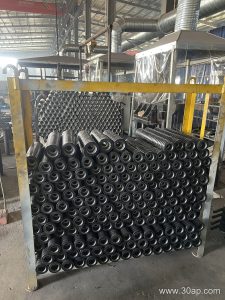
The usual construction combines a standard idler roller with a pivoting bracket. The roller shell may be steel tube, nylon, or rubber-covered, and the shaft runs in sealed bearings such as 6204, 6205, or 6305, depending on load and roller diameter. Common roller diameters for this type include 89 mm, 108 mm, 133 mm, and 159 mm, but the correct size follows belt width, capacity, and the conveyor’s load profile rather than a fixed rule.
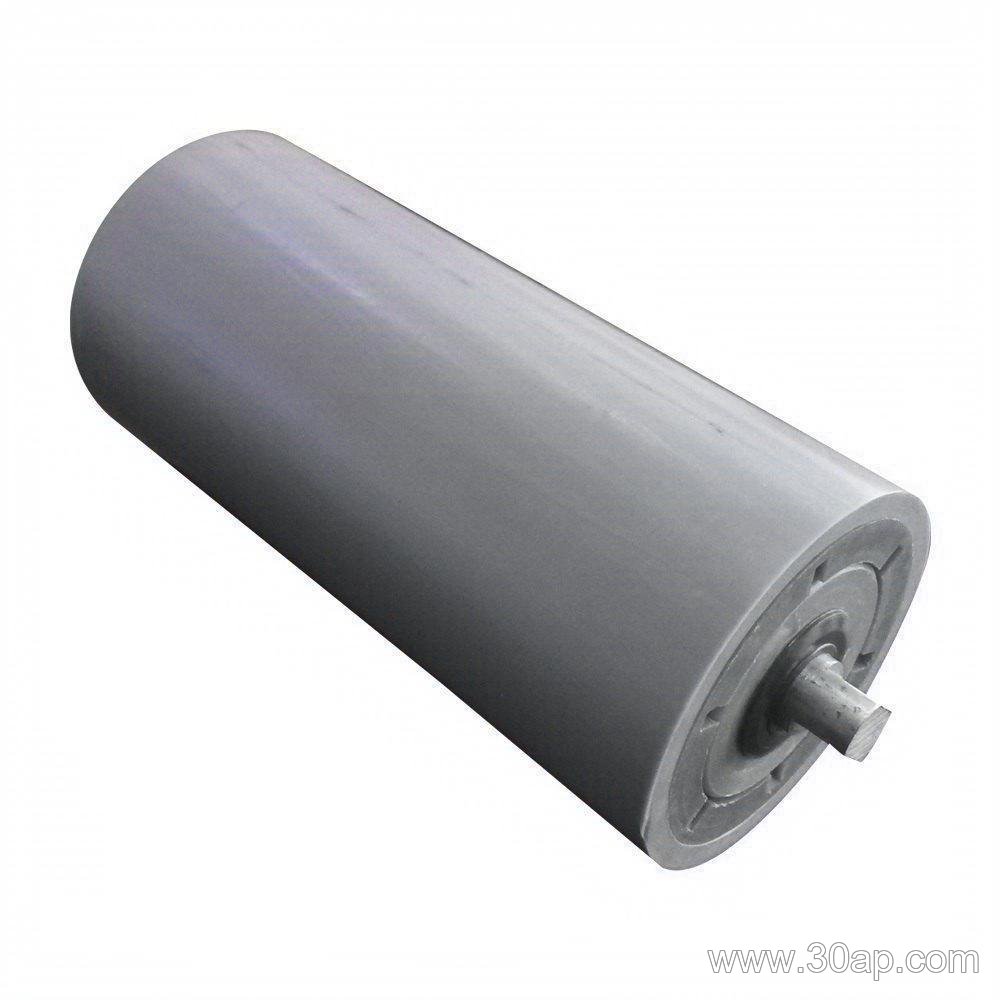
The swivel base typically has a vertical pivot pin, a thrust bearing, and a stop that limits rotation to a few degrees. A three-roll troughing set may be used for the carrying side, while a two-roll V-return or a single flat roller handles the return strand. Some designs add a tapered end roller to increase the correcting force. The frame is mounted on a conveyor bracket that bolts to the stringer, so the pivot axis stays vertical while the rollers can tilt slightly.
Where It Fits on the Conveyor
These idlers are placed at intervals along the carrying run, often after the loading zone and before the head end. In a quarry or sand and gravel line, a rotating self-aligning idler helps keep a conveyor belt centered when the load is uneven or when wind and material build-up push the belt to one side. In a coal handling plant, the same roller is used on the return strand to correct drift caused by sticky fines.
The idler should not be confused with a training idler of the fixed type, which uses angled rollers but no pivot. A rotating self-aligning idler actively moves, so it responds to small deviations before the belt touches the structure. It also differs from a buffer idler or impact roller, which absorbs falling material but does not steer the belt.
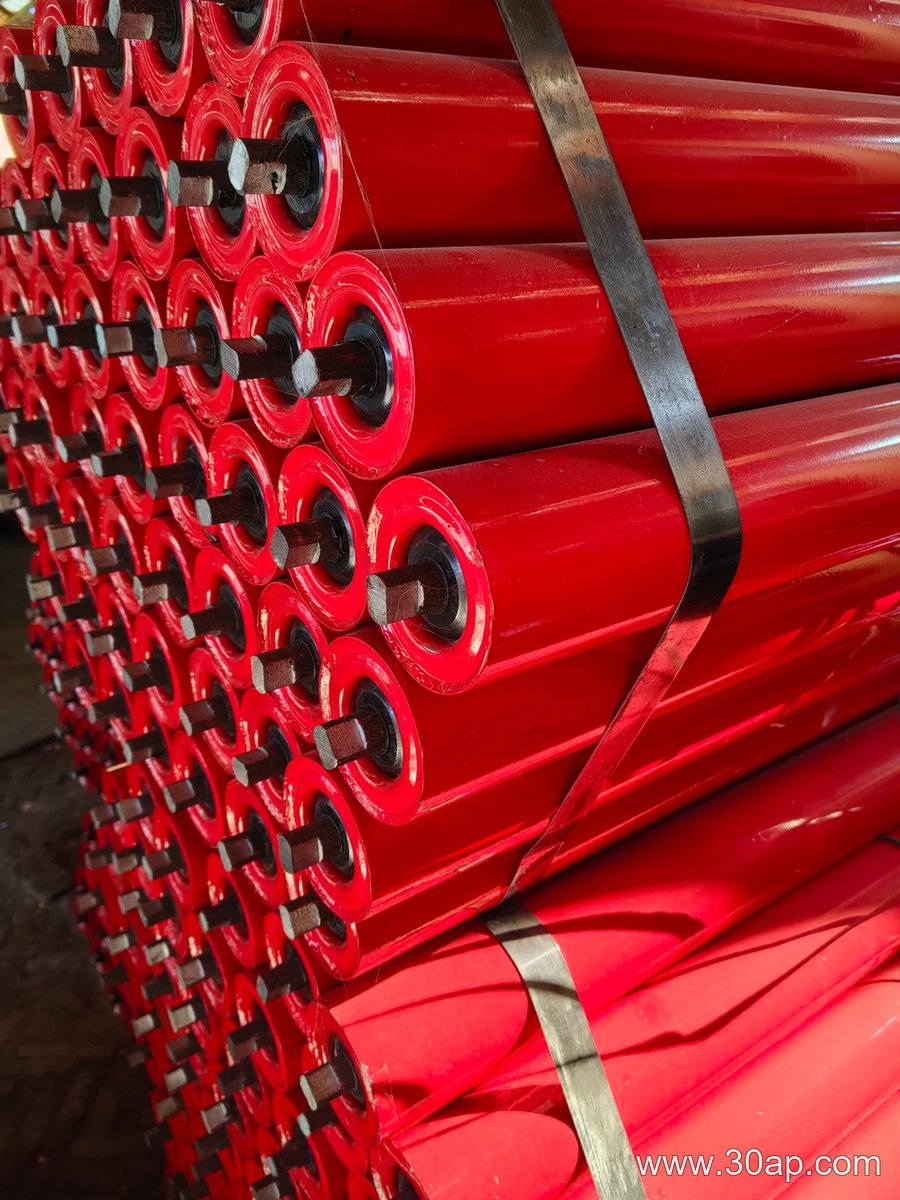
Selection Points for Buyers
- Belt width sets the roller length and the number of rollers in the set. A 650 mm or 800 mm belt may use a three-roll troughing set with side rollers around 250 mm or 315 mm, while a 1200 mm belt commonly uses longer rollers. These are typical examples, not fixed pairings.
- Troughing angle affects belt support. Common angles are 20, 30, 35, and 45 degrees. A steeper angle suits fine, free-flowing material; a shallower angle suits lumpy or sticky loads.
- Roller diameter and bearing size must match the load and speed. A larger diameter roller turns slower and can reduce belt wear, but it needs more space and a stronger bracket.
- Sealing matters in dusty or wet locations. Labyrinth seals and contact seals keep grit out of the bearing, which extends service life.
- The pivot mechanism should move freely but without excess play. A stiff pivot will not correct drift, while a loose one may oscillate.
Installation and Maintenance Notes
Mount the rotating self-aligning idler so the pivot axis is truly vertical. A tilted base will bias the belt to one side. Install the first unit a short distance after the loading point, then space additional units along the run according to belt length and drift tendency. Keep the roller surface clean and check that the swivel returns to center by hand. Worn bearings or a bent shaft will prevent proper rotation, so replace the roller or the pivot assembly when movement becomes rough.
For a buyer, the key is to match the idler to the conveyor’s belt width, trough angle, and duty. A rotating self-aligning idler is a tracking aid, not a substitute for proper pulley alignment, belt splicing, or loading control. When those basics are correct, it adds a reliable layer of correction that reduces edge damage and spillage.