What an Upper Self-Aligning Idler Does
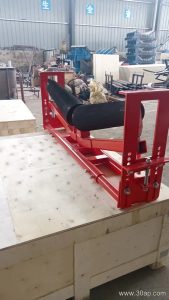
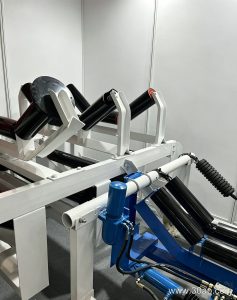
An upper self-aligning idler is a carrying-side idler that corrects belt misalignment as the conveyor runs. Instead of sitting rigidly square to the frame, the roller set is mounted on a pivoting base, so when the belt drifts toward one side it pushes against the idler and the assembly swings slightly to steer the belt back toward the center line. In a quarry, a coal washing plant or a cement clinker line, that small self-correcting movement is often what keeps a long conveyor belt from rubbing the frame and spilling material.
The same component is also called a self-aligning carrying idler or a training idler for the upper strand. Those names describe the same product; they are not the same as a return-side training idler, which sits under the belt and works on the lower strand.
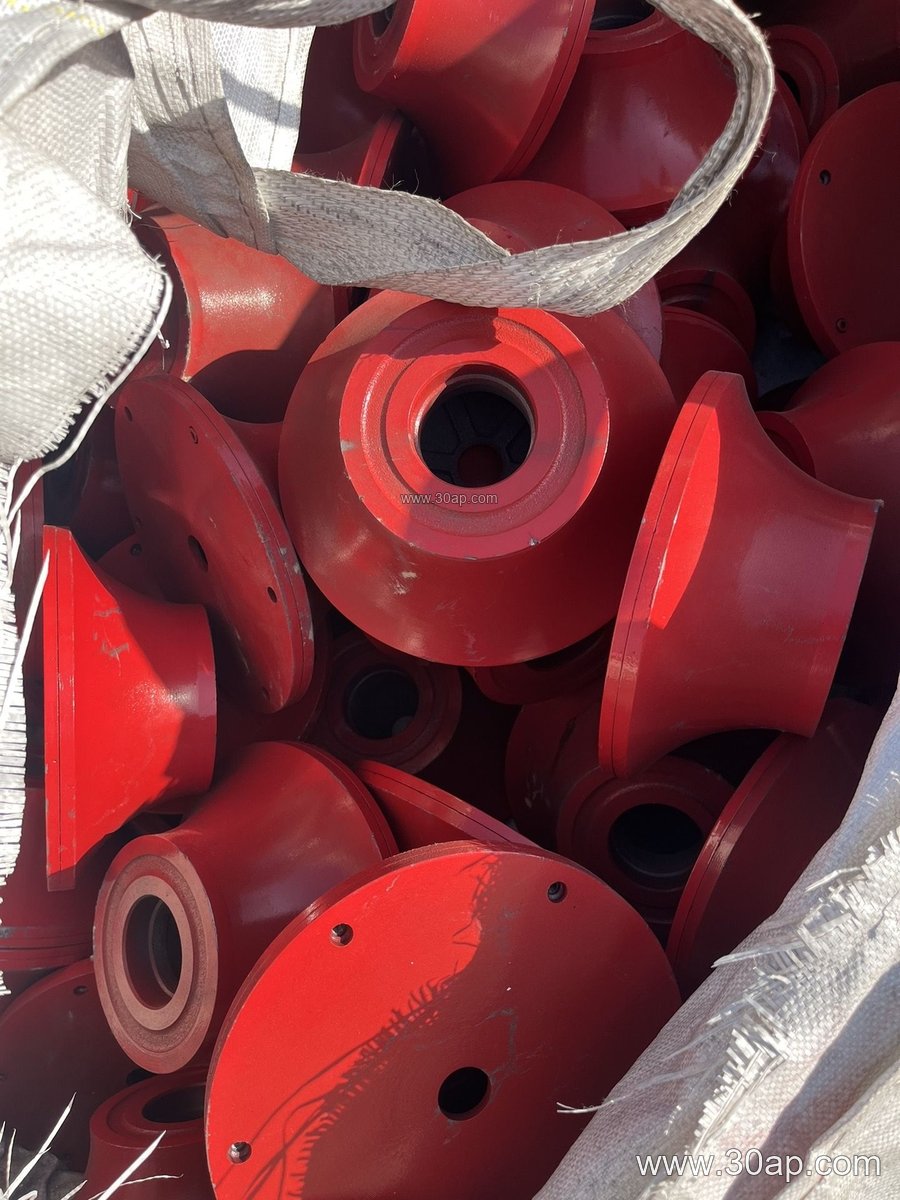
How the Assembly Is Built
A typical unit combines a set of carrying rollers, a pivot mechanism and a mounting frame. The roller set can be a single roller, a two-roll configuration or a three-roll troughing arrangement, depending on belt width and the trough angle the conveyor needs. Common trough angles are 20, 30, 35 and 45 degrees. Some designs add a small forward tilt of about 1.5 to 2 degrees to the side rollers, which helps the idler generate a corrective force sooner when the belt begins to wander.
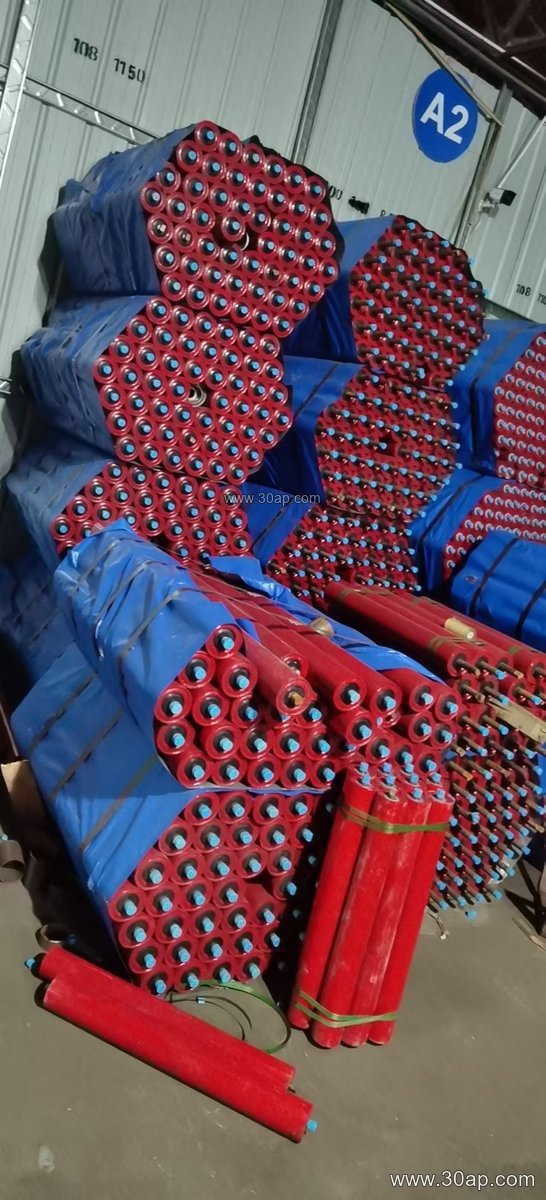
The rollers themselves are usually steel tube, with nylon, ceramic or rubber-ring surfaces available where wear or impact is a concern. Bearings such as 6204, 6205, 6305, 6306, 6308 or 6310 are common, matched to the roller diameter and load rather than to belt width alone. Roller diameters commonly run from Ø63 up to Ø219 mm, and the roller length is set by belt width, trough angle and the number of rolls in the set, so a B800 three-roll troughing idler and a B1400 unit will not share the same roller length.
Common reference dimensions
The values below are typical examples for orientation only; final dimensions follow the conveyor design.
| Belt width | Typical roller length, three-roll troughing set | Common roller diameters |
|---|---|---|
| B500 | about 200 mm | Ø63 to Ø89 mm |
| B650 | about 250 mm | Ø76 to Ø108 mm |
| B800 | about 315 mm | Ø89 to Ø133 mm |
| B1000 | about 380 mm | Ø108 to Ø159 mm |
| B1200 | about 465 mm | Ø108 to Ø178 mm |
| B1400 | about 530 mm | Ø133 to Ø194 mm |
| B1600 | about 600 mm | Ø133 to Ø219 mm |
Side rollers and the center roller may differ in length within the same set, so these figures should be treated as reference points rather than fixed pairings.
Where It Fits on the Conveyor
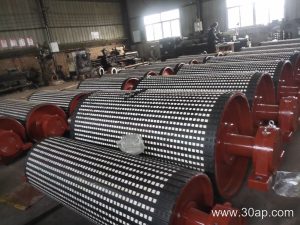
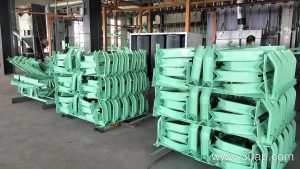
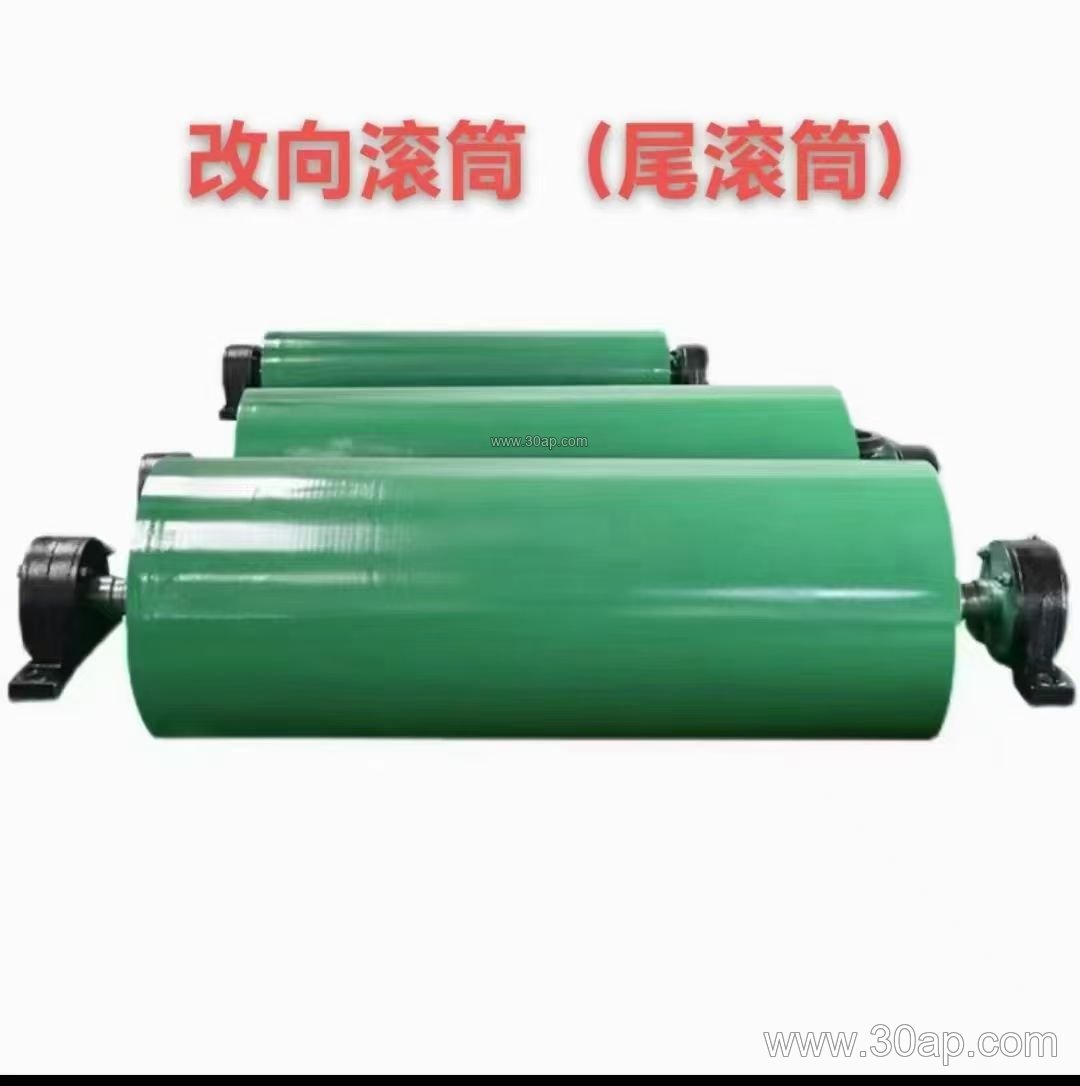
Self-aligning carrying idlers are usually placed at intervals along the upper strand, often near the head end, after a loading point, or on long runs where the belt is most likely to drift. In an iron ore transfer line, a tunnel muck conveyor or a power plant coal handling system, they work alongside standard troughing idlers and are supported by the same conveyor bracket arrangement. They are not a substitute for a conveyor pulley at the drive, tail or bend position; those pulleys perform different duties, and a bend pulley in particular cannot be swapped for a training idler.
Where material falls onto the belt with impact, a rubber-ring buffer idler may be used at the load zone, while the self-aligning unit handles tracking further along the run. The two functions are separate and are often combined on the same conveyor.
Selection Points for Buyers
- Confirm belt width and trough angle first; these set the roller set geometry and the roller length range.
- Check the roller diameter and bearing size against the actual load and belt speed, not against belt width alone.
- Decide whether a forward-tilted design is needed, since tilt affects how quickly the idler responds to drift.
- Match the roller surface to the material: steel for general service, rubber rings for impact, ceramic or nylon where abrasion is heavy.
- Verify the pivot and frame clearances so the assembly can actually swing; a stiff or jammed pivot defeats the purpose.
- Plan inspection of the pivot, seals and roller rotation as part of routine maintenance, especially in dusty coal or cement service.
A well-chosen upper self-aligning idler reduces edge wear on the conveyor belt and keeps material centered, but it works best when the whole conveyor, including pulleys, brackets and loading conditions, is set up correctly.