What a Conveyor Self-Aligning Idler Does
A conveyor self-aligning idler is a training idler that steers a wandering conveyor belt back toward the center line of the structure. Instead of a plain trough roll set that only supports the belt, this idler is mounted so it can pivot, and its rollers are arranged to create a small steering effect when the belt drifts sideways. In a quarry, a coal handling plant, or a cement kiln feed line, a belt that rubs the frame will fray edges, spill material, and shorten the life of the conveyor belt. The self-aligning idler is the component that corrects that drift before it becomes a maintenance problem.
The same product is also called a self-training idler or belt training idler. Those names describe the same function; they are not different hardware categories. A self-aligning idler should not be confused with a drive pulley, tail pulley, or bend pulley, which transmit power or change belt direction and are not interchangeable with any idler type.
How the Idler Is Built
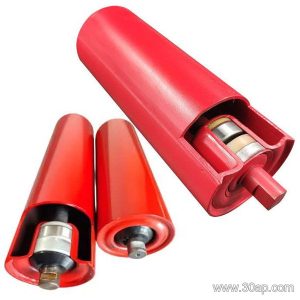
A typical unit combines two or three rollers in a trough or V frame, carried on a pivoting base. The frame rotates slightly about a vertical axis, so when the belt touches a guide roller at the side, the whole set swings and angles the rolls against the belt edge. Friction between the roller surface and the moving belt then pushes the belt back to center. Some designs use a vertical guide roller at each end; others rely on the offset pivot geometry alone.
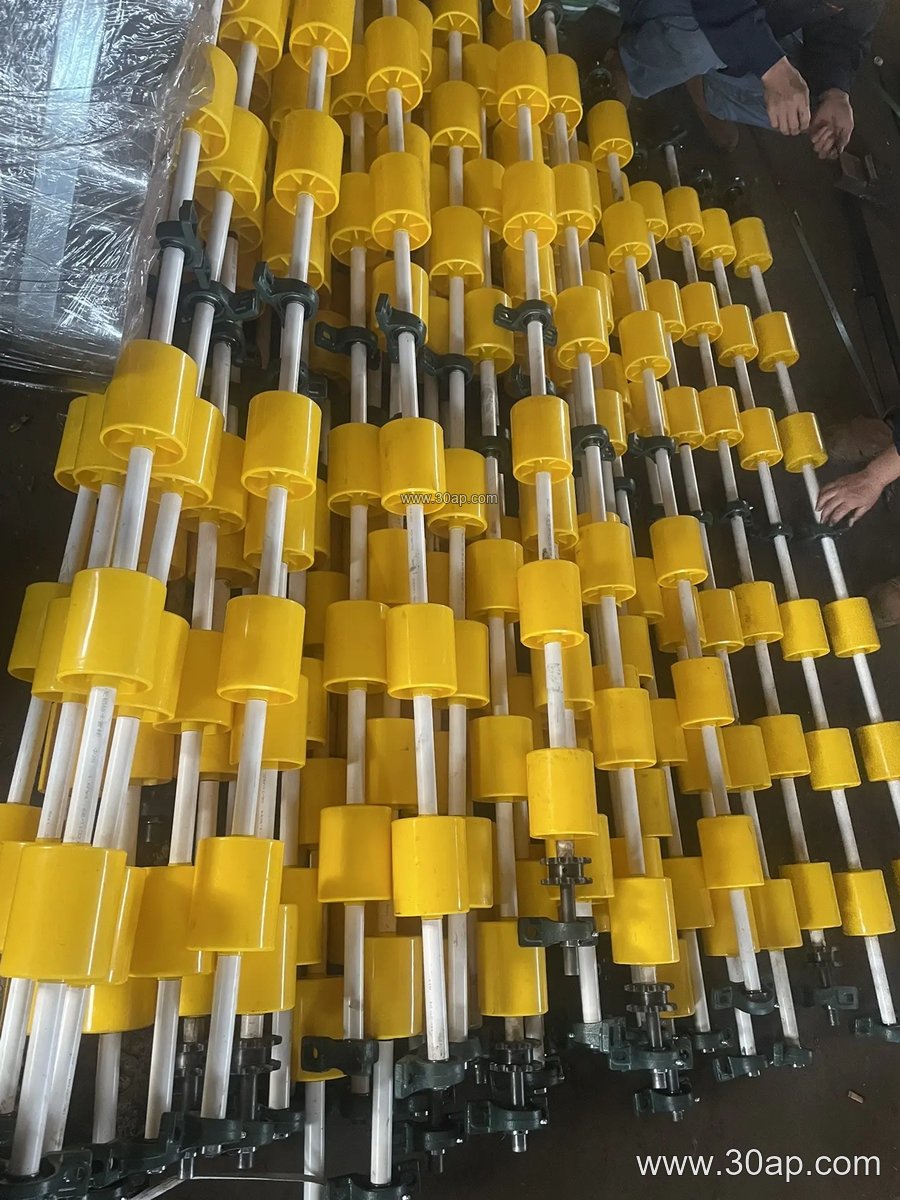
Common construction details include:
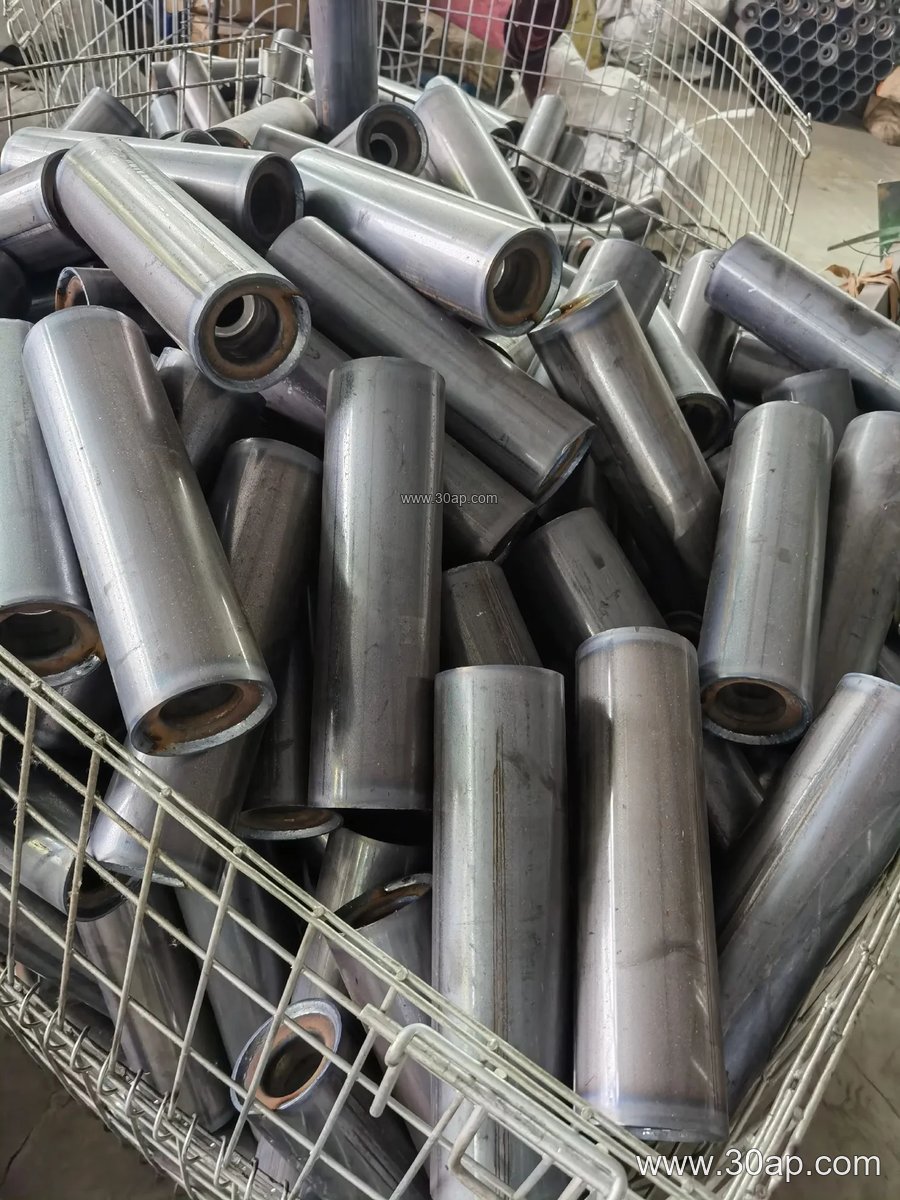
- Roller shells in steel tube, nylon, or rubber-covered form, with rubber rings used where impact and grip matter.
- Bearing sizes such as 6204, 6205, 6305, 6306, 6308, and 6310, selected according to load and roll diameter rather than one fixed pairing.
- Roll diameters commonly from Ø63 and Ø76 up through Ø89, Ø102, Ø108, Ø127, Ø133, Ø159, and larger sizes for heavy duty work.
- Trough angles of 20, 30, 35, or 45 degrees, with a slight forward tilt of about 1.5 to 2 degrees used on training sets to improve steering response.
The roller length follows belt width, trough angle, and roll arrangement. As a common example, a three-roll trough set might use rolls of roughly 200 mm for B500, 250 mm for B650, 315 mm for B800, 380 mm for B1000, 465 mm for B1200, 530 mm for B1400, 600 mm for B1600, and 670 mm for B1800. Side rolls and center rolls can differ, so these figures are reference points for design, not fixed rules.
Where It Fits on the Conveyor
Training idlers are usually installed on the carrying side at intervals along a long run, and sometimes on the return side where belt tracking is poor. They are especially useful near loading points, on curves in the route, and on inclined sections where material shifts to one side. A stone crushing and screening line, a power plant coal conveyor, and a fertilizer or grain handling system all benefit from the same principle: correct the belt early rather than let it load the frame.
The self-aligning idler works alongside other components. Standard carrying idlers and return idlers support the belt, impact idlers absorb shock at the chute, and the conveyor pulley drives the belt. A conveyor bracket or frame holds the training set in place, and the pivot must be free to move for the idler to do its job.
Buyer Checklist
Before ordering, confirm the belt width and the trough angle of the existing idler set, then check the roll diameter and shaft ends so the new unit matches the frame. Ask whether the installation is on the carrying or return side, since the frame shape differs. Consider the material: abrasive ore, wet coal, or fine cement dust each puts different demands on seals and bearing protection. Check that the pivot has enough clearance and that the guide rollers are positioned for the belt edge without over-constraining it.
Maintenance is simple but should not be skipped. Inspect the pivot for seized or stiff movement, check roller rotation by hand, and look for worn rubber rings or damaged shells. A training idler that cannot swing freely will not correct belt drift, no matter how well the rolls are made. Keeping the belt tension correct and the structure square also helps the idler perform as intended.