What a 315mm Diameter Conveyor Pulley Is
A 315mm diameter conveyor pulley is a mid-size drum that guides, drives, or tensions a conveyor belt in bulk material handling lines. The 315 mm figure refers to the outside diameter of the pulley shell, not the shaft or the bearing housing. In practice, this size sits between small snub pulleys and the larger head pulleys used on high-capacity trunk conveyors, which makes it a practical choice for medium-width belts in crushing and screening circuits, cement clinker lines, and coal preparation plants.
How the Pulley Is Built
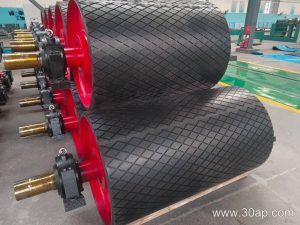
The assembly normally includes a cylindrical shell, two end discs, a through shaft, hub connections, and bearing housings mounted on a frame or conveyor bracket. Shells are usually rolled from steel plate and welded to the end discs; the weld quality and runout matter because an out-of-round shell will shorten belt life. The shaft diameter is not fixed by the 315 mm shell size. It is selected from torque, belt tension, and bearing load, with common shaft sizes ranging from Ø80 to Ø160 depending on duty.
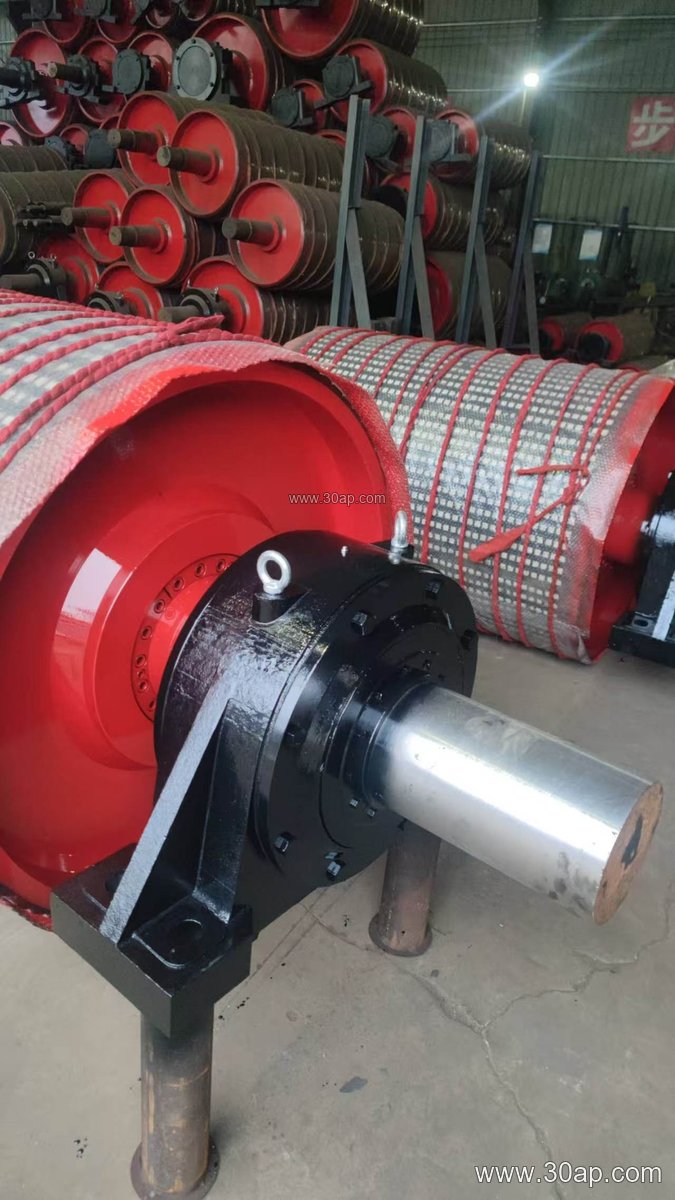
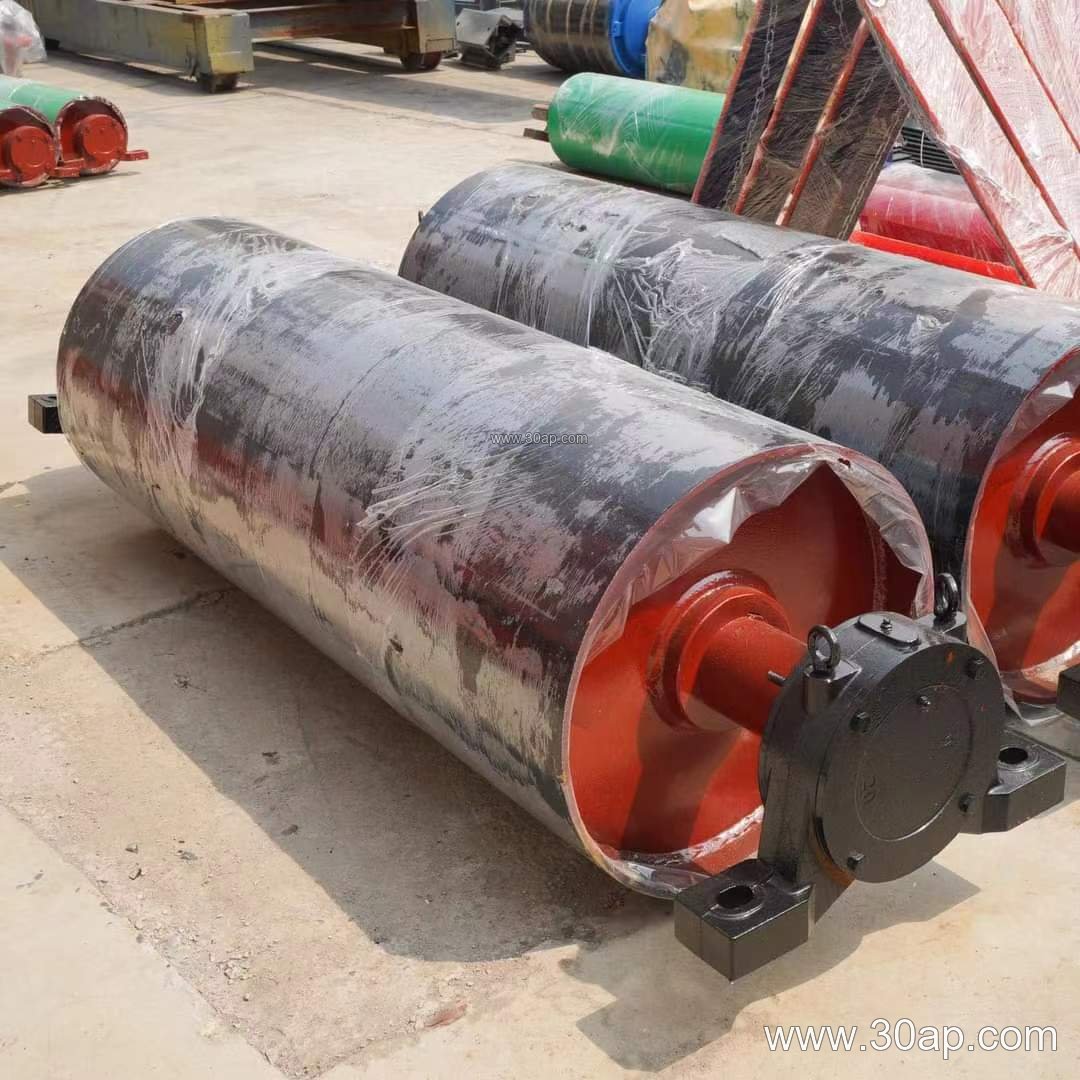
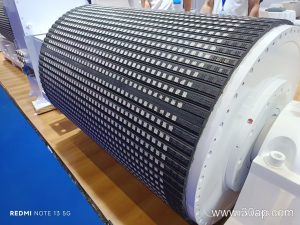
Surface finish is a separate decision. A plain steel shell suits many non-driven positions, while rubber lagging improves grip on drive pulleys and reduces slip on wet or dusty belts. Common lagging options include cold-bonded rubber, hot-vulcanized rubber, diamond groove, herringbone, and ceramic tile, usually at 8, 10, 12, 15, or 20 mm thickness.
Where the 315mm Size Fits
This diameter appears in several positions along a conveyor. As a bend or snub pulley it changes belt direction around a transfer point; as a tail pulley it returns the belt at the loading end; as a tension pulley it takes up slack in a take-up frame. It can also serve as a drive pulley on lighter belts where the required wrap angle and torque are modest. Each position has different loads, so the same shell diameter may carry different shafts, bearings, and lagging.
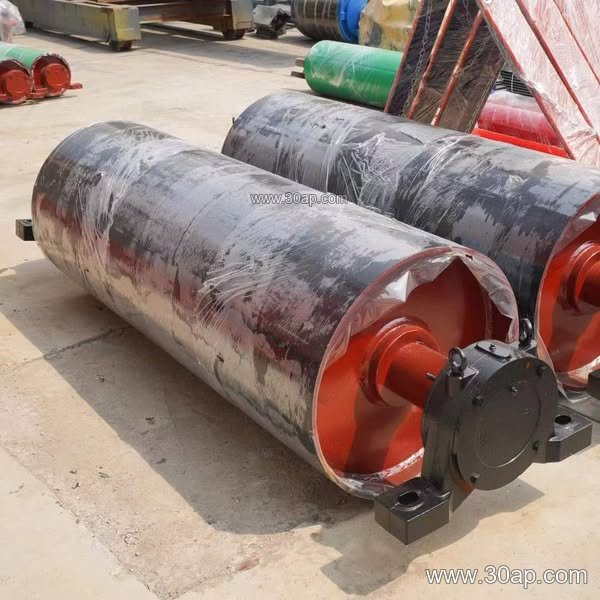
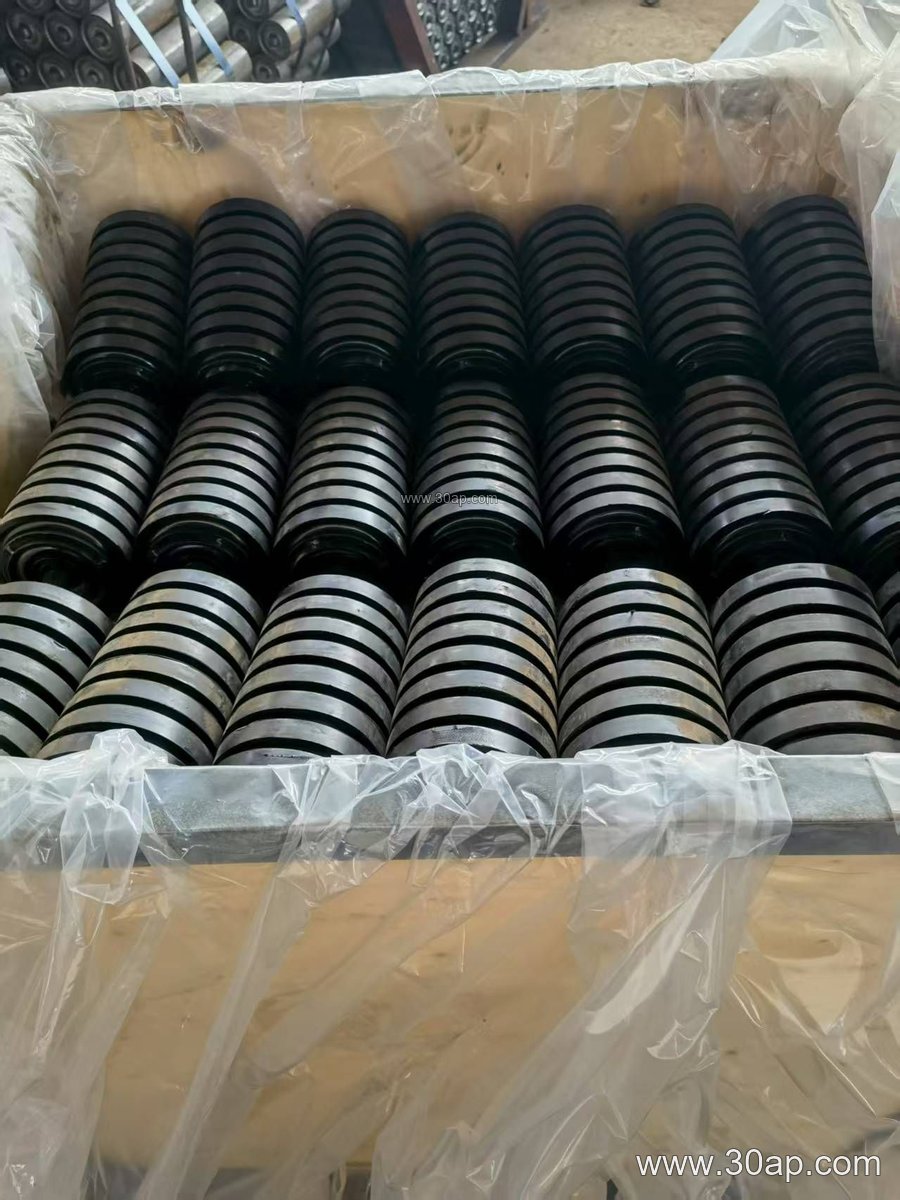
Typical industries include sand and gravel plants, limestone quarries, iron and copper mines, coal washing plants, power station coal handling, and concrete batching plants. In these settings the pulley works alongside the conveyor belt, idler rollers, and support brackets, and its dimensions must match the belt width and the frame layout.
Common Size Reference
The following values are reference data for planning, not a fixed supply list. Actual dimensions follow the conveyor design.
| Item | Common reference values |
|---|---|
| Shell diameter | Ø315 mm |
| Belt width examples | B650, B800, B1000, B1200 |
| Shell face width (approx.) | B650 about 750 mm; B800 about 950 mm; B1000 about 1150 mm; B1200 about 1400 mm |
| Shaft diameter | Ø80, Ø90, Ø100, Ø120, Ø140 (by torque and load) |
| Lagging thickness | 8, 10, 12, 15, 20 mm |
| Surface forms | Plain, cold-bonded rubber, hot-vulcanized rubber, diamond, herringbone, ceramic |
A 315 mm pulley can be paired with more than one belt width, and the face width is generally wider than the belt to keep the belt centered. Do not assume that one belt width locks in one diameter or one shaft size.
What Buyers Should Check
- Position and duty. Confirm whether the pulley is a drive, tail, bend, or tension unit, because the load case changes the shaft and bearing selection.
- Belt width and face width. Match the shell face to the belt and frame, allowing for lagging thickness.
- Lagging. Choose plain, rubber, diamond, or ceramic based on grip needs and material conditions such as wet coal or abrasive aggregate.
- Balance and runout. Ask for dynamic balancing where speeds are high, and check shell roundness before installation.
- Bearing and bracket fit. Verify housing dimensions against the conveyor bracket and confirm lubrication access.
- Maintenance. Inspect lagging wear, check bearing temperature, and re-torque fasteners on a regular schedule.
A 315mm diameter conveyor pulley is a versatile mid-range drum, but the right specification comes from the conveyor layout, belt tension, and material handled, not from the diameter alone.