What a Corrugated Sidewall Conveyor Belt Is
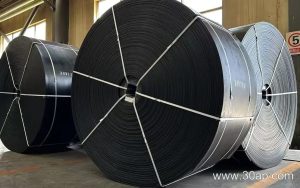
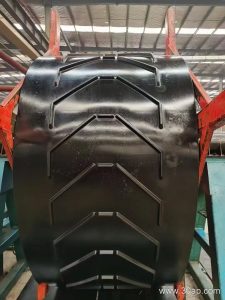
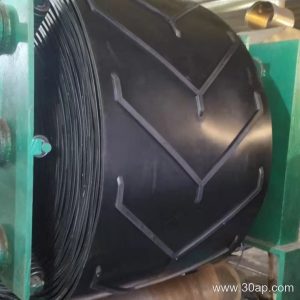
A corrugated sidewall conveyor belt is a specialized conveyor belt with raised, wave-shaped walls along both edges and often cross-cleats between them. The sidewalls keep bulk material from spilling on steep inclines, while the cleats carry the load upward. This design allows a single belt to replace multiple conventional conveyors and transfer points in mining, coal, cement, power, and sand and gravel plants. The product is also called a sidewall belt or a cleated sidewall belt, but it remains the same belt type.
Construction and Main Components
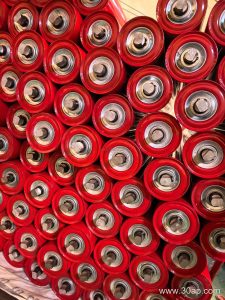
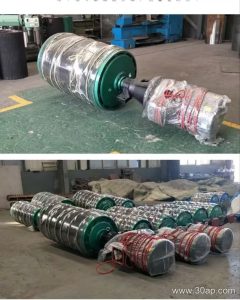
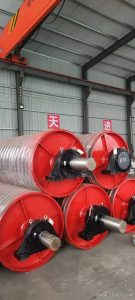
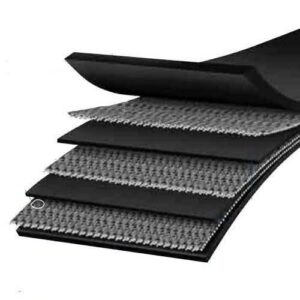
The belt is built around a base belt with a carcass, rubber covers, and molded corrugated sidewalls. Cross-cleats are vulcanized between the sidewalls. The base belt usually uses an EP or NN fabric carcass, and steel cord carcass is available for higher tension. Common cover grades include wear-resistant, heat-resistant, oil-resistant, flame-retardant, antistatic, cold-resistant, and acid and alkali resistant. A corrugated sidewall conveyor belt works with three main pulley positions: the drive pulley, the tail pulley, and the bend pulley. These are not interchangeable. The drive pulley transmits power, the tail pulley returns the belt, and the bend pulley changes its direction.
Typical Specifications and Reference Data
Buyers often ask for belt width, sidewall height, cleat height, and cover thickness. The following values are common reference points; actual dimensions depend on the design and the manufacturer.
| Parameter | Common reference values |
|---|---|
| Belt width | B500, B650, B800, B1000, B1200, B1400, B1600, B1800, B2000 |
| Fabric carcass type | EP200, EP315, EP400, EP500, EP630, EP800, EP1000, EP1250, EP1600, EP2000 |
| Cover thickness | 3+1.5, 4+2, 5+2, 6+2, 8+3 mm |
| Carcass layers | 2 to 6 layers, depending on tension |
| Sidewall height | Usually 40 mm to 300 mm and above |
| Cleat height | Often matched to sidewall height |
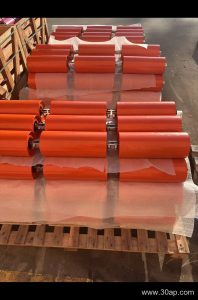
These figures are not fixed combinations. A wide belt does not require one specific pulley diameter, and belt width alone does not determine shaft diameter. The conveyor pulley, idler roller, and conveyor bracket are selected from the full conveyor design.
Where It Works Well
Steep-angle and vertical conveying is the main job. In coal mines, a corrugated sidewall conveyor belt can lift coal from a bunker to a screening station. In cement plants, it handles clinker, limestone, and gypsum on an inclined route. Power plants use it for coal and ash. Sand and gravel pits use it to move aggregate up a stockpile. A sidewall belt also fits mobile crushing plants and ship loaders where space is limited.
Selection and Maintenance Notes
- Match the belt strength to the calculated tension, not to the belt width alone.
- Check that the drive pulley, tail pulley, and bend pulley are sized for the belt and the load.
- Keep idler rollers and pulleys aligned to reduce edge wear on the sidewalls.
- Inspect the cleats and sidewalls for cracks, especially in cold or hot service.
- Choose the cover grade for the actual material: abrasive, hot, oily, or flammable.
- Confirm the conveyor bracket and frame support the extra belt weight and sidewall height.
A corrugated sidewall conveyor belt is not a simple replacement for a flat belt. It is a system product that depends on pulleys, rollers, and structure working together. For any project in mining, coal, cement, power, or sand and gravel, the belt width, carcass, cover, sidewall, and cleat should be selected from the duty and the layout, not from a single catalog line.