What a Conveyor Pulley Does on a Belt System
A conveyor pulley is the cylindrical rotating component that drives, redirects, or tensions a conveyor belt. Unlike an idler roller, which only supports the belt, a pulley transmits torque or changes the belt path. In a quarry, cement plant, or coal handling line, these pulleys sit at critical points: the head end discharges material, the tail end returns the belt, and bend or take-up positions manage belt tension and direction. The main subject here is the conveyor pulley itself, not a specific subtype such as a drive pulley or tail pulley, though those roles matter when selecting one.
How a Conveyor Pulley Is Built
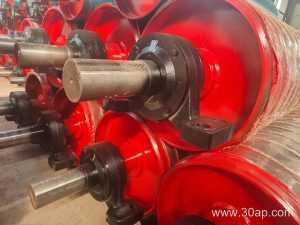
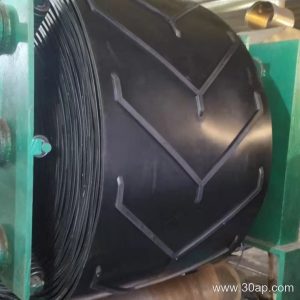
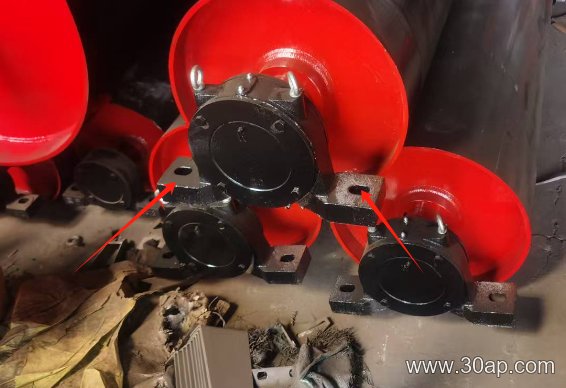
A typical pulley consists of a cylindrical shell, two end discs, a shaft, and a hub connection. The shell can be seamless pipe or rolled plate. The shaft is sized by torque and bending load, not by belt width alone. Common shaft diameters include Ø50, Ø60, Ø80, Ø100, Ø120, Ø160, and Ø200, but the final value comes from the drive calculation. Surface options include plain, rubber lagging, ceramic lagging, and herringbone or diamond patterns. Lagging thickness often ranges from 8 mm to 20 mm. The pulley face width is usually wider than the belt: for example, a B800 belt often uses a face around 950 mm, while a B1200 belt may use about 1400 mm. These are reference examples, not fixed rules for every design.
Common Construction Parameters
| Item | Common Reference Values |
|---|---|
| Belt width | B400, B500, B650, B800, B1000, B1200, B1400, B1600, B1800 |
| Pulley diameter | Ø200, Ø250, Ø315, Ø400, Ø500, Ø630, Ø800, Ø1000, Ø1250 |
| Shaft diameter | Ø50, Ø60, Ø70, Ø80, Ø90, Ø100, Ø120, Ø140, Ø160, Ø180, Ø200 |
| Surface form | Plain, cold-bonded rubber, hot vulcanized rubber, diamond lagging, herringbone lagging, ceramic lagging |
Where Conveyor Pulleys Are Used
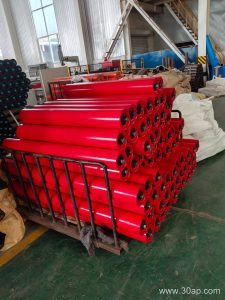
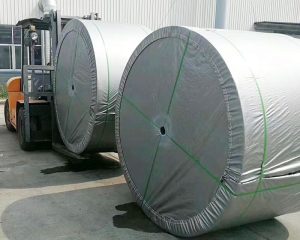
In a sand and gravel plant, a head pulley discharges crushed stone onto a screen. In a coal washing plant, a tail pulley keeps the return belt aligned. In a power plant coal yard, bend pulleys route the belt around transfer towers. The same component appears in fertilizer granulation lines, grain silos, and tunnel muck removal. A conveyor pulley works together with the conveyor belt, idler rollers, and conveyor brackets. If the pulley is misaligned or under-sized, the belt may track poorly, spill material, or wear prematurely. That is why the pulley is not just a passive wheel; it is part of the belt path geometry.
Types and Their Roles
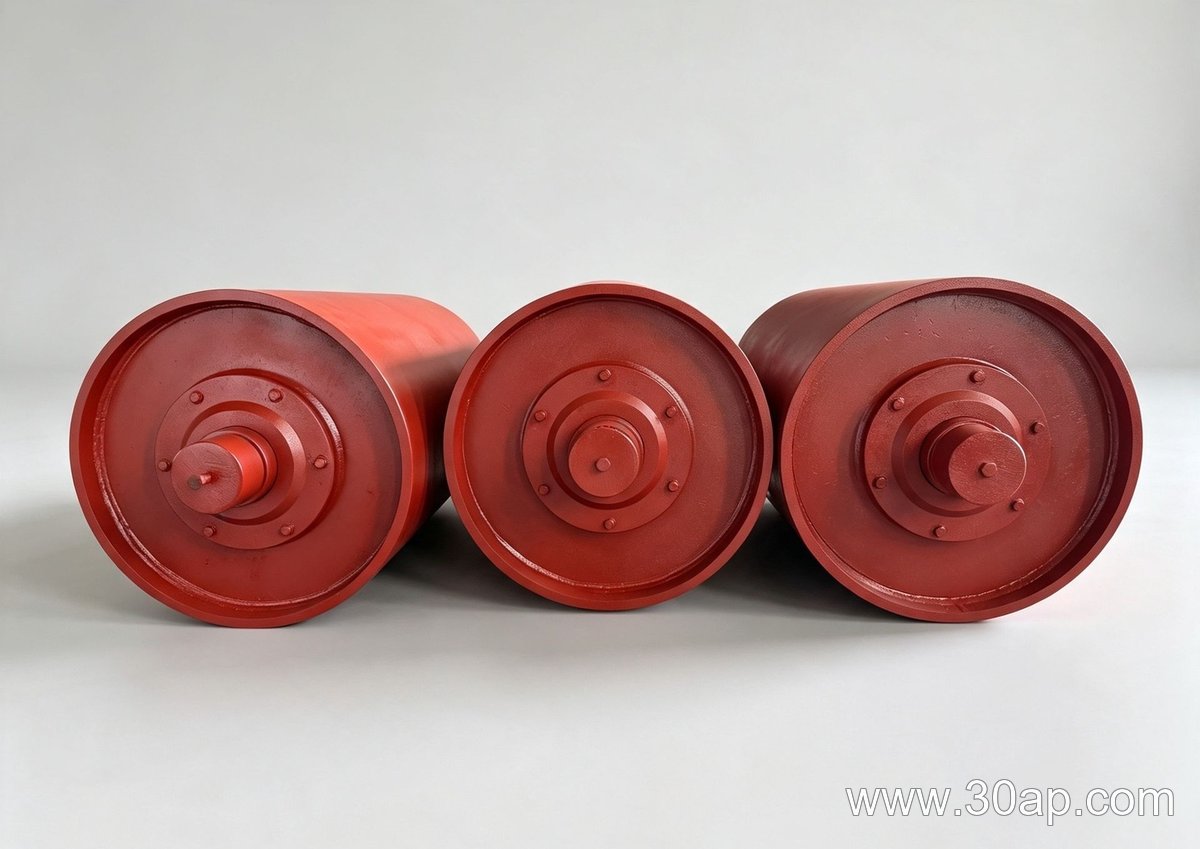
Drive pulleys, also called head pulleys, transmit power from the gearbox to the belt. Tail pulleys return the belt at the rear. Bend pulleys change direction without driving. Take-up pulleys maintain tension. These are not interchangeable names. A bend pulley cannot replace a drive pulley because it lacks the torque transmission and lagging needed for traction. An electric drum pulley combines the motor and gearbox inside the shell, which saves space in compact transfer stations. When comparing, a wing pulley may be used in sticky material to shed fines, but it is a different subtype and not a universal substitute for a standard conveyor pulley.
What a Buyer Should Check
- Belt width and pulley face: The face should exceed belt width, but the exact amount depends on belt training and edge clearance. A B650 belt may use a 750 mm face, while a B1400 belt may use about 1600 mm.
- Diameter: Larger diameters reduce belt bending stress. A B800 × Ø500 pulley is common, but B800 × Ø630 may be chosen for higher tension. Do not assume one belt width matches only one diameter.
- Shaft and bearing: Shaft diameter follows torque and load. Bearings must match the shaft and the pulley’s radial load.
- Lagging: Rubber lagging improves grip in wet or dusty conditions. Ceramic lagging may be used for high wear. Herringbone or diamond patterns help water drainage.
- Balance and runout: A poorly balanced pulley causes vibration and belt mistracking. Dynamic balancing is often required for high-speed or large-diameter pulleys.
Maintenance and Compatibility
Regular inspection of lagging wear, shaft play, and bearing temperature helps avoid unplanned downtime. In a cement plant, a worn drive pulley can slip under load, especially when the belt is wet. In a quarry, impact from large lumps may damage the shell or lagging. A conveyor pulley should be selected with the conveyor belt, idler roller, and conveyor bracket as a system. The goal is not to find the largest pulley, but to match the pulley to the belt width, torque demand, and material conditions. Reference values in this article are for general guidance; actual dimensions and surface forms should be confirmed with the current product data and engineering calculation.