What an EP Rubber Conveyor Belt Is
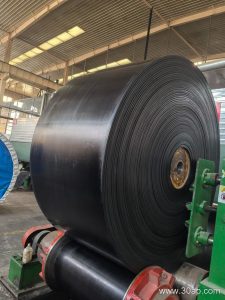
An EP rubber conveyor belt is a multi-ply rubber belt built on an EP fabric carcass, where EP stands for polyester warp and polyamide weft. This carcass gives the belt high tensile strength, low elongation, and good resistance to impact and fatigue. The rubber covers protect the carcass from abrasion, moisture, oils, heat, and other service conditions. In many plants, this product is also called a polyester-nylon rubber conveyor belt, which is the same construction described by its two fibre components.
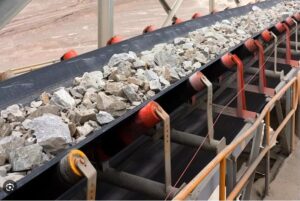
The belt sits on the carrying side of a conveyor system and moves bulk or unit loads between transfer points. It is supported by idler rollers on the carrying run and return run, wraps around a drive pulley at the head, a tail pulley at the load end, and bend pulleys where the route changes direction. Each pulley has its own role, and they are not interchangeable. The belt itself is the flexible load-bearing element that ties the system together.
How the Belt Is Built
A typical EP rubber conveyor belt is assembled in layers. The carcass usually contains 2 to 6 plies of EP fabric, bonded with rubber skim compound. On top of the carcass, a cover rubber is applied to the carrying side and a thinner cover to the pulley side. The covers are often described by thickness, for example 3+1.5 mm, 4+2 mm, 5+2 mm, 6+2 mm, or 8+3 mm, although the exact combination is selected for the application.
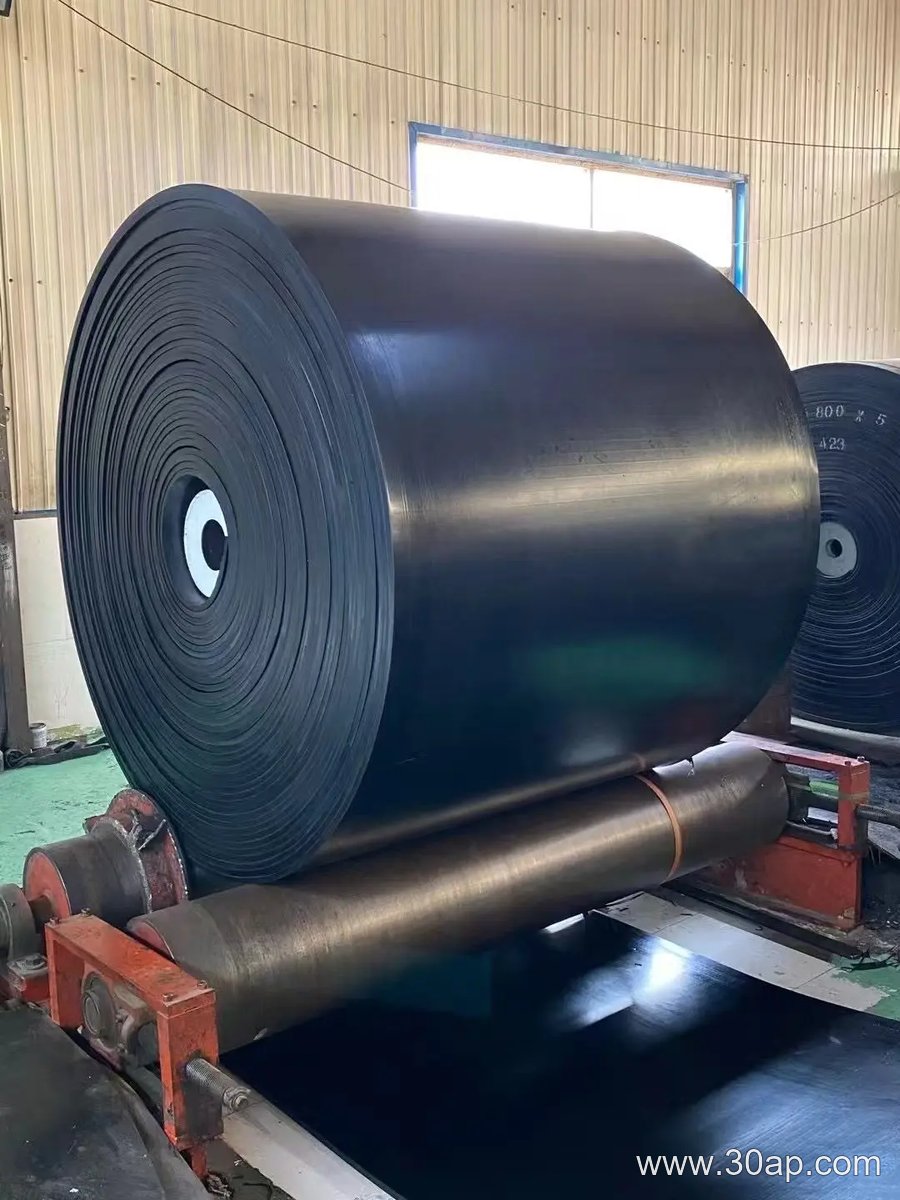
Strength grades are commonly expressed as EP200, EP315, EP400, EP500, EP630, EP800, EP1000, EP1250, EP1600, and EP2000. The number refers to the nominal tensile strength of the carcass in newtons per millimetre of belt width. These are reference grades, not a fixed rule. Belt width is chosen separately and may be B500, B650, B800, B1000, B1200, B1400, B1600, B1800, or B2000, depending on the tonnage, lump size, and conveyor design.
Common Construction Reference
| Element | Common options |
|---|---|
| Strength grade | EP200, EP315, EP400, EP500, EP630, EP800, EP1000, EP1250, EP1600, EP2000 |
| Belt width | B500, B650, B800, B1000, B1200, B1400, B1600, B1800, B2000 |
| Cover thickness | 3+1.5 mm, 4+2 mm, 5+2 mm, 6+2 mm, 8+3 mm |
| Carcass plies | 2 to 6 plies, depending on the duty |
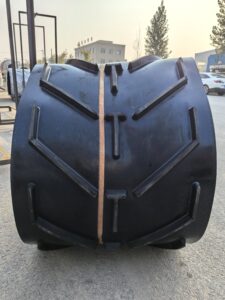
Special cover compounds are available for abrasion resistance, heat, oil, flame retardancy, antistatic behaviour, cold conditions, and acid or alkali exposure. Surface forms such as patterned, chevron, or corrugated sidewall belts are separate variants used for inclined or contained conveying. They are not replacements for a standard EP rubber belt when the application calls for a flat carrying surface.
Where It Is Used
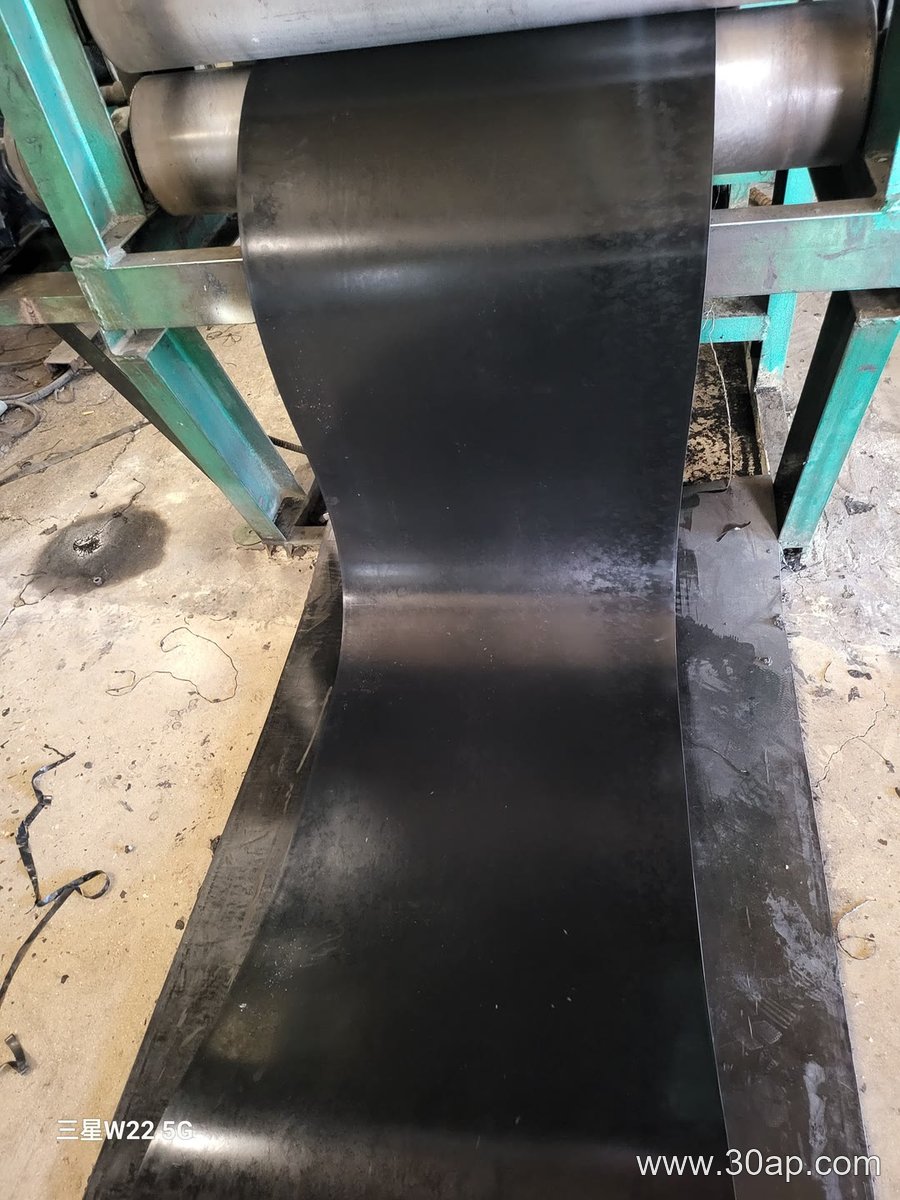
This type of belt is common in mining, quarrying, aggregate processing, cement plants, steel mills, ports, power stations, and bulk material handling terminals. It moves crushed stone, sand, gravel, coal, ore, clinker, fertiliser, grain, and many other loose materials. It can also handle packaged goods where a smooth, strong surface is needed.
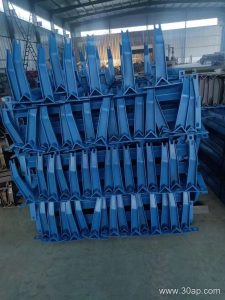
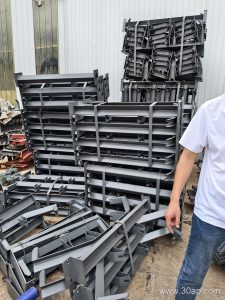
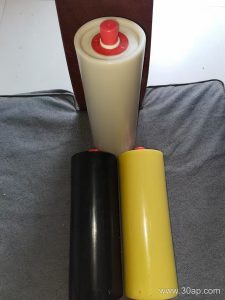
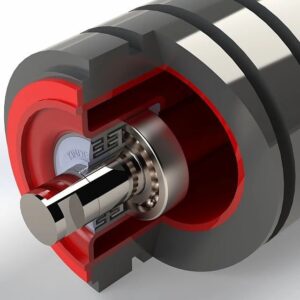
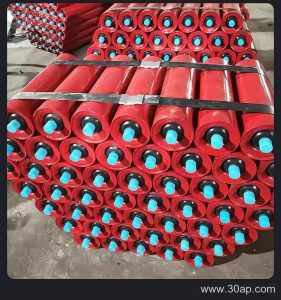
Because the EP carcass stretches less than some other fabric constructions, it suits long conveyors and systems with start-stop cycles. A conveyor pulley at the head drives the belt, while the tail pulley helps keep tracking. Bend pulleys guide the belt through changes in direction. Idler rollers support the belt between pulleys and affect the belt’s training and wear pattern. Conveyor brackets hold the idlers and pulleys in position, so their alignment matters as much as the belt itself.
What a Buyer Should Know
Selection starts with the duty. The buyer should know the material being carried, its density, lump size, temperature, moisture, and any chemical exposure. The required capacity, conveying distance, incline angle, and pulley diameters also shape the choice. A belt that is too weak for the load will stretch or fail, while an oversized belt adds unnecessary weight and cost.
Cover thickness should match the wear pattern. A belt carrying sharp, abrasive rock may need a thicker top cover than one moving grain or light packages. Heat-resistant, oil-resistant, or flame-retardant grades should be chosen only when the environment demands them, because each compound has its own balance of properties.
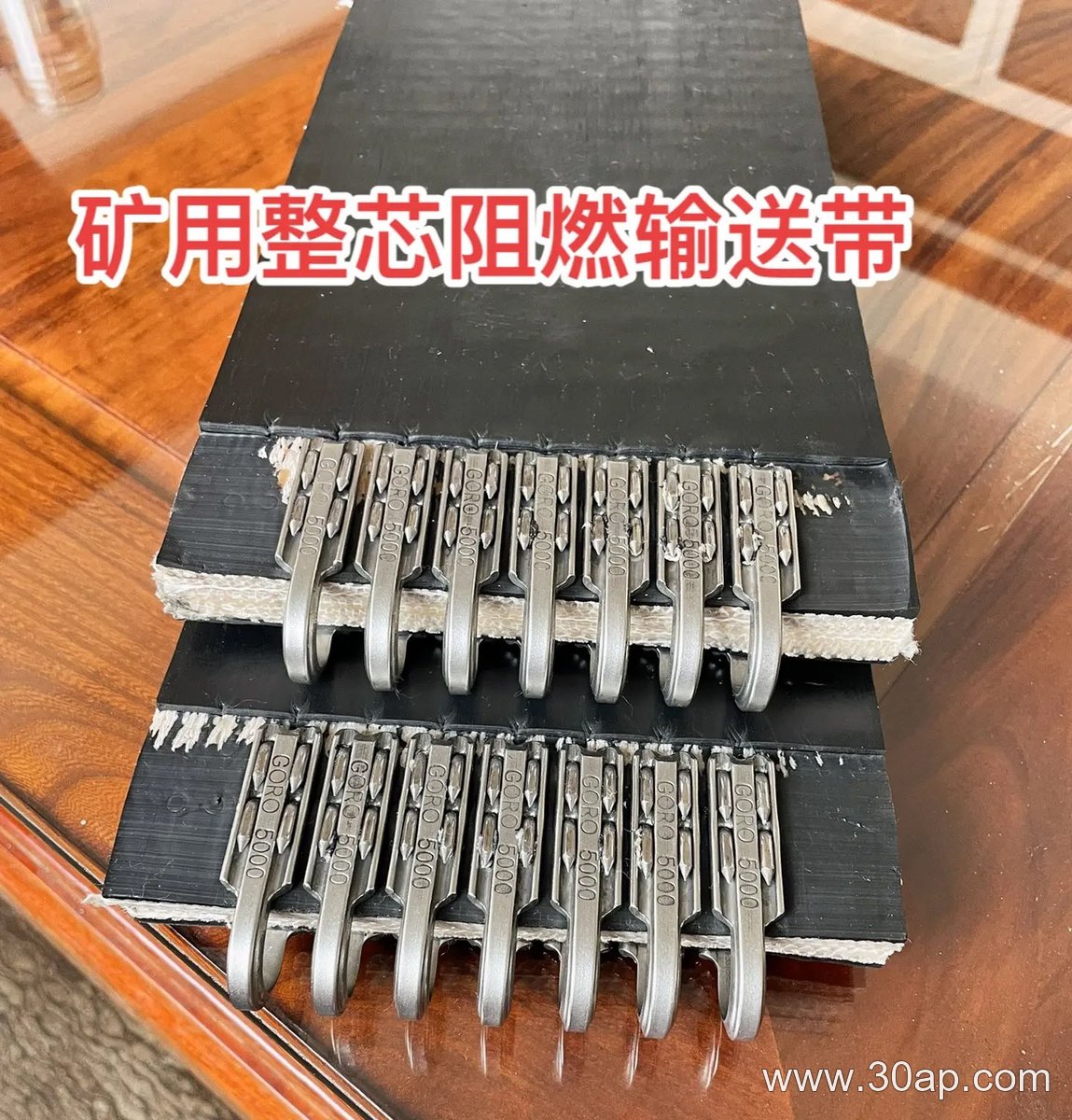
Installation and maintenance also affect service life. Correct splicing, proper tension, aligned pulleys, and free-turning idler rollers reduce edge damage and premature cover wear. Inspections should look for cuts, gouges, exposed fabric, and abnormal tracking. A small repair made early often prevents a full belt replacement.
Finally, ask the supplier for the actual construction data of the offered belt: grade, ply number, cover thickness, width, and compound type. Values such as EP630 or B1200 are reference points, not universal promises. The right EP rubber conveyor belt is the one matched to the conveyor, the material, and the working conditions.