What a Conveyor Bracket Does on a Belt System
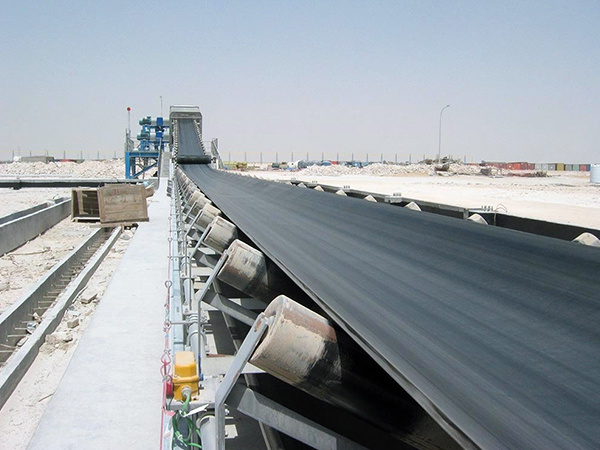
A conveyor bracket is the structural interface that holds idler rollers in the correct position along a conveyor frame. It connects the roller shaft to the conveyor stringer or cross member, keeping the belt profile stable from the loading zone to the discharge point. Without a properly aligned bracket, even a well-made idler roller will sit at the wrong height or angle, causing the conveyor belt to track poorly and wear unevenly.
The same component is often called a conveyor roller bracket or idler bracket, depending on the region and the supplier. These names describe the same functional part. A drive pulley, tail pulley and bend pulley are different assemblies and are not interchangeable with a bracket. A bracket supports rollers; it does not transmit driving torque.
How a Conveyor Bracket Is Built
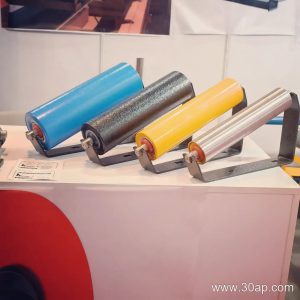
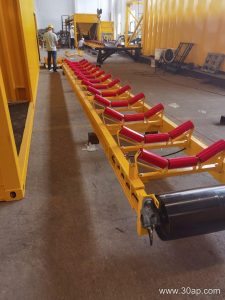
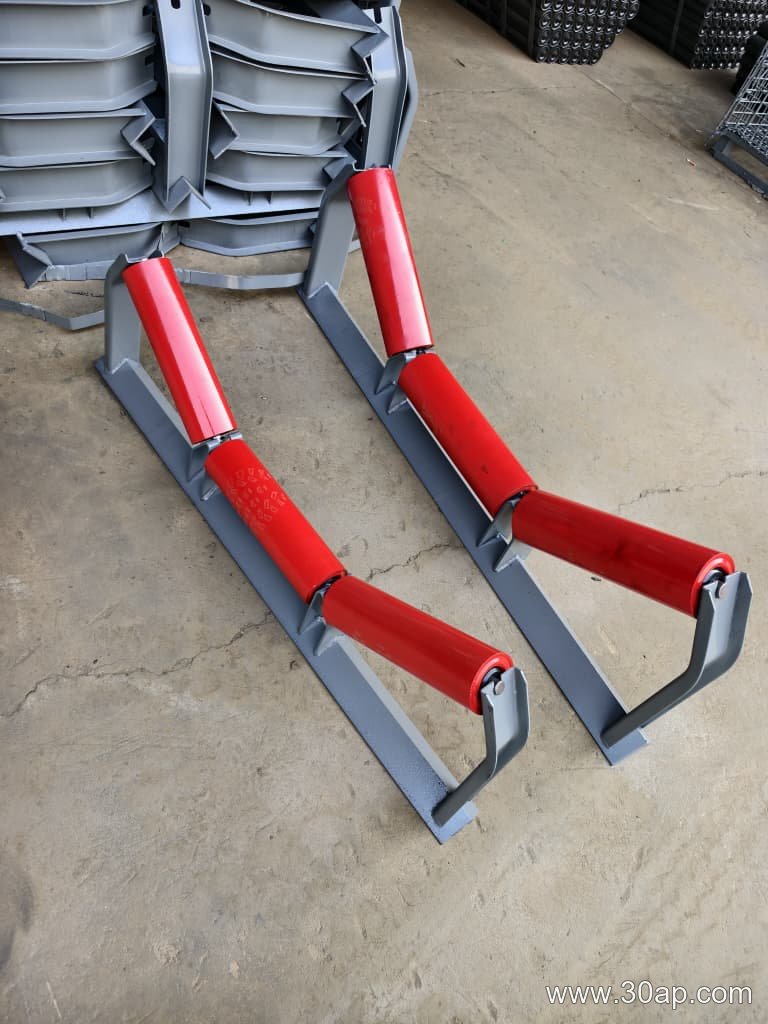
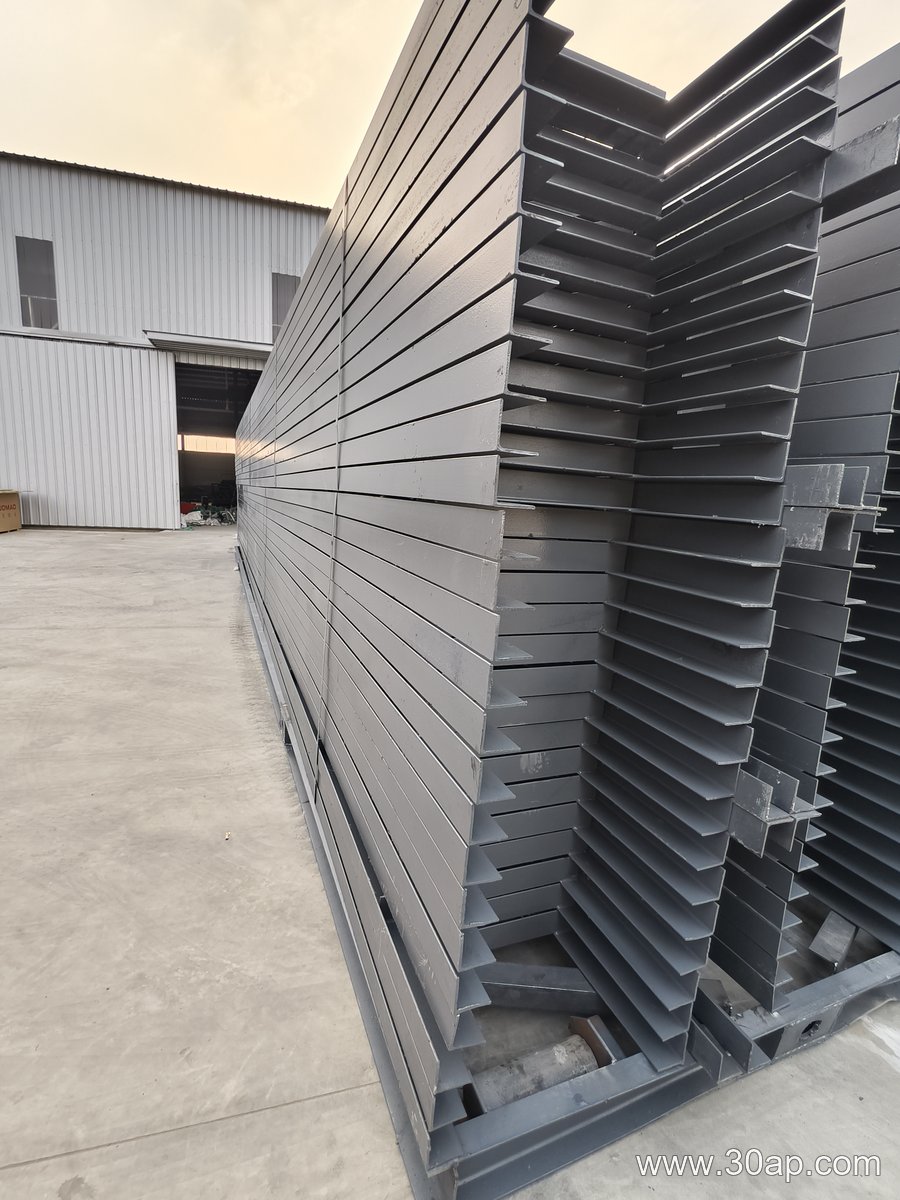
Most brackets are fabricated from angle steel, channel steel or folded steel plate. The choice depends on the load, the belt width and the mounting method. A typical troughing bracket has angled slots or arms that set the side rollers at a specific trough angle. Return brackets are usually flatter, while impact brackets use a heavier section to absorb material drop energy.
Key construction details include shaft slots or holes, bolt holes for frame attachment, and sometimes a slotted design for field adjustment. Welded brackets are common for fixed positions, while bolted or clamped designs allow replacement without cutting the frame.
Common Bracket Types and Where They Fit
Different positions on a conveyor call for different bracket forms. The main types include troughing brackets, transition brackets, return brackets, flat return brackets, V-return brackets, impact brackets, self-aligning brackets, forward-tilt brackets and adjustable brackets.
- Troughing bracket: supports the carrying side rollers, often at 20, 30, 35 or 45 degrees.
- Transition bracket: eases the belt from the flat pulley area into the full trough profile.
- Return bracket: holds the return-side rollers under the belt.
- V-return bracket: uses two rollers in a V shape to help center the belt on the return run.
- Impact bracket: placed under the loading point to resist shock from falling material.
- Self-aligning bracket: allows small lateral movement to correct belt tracking.
- Adjustable bracket: lets maintenance staff change the trough angle or roller position within a range.
A forward-tilt bracket is set at roughly 1.5 to 2 degrees to help guide the belt. This is a small angle, but it affects tracking and should be checked during installation.
Matching Brackets to Belt Width and Roller Diameter
Bracket dimensions are not universal. The mounting hole spacing and crossbeam length change with belt width, trough angle and roller diameter. A B800 bracket, for example, may be built for 35 degrees and Ø108 rollers, while a B1200 system might use 45 degrees and Ø133 rollers. These are common combinations, not fixed rules. A B650 conveyor could run 30 degrees with Ø89 rollers, and a B1400 conveyor might use Ø159 rollers at 35 degrees. The final choice should follow the conveyor design.
| Belt width | Common trough angle | Common roller diameter |
|---|---|---|
| B500 | 20–30 degrees | Ø89 |
| B650 | 30 degrees | Ø89–Ø108 |
| B800 | 30–35 degrees | Ø108 |
| B1000 | 35 degrees | Ø108–Ø133 |
| B1200 | 35–45 degrees | Ø133 |
| B1400 | 35–45 degrees | Ø133–Ø159 |
| B1600 | 35–45 degrees | Ø159 |
| B1800 | 35–45 degrees | Ø159–Ø194 |
| B2000 | 35–45 degrees | Ø194 |
| B2200 | 35–45 degrees | Ø194 |
Do not assume that one belt width can only match one pulley diameter or one trough angle. The bracket must fit the actual roller shaft and frame hole pattern, so always confirm these dimensions before ordering.
Where Conveyor Brackets Are Used
These brackets appear in bulk material handling across many industries. In a coal washing plant, troughing and impact brackets support the belt under the loading chute. In a crushing and screening line, return brackets and self-aligning brackets keep the belt centered after the crusher. In a cement plant or a power station coal yard, adjustable brackets help maintain the trough profile as the belt wears. In a port or a steel plant sinter line, heavy-duty brackets carry large rollers under high tonnage.
Other locations include sand and gravel lines, tunnel muck removal, fertilizer plants and grain silos. In each case, the bracket works with the conveyor belt, idler roller and conveyor pulley to form a complete support system.
What Buyers Should Check Before Ordering
Before selecting a conveyor bracket, confirm the belt width, the roller diameter, the trough angle and the mounting hole spacing. Check whether the bracket is for the carrying side, the return side or the loading zone. Decide if a fixed or adjustable design is needed. Verify the material thickness and surface treatment for the working environment. Ask for a dimensional drawing if the frame is non-standard.
During maintenance, inspect brackets for bending, corrosion and loose bolts. A bent bracket can misalign the roller, which then damages the belt edge. Replacing a worn bracket early is usually simpler than correcting belt tracking later.