What Is an EP Fabric Core Conveyor Belt
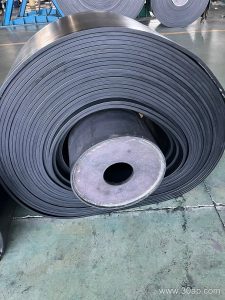
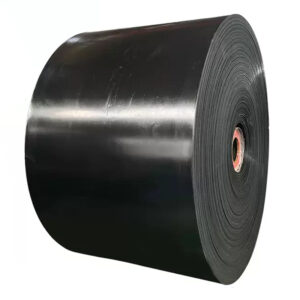
An EP fabric core conveyor belt is a rubber belt built around a carcass of polyester (E) and polyamide (P) warp and weft yarns. The EP layers give the belt low elongation in the warp direction and good resistance to impact and fatigue in the weft direction. This is the same product often called a polyester-nylon conveyor belt, and both names refer to the same construction rather than to different belt families.
Because the carcass stretches less than a cotton or nylon-only carcass under load, the belt is commonly chosen for medium and long conveying lines where take-up travel must be kept within reasonable limits. It is not a steel cord belt, and it is not a solid-woven PVC or PVG belt; those are separate product types with their own design rules.
How the Belt Is Built
A typical EP belt is assembled in layers. The fabric plies sit in the middle, frictioned and skim-coated with rubber compound, then a top cover and a bottom cover are applied and the whole slab is vulcanized. Edge construction can be cut-edge or moulded-edge depending on the application and the manufacturer.
Cover compounds are selected for the duty. Common families include abrasion-resistant, heat-resistant, oil-resistant, flame-retardant and anti-static grades, plus cold-resistant and acid-alkali-resistant versions. A buyer working in a cement plant may need heat resistance, while a coal mine usually needs flame retardancy and anti-static properties to be considered.
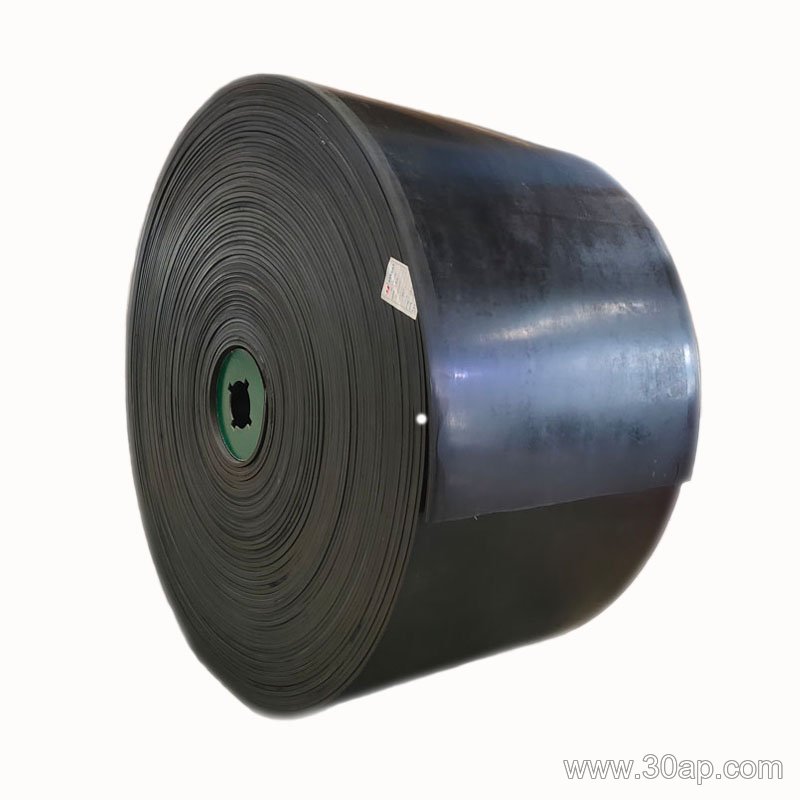
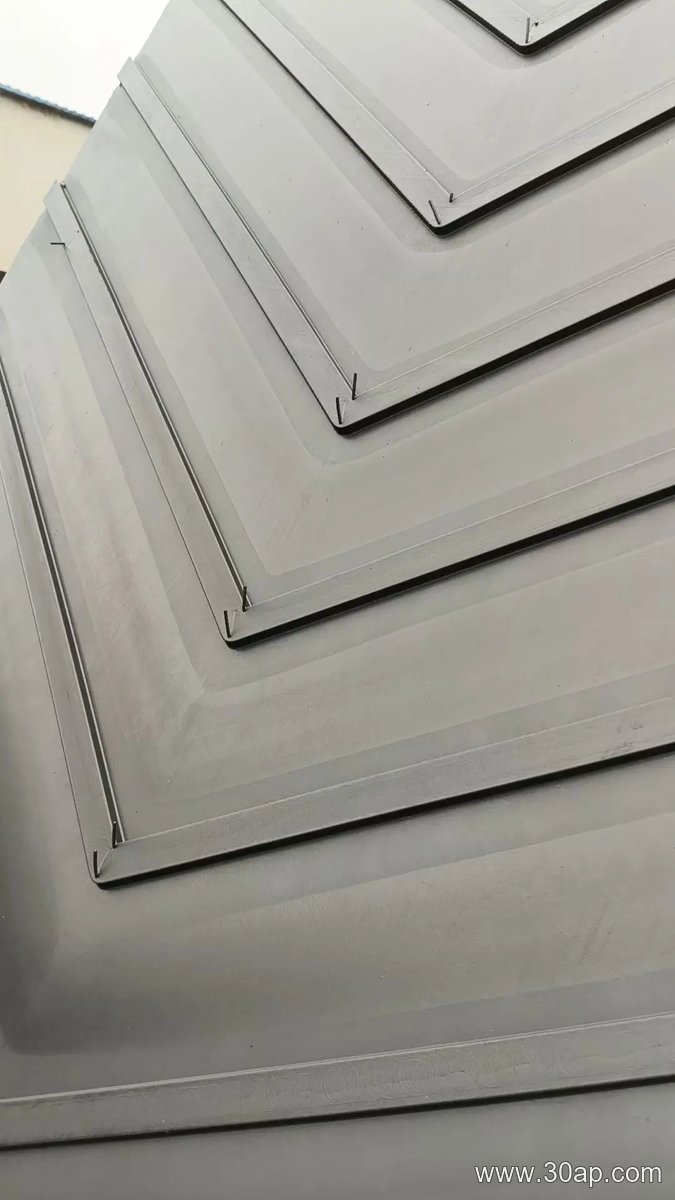
Surface form is another variable. Smooth covers suit general transport, while patterned or chevron surfaces help on inclines, and corrugated sidewall belts handle steep or vertical lifts. Those are different belt types, so they should not be ordered as a direct substitute for a standard EP belt.
Common Strength and Dimension Reference
The figures below are reference values only. Actual supply is confirmed against the belt drawing and the current manufacturer data sheet.
| Item | Typical range |
|---|---|
| Tension grade | EP200, EP315, EP400, EP500, EP630, EP800, EP1000, EP1250, EP1600, EP2000 |
| Belt width | B500, B650, B800, B1000, B1200, B1400, B1600, B1800, B2000 |
| Cover thickness | 3+1.5, 4+2, 5+2, 6+2, 8+3 mm |
| Carcass plies | 2 to 6 layers |
Belt width and pulley diameter are matched by calculation, not by a fixed table. A B1000 belt does not imply one specific pulley size, and a wider belt does not automatically require a larger shaft diameter on its own.
Where It Fits in a Conveying System
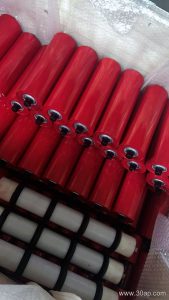
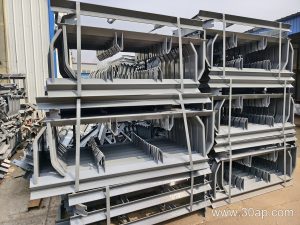
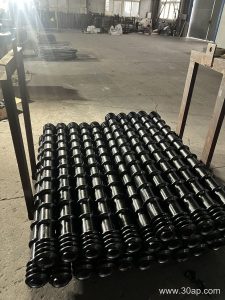
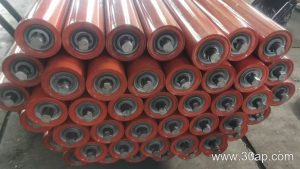
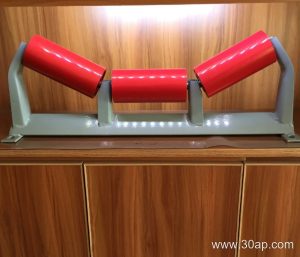
EP belts appear in mining, coal preparation, cement kiln feed, power plant coal handling, sand and gravel pits, and general bulk terminals. They run over a driven head pulley, a tail pulley and one or more bend pulleys, and they are supported on the carrying side by troughing idler rollers and on the return side by flat return rollers. Conveyor brackets hold the idlers and the pulley assemblies in alignment along the frame.
Drive, tail and bend pulleys are not interchangeable names. The drive pulley transmits torque, the tail pulley turns freely at the loading end, and a bend pulley changes belt direction or increases wrap angle. Each has its own diameter, lagging and bearing requirement.
For a comparison that helps in selection, an NN nylon belt is more elongation-tolerant and can absorb shock well, but it needs more take-up travel. A steel cord belt carries much higher tension in a single plane and is used on very long or high-capacity lines. The EP belt sits between them for many ordinary and heavy-duty duties.
Selection and Buyer Notes
- State the material, lump size, capacity and incline so the tension grade can be calculated.
- Give the pulley diameters, centre distance and take-up type, because these affect the required elongation class.
- Confirm the cover grade against the actual environment, not only against the material name.
- Check the splice method. Vulcanized splicing is usual for long lines, while mechanical fasteners suit some short or temporary installations.
- Ask for the carcass ply count and the cover thickness in millimetres, not only the tension grade.
- Store belts away from direct sunlight, oil and ozone sources, and keep them rolled on a suitable core.
Maintenance is mostly about alignment and damage control. Misaligned idler rollers and worn pulley lagging cause edge wear; sharp material at the transfer point causes cover gouging. Inspecting the belt edge, the splice and the pulley contact area at regular intervals helps avoid a sudden failure on a busy cement or coal line.