What a Cleaning Idler Does on a Conveying Line
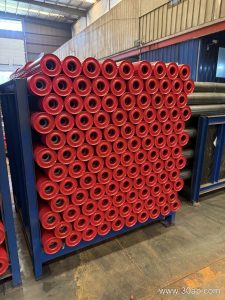
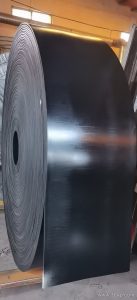
A cleaning idler is a rotating roller assembly placed so that it removes sticky material from the belt surface or keeps the belt path free of buildup. In practice, the term usually refers to a spiral or helical roller—sometimes called a spiral cleaning roller—mounted under or near the return strand. As the conveyor belt moves, the helical rubber or steel surface scuffs the belt and throws clinging fines to the side, which reduces carryback and the labor needed for manual cleanup.
Because it spins with the belt rather than scraping against it, a cleaning idler is gentler than a fixed scraper blade. That makes it popular in coal handling, cement plants, power station coal yards, and sand and gravel lines where wet or dusty material tends to stick.
How a Spiral Cleaning Roller Is Built
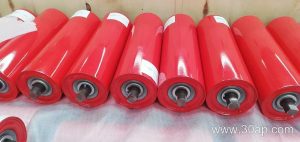
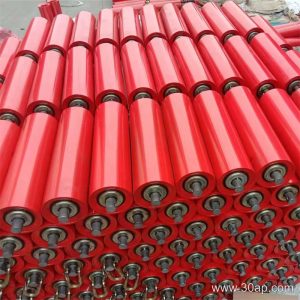
The construction is similar to other idler rollers, but the shell carries a helical feature. Typical components include:
- A steel tube body, often with a rubber or polyurethane spiral wrap
- Stub shafts welded or pressed into each end
- Sealed ball bearings housed in bearing seats
- Labyrinth or contact seals to keep out dust and moisture
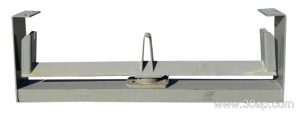
- Mounting brackets that bolt to the conveyor frame
Common roller diameters for this family include Ø89, Ø108, Ø127, Ø133, and Ø159. Bearing sizes such as 6204, 6205, 6305, 6306, and 6308 are frequently used, matched to the shaft and load rather than to belt width alone. A cleaning roller is not the same as a drive pulley, tail pulley, or bend pulley; those are drum-type components that transmit power or change belt direction, while a cleaning idler only rotates freely.
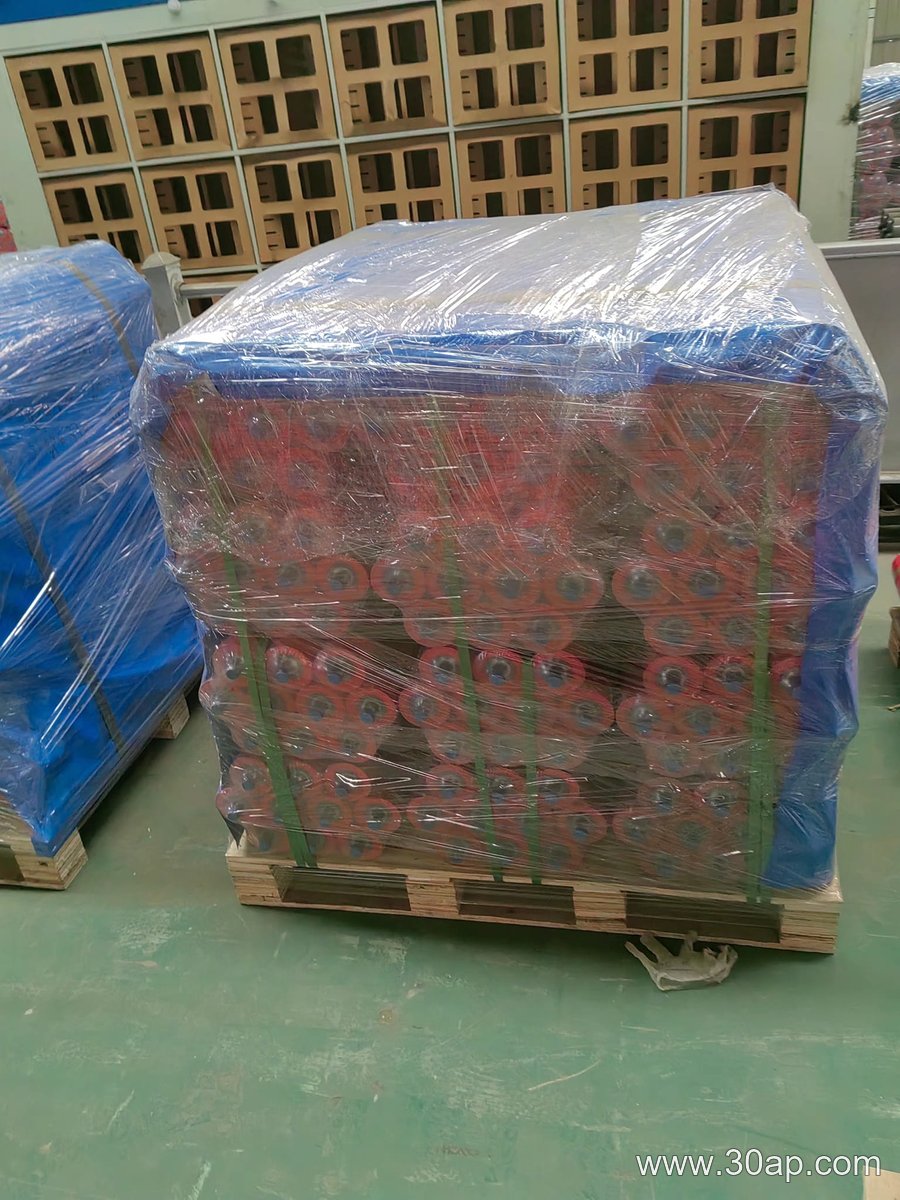
Where Cleaning Rollers Are Used
Spiral cleaning idlers appear in many bulk handling operations:
- Wash plants and aggregate crushing circuits handling damp sand and stone
- Coal preparation plants and mine transfer points
- Cement and clinker conveyors where fine powder cakes on the belt
- Power plant coal feed lines and biomass handling
- Fertilizer and grain terminals with sticky or oily residues
They are usually installed on the return run, after the discharge pulley, where the belt is empty. In some layouts a spiral roller is also placed before the tail pulley to protect it from lumps. A V-shaped return idler or flat return idler may be used nearby for support, but the spiral cleaning roller is the component doing the cleaning work.
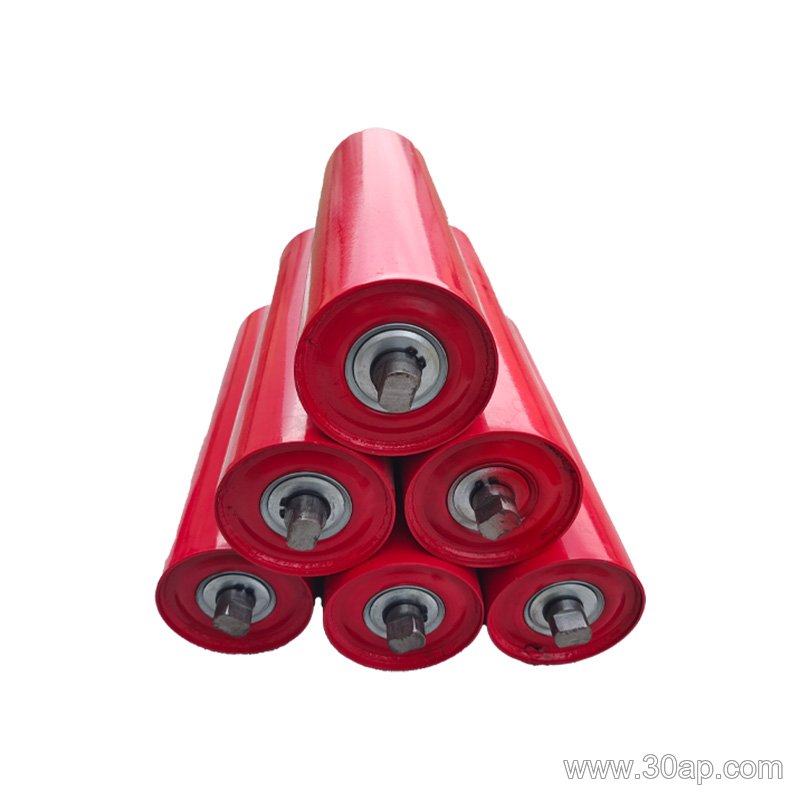
Key Dimensions to Confirm Before Ordering
Because roller length follows belt width, trough angle, and the frame arrangement, a cleaning idler should be specified as a complete assembly. The table below shows common reference values; actual sizes are confirmed by design.
| Belt width | Common roller diameter | Common roller length (return) |
|---|---|---|
| B500 | Ø89 – Ø108 | about 600 mm |
| B650 | Ø89 – Ø127 | about 750 mm |
| B800 | Ø108 – Ø133 | about 950 mm |
| B1000 | Ø108 – Ø159 | about 1150 mm |
| B1200 | Ø127 – Ø159 | about 1400 mm |
| B1400 | Ø133 – Ø159 | about 1600 mm |
| B1600 | Ø133 – Ø178 | about 1800 mm |
Roller length is not tied to one diameter, and a given belt width can accept several roller diameters depending on load and shaft size. Do not select a shaft diameter from belt width alone; the bearing, load rating, and bracket design must be checked together.
Buying and Maintenance Notes
When choosing a cleaning idler, consider the material being conveyed. Abrasive ore favors a rubber-covered spiral; hot clinker needs a heat-resistant shell; food or grain service may call for a smooth, easily cleaned surface. Check that the mounting brackets match the existing conveyor bracket spacing, and confirm the roller rotates freely by hand before installation.
Routine inspection should look for worn spiral edges, damaged seals, and noisy bearings. A cleaning roller that stops turning can flat-spot and damage the conveyor belt, so replacing a seized unit early is cheaper than repairing the belt. Keep a small stock of common sizes for critical lines, and record the roller diameter, bearing number, and shaft end type for each position.