What the Head Pulley Does on a Conveying Line
At the discharge end of a belt conveyor, the belt conveyor head pulley turns the carrying belt around and throws the material into the chute, stockpile, or the next machine. It is also called the discharge pulley or the drive pulley when it is the unit that receives torque from the gearbox or from an internal motor. In a quarry, a coal preparation plant, or a cement clinker line, this pulley is the point where the belt leaves its loaded path, so its diameter, shell, and lagging all influence belt tracking and service life.
Drive, tail, and bend pulleys are not interchangeable names. A tail pulley sits at the loading end and often works with a take-up device. A bend pulley only changes belt direction. The head pulley, by contrast, carries the highest belt tension on many layouts and usually has the largest diameter in the assembly.
How the Assembly Is Built
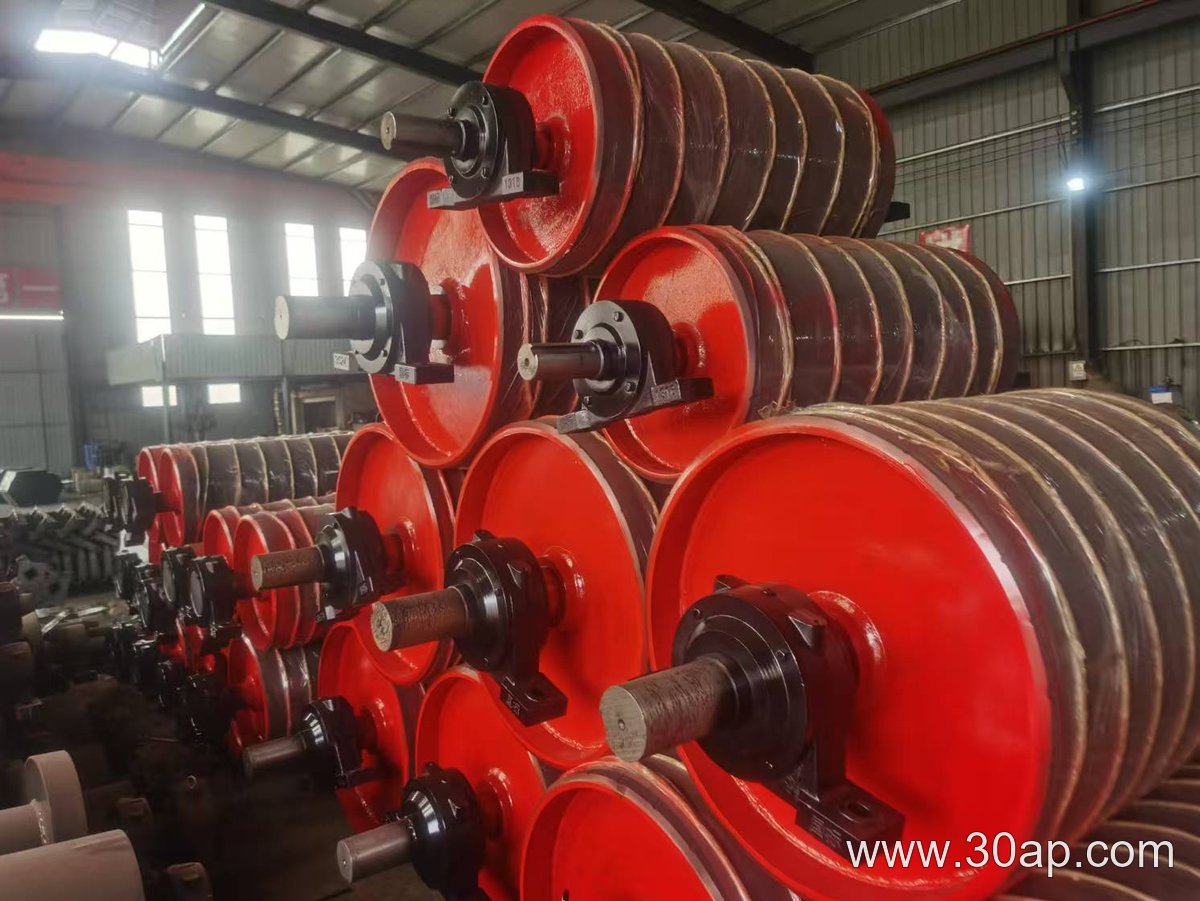
A typical unit combines a cylindrical shell, two end discs, a shaft, hubs, and bearing housings. The shell may be seamless pipe or rolled plate; the shaft is sized by torque and bending load rather than by belt width alone. Common shaft diameters include Ø50, Ø60, Ø70, Ø80, Ø90, Ø100, Ø120, Ø140, Ø160, Ø180, and Ø200, but the final value must follow the drive calculation.
- Shell and end disc welded into one rotating body
- Keyed or shrink-fit shaft connection
- Self-aligning bearing blocks mounted on the conveyor bracket
- Lagging applied to the contact face for grip and wear protection
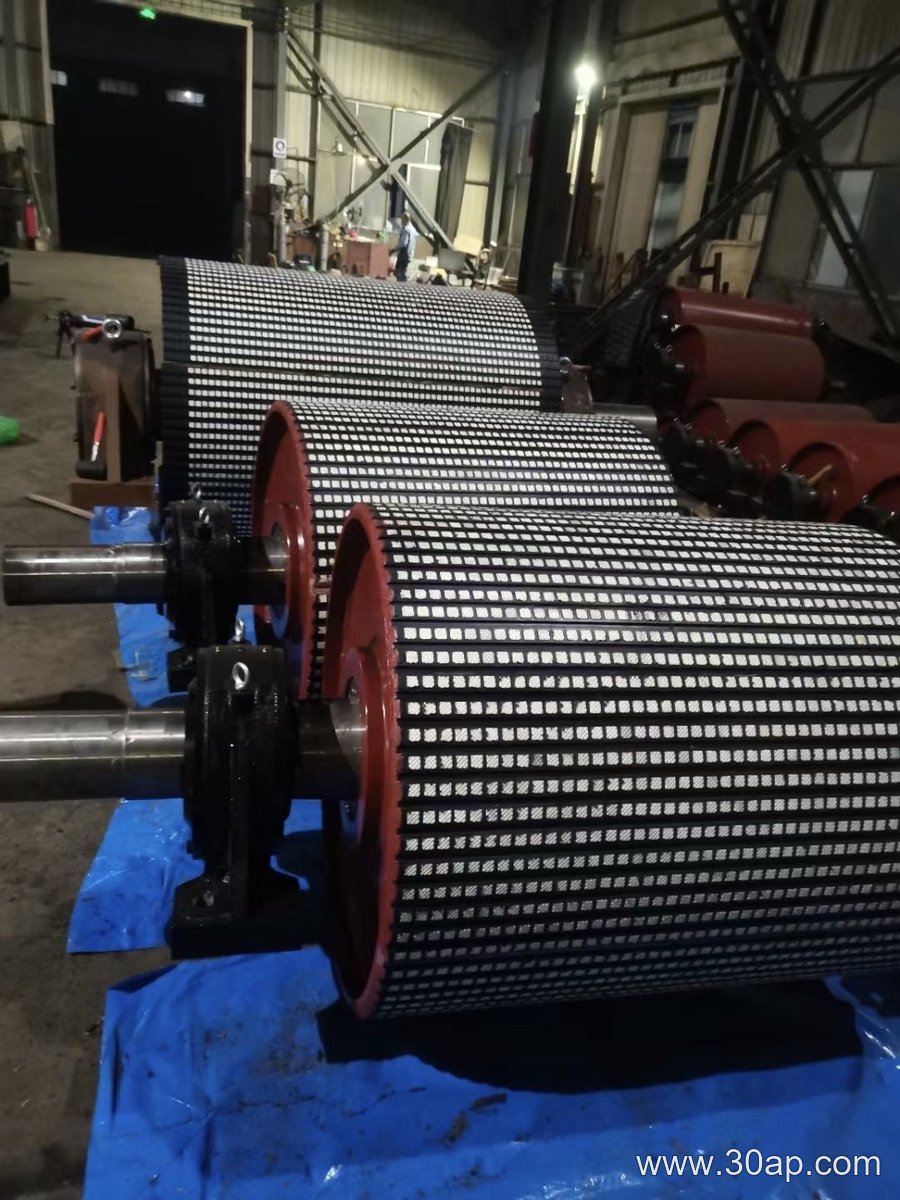
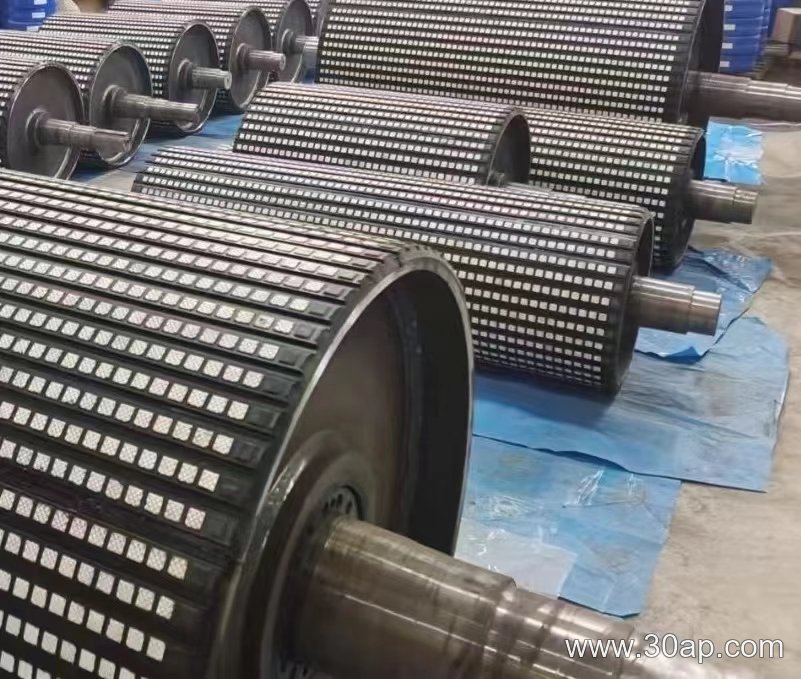
Because the belt wraps this pulley under tension, the surface form matters as much as the steel. A smooth face is used where the belt is not heavily loaded or where slip is not a concern. Rubber lagging, applied by hot vulcanization, cold bonding, or casting, raises friction and cushions the belt. Diamond and herringbone patterns help shed water and fines, while ceramic lagging is chosen for abrasive duty in iron ore or limestone service.
Common Sizes and Surface Options
The table below lists reference combinations often discussed in project drawings. They are examples, not a fixed match between one belt width and one diameter, and the actual selection should come from the conveyor design.
| Belt width | Shell face width (approx.) | Reference diameter | Typical lagging |
|---|---|---|---|
| B500 | 600 mm | Ø320 or Ø400 | Plain, 8–10 mm rubber |
| B800 | 950 mm | Ø500 or Ø630 | Diamond, 10–12 mm |
| B1200 | 1400 mm | Ø800 or Ø1000 | Herringbone, 12–15 mm |
| B1400 | 1600 mm | Ø1000 or Ø1250 | Hot vulcanized, 15 mm |
| B1800 | 2000 mm | Ø1250 or Ø1400 | Ceramic or plain, 15–20 mm |
Common diameters in the reference range run from Ø200 up to Ø1800, and lagging thickness is frequently 8, 10, 12, 15, or 20 mm. A larger diameter reduces belt flexing and helps with high-tension drives, while a smaller one saves space. In a tunnel mucking line or a fertilizer plant, the available headroom often decides the final size.
Matching the Pulley to the Belt and the Duty
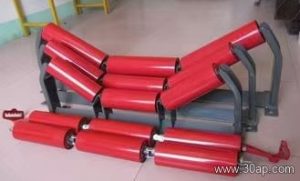
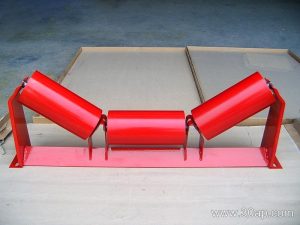
The conveyor belt must bend around the shell without cracking, so the diameter should be checked against the belt carcass and the recommended minimum pulley size from the belt supplier. An idler roller and a conveyor pulley are different components: idlers support the belt along the carrying run, while the head pulley drives or redirects it. Mixing them up leads to wrong bearing choices and poor tracking.
When slip is a risk, lagging with a grooved pattern improves grip, especially in wet coal or washed aggregate. When the material is sticky, a plain face may release fines more easily. The conveyor bracket and bearing housing must also suit the load and the available mounting space, and the take-up system should be able to keep enough wrap on the pulley.
Buyer Checklist
- Confirm whether the unit is a drive, discharge, or non-drive head position
- State belt width, belt type, and expected tension
- Give the required shaft diameter and bearing style from the design
- Specify lagging material, pattern, and thickness
- Check face width, keyway, and balancing needs
- Plan for inspection of the shell, lagging, and bearings during shutdowns
A well-chosen belt conveyor head pulley keeps discharge clean, protects the belt, and reduces unplanned stops in sand and gravel plants, power station coal handling, and similar bulk material operations.