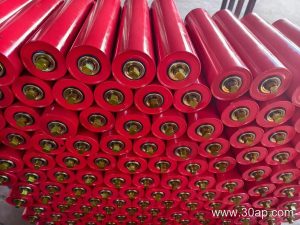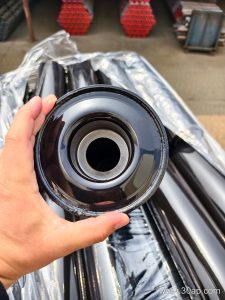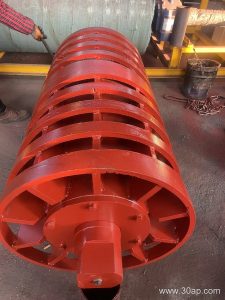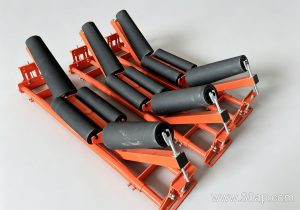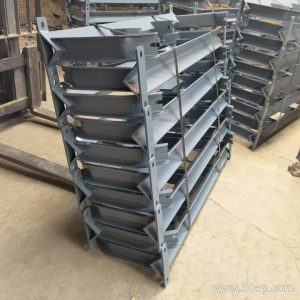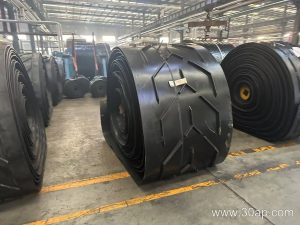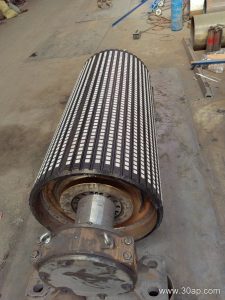
A heavy-load pulley is the rotating drum that carries and drives the conveyor belt in high-capacity bulk handling systems. Unlike a standard-duty drum, this component is engineered to withstand extreme belt tensions, abrasive materials, and continuous operation. In practice, the heavy-load pulley is often a drive pulley, though it can also serve as a tail or bend pulley when the application demands extra structural strength. The term describes a class of conveyor pulleys built for the toughest jobs, not a single interchangeable part.
Construction and Key Components
A heavy-duty conveyor pulley typically consists of a thick-walled steel shell, reinforced end discs, and a robust shaft. The shell may be machined from seamless pipe or rolled and welded, depending on the diameter and load requirements. Common diameters range from Ø200 mm up to Ø1800 mm, with larger sizes used in high-tension main drives. Shaft diameters are determined by torque and bending loads, often falling between Ø50 mm and Ø200 mm. The shaft is usually keyed or shrink-fitted to the end discs, and the assembly is dynamically balanced for smooth rotation.
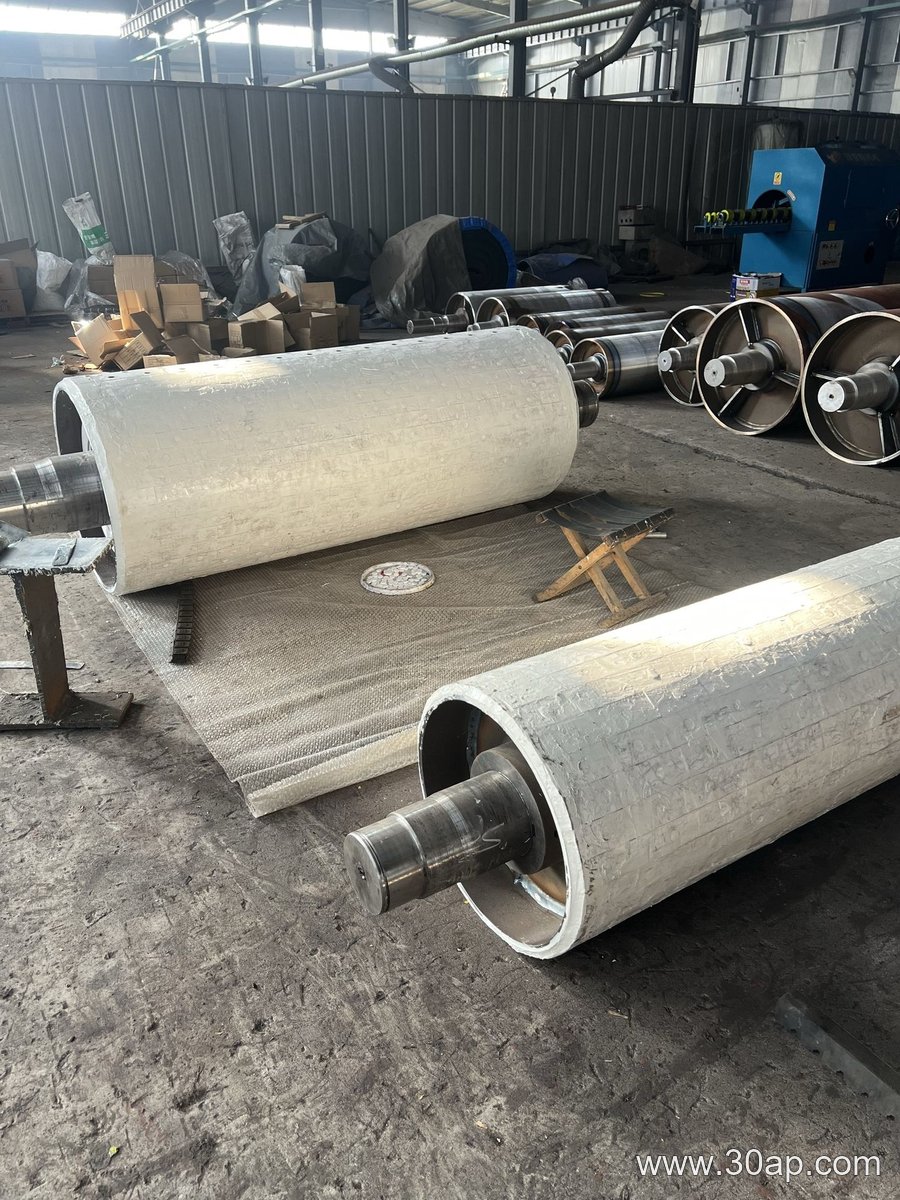
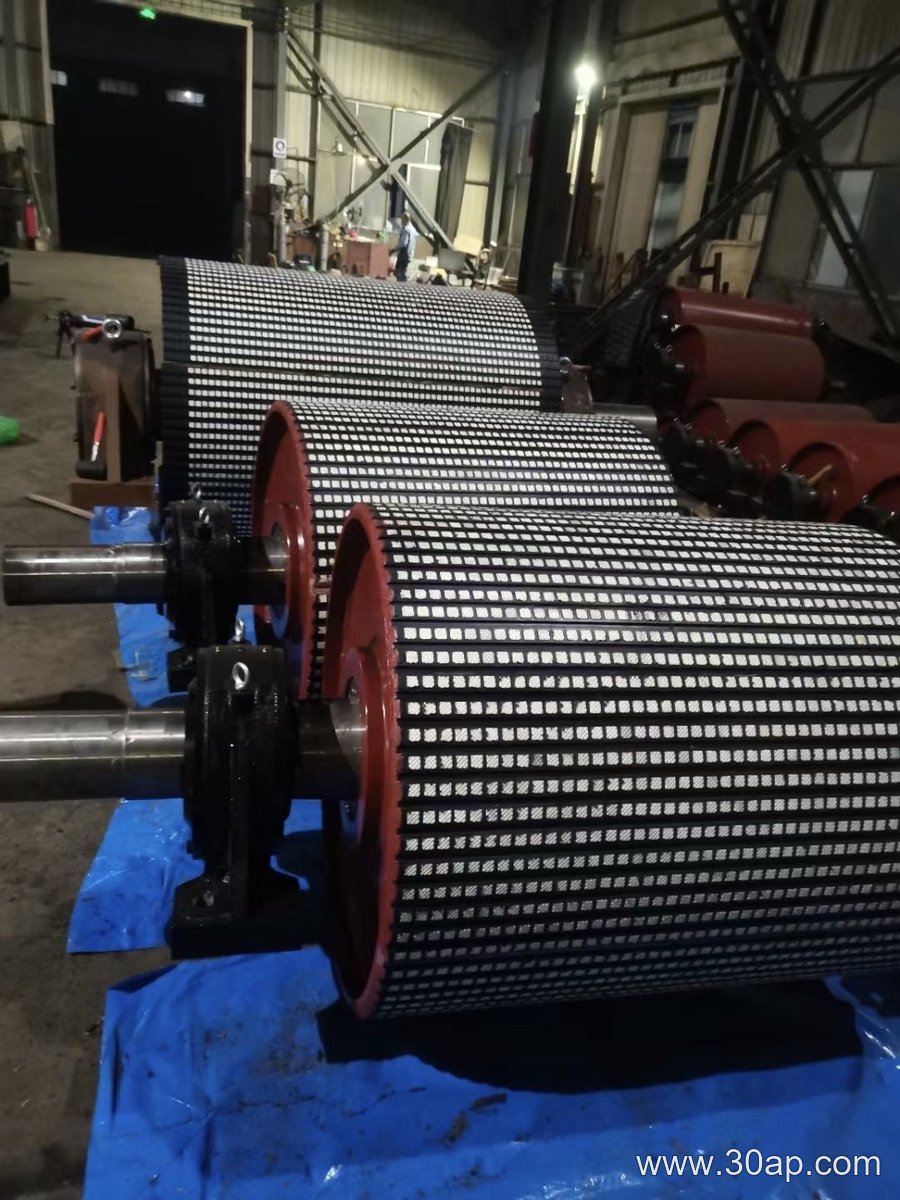
Surface treatment is critical. A heavy-load pulley may be supplied with a plain finish, but more often it receives rubber lagging to improve grip and protect the belt. Lagging options include cold-bonded rubber, hot-vulcanized rubber, diamond grooving, herringbone pattern, or ceramic tiles. Lagging thickness commonly ranges from 8 mm to 20 mm, with 10 mm or 12 mm being typical for many drive applications. The choice depends on the material being conveyed, the presence of oil or water, and the required coefficient of friction.
Where Heavy-Load Pulleys Are Used
These pulleys are found in primary crushing circuits, overland conveyors, and high-capacity transfer points. In a copper mine, for example, a heavy-load drive pulley may handle a B1400 belt carrying coarse ore. In a coal-fired power plant, a similar pulley might be used on a B1200 conveyor feeding the stockpile. The tail pulley in such systems also falls under the heavy-load category when it must resist material buildup and high tension. A bend pulley, by contrast, only changes belt direction and does not transmit significant torque, so it is not interchangeable with a drive pulley. The same applies to a wing pulley, which is designed for self-cleaning rather than heavy drive duty.
Matching Belt Width and Pulley Dimensions
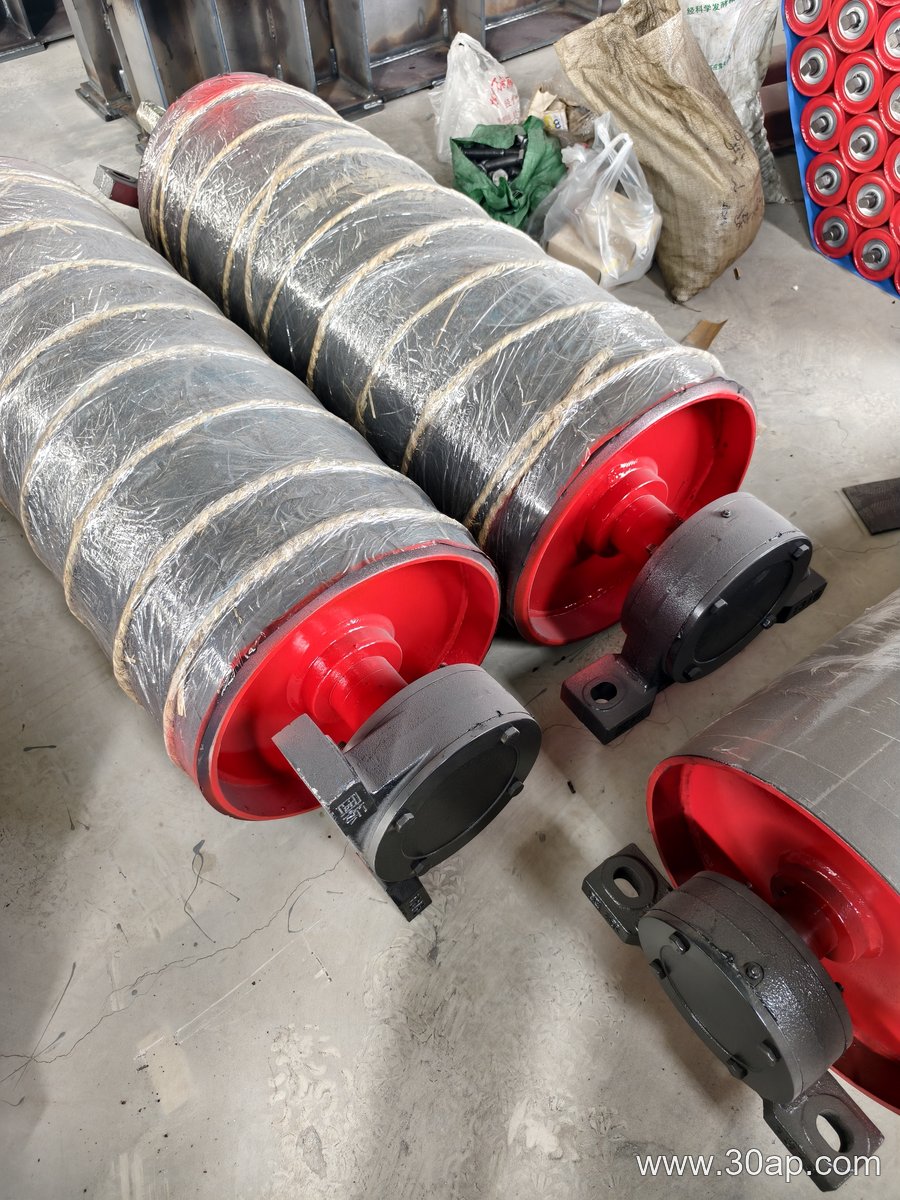
Belt width and pulley diameter are selected together, but they are not rigidly paired. A B800 conveyor might use a Ø500 mm drive pulley in one plant and a Ø630 mm pulley in another, depending on belt speed, tension, and available space. The pulley face width is usually slightly wider than the belt itself. For reference, common face widths include approximately 500 mm for B400, 600 mm for B500, 750 mm for B650, 950 mm for B800, 1150 mm for B1000, 1400 mm for B1200, 1600 mm for B1400, 1800 mm for B1600, 2000 mm for B1800, 2200 mm for B2000, and so on. These are typical values, not fixed rules, and should be confirmed by the conveyor designer.
| Belt Width | Typical Pulley Face Width |
|---|---|
| B400 | ≈ 500 mm |
| B500 | ≈ 600 mm |
| B650 | ≈ 750 mm |
| B800 | ≈ 950 mm |
| B1000 | ≈ 1150 mm |
| B1200 | ≈ 1400 mm |
| B1400 | ≈ 1600 mm |
Shaft diameter is never chosen from belt width alone. It is calculated from the torque transmitted, the belt tension, and the distance between bearings. A heavy-load pulley for a B1200 belt might have a Ø120 mm shaft in one design and a Ø160 mm shaft in another if the drive power or span is greater.
What Buyers Should Consider
When specifying a heavy-load pulley, start with the duty cycle and the belt tension. Confirm the required diameter and face width with the conveyor engineer. Decide on the lagging type and thickness: plain steel for non-drive positions, rubber lagging for standard grip, or ceramic lagging for wet or oily conditions. Check that the shaft material and keyway match the gearbox or coupling. Also consider the bearing type and the method of mounting to the conveyor bracket. Finally, verify that the pulley can be balanced and that the lagging can be replaced in the field if needed. A heavy-load pulley is a long-term investment, so the selection should be based on the actual load case, not on a generic size chart.