What a Port Conveyor Pulley Does at the Terminal
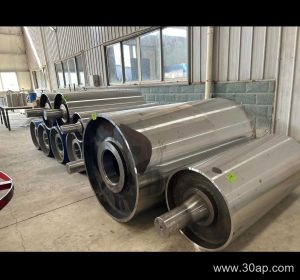
A port conveyor pulley is the rotating drum that turns, supports and steers the conveyor belt in a bulk handling system. At a port, these pulleys sit inside ship loaders, stackers, reclaimers and long jetty conveyors, where they deal with salt air, fine dust and continuous duty. The pulley is not a single generic part; each position in the belt path calls for a specific role, and the drum must be matched to that role rather than treated as a universal spare.
The drive pulley, also called the head or drive drum, transmits torque from the gearbox to the belt. The tail pulley at the return end keeps the belt tracking and provides a turning point. A bend pulley changes the belt direction without driving it, and a tension pulley takes up slack. These names are not interchangeable, and a buyer should never order a bend pulley to replace a drive pulley or the other way around.
How the Drum Is Built
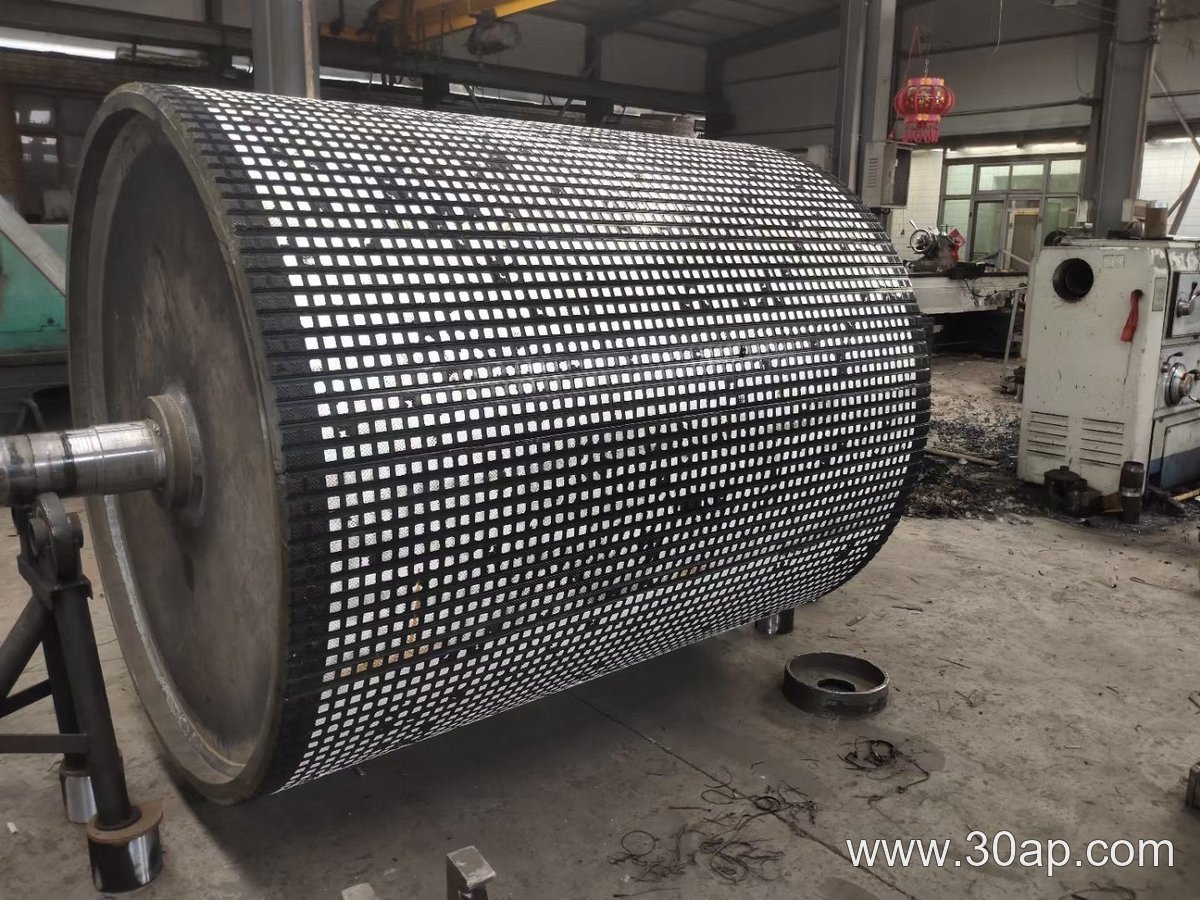
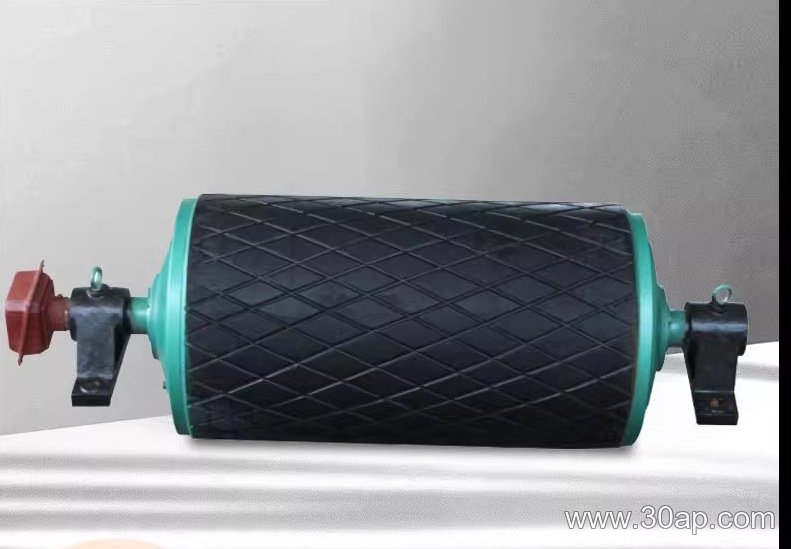
A typical unit combines a cylindrical shell, end discs, a shaft, hubs, bearing housings and a surface covering. The shell is usually seamless tube or rolled and welded steel, machined at the ends for concentricity. The shaft is sized by torque and bending load, not by belt width alone, so a B1200 system may use different shaft diameters depending on the drive arrangement and belt tension.
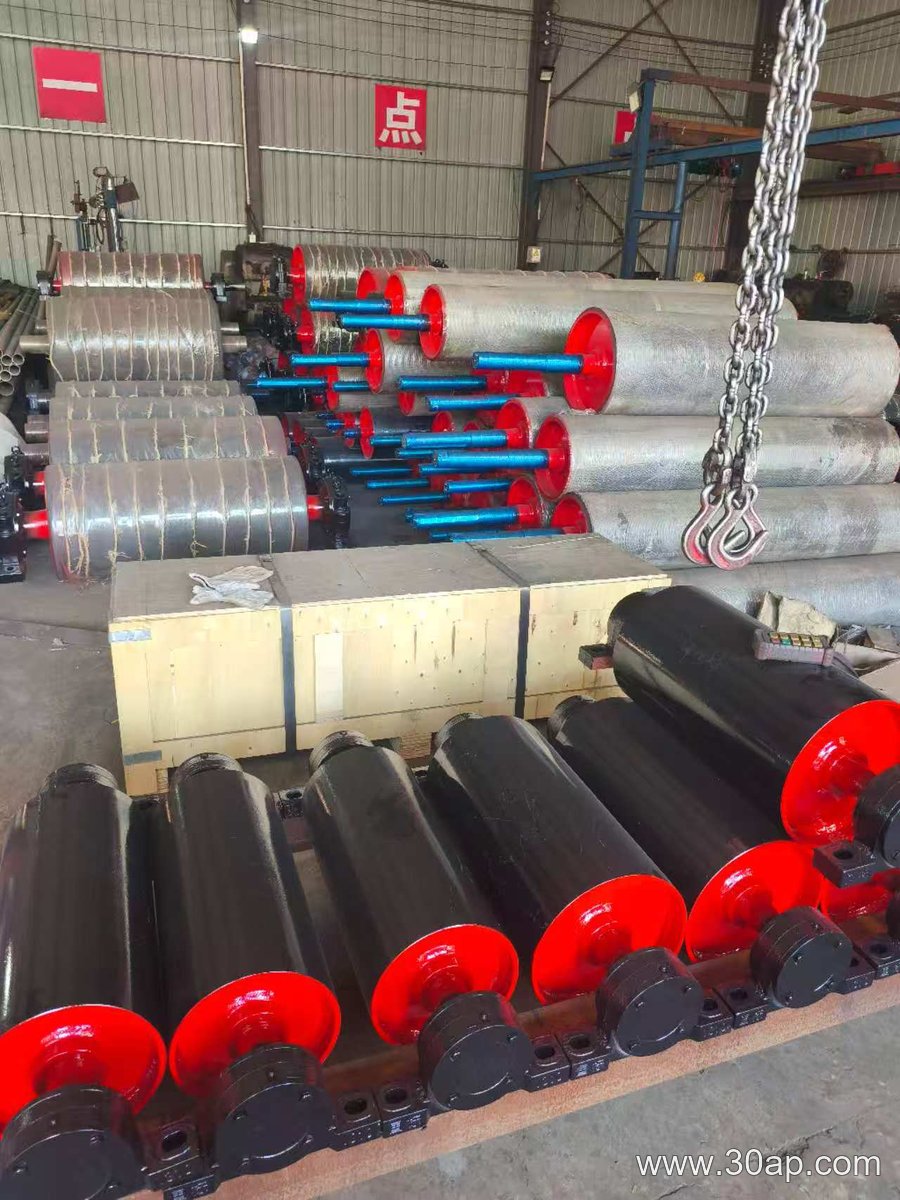
Surface finish matters as much as the body. A plain face is used where grip is not critical. Rubber lagging, applied cold or hot vulcanized, improves friction and protects the shell. Diamond or herringbone grooves help shed water and fines. Ceramic lagging is chosen for high wear zones. Common lagging thicknesses include 8, 10, 12, 15 and 20 mm, selected according to slip risk and abrasion.
Typical reference dimensions
The table below shows common combinations used in port and bulk terminal projects. These are reference values, not fixed rules; final sizes come from the conveyor design.
| Belt width | Face width (approx.) | Common pulley diameter |
|---|---|---|
| B400 | 500 mm | Ø200, Ø250, Ø315 |
| B650 | 750 mm | Ø320, Ø400, Ø500 |
| B800 | 950 mm | Ø400, Ø500, Ø630 |
| B1000 | 1150 mm | Ø500, Ø630, Ø800 |
| B1200 | 1400 mm | Ø630, Ø800, Ø1000 |
| B1400 | 1600 mm | Ø800, Ø1000, Ø1250 |
| B1600 | 1800 mm | Ø1000, Ø1250, Ø1400 |
| B1800 | 2000 mm | Ø1250, Ø1400, Ø1600 |
Shaft diameters commonly range from Ø50 up to Ø200, again determined by load rather than by belt width. A B800 × Ø500 assembly and a B1200 × Ø1000 assembly may both be correct in different positions on the same conveyor.
Where Port Pulleys Are Used
Bulk terminals handling coal, iron ore, limestone, fertilizer or grain rely on these drums at every transfer point. A single jetty conveyor may have a drive pulley at the head, a tail pulley at the loading end, several bend pulleys through the transfer tower and a tension pulley near the take-up. In a stacker-reclaimer, the boom conveyor uses similar drums under tighter space limits. The same components also appear in quarry and aggregate lines feeding a port stockyard.
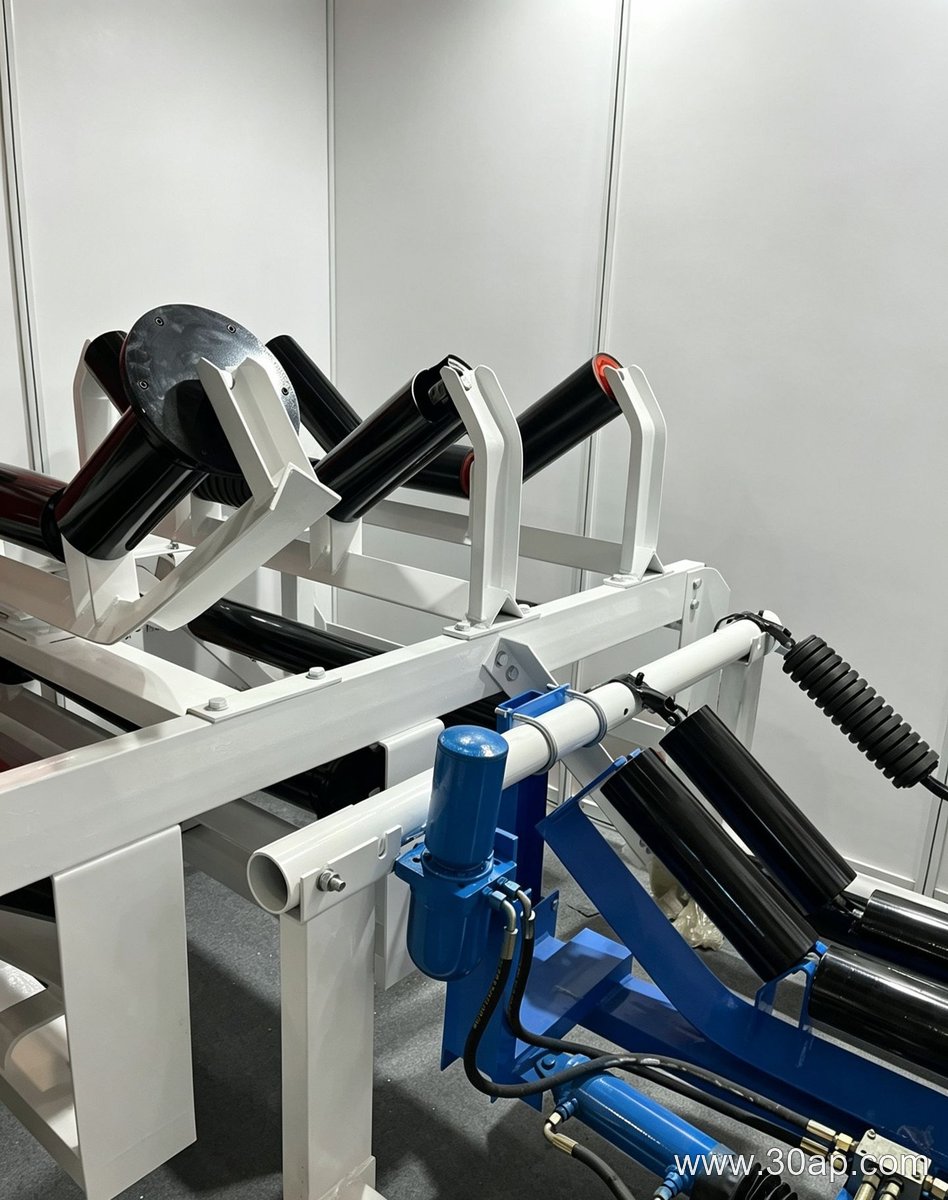
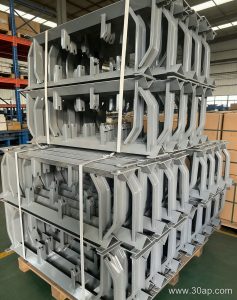
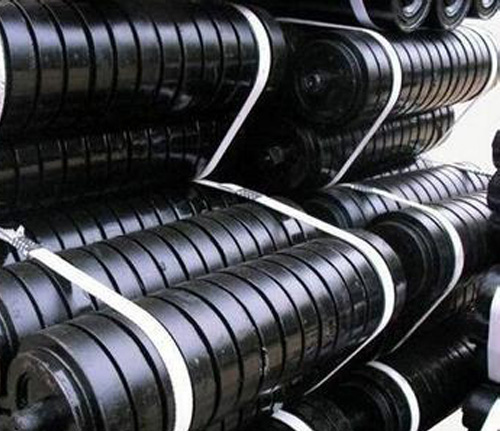
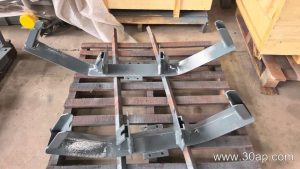
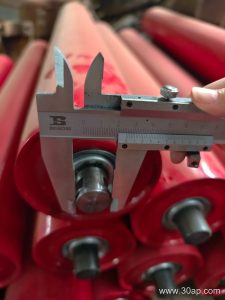
Because the environment is corrosive and dusty, seals and bearing selection deserve attention. Grease-lubricated spherical roller bearings in split housings are common, and the pulley face is often wider than the belt to allow minor mistracking. A conveyor bracket and idler roller set work alongside the pulley, but they do not replace it; the pulley carries the main belt tension and torque.
What a Buyer Should Confirm
- The exact duty: drive, tail, bend or tension. Do not substitute one for another.
- Belt width and required face width, plus the design belt tension and torque.
- Shaft diameter and material, based on the actual load calculation.
- Lagging type and thickness: plain, rubber, diamond, herringbone or ceramic.
- Bearing type, sealing arrangement and lubrication method for the port environment.
- Balancing requirement and surface protection for salt-laden air.
Ordering by belt width alone is a common mistake. A port conveyor pulley should be specified as a complete assembly with the shell, shaft, lagging and bearings matched to the conveyor’s duty. When in doubt, share the belt speed, capacity, material and pulley position with the supplier so the drum can be sized correctly for the application.