What a Return Idler Set Does
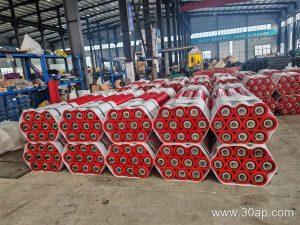
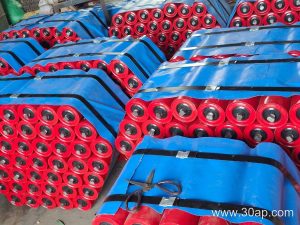
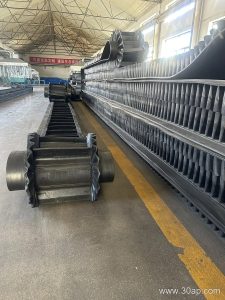
A return idler set carries the empty side of a conveyor belt on its way back to the loading point. It is not the same as a troughing set on the carrying side, and it is not a drive pulley, tail pulley, or bend pulley. The set usually consists of one or more idler rollers mounted in a frame or on conveyor brackets. The rollers rotate with the belt, supporting its weight and keeping the belt aligned. On many conveyors, a return idler set includes a single flat roller, but V-shaped and two-roller designs are also common where belt tracking matters.
The product name “return idler set” describes the complete assembly: rollers, shaft, bearings, seals, and the supporting frame. A single roller is often called a return idler roller, while the full set is the return idler set. Buyers should treat the two terms carefully, because the set is the installed unit, not just the roller.
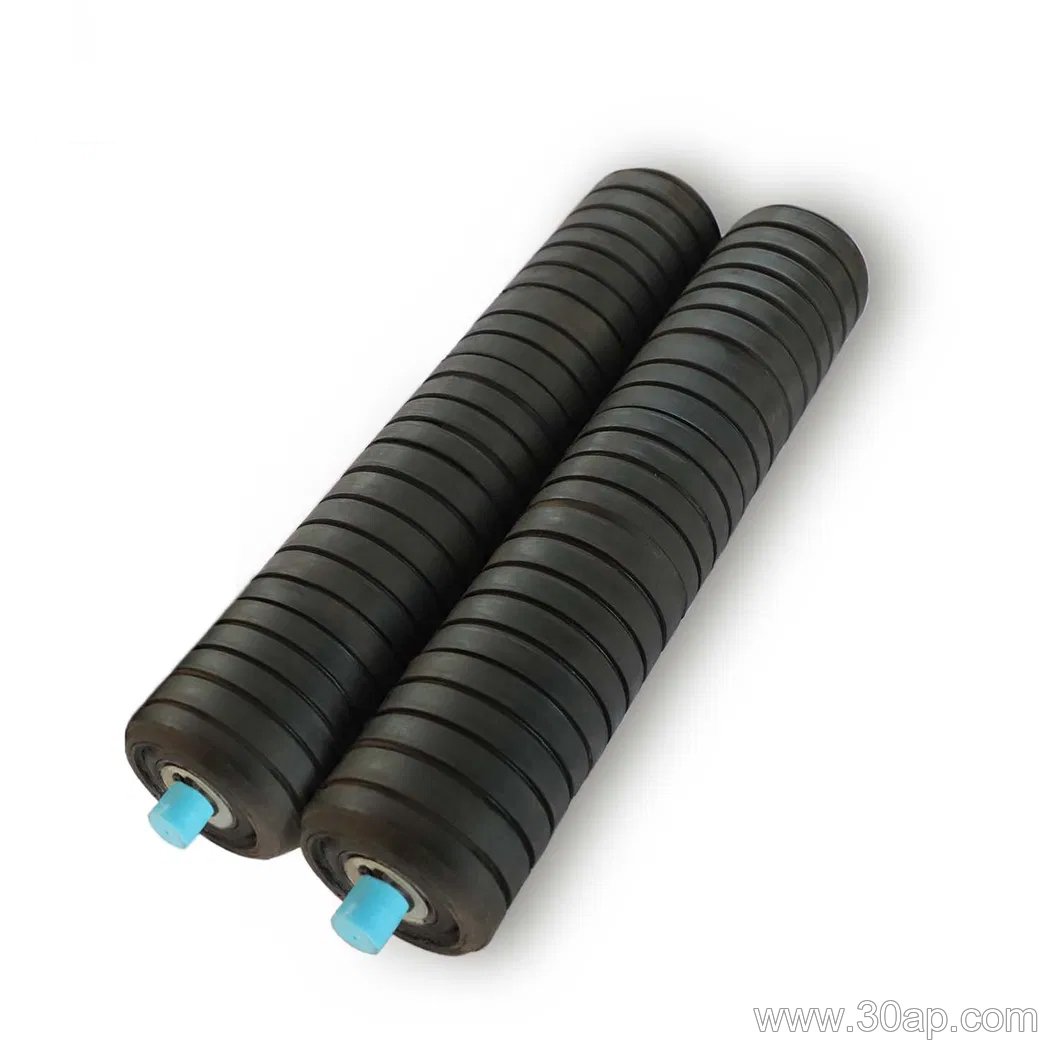
How the Set Is Built
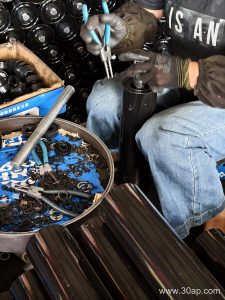
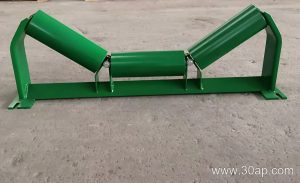
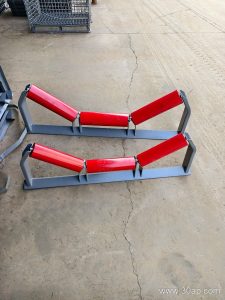
Construction starts with the roller shell. Common roller surfaces include steel tube, nylon, ceramic, and rubber rings. The shell is fitted over a shaft through bearing housings. Bearings such as 6204, 6205, 6305, 6306, 6308, or 6310 are common, but no single bearing number is tied to one roller diameter. Seals protect the bearing from dust and fine material. The frame of a return idler set may be a simple flat bracket or a shaped support that holds the rollers at the correct angle. A V-return set uses two rollers set at a shallow angle to help center the belt. A flat return set uses one roller across the belt width.
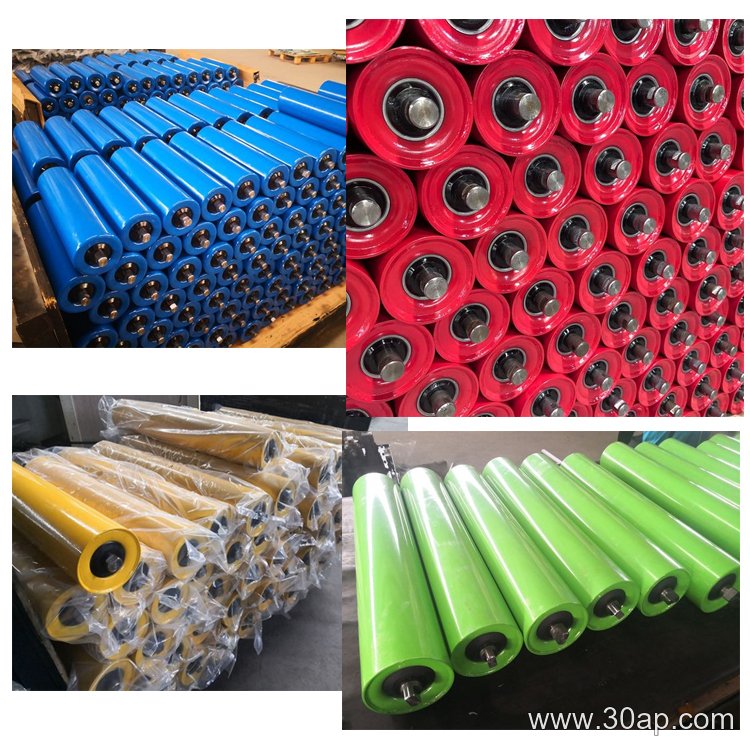
Where a Return Idler Set Is Used
These sets appear on many conveyor systems. In a sand and gravel plant, a return idler set supports the belt after the head pulley and before the tail pulley. In a coal handling system at a power plant, the return side may carry sticky fines, so a V-return or spiral roller can reduce buildup. A concrete mixing plant often uses a short conveyor where a flat return set is enough. In a tunnel boring operation, the return idler set must handle abrasive dust and constant belt movement. The same product is used in a limestone quarry, a fertilizer plant, or a grain elevator, but the roller surface and sealing choice may change with the material.
When the conveyor has a bend pulley, the return idler set still works on the return strand. The bend pulley changes belt direction, but the return idler set supports the belt between pulleys. Drive pulleys and tail pulleys are not interchangeable with return idler sets, because each does a different job.
Sizes and Selection Points
Roller diameter and belt width are the first two numbers a buyer checks. Common roller diameters include Ø63, Ø76, Ø89, Ø102, Ø108, Ø127, Ø133, Ø159, Ø178, Ø194, and Ø219. Belt widths may range from B400 to B2400. The roller length changes with belt width, trough angle, and set form. For a three-roller troughing set, common roller lengths are about 200 mm for B500, 250 mm for B650, 315 mm for B800, 380 mm for B1000, 465 mm for B1200, 530 mm for B1400, 600 mm for B1600, 670 mm for B1800, and 750 mm for B2000. These are examples, not fixed matches. Side rollers and center rollers can differ. A return idler set may use one roller or two, and the length should be confirmed against the actual conveyor design.
| Parameter | Common range or example |
|---|---|
| Roller diameter | Ø63, Ø76, Ø89, Ø102, Ø108, Ø127, Ø133, Ø159, Ø178, Ø194, Ø219 |
| Belt width | B400, B500, B650, B800, B1000, B1200, B1400, B1600, B1800, B2000, B2200, B2400 |
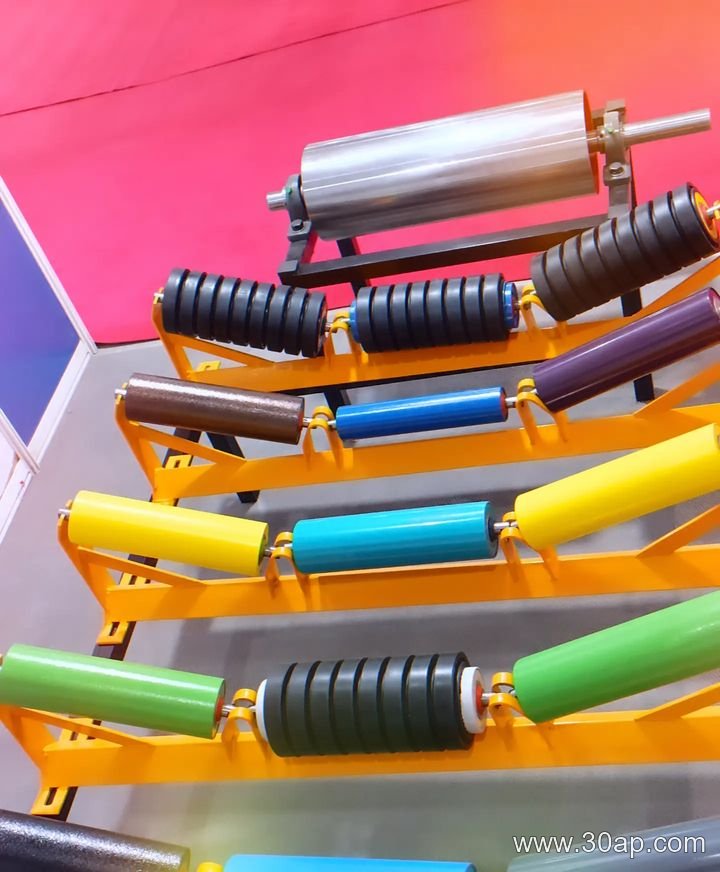
| Set form | Single roller, two-roller V-return |
| Roller surface | Steel tube, nylon, ceramic, rubber rings |
| Bearing | 6204, 6205, 6305, 6306, 6308, 6310 |
Selection also depends on belt speed, load, and environment. A dusty site may need better seals. A wet or sticky site may need a spiral or rubber-covered roller. A long conveyor may need a V-return set to keep the belt centered. The buyer should give the belt width, roller diameter, shaft size, bracket spacing, and the material being carried. If the return idler set is meant to replace an existing unit, the mounting dimensions matter as much as the roller diameter.
Maintenance and Buying Notes
A return idler set should turn freely. A seized roller can wear the belt edge or cause mistracking. Inspect the rollers for flat spots, damaged seals, and material buildup. Replace the set when the shell is worn through or the bearing is noisy. Keep the frame and conveyor bracket clean so the rollers can move. When ordering, do not assume that one belt width matches one pulley diameter. The drive pulley, tail pulley, and bend pulley have their own dimensions, while the return idler set is selected from the return strand requirements. A well-matched return idler set reduces belt wear and keeps the conveyor running smoothly.