What a Three-Roll Idler Bracket Does
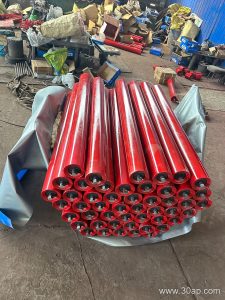
A three-roll idler bracket is the support frame that holds three idler rollers in a trough shape across a conveyor belt. The two outer rolls angle upward while the center roll sits flat, forming the trough that keeps bulk material centered on the belt. This bracket is also called a three-roll troughing idler bracket or a three-roll carrying idler bracket, and it is one of the most common support components in a belt conveyor line.
The bracket does not move material on its own. It positions the idler rollers so they can rotate freely and carry the loaded belt with minimal friction. Belt tracking, material spillage, and roller life all depend on how well this bracket holds the rolls in alignment.
Construction and Common Forms
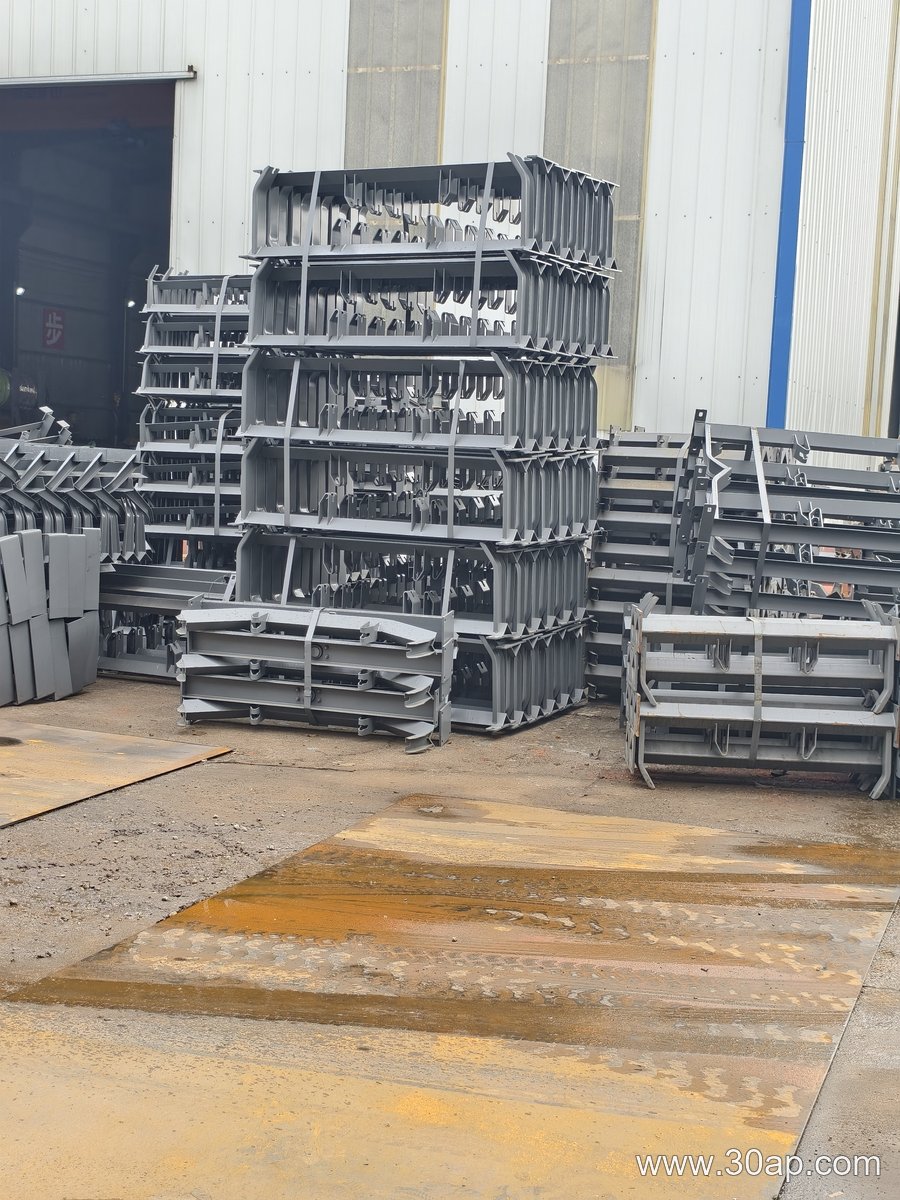
Most three-roll idler brackets are made from angle steel, channel steel, or bent steel plate. The frame has three mounting positions: a horizontal seat for the center roll and two inclined seats for the wing rolls. Slots or holes in the base allow the bracket to be bolted to the conveyor stringer.
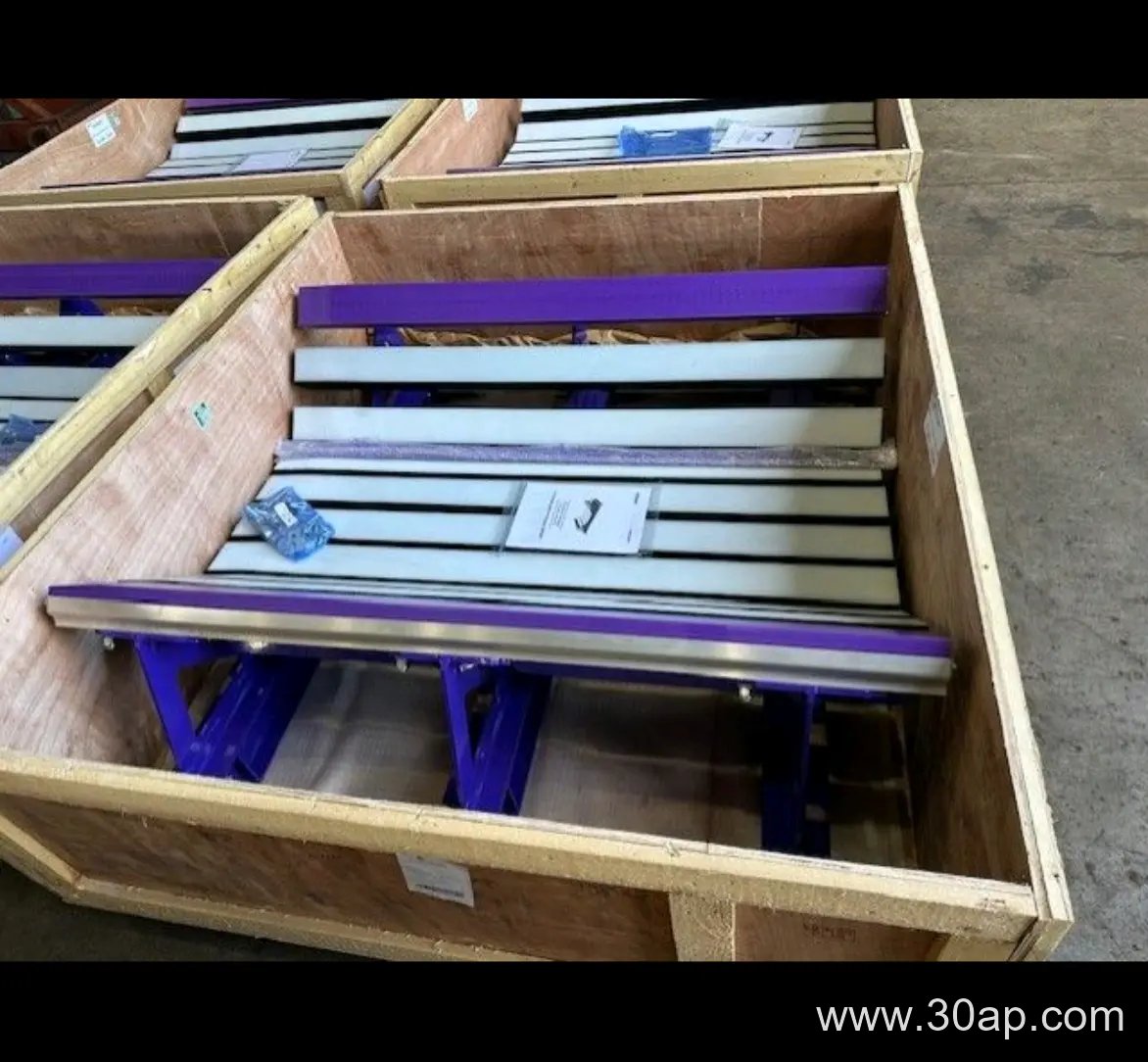
A fixed bracket holds one trough angle. An adjustable three-roll idler bracket can be set to different trough angles by moving the wing roll mounts or using slotted plates. This is useful when a conveyor handles materials with different flow characteristics or when the belt needs a gentler transition.
Typical reference data
The table below shows common combinations used in design work. These are reference values, not fixed rules, and the final choice depends on belt width, material, capacity, and conveyor layout.
- Belt width: B500, B650, B800, B1000, B1200, B1400, B1600
- Trough angle: 20 degrees, 30 degrees, 35 degrees, 45 degrees
- Idler diameter: 89 mm, 108 mm, 133 mm, 159 mm, 194 mm
- Frame material: angle steel, channel steel, bent steel plate
For example, a B800 belt may be paired with a 35 degree trough and 108 mm rolls on one conveyor, while a B1200 line might use a 45 degree trough with 133 mm rolls. The bracket mounting hole spacing and crossbeam length change with belt width and trough angle, so they are determined by the conveyor design rather than a single universal number.
Where It Fits in the Conveyor
The three-roll idler bracket belongs to the carrying side of a belt conveyor, usually spaced at regular intervals along the loaded section. It is not a drive pulley, tail pulley, or bend pulley, and it should not be confused with those components. Drive, tail, and bend pulleys transmit power or change belt direction, while the idler bracket only supports the belt and its load.
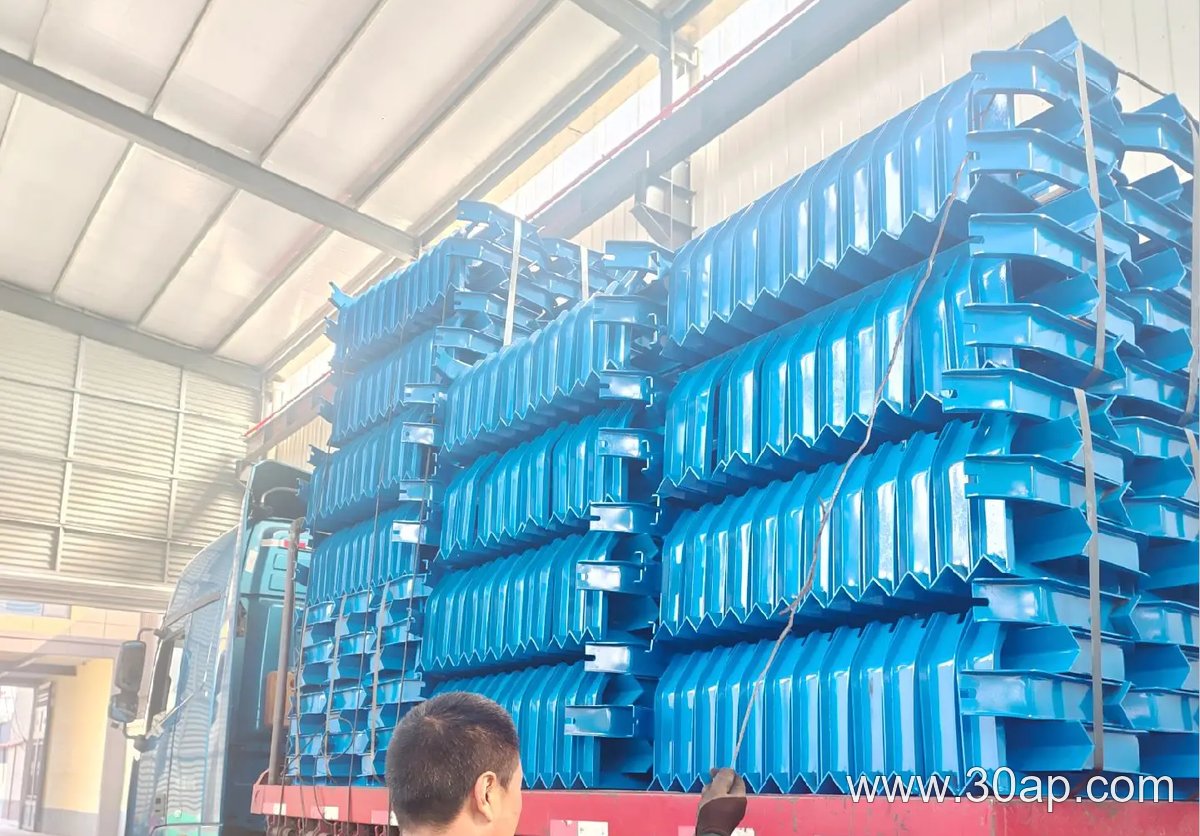
Other bracket types serve different positions. A return bracket supports the empty belt on the return run, and a V-return bracket helps center the belt on the way back. A transition bracket is used near a pulley to guide the belt from a flat profile into a trough. These are related parts, but each has its own role.
Common applications include quarry and limestone crushing lines, coal washing plants, cement plants, power station coal handling, port bulk terminals, steel plants, and sand and gravel production. In each case, the bracket works together with idler rollers, the conveyor belt, and the conveyor frame to keep material moving smoothly.
Choosing the Right Bracket
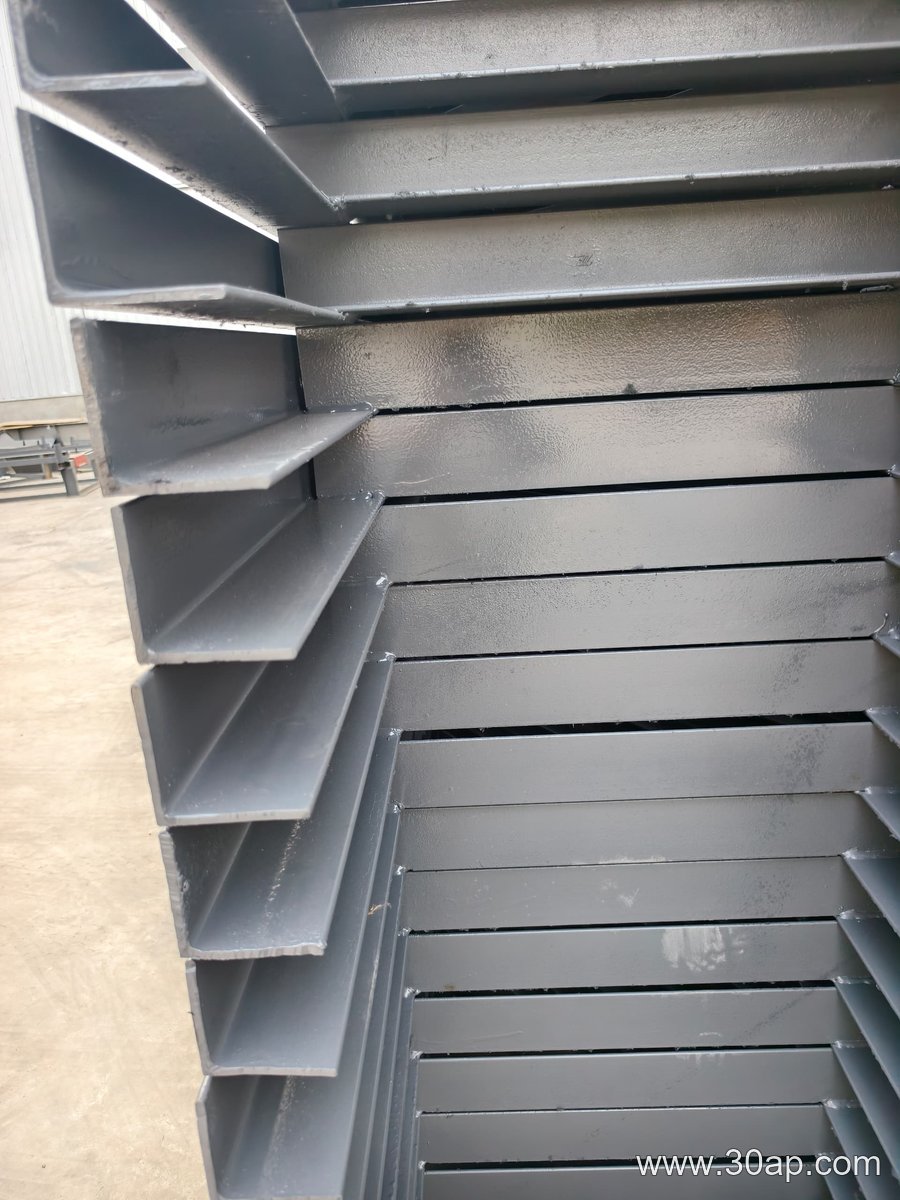
Buyers should start with the belt width and the required trough angle. The bracket must match the stringer hole pattern and the roll diameter used on the rest of the conveyor. If the conveyor carries hot, abrasive, or heavy material, a heavier frame or a cushioning bracket may be needed.
Adjustable brackets are worth considering when the conveyor handles more than one material type or when the belt has a tendency to mistrack. Forward-tilt brackets, often set at about 1.5 to 2 degrees, can help steer the belt, but they must be used consistently along the line.
Inspection points include loose bolts, bent frames, worn mounting slots, and rollers that no longer turn. A damaged bracket can cause the belt to run off center, wear the edges, or spill material. Replacing a worn three-roll idler bracket before it fails is usually simpler than correcting the belt damage that follows.
For a reliable match, provide the conveyor width, trough angle, roll diameter, and mounting dimensions when requesting a three-roll idler bracket. The bracket is a small part of the conveyor, but it directly affects belt life and operating cost.