What a Belt Conveyor Bracket Does
A belt conveyor bracket is the structural support that holds the idler roller in place and sets the belt profile along the carrying and return sides of a conveyor. It is often called a conveyor bracket or idler frame in workshop drawings. The bracket does not move material by itself, but it decides whether the conveyor belt runs centered, whether the trough is deep enough to contain the load, and whether the rollers can be serviced without dismantling the whole line.
In a typical troughing station, the bracket carries two or three rollers at a chosen trough angle. On the return run, a different bracket supports a single flat roller or a V-shaped set. The same conveyor may use several bracket forms along its length because loading, transition and tracking zones behave differently.
How the Bracket Is Built
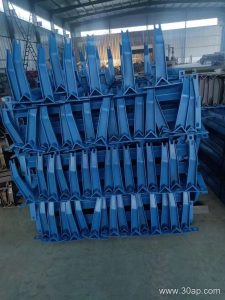
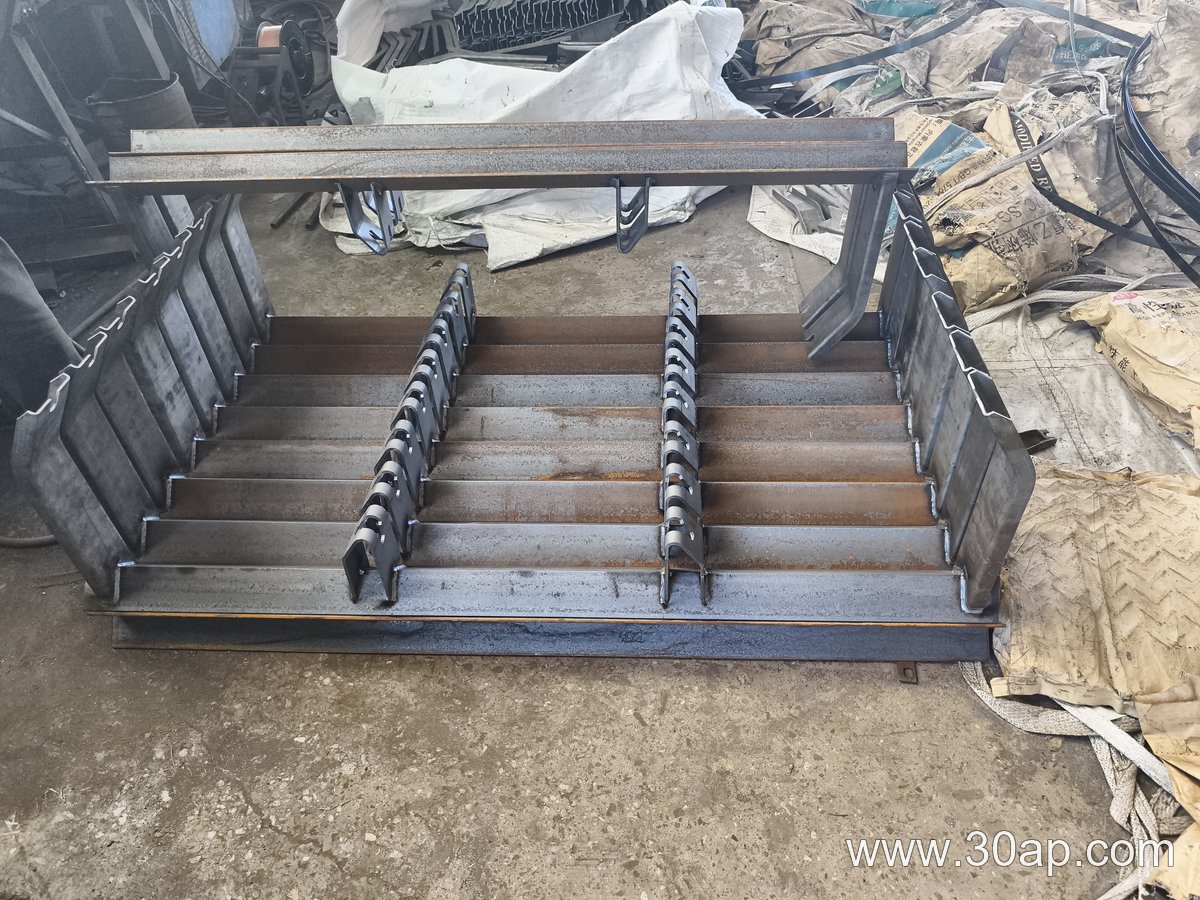
Most frames are made from angle steel, channel steel or folded steel plate. The fabrication steps are simple but the details matter: cutting to length, punching or drilling mounting holes, welding the roller seats, and checking that the roller slots are square to the belt centerline. The bracket may be fixed or adjustable. An adjustable bracket lets maintenance staff change the trough angle between common values such as 20, 30, 35 or 45 degrees without replacing the frame.
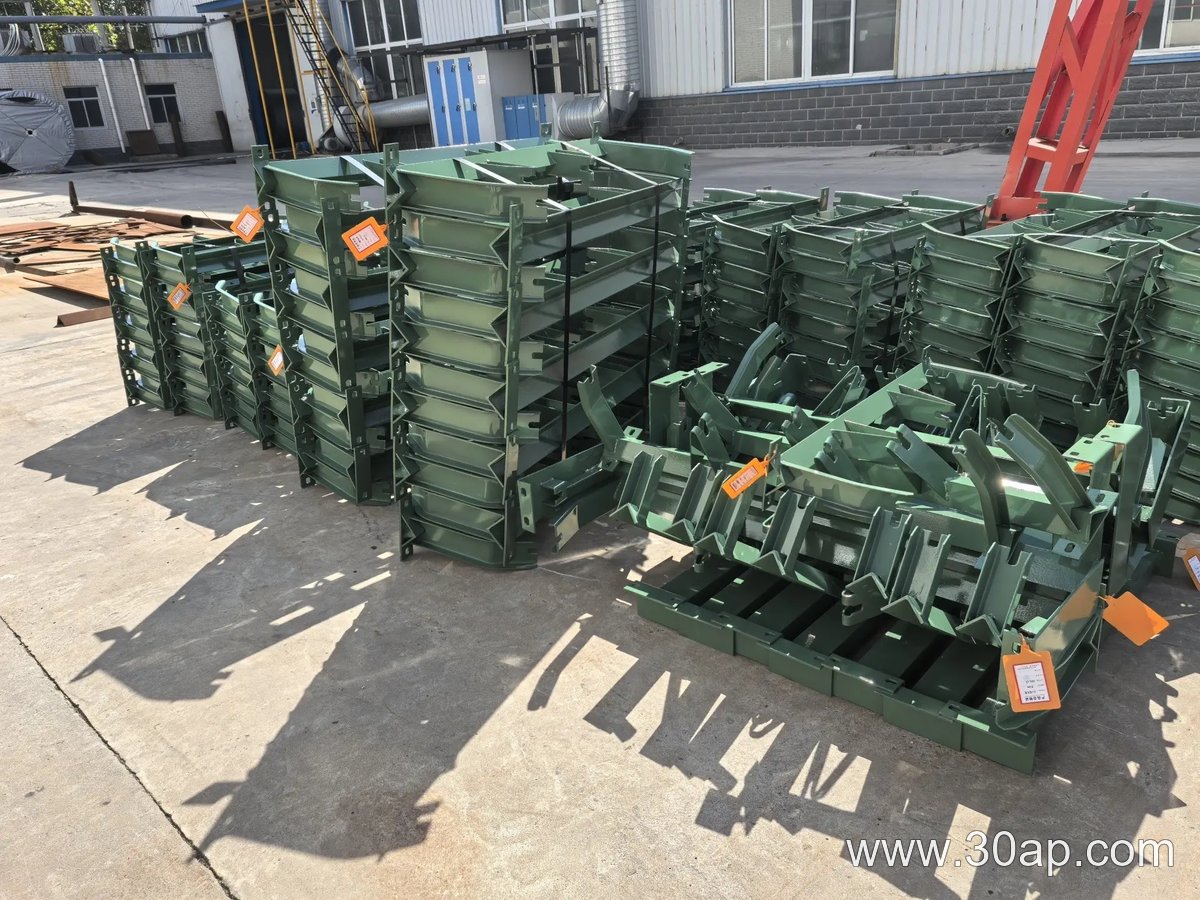
The mounting hole spacing and crossbeam length follow the belt width, trough angle and roller diameter rather than a single universal number. For example, a B800, 35 degree, Ø108 arrangement is a common combination, while a B1200, 45 degree, Ø133 set may be used where a deeper trough is needed. These are reference examples, not fixed pairings. A wide belt can run with different trough angles, and a given belt width does not lock the user into one roller diameter.
Main Types and Where They Fit
- Troughing bracket: supports two or three rollers to form the carrying trough.
- Transition bracket: eases the belt from the flat pulley area into the full trough.
- Return bracket: carries the empty belt, often with a single flat roller.
- V-return bracket: uses two rollers in a shallow V to help center the return belt.
- Impact bracket: mounted under the loading point to absorb falling material energy.
- Self-aligning bracket: allows slight rotation to correct belt drift.
- Suspended bracket: hung from a wire or chain, useful where floor supports are difficult.
These names describe different jobs. A return bracket is not a substitute for a troughing bracket, and a self-aligning frame should not be used as a general carrying station. The right choice depends on belt width, material lump size, loading method and maintenance access.
Applications in the Field
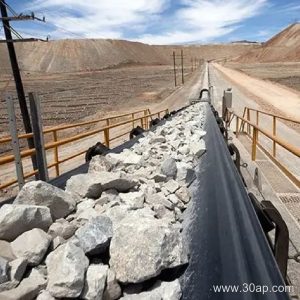
Belt conveyor brackets appear wherever a belt moves bulk material. In a crushing and screening plant, troughing brackets carry the belt after the crusher and transition brackets guide it toward the head pulley. In a grain silo or fertilizer warehouse, lighter frames with smooth roller seats reduce wear on the conveyor belt. In a tunnel mucking line, impact brackets under the loading chute protect the rollers from falling rock. The same frame family also works in a coal washing plant or a power station coal yard, though the user should confirm the roller diameter and shaft size against the actual idler roller being installed.
What Buyers Should Check
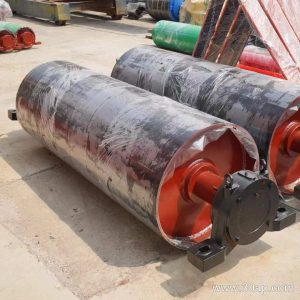
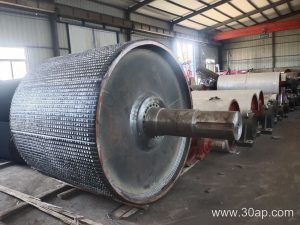
Before ordering, confirm the belt width, the trough angle or return arrangement, the roller diameter and the shaft end shape. Check the mounting hole spacing on the conveyor stringer, because a frame that fits one conveyor may not fit another. Ask whether the bracket is fixed or adjustable, and whether the roller slots are designed for a specific idler roller brand. For dusty or wet conditions, a folded plate design with drain openings can reduce material build-up. The conveyor pulley at the drive end is a separate component and does not replace the bracket; the bracket only supports the rollers between pulleys.
Finally, treat any catalogue number as a starting point. Site conditions, belt tension and maintenance practice all affect how long a bracket lasts. A practical spare parts list usually includes several bracket types rather than one universal frame.