What a Heavy-Duty Ceramic Lagged Pulley Does
A heavy-duty ceramic lagged pulley is a conveyor pulley whose shell is covered with rubber that holds embedded ceramic tiles. The ceramic gives the surface a hard, gritty texture, while the rubber cushions the conveyor belt and keeps the tiles in place. In practice, this pulley is most often used as a drive pulley at the head of a conveyor, where it must transmit torque without slipping.
The same product is also called a ceramic rubber lagged pulley or a ceramic-coated pulley drum. Those names describe the same assembly, not a different component. A drive pulley, a tail pulley, and a bend pulley are not interchangeable; each sits at a different point in the conveyor and does a different job.
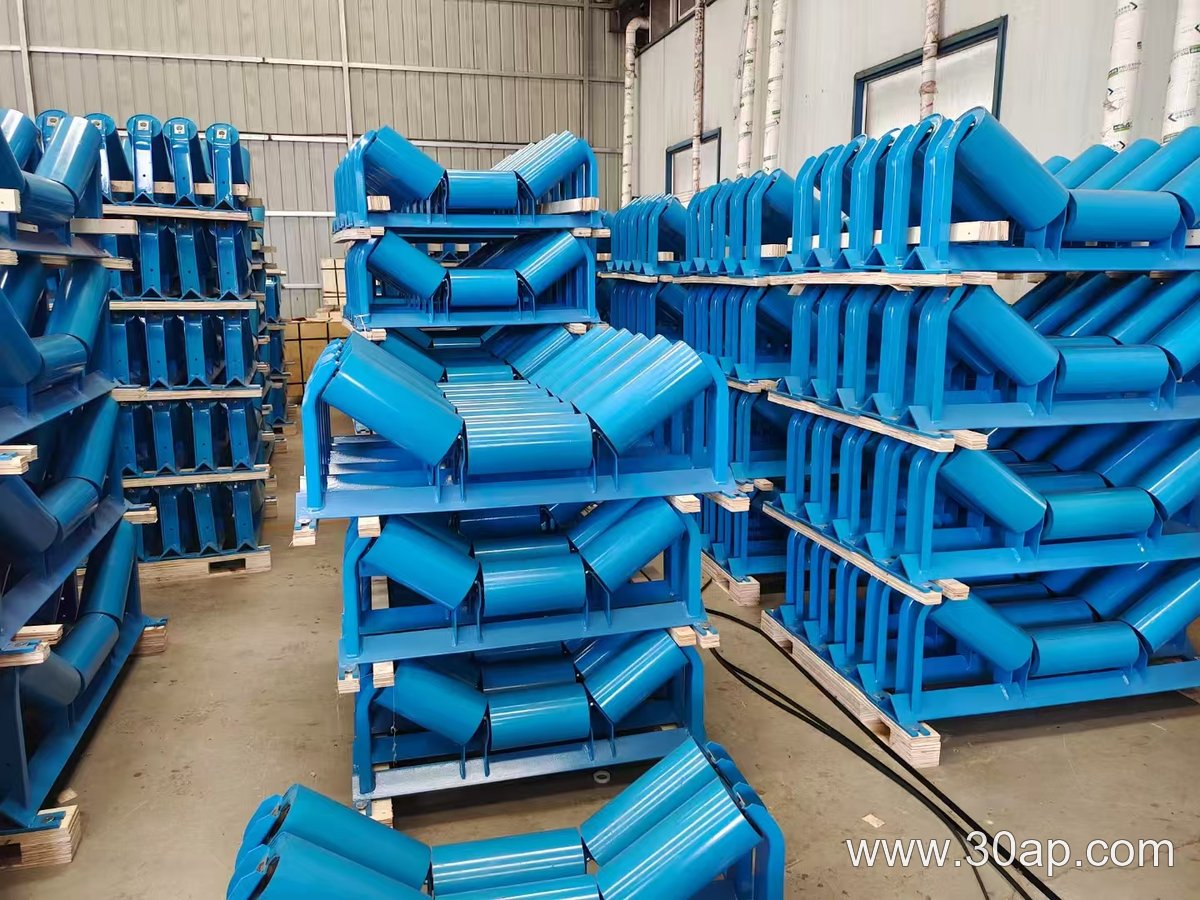
How the Ceramic Layer Is Built
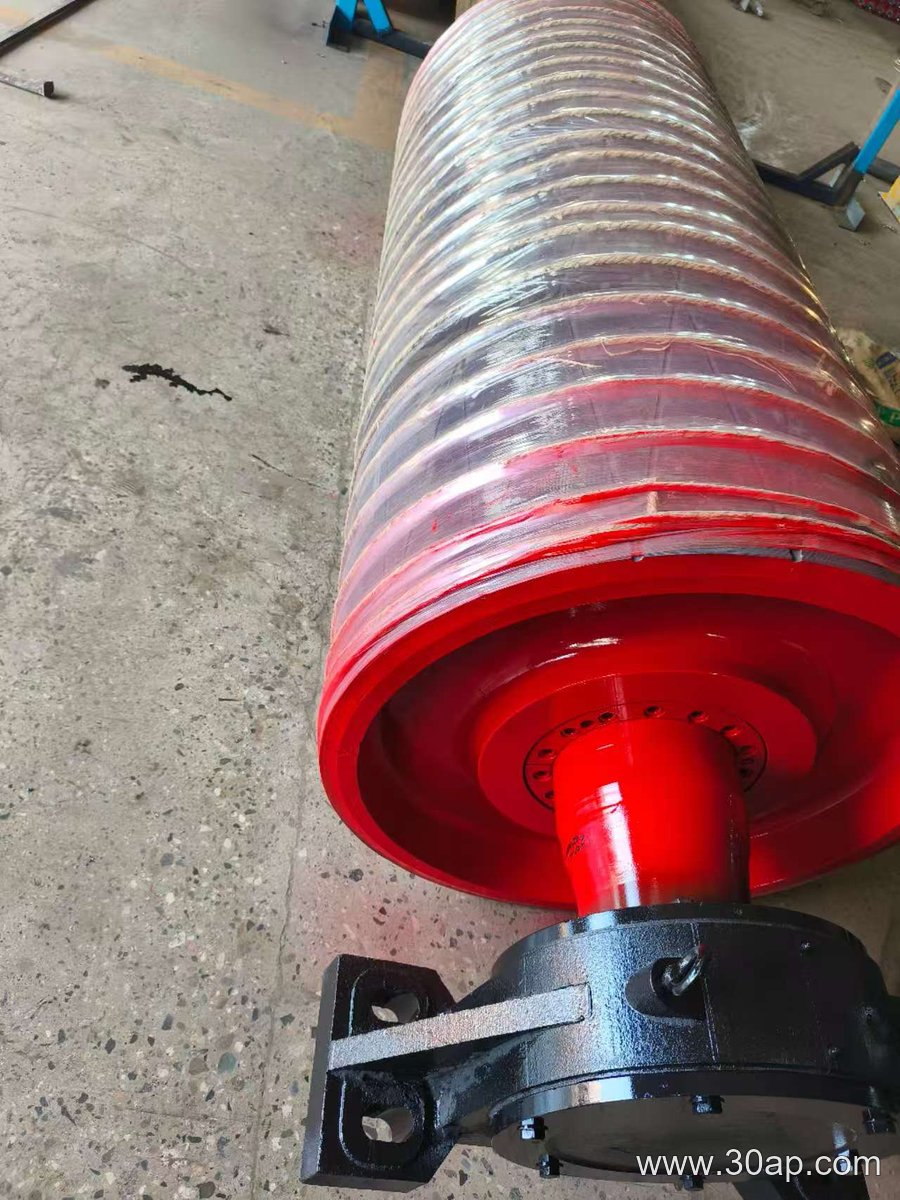
The build starts with a steel shell, hub, and shaft. After machining, the shell is covered with a rubber layer, usually 8 mm to 20 mm thick, and ceramic tiles are bonded into the rubber. The tiles are commonly arranged in a dimpled or diamond pattern, leaving small gaps that let water and fine material escape.
That pattern matters. On a wet or muddy belt, a smooth rubber surface can hydroplane. The ceramic studs bite into the belt cover and push water aside, so the drive keeps grip. Rubber alone can also polish and harden over time; ceramic keeps its edge much longer.
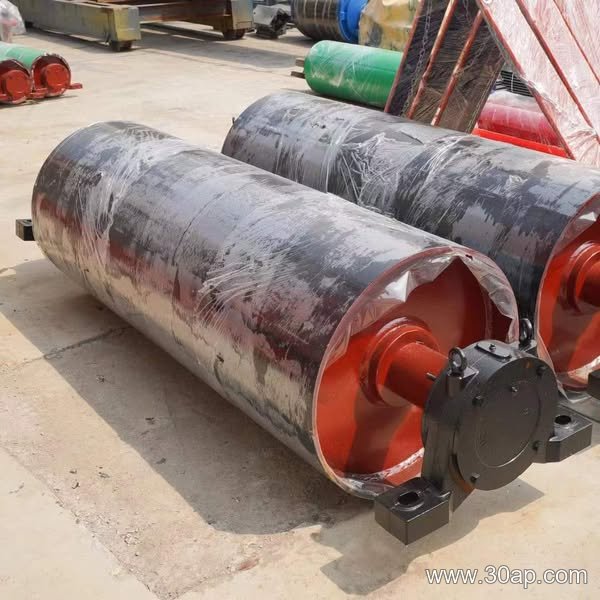
Common shell diameters range from around Ø200 mm up to Ø1800 mm, and face widths are usually wider than the belt. For example, a B800 belt often runs on a face around 950 mm, while a B1200 belt may use a face near 1400 mm. A B1200 × Ø1000 unit and a B1400 × Ø800 unit are both realistic combinations, but belt width alone does not fix the diameter. Shaft diameter, typically Ø50 mm to Ø200 mm, follows torque and load calculations, not the belt width by itself.
Where It Fits on the Conveyor
The main role is at the drive position. On a long inclined conveyor, the head pulley must overcome belt tension and material weight, and slip here means heat, wear, and lost production. The ceramic surface raises the friction coefficient, so the same pulley can move more load or run with less wrap angle.
Heavy-duty ceramic lagging also appears on tension and bend positions where the belt is wet or oily, though the drive remains the primary use. A tail pulley is usually a different design; it turns freely and does not need the same grip. Comparing the two helps explain why ceramic lagging is specified mainly where torque transfer happens.
Applications and Working Conditions
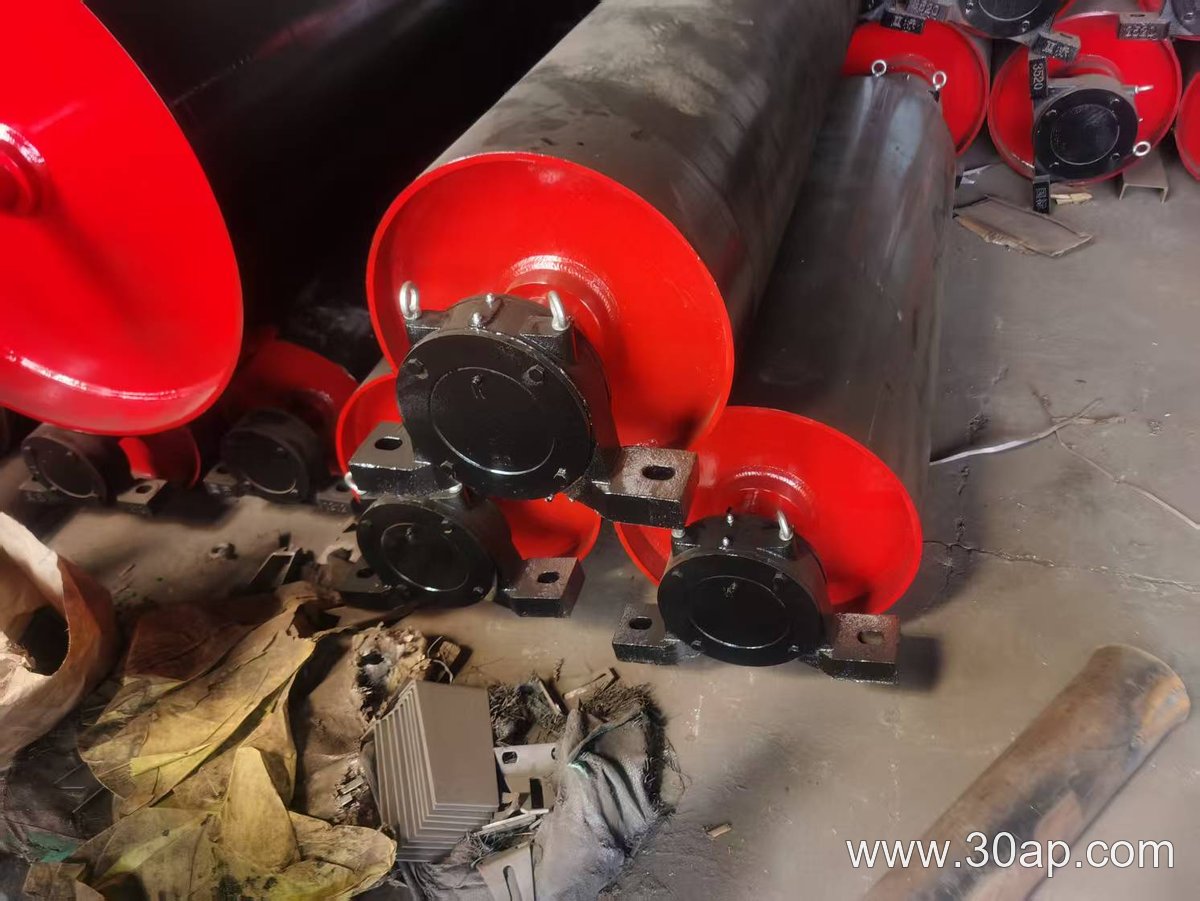
These pulleys suit lines that carry abrasive, damp, or sticky bulk material. Two typical settings are a quarry feeding crushed stone and a coal preparation plant moving washed coal. In both, water and fines reach the pulley face, and a plain steel or smooth rubber surface would lose traction.
Other fitting locations include sand and gravel lines, cement clinker handling, and port bulk terminals. In each case, the belt may be a heavy multi-ply or steel-cord conveyor belt, and the pulley must handle high tension without the lagging peeling away.
What Buyers Should Check
- Duty and position: confirm whether the pulley is a drive, tension, or bend unit. The ceramic lagging is most justified on the drive.
- Belt width and face width: the face is normally wider than the belt, so state both. Do not assume one belt width matches only one diameter.
- Diameter and shaft: give the required shell diameter and the calculated shaft size. Shaft diameter comes from torque and load, not from the belt width alone.
- Lagging thickness and pattern: 8 mm, 10 mm, 12 mm, 15 mm, and 20 mm are common. Ask how the tiles are bonded and whether the pattern suits wet or dry material.
- Balance and runout: an unbalanced drum causes vibration and premature bearing wear, especially at higher speeds.
- Bearing and bracket interface: the pulley must match the conveyor bracket and bearing housing used on the frame.
Maintenance Notes
Ceramic lagging is durable, but it is not indestructible. Chipped tiles can expose rubber underneath, and a loose tile can spread damage. Inspect the face during scheduled shutdowns, keep the belt tracking straight, and check that scrapers or skirt rubber do not rub the ceramic. A worn idler roller nearby can also throw the belt off line and wear one side of the lagging.
When the ceramic layer is badly worn or torn, re-lagging is usually more economical than replacing the whole pulley, provided the shell and shaft are still sound. The right choice depends on the actual belt tension, material, and duty cycle, so the pulley should be selected as part of the whole conveyor design rather than as a standalone part.