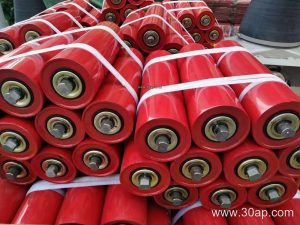
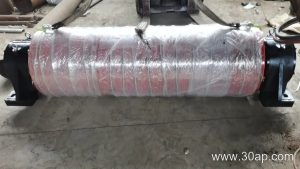
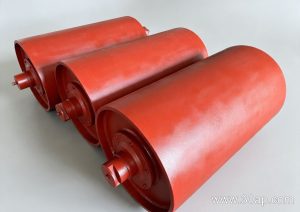
What the Head Pulley Does on a Belt Conveyor
The belt conveyor head pulley sits at the discharge end of the conveyor. It is the drum that the conveyor belt wraps around before the material leaves the belt, and in most installations it is also the drive pulley that pulls the belt forward. Because it combines both functions, its design, surface and shaft connection matter more than many people expect. A head pulley that is undersized or badly lagged can cause belt slip, premature wear on the conveyor belt, and spillage at the transfer point. In a quarry, a cement plant or a coal handling system, that often means unplanned downtime.
The accurate equivalent name for this component is the head drum or drive head pulley. It should not be confused with a tail pulley, which is the return-end drum, or a bend pulley, which only changes belt direction. Those are different positions with different loads and different design priorities.
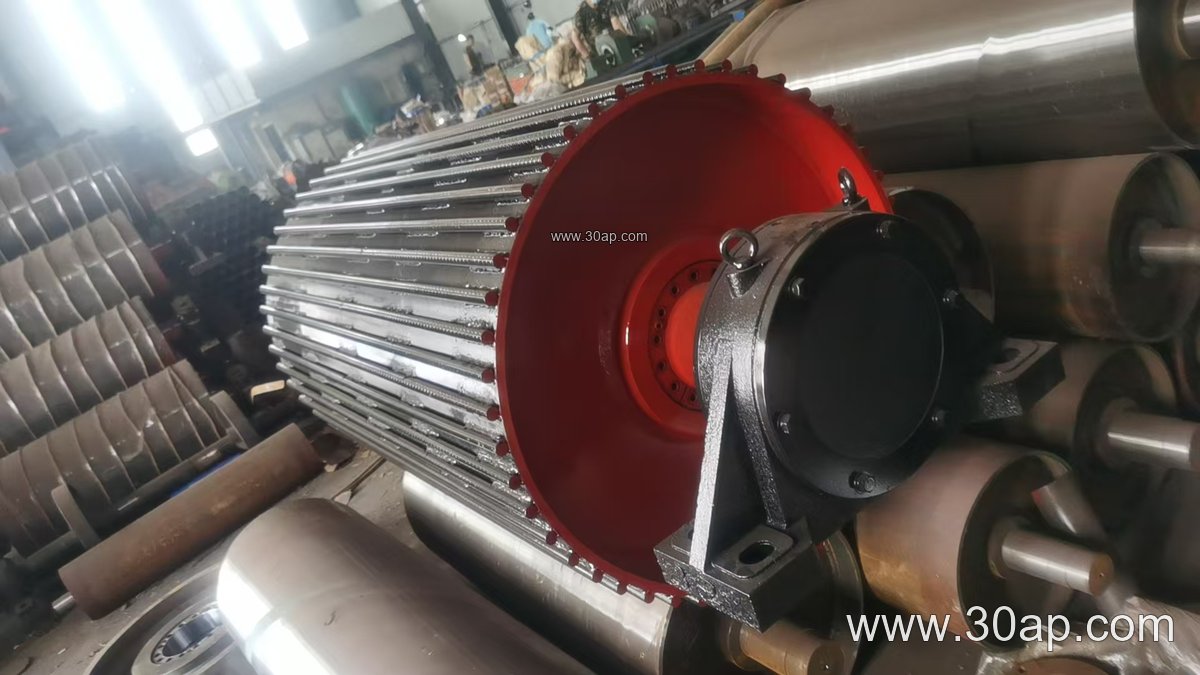
Construction and Surface Options
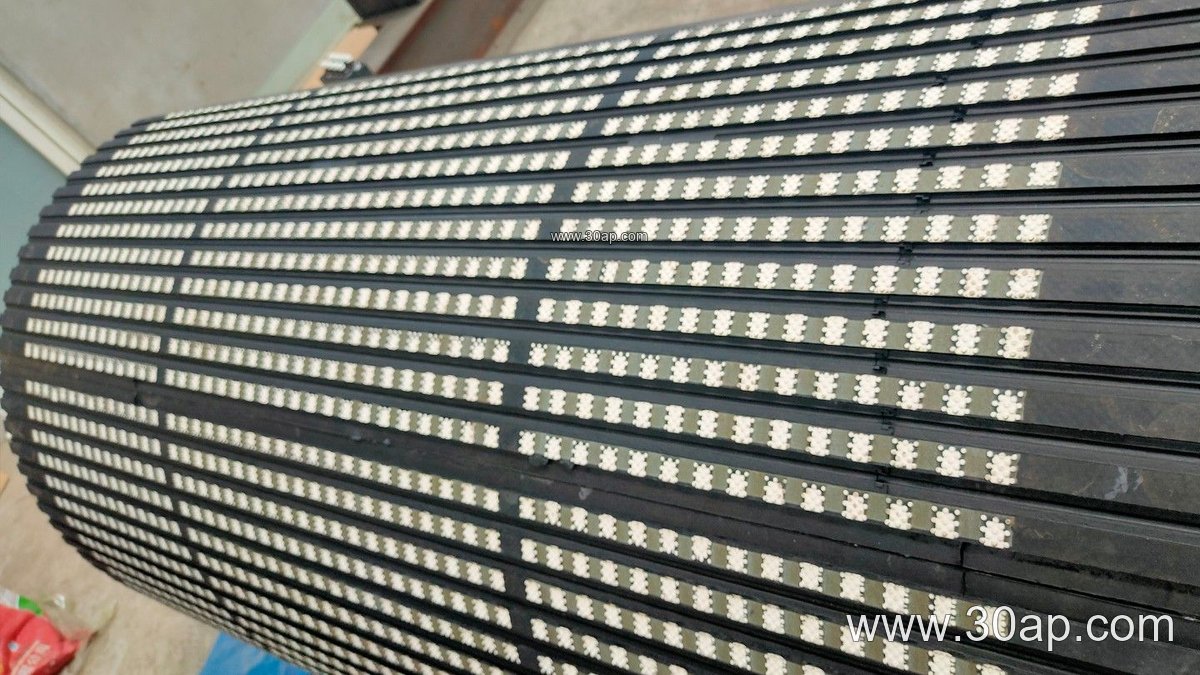
A typical head pulley is built from a steel shell, two end discs, a shaft and a bearing housing on each side. The shell is machined and balanced, and the shaft is sized by torque and radial load rather than by belt width alone. Surface treatment is where most buyers focus. Common options include plain finish, hot-vulcanized rubber lagging, cold-bonded rubber, diamond grooving, herringbone grooving and ceramic lagging. Lagging thickness is commonly 8 mm, 10 mm, 12 mm, 15 mm or 20 mm, depending on the duty and the belt tension.
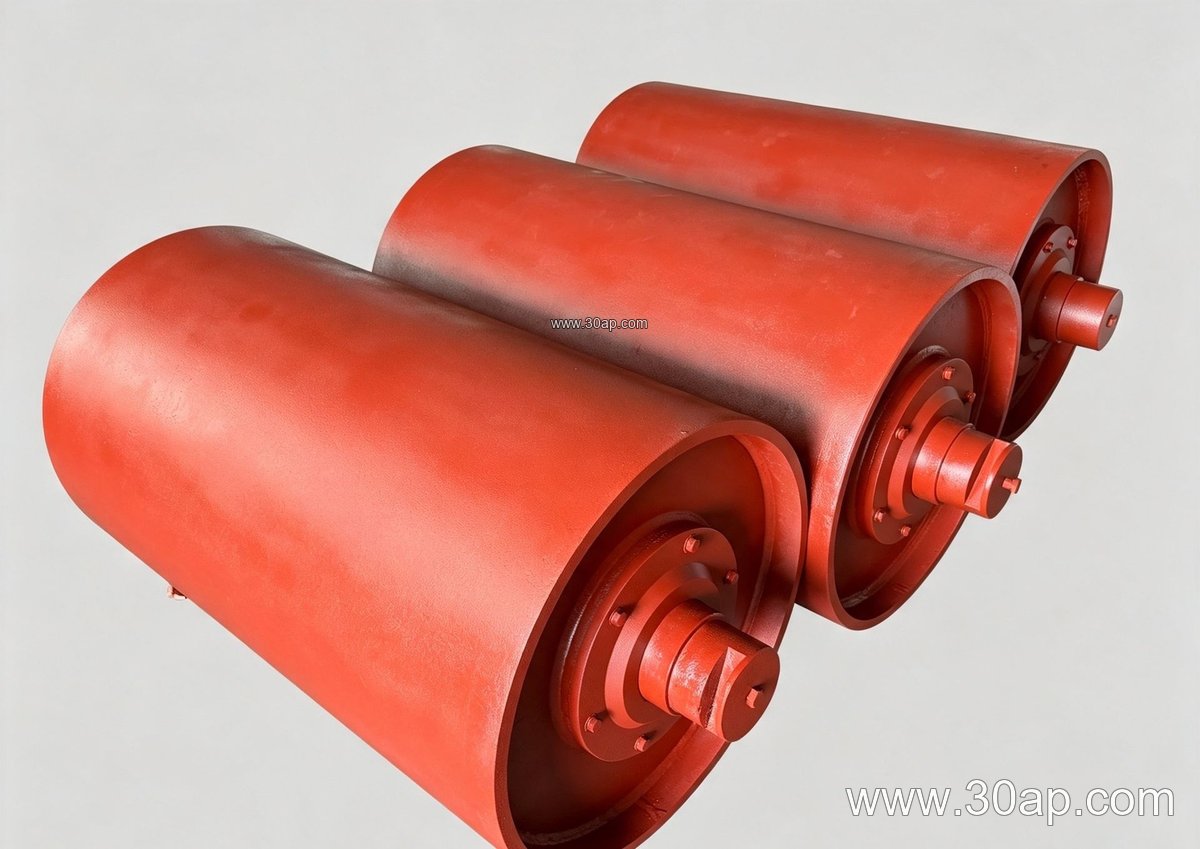
Diamond and herringbone patterns help shed water and fines, which is useful in wet or dusty conditions. Ceramic tiles are chosen where the belt is heavily loaded and long service life is a priority. A smooth finish is usually reserved for non-drive positions or light-duty applications. The lagging should be matched to the belt cover, because a very aggressive pattern can wear a thin belt cover faster than expected.
Common Dimensions and How They Relate
Pulley diameter and face width are selected together with the belt width, but there is no single fixed pairing. A B800 conveyor may run a Ø500 head pulley in one plant and a Ø630 in another, depending on belt speed, wrap angle and tension. The face width is normally slightly wider than the belt, for example B650 with about 750 mm face, B1000 with about 1150 mm, and B1400 with about 1600 mm. Shaft diameters commonly range from Ø50 to Ø200, again determined by the drive design rather than by the belt width alone.
| Belt width | Typical face width | Common diameter range |
|---|---|---|
| B500 | about 600 mm | Ø250 to Ø400 |
| B650 | about 750 mm | Ø315 to Ø500 |
| B800 | about 950 mm | Ø400 to Ø630 |
| B1000 | about 1150 mm | Ø500 to Ø800 |
| B1200 | about 1400 mm | Ø630 to Ø1000 |
| B1400 | about 1600 mm | Ø800 to Ø1250 |
These figures are reference values, not fixed combinations. The final choice should come from the conveyor design calculation.
Where It Fits in the System
The head pulley is usually the highest-tension point on the conveyor, so it carries the full drive load and the belt wrap. In a coal mining conveyor or an underground coal mining conveyor, it may need a flame retardant conveyor belt and a fire resistant conveyor belt to match site rules. In a cement plant, a heat resistant conveyor belt may be used near the kiln discharge, while a heavy-duty mining conveyor belt handles clinker and limestone. In an iron ore or copper ore application, an abrasion resistant conveyor belt paired with a well-lagged head drum reduces slip and shell wear. The pulley also works with the conveyor bracket and the conveyor pulley frame at the discharge chute, where alignment affects belt tracking.
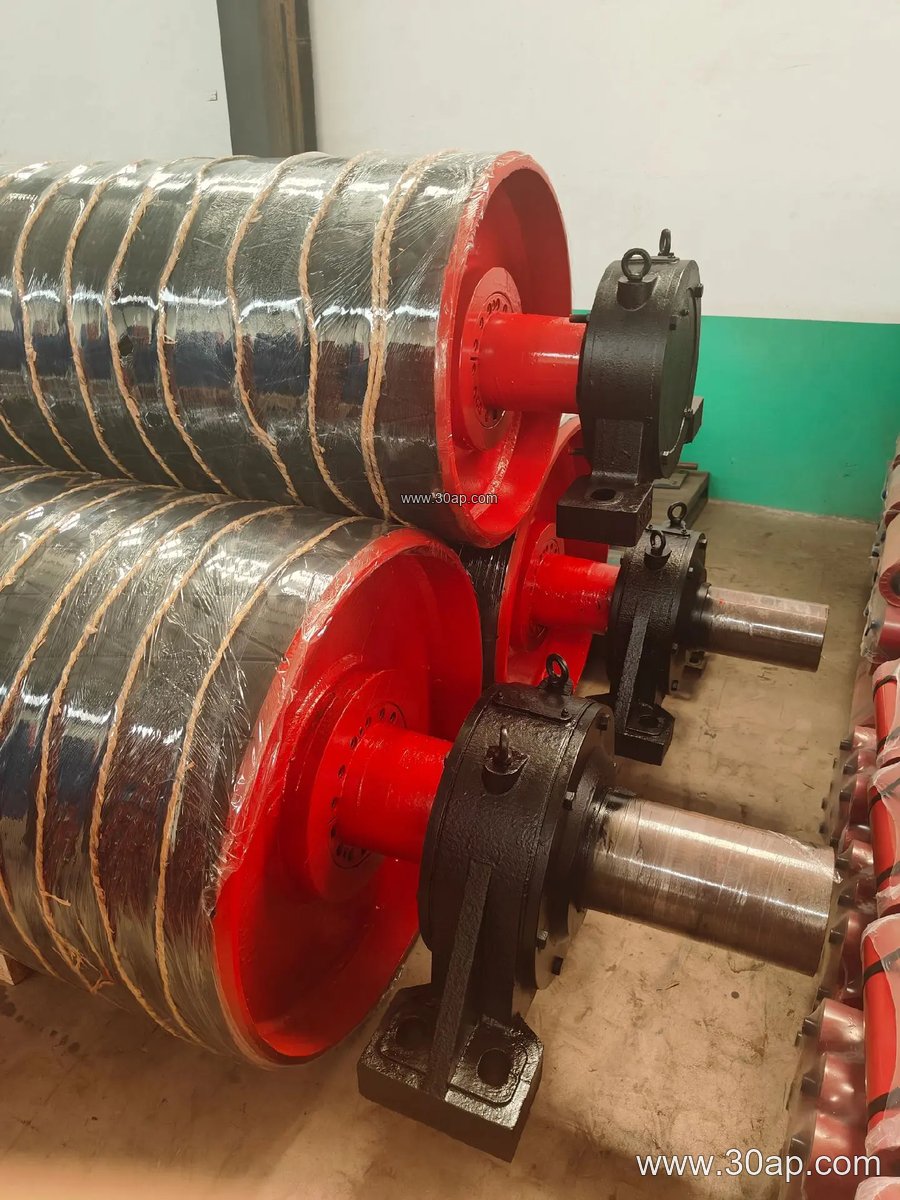
In a port or ship loading line, the head pulley often runs at high speed and must be balanced carefully. In a crusher conveyor or quarry conveyor, impact and dust are the main concerns. The head drum does not work alone: the idler roller set, the conveyor belt and the take-up system all influence how well it performs.
What Buyers Should Check
- Confirm the position: head, drive or discharge. A tail pulley or bend pulley is not a substitute.
- Match lagging type and thickness to the belt and the material. For oily or wet conditions, consider an oil resistant conveyor belt or a rubber conveyor belt with suitable cover.
- Check shaft diameter, keyway and bearing size against the actual drive torque.
- Ask for dynamic balancing data on larger diameters.
- Review the belt width, face width and diameter together, not as separate items.
- For fabric core belts such as EP conveyor belt or NN conveyor belt, confirm the pulley diameter is large enough for the belt construction.
Maintenance is mainly about lagging wear, bearing condition and shell alignment. Re-lagging a worn head pulley is often more economical than replacing the whole drum, provided the shell and shaft are still sound. Keeping the conveyor belt tension correct and the idler roller set turning freely will extend the life of the head pulley considerably.