What a Drive Rubber Lagged Pulley Does
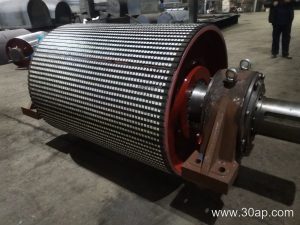
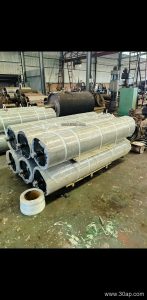
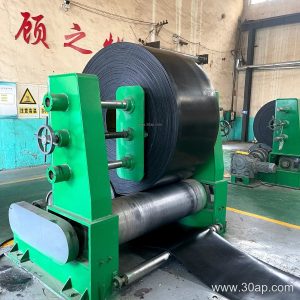
The drive rubber lagged pulley is the head-end drum that transmits motor torque to the conveyor belt and sets the entire line in motion. It sits at the discharge point, grips the belt through a rubber covering, and converts rotary power into forward travel. Without adequate friction between drum and belt, a fully loaded conveyor in a quarry or a coal washing plant can slip, overheat, and stall. The rubber lagging is therefore not decoration; it is the working interface that determines how much pull the drive can deliver before the belt loses grip.
Buyers often compare this drum with a tail pulley or a bend pulley, but these play different roles. A tail pulley turns the belt around at the return end, and a bend pulley changes belt direction or adds wrap angle. Only the drive drum carries the main torque load, so its lagging, shell thickness, and shaft design deserve separate attention.
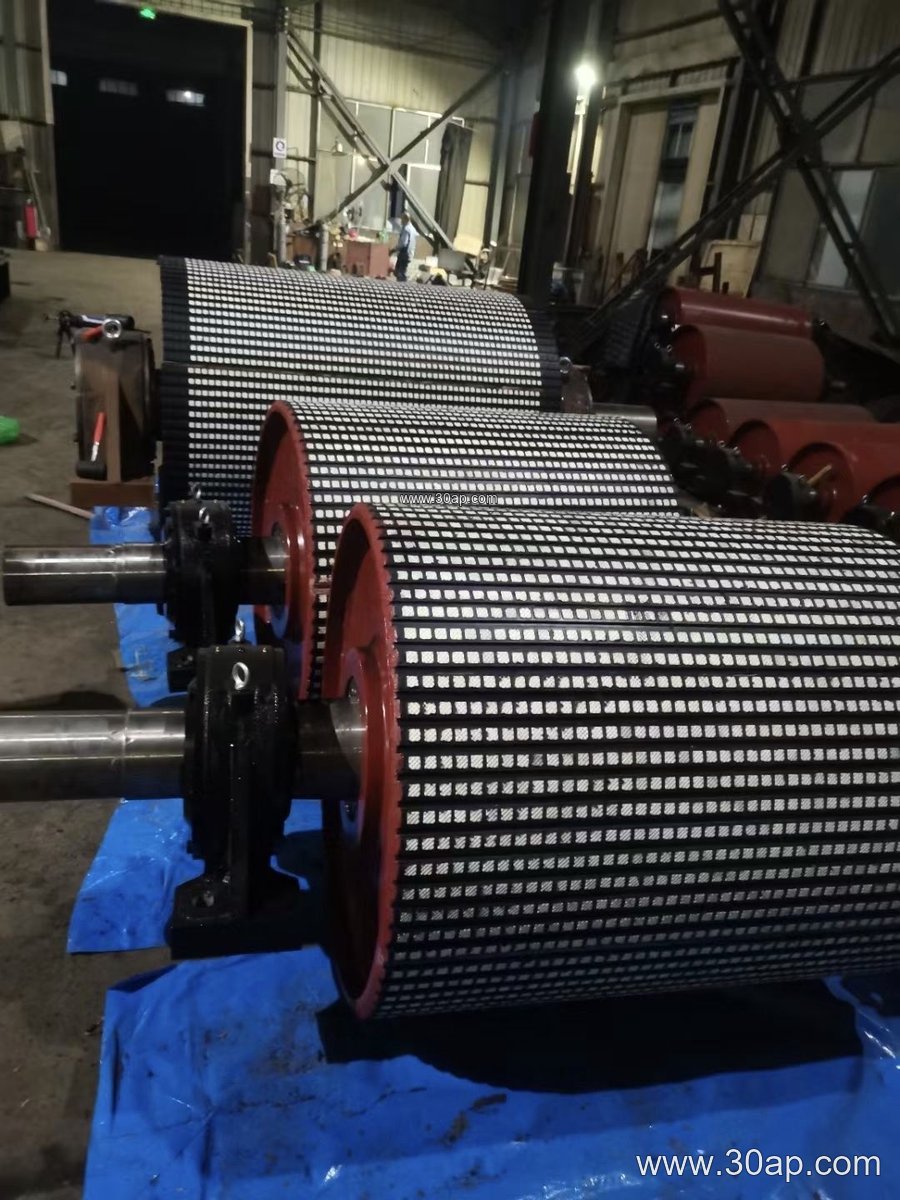
Construction and Surface Options
A typical unit combines a steel shell, welded end discs, a shaft, bearing housings, and a vulcanized or bonded rubber layer. Common surface forms include plain rubber, diamond groove, herringbone, and ceramic-inlaid lagging. Plain rubber suits clean, moderately loaded belts; diamond and herringbone patterns help shed water and fines in wet or dusty service; ceramic tiles add bite where slip risk is high.
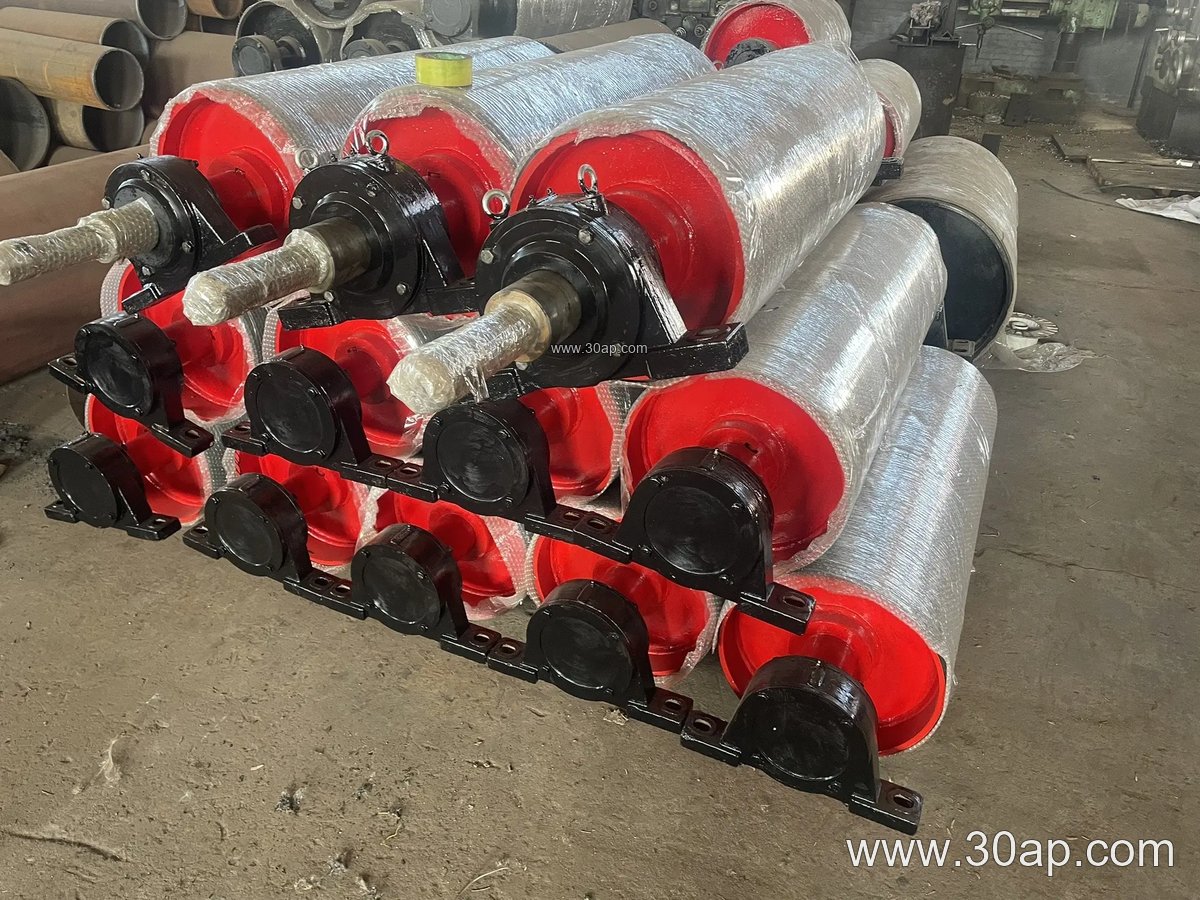
Lagging thickness commonly runs 8, 10, 12, 15, or 20 mm depending on duty. Hot vulcanized rubber usually bonds more firmly than cold-bonded sheet, which matters when the drum faces continuous shock loads from coarse ore or aggregate.
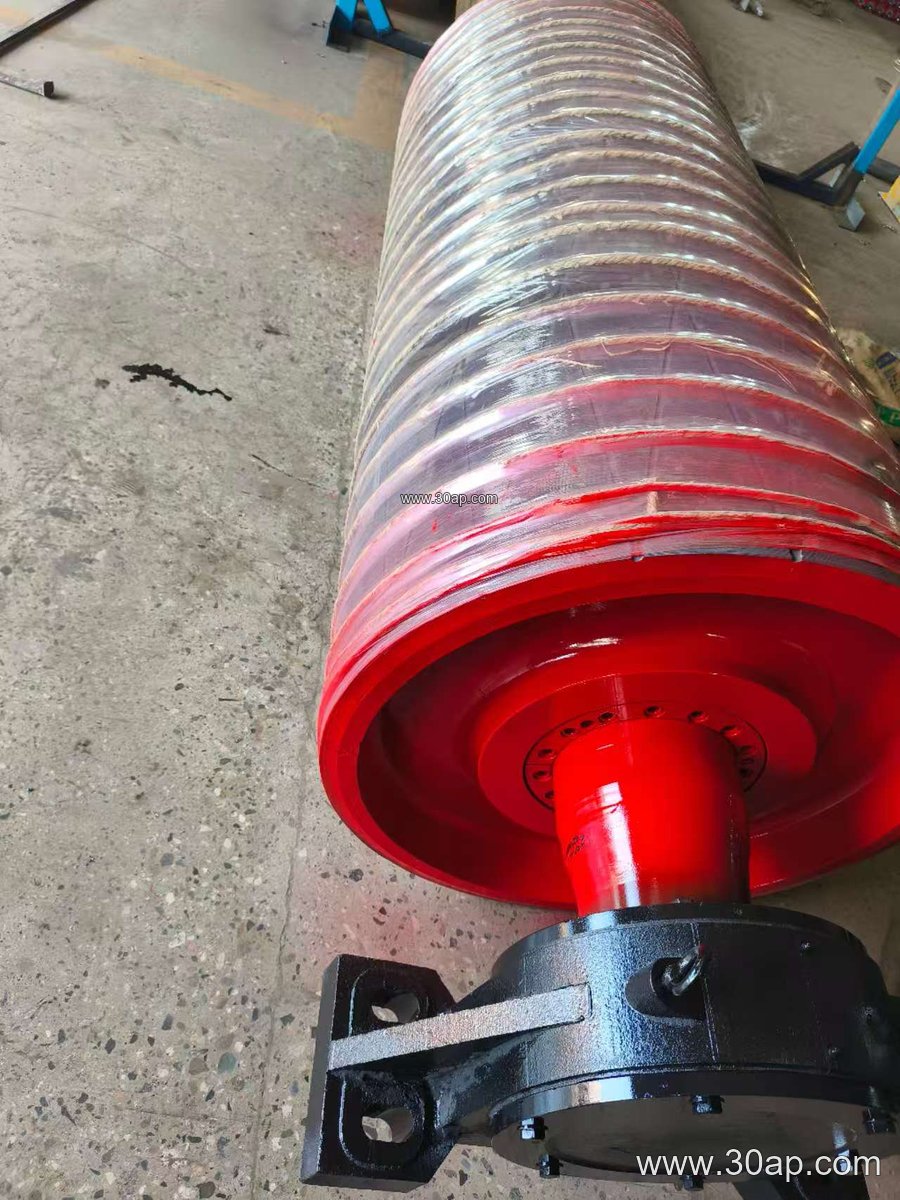
Reference Dimensions
The figures below are common reference values, not fixed pairings. Final selection follows torque, belt tension, and wrap angle.
| Belt width | Typical drum face width | Common diameter range | Shaft diameter (by load) |
|---|---|---|---|
| B500 | about 600 mm | Ø250 to Ø500 | Ø60 to Ø90 |
| B650 | about 750 mm | Ø315 to Ø630 | Ø70 to Ø100 |
| B800 | about 950 mm | Ø400 to Ø800 | Ø80 to Ø120 |
| B1000 | about 1150 mm | Ø500 to Ø1000 | Ø90 to Ø140 |
| B1200 | about 1400 mm | Ø630 to Ø1250 | Ø100 to Ø160 |
| B1400 | about 1600 mm | Ø800 to Ø1400 | Ø120 to Ø180 |
| B1600 | about 1800 mm | Ø1000 to Ø1600 | Ø140 to Ø200 |
Face width is usually slightly wider than the belt, for example B800 with roughly 950 mm of rubber-covered face. Diameter and shaft size are determined by the transmitted torque and bearing load, never by belt width alone.
Where It Fits in the Plant
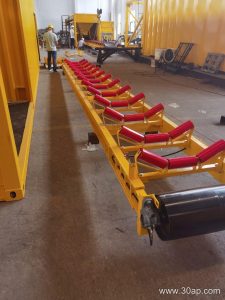
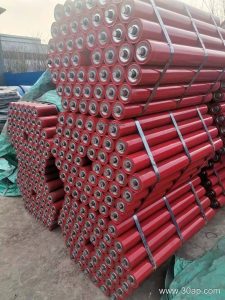
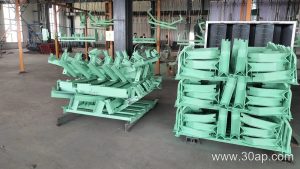
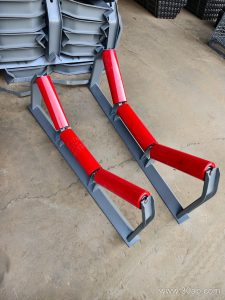
Drive drums appear wherever a belt must be powered: primary crushing circuits in an iron ore mine, coal handling lines at a power plant, clinker transport in a cement works, and ship-loading booms at a port terminal. In a stone crushing line, the drive pulley works together with troughing idler rollers and sturdy conveyor brackets to keep a heavy-duty mining conveyor belt tracking straight under tonnes of rock.
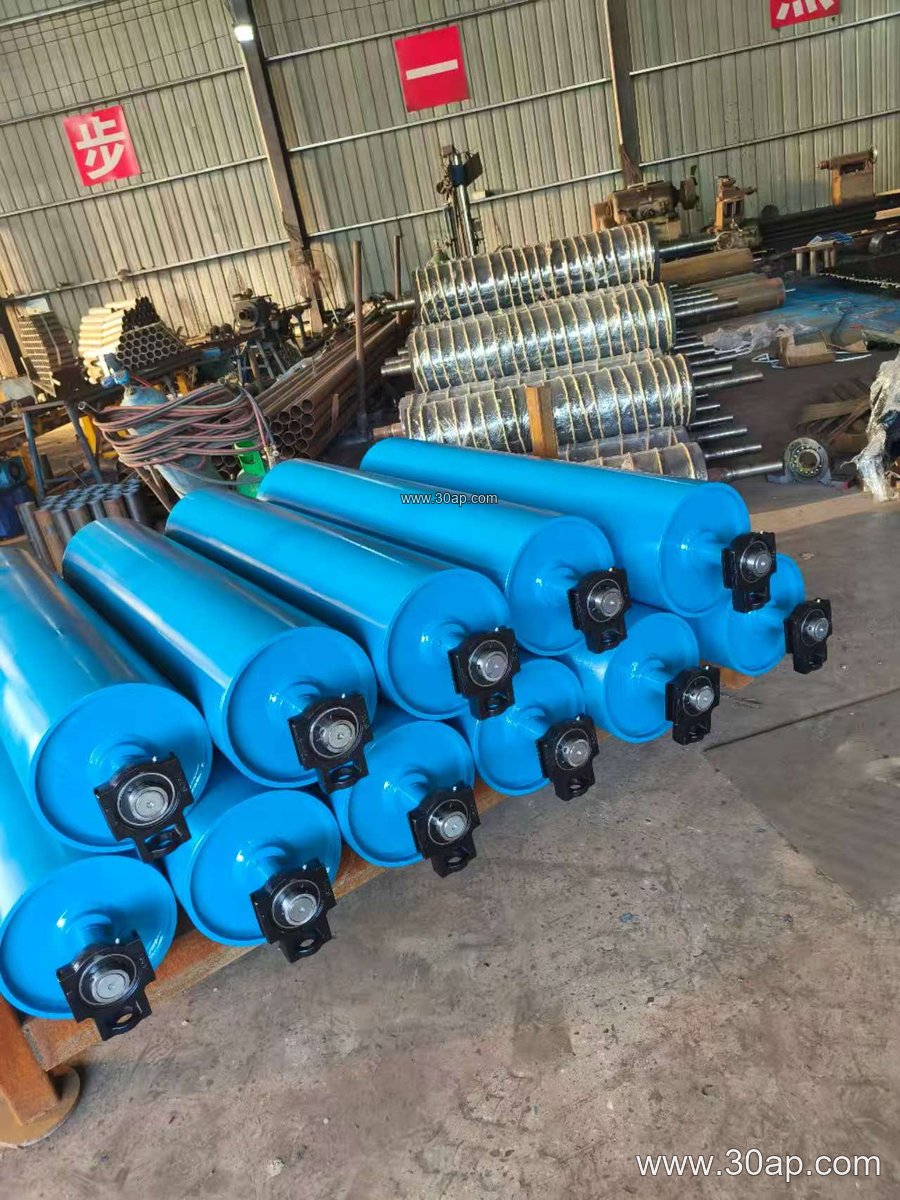
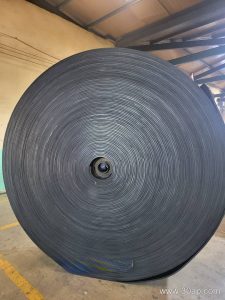
The belt itself must match the duty. An abrasion resistant conveyor belt handles sharp granite, a flame retardant conveyor belt suits underground coal mining, and a heat resistant conveyor belt is needed near sinter or clinker. On long overland routes, a steel cord conveyor belt or a high strength EP conveyor belt may be paired with a larger drum to keep bending stress low.
Selection and Maintenance Notes
- Confirm the required traction: lagging pattern and thickness should follow wetness, fines, and start-up frequency.
- Check belt compatibility: a thick, stiff steel cord belt needs a larger diameter than a thin fabric core belt to avoid ply fatigue.
- Verify shaft and bearing ratings against actual torque, not just belt width.
- Inspect lagging wear, groove depth, and bond integrity during scheduled stops; worn grooves reduce grip long before the rubber is fully consumed.
- Keep the belt cleaner and alignment in order, since material build-up on the drum face causes uneven wear and tracking faults.
For more on matching drums with rubber conveyor belting and conveyor components, review the drive rubber lagged pulley range at www.example.com/drive-rubber-lagged-pulley alongside belt and idler data before finalizing an order.