What a Parallel Idler Is
A parallel idler is a straight cylindrical roller mounted across the belt path so the belt runs flat over it. The roller axis stays parallel to the belt surface, with no trough angle and no side rollers. In many conveyor layouts this role belongs to the return run, where the belt comes back empty and only needs support, not shaping. The same parallel idler roller can also appear at a loading zone or a transition point where a flat belt section is required.
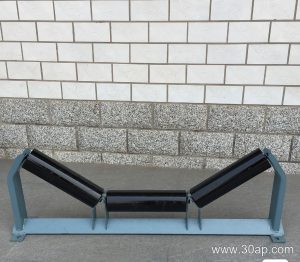
Because the roller is a single straight cylinder, it does not squeeze the belt into a trough. That is the main difference from a three-roll troughing set with a 20, 30, 35, or 45 degree trough angle. The troughing idler shapes the belt to hold material; the parallel type simply carries it.
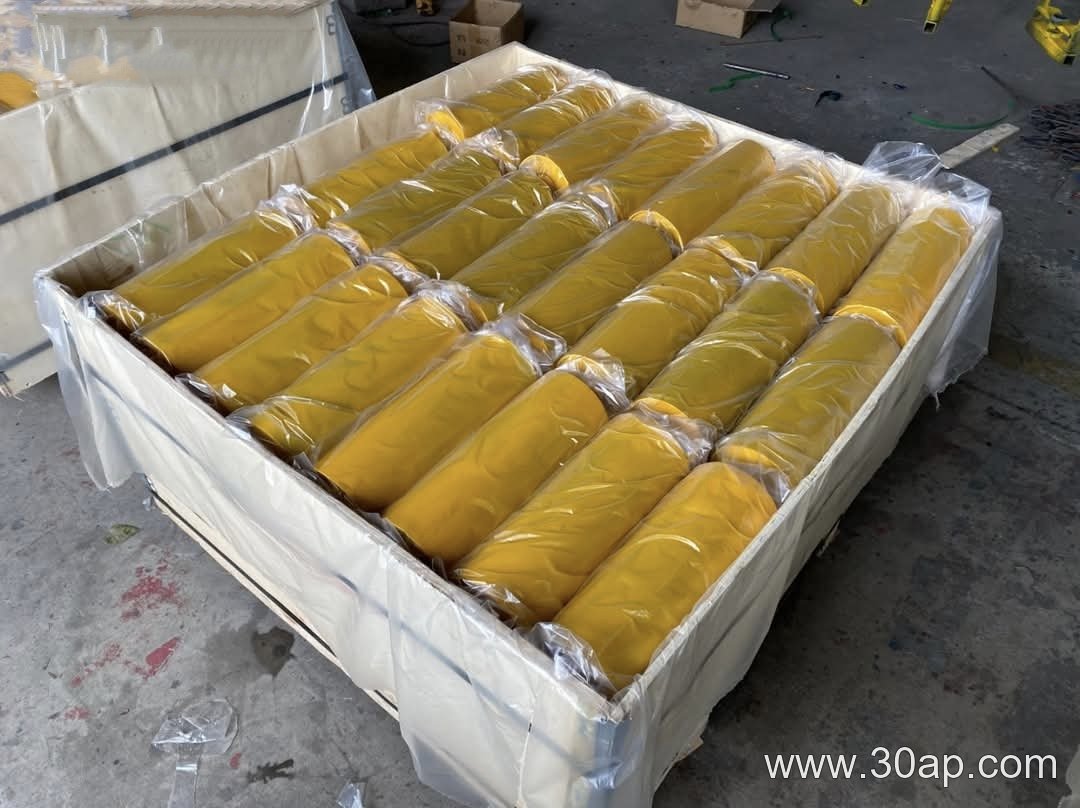
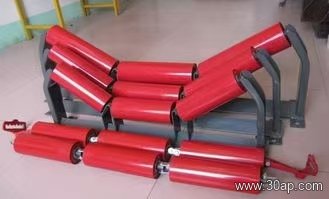
Construction Details
The body is usually a steel tube with machined ends. Common roller diameters include 63, 76, 89, 102, 108, 127, 133, 159, and larger sizes up to about 219 mm. The tube length is matched to the belt width and to the frame design, not chosen at random. For a three-roll troughing set, common roller lengths may run from about 200 mm at B500 to around 750 mm at B2000, but a parallel idler on the return side often uses a different length because it spans the full belt width on its own.
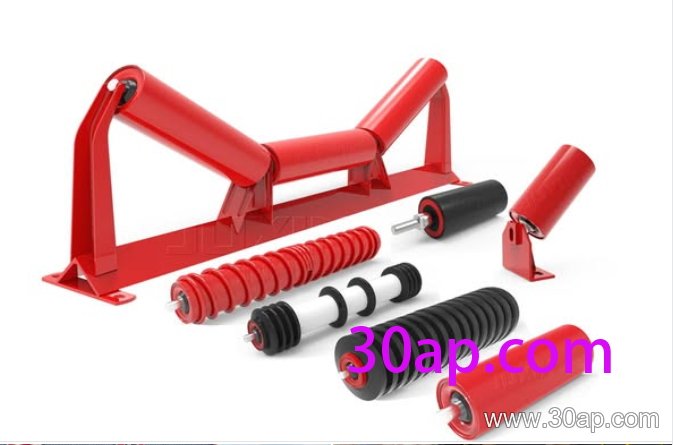
Inside the tube, a shaft runs through bearing housings at each end. Bearings such as 6204, 6205, 6305, 6306, 6308, or 6310 are common, selected by load and speed rather than by roller diameter alone. Seals protect the bearings from dust and fine particles. Roller surfaces can be plain steel, nylon, ceramic, or rubber rings. Rubber rings are more often seen on impact or buffer rollers, but a parallel idler may also use a rubber-covered surface where noise or belt marking matters.
Where It Fits on a Conveyor
The return strand is the classic location. After the belt discharges at the head pulley, it travels back underneath the conveyor and needs support at regular intervals. A flat return idler or a V-shaped return roller may be used, but the parallel type is the simplest option when the belt is stiff enough or the load is light.
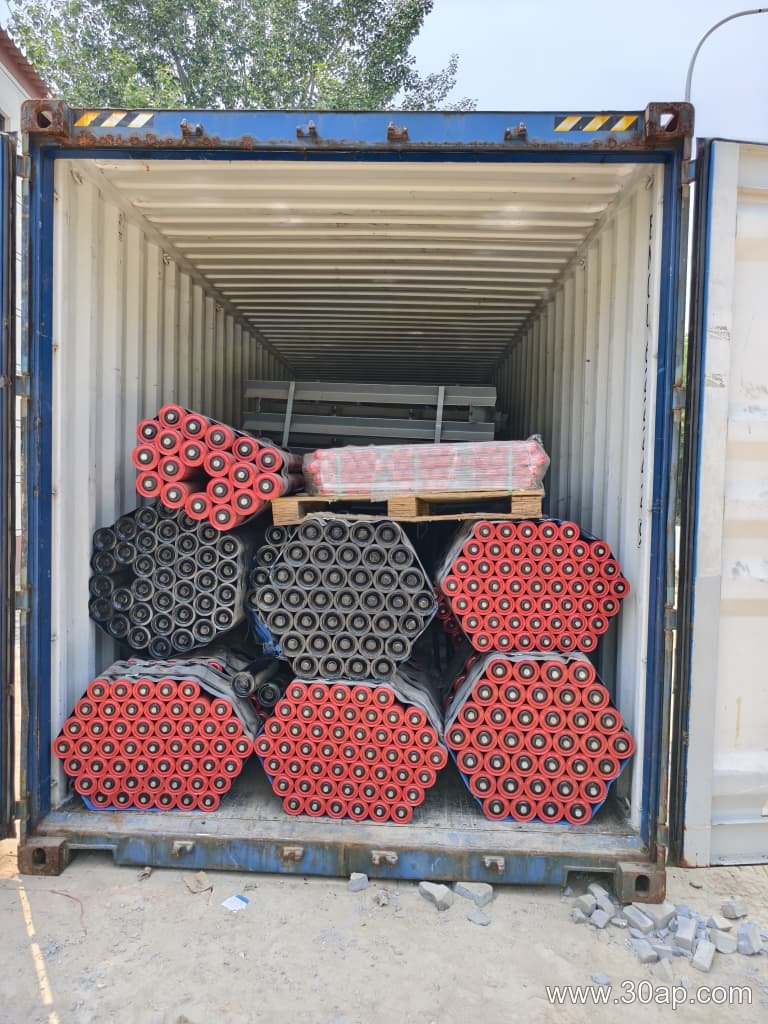
Other applications include the tail area just before the belt enters the loading zone, and short transfer conveyors where a flat profile is acceptable. In a quarry or a sand and gravel line, a parallel idler may carry the empty belt on the return side while the carrying side uses troughing idlers. In a coal handling plant or a cement plant, the same roller can support a flat belt section near a belt scale or a discharge point.
Parallel Idler vs Other Idler Types
It is helpful to compare, not substitute. A troughing idler, whether two-roll or three-roll, forms the belt into a curve and is used on the carrying run for bulk material. A V-shaped return idler uses two angled rollers to center the belt. A training idler, including the friction and tapered types, corrects belt misalignment. A spiral idler uses a helical surface to shed sticky material. An impact idler or rubber-ring buffer idler absorbs the shock of falling lumps. The parallel idler does none of these jobs; it provides flat support and low rolling resistance. Drive pulleys, tail pulleys, and bend pulleys are different again. They transmit power or change belt direction, and they are not interchangeable with any idler roller.
Buyer Checklist
- Confirm the belt width, such as B650, B800, or B1000, and the required roller length for the frame.
- Check the roller diameter and shaft size against the load and the bracket opening. Do not assume a fixed shaft diameter from belt width alone.
- Ask about bearing type, seal design, and surface form. Steel, nylon, ceramic, and rubber surfaces suit different environments.
- Check the mounting bracket and the distance between idler stations. A parallel idler may need closer spacing on a heavy return belt.
- For dusty or wet conditions, specify the sealing level and consider a surface that resists buildup.
A parallel idler is a simple component, but it still has to match the belt, the frame, and the duty. When the return run is flat and the material is not shaping the belt, it is often the right choice.