What a Five-Roll Idler Set Does
A Five-Roll Idler Set is a conveyor support assembly that uses five idler rollers to carry the belt and material load. It is commonly installed on the carrying side of a conveyor, especially where the belt is wide or the load is heavy. The extra rollers distribute weight more evenly than a traditional three-roll set, helping to reduce belt sag and extend service life in demanding operations such as mining conveyor belt systems, coal handling plants, and aggregate yards.
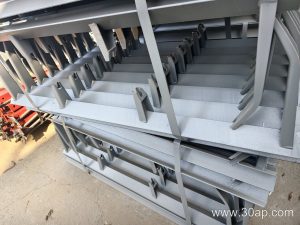
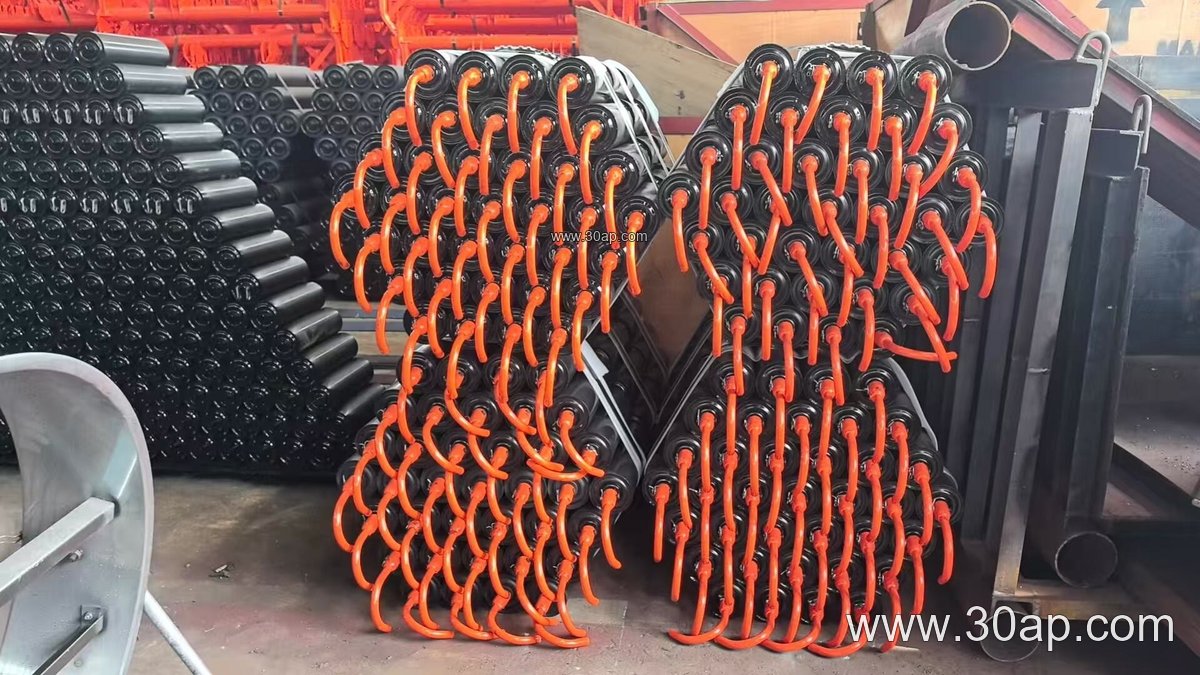
The set typically consists of a central roller and two pairs of side rollers arranged at fixed trough angles. This configuration supports the belt across its full width, keeping material centered and minimizing spillage. While three-roll troughing sets are common, the five-roll design offers additional support for high-capacity conveyors and wider belts.
Construction and Key Components
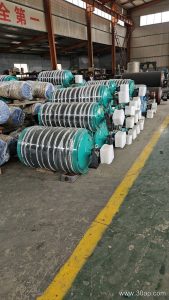
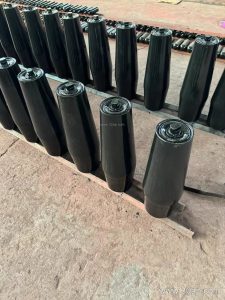
Each roller in a Five-Roll Idler Set is built around a steel tube shell, often fitted with bearing housings and sealed for dust and moisture protection. Common bearing sizes include 6204, 6205, 6305, 6306, 6308, and 6310, selected according to load and speed requirements. Roller diameters typically range from Ø63 mm to Ø219 mm, with Ø89, Ø108, Ø127, and Ø159 being frequent choices for bulk material handling.
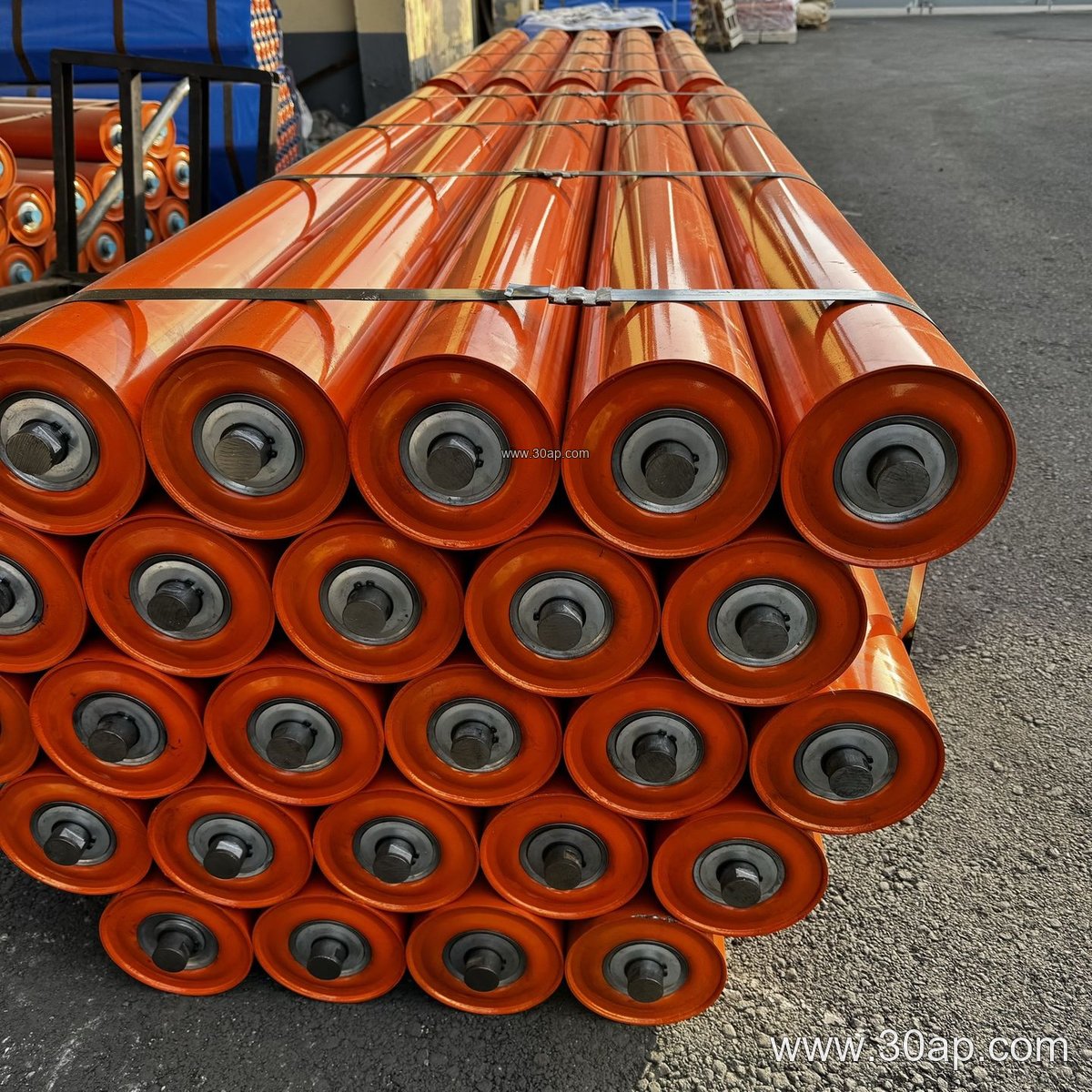
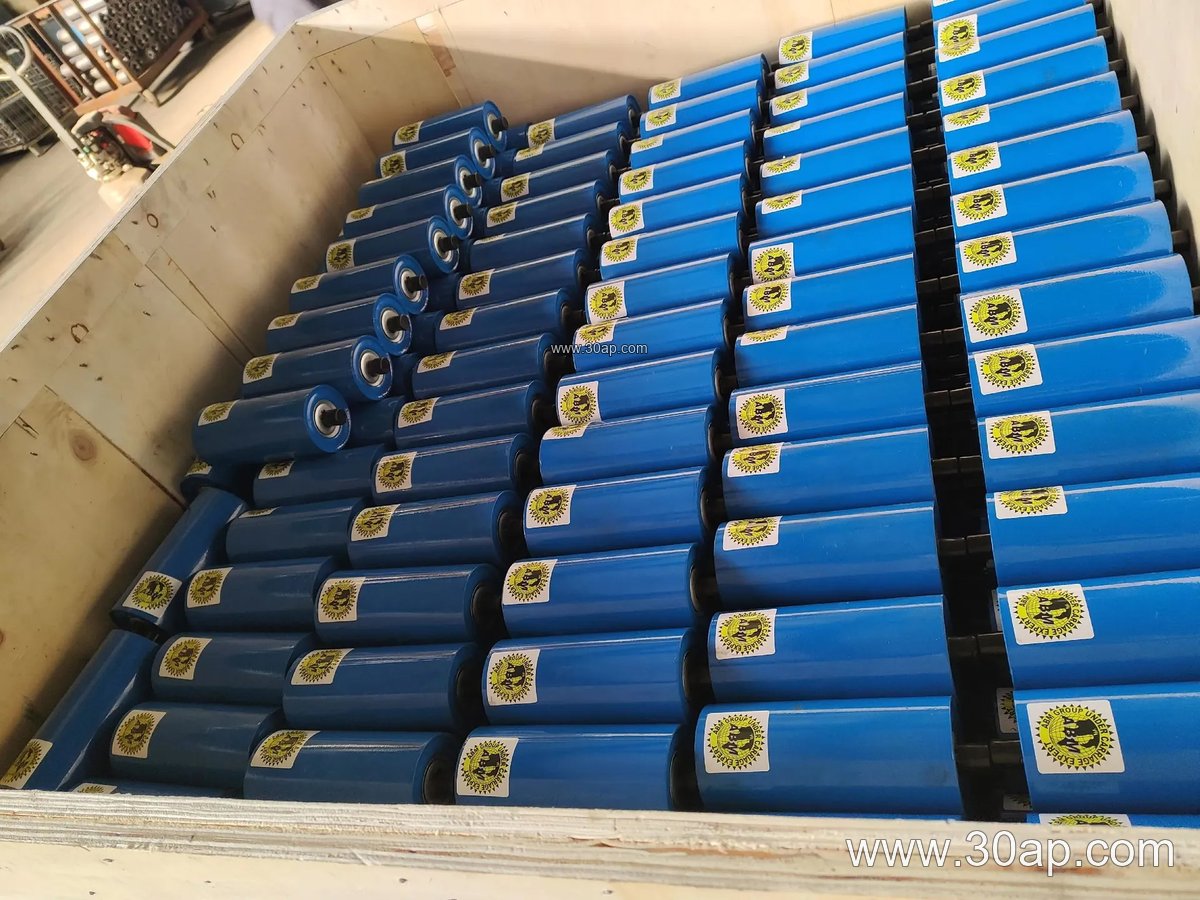
The roller surface may be plain steel, nylon, ceramic, or rubber-covered. Rubber discs are sometimes used on impact rollers to absorb shock at transfer points. The frame that holds the five rollers is usually made of formed steel and is designed to maintain the correct trough angle. Common trough angles are 20, 30, 35, and 45 degrees, with 35 degrees being widely used in many bulk handling applications.
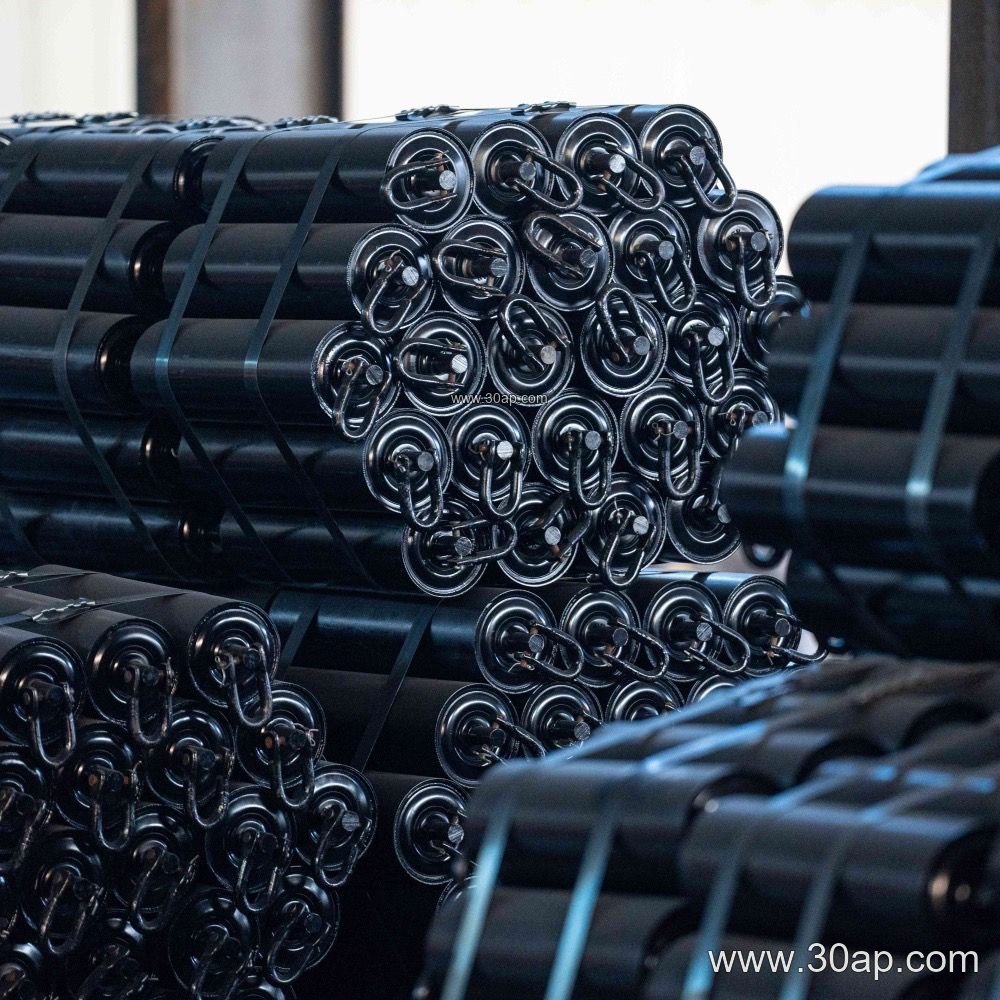
For maintenance, the idler set should be inspected for roller rotation, seal condition, and frame alignment. Worn rollers can cause belt tracking issues and increase power consumption. In dusty environments such as a cement conveyor belt line or a quarry, sealed bearings are essential to prevent premature failure.
Where Five-Roll Idler Sets Are Used
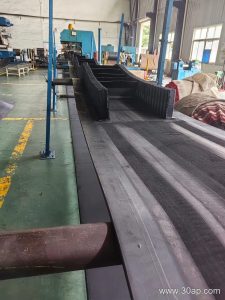
These sets are often found in applications where belt widths are large and material loads are heavy. For example, a 1200mm or 1400mm wide conveyor carrying abrasive rock may benefit from the additional support of five rollers. They are also used in coal preparation plants, power station coal yards, and iron ore terminals where continuous operation is critical.
In a typical five-roll arrangement, the two outer rollers on each side are set at a steeper angle than the central roller, creating a deeper trough profile. This helps contain the load and reduce spillage on high-speed conveyors. The set is compatible with various belt types, including EP conveyor belt and steel cord constructions, as long as the belt is suitable for the trough angle and roller spacing.
It is important to note that a Five-Roll Idler Set is not a substitute for other conveyor components such as drive pulleys, tail pulleys, or bend pulleys. These pulleys serve different functions and are not interchangeable with idler sets. Similarly, a five-roll set should not be confused with a three-roll troughing set or a return roller; each has its own role in the conveyor system.
Specifications and Selection Guidance
When selecting a Five-Roll Idler Set, consider belt width, material weight, trough angle, and environmental conditions. The table below lists common reference values; actual dimensions should be confirmed with the conveyor design.
| Parameter | Common Reference Range |
|---|---|
| Roller diameter | Ø63 mm to Ø219 mm (e.g., Ø108, Ø127, Ø159) |
| Belt width | B400 to B2400 (e.g., B800, B1000, B1200, B1400) |
| Trough angle | 20°, 30°, 35°, 45° |
| Bearing size | 6204, 6205, 6305, 6306, 6308, 6310 |
| Roller surface | Steel, nylon, ceramic, rubber disc |
Roller length varies with belt width and trough angle. For a three-roll set, typical roller lengths might be 200 mm for B500, 315 mm for B800, and 465 mm for B1200, but these are examples only. In a five-roll set, the side rollers and center roller may have different lengths to match the trough profile. Always refer to the conveyor manufacturer’s specifications.
For high-abrasion environments, consider rollers with ceramic or rubber surfaces. In coal mines, flame retardant and anti-static properties may be required for the entire conveyor system, including the flame retardant conveyor belt. While the idler set itself does not carry these ratings, it must be compatible with the belt and the surrounding equipment.
Buyer Checklist
- Confirm the belt width and trough angle required for your conveyor.
- Check the load capacity and select roller diameter and bearing size accordingly.
- Verify the roller surface material suits the material being conveyed (e.g., abrasive, corrosive, or hot).
- Ensure the idler set frame matches the conveyor bracket spacing and mounting holes.
- Consider environmental factors such as dust, moisture, and temperature, which affect seal life.
- Ask for dimensional drawings to confirm roller lengths and overall set width.
A well-chosen Five-Roll Idler Set can improve belt stability and reduce maintenance downtime in bulk handling operations. For more information on compatible conveyor belts and components, visit https://en.30ap.com/.