What the Discharge-End Pulley Does
The discharge-end pulley is the rotating drum at the delivery point of a belt conveyor. It is also accurately called the head pulley or delivery pulley, and it serves two jobs at once: it returns the conveyor belt and it throws the carried material off the belt by centrifugal force. Because the belt wraps this drum at the highest tension in the system, the discharge-end pulley usually carries the largest shaft and bearing load of any pulley on the conveyor.
Drive is often applied to this same drum, making it a drive pulley as well. That combination is common on short and medium conveyors. On long, high-capacity lines the drive may be separated from the discharge position, but the delivery point still uses a robust drum of the same general construction. Drive, tail and bend pulleys are not interchangeable names for this component; each sits at a different location and performs a different function.
Construction and Surface Options
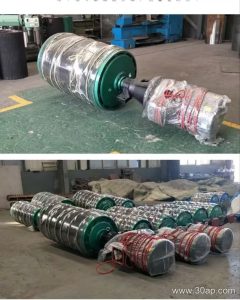
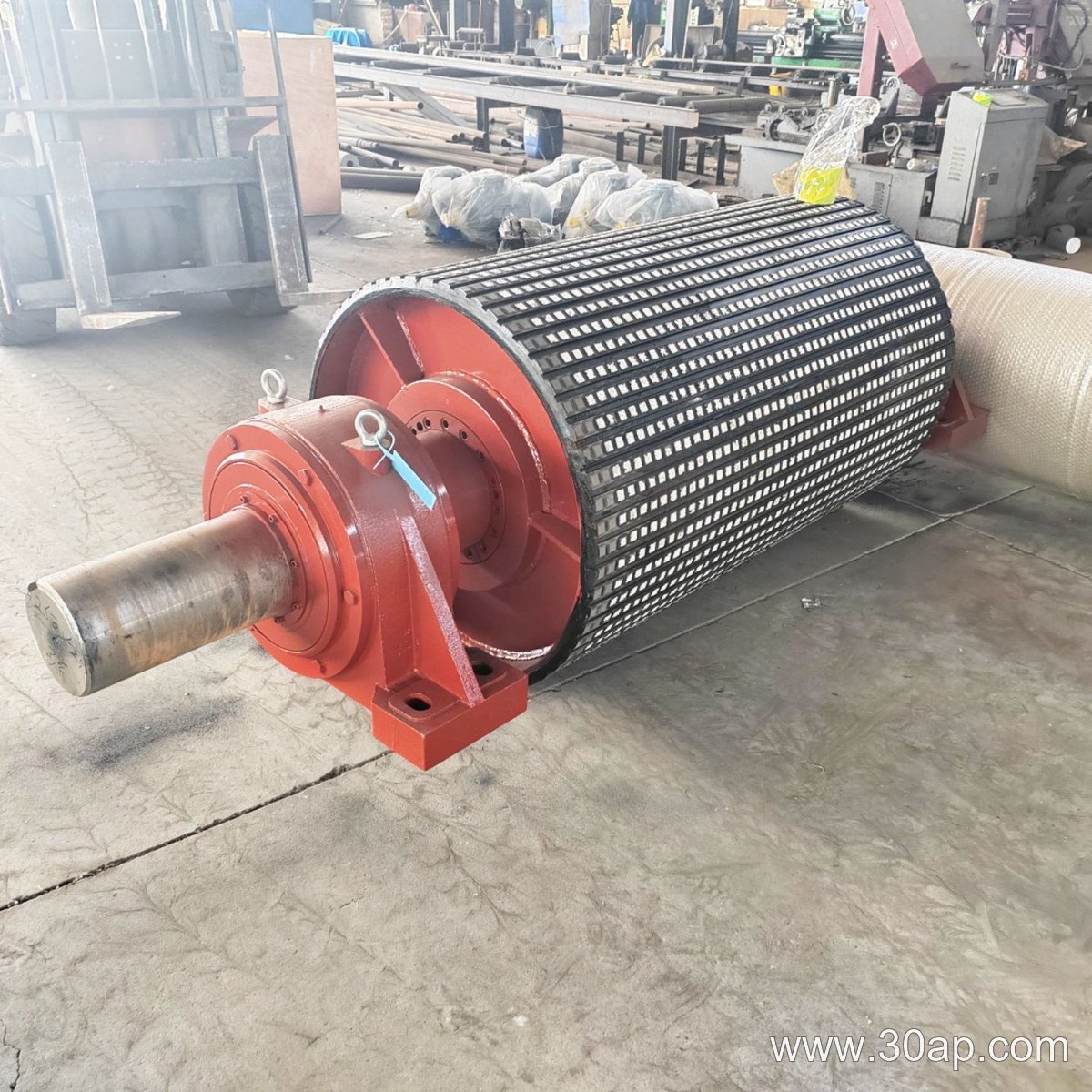
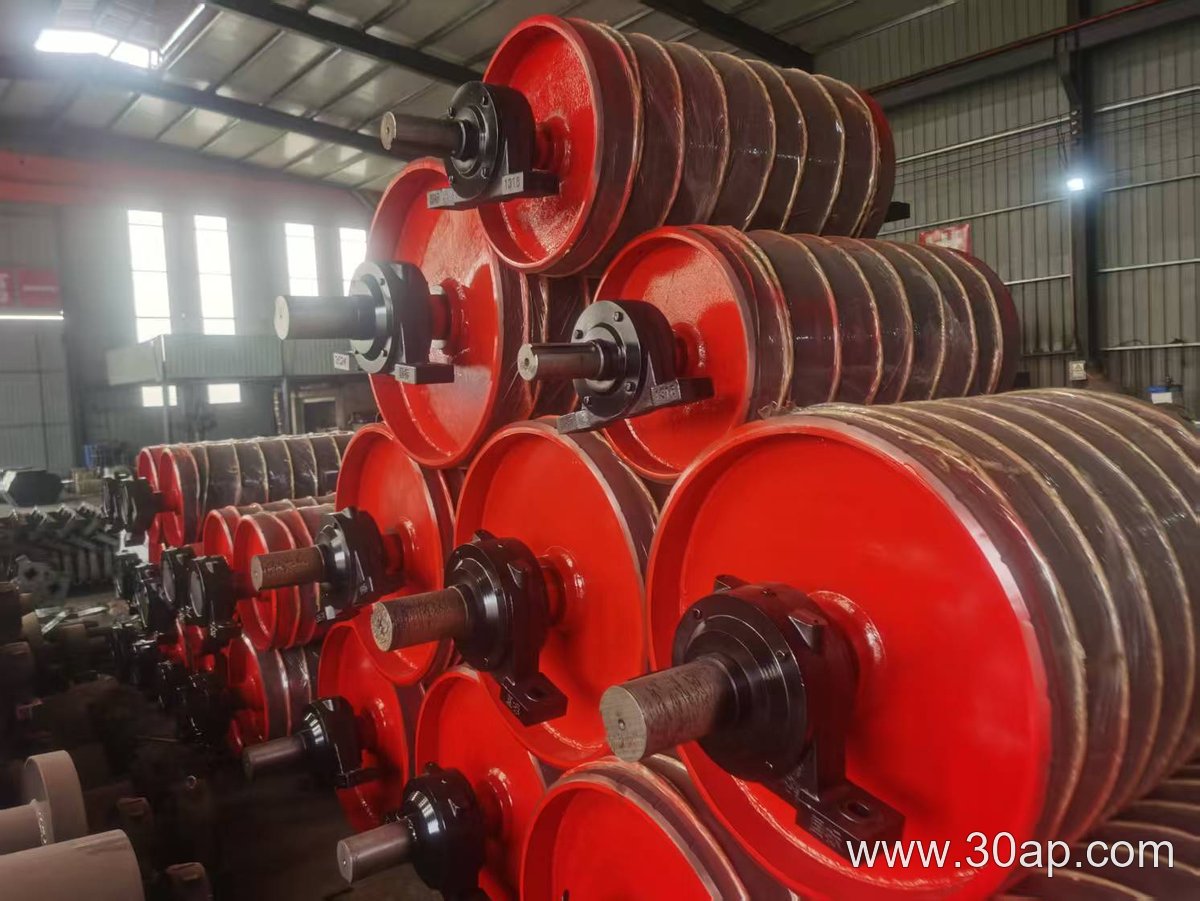
A typical discharge-end pulley is built from a rolled steel shell, two end discs, a shaft and a hub connection. The shell is machined or ground so the belt tracks evenly. Shaft diameter is determined by torque and load, not by belt width alone. Common shaft sizes range from about Ø50 mm on small units to Ø200 mm on heavy ones, but the correct value always follows the design calculation.
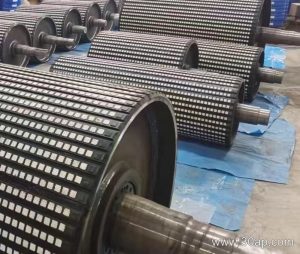
The surface can be plain, rubber lagged, or ceramic lagged. Rubber lagging, applied by hot vulcanizing or cold bonding, raises friction and protects the shell from abrasive material. Diamond or herringbone patterns help shed water and fines. Lagging thickness is often 8, 10, 12, 15 or 20 mm depending on the duty. For a non-driven discharge drum, plain or lightly lagged surfaces may be enough.
Where It Is Used
You will find the discharge-end pulley in almost every bulk handling line. In a quarry or sand and gravel plant it sits at the top of the incline, launching crushed rock onto a stockpile or into a screen. In a coal handling system it delivers fuel to a transfer chute. In a cement plant it may feed clinker or limestone to the next stage. The same drum appears in port bulk terminals, tunnel muck removal and fertilizer granulation lines.
Material leaving the belt at this point is moving fast, so the discharge chute and skirt design must match the pulley diameter and belt speed. A poorly matched chute causes buildup and belt misalignment.
Matching Belt Width and Pulley Diameter
Belt width and pulley diameter are related but not locked together. A wider belt needs a wider shell face, and the face is usually slightly larger than the belt. For example, B800 often pairs with a face around 950 mm, while B1200 may use about 1400 mm. Diameter is selected from the required belt wrap, tension and material trajectory. A B1200 conveyor might run a Ø1000 discharge drum, but a B1200 with lower tension could use a smaller diameter. Never assume that one belt width can only match one pulley diameter.
What a Buyer Should Check
- Confirm the actual function: pure delivery, drive, or both. This changes shaft and bearing size.
- State the conveyor belt width, speed and material so the supplier can propose a diameter.
- Choose the lagging surface and thickness for the environment. Abrasive wet rock may need ceramic or thick rubber.
- Check the shaft diameter against the torque and load, not against belt width.
- Verify the mounting dimensions and conveyor bracket interface before ordering.
- Ask for the balancing grade and runout tolerance if the pulley will run at high speed.
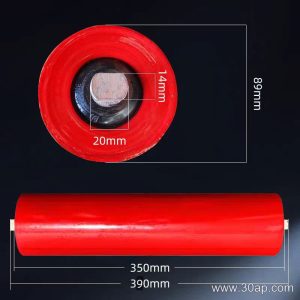
Maintenance is mostly about bearings and lagging. Worn lagging reduces grip and can damage the belt. A seized bearing will destroy the shaft quickly. Regular inspection of the discharge-end pulley, along with the idler roller and conveyor pulley in the same line, keeps the whole system running.
For an accurate quotation, provide the belt width, material, capacity, speed, drive position and environmental conditions. The discharge-end pulley is a small part of the conveyor, but its selection affects belt life, material trajectory and uptime.