What a Tail Pulley Does on a Conveyor
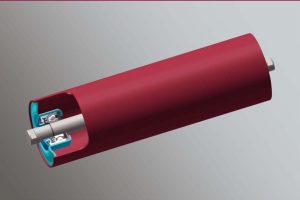
A tail pulley is the return-end drum that guides the conveyor belt as it completes its loop. Positioned at the opposite end from the drive, it helps maintain belt tracking and supports the continuous cycle of material transport. In quarry, cement, and power plant applications, this component works alongside idler rollers and conveyor brackets to keep the system running smoothly. While drive pulleys transmit power, the tail pulley primarily redirects and tensions the belt, making it a distinct part of the conveyor structure.
Construction and Surface Options
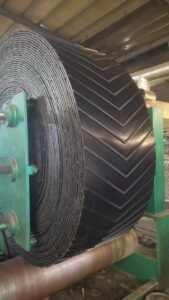
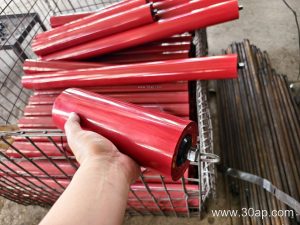
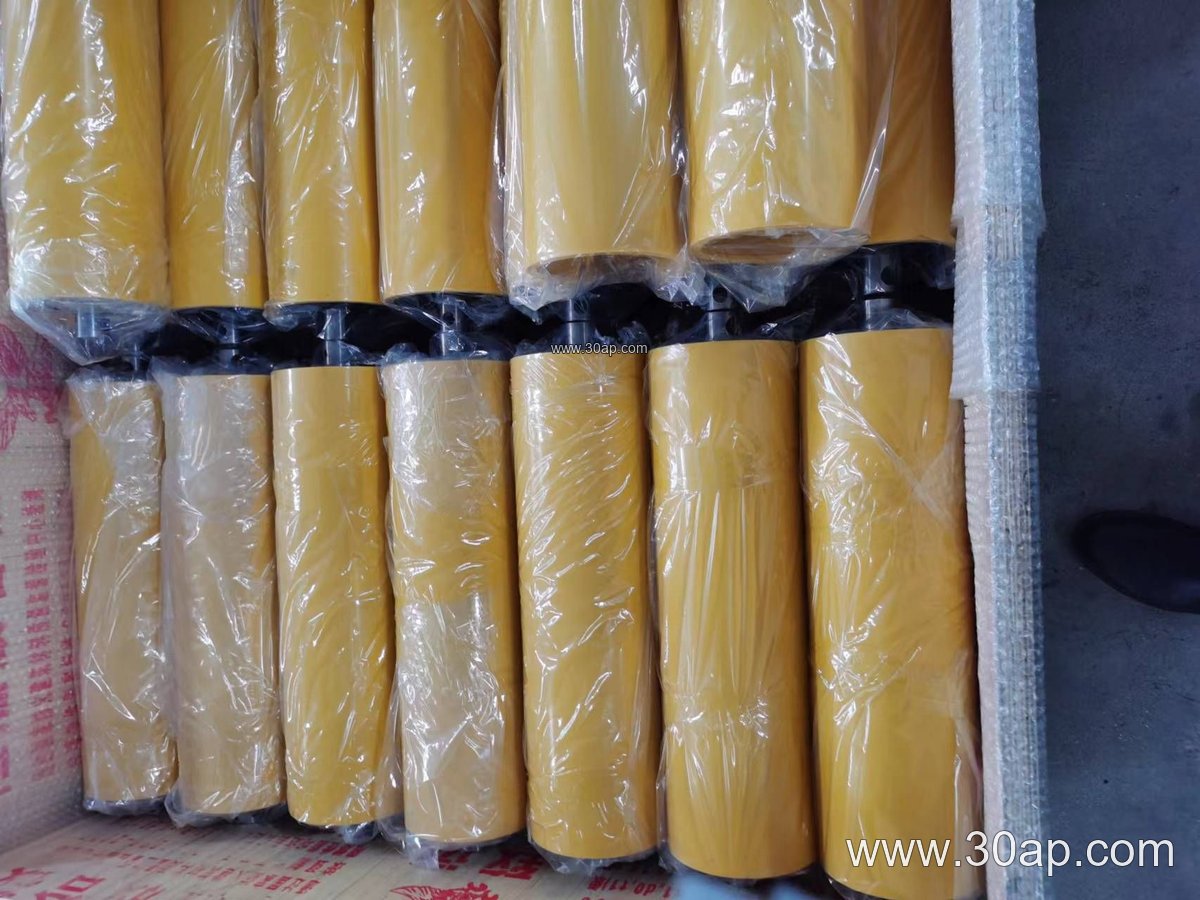
Tail pulleys are typically built with a welded steel shell, a shaft, and bearing housings. Surface treatment can vary: plain steel, rubber lagging applied by cold bonding or hot vulcanization, or patterned lagging such as diamond or herringbone. Lagging thickness commonly ranges from 8 to 20 mm, depending on the duty. The pulley face width usually exceeds the belt width — for example, a B800 belt often pairs with a 950 mm face, and a B1200 belt with a 1400 mm face. Diameters commonly fall between Ø200 and Ø1250, though larger sizes exist for heavy-duty conveyors. Shaft diameter is determined by torque and load, not by belt width alone; typical shaft sizes include Ø80, Ø100, and Ø120 mm.
Where Tail Pulleys Are Used
These pulleys are found in bulk material handling across many industries. In a coal mining conveyor system, a tail pulley at the loading point helps absorb impact and maintain belt alignment. Aggregate plants use them on crusher discharge belts, while cement plants rely on them in clinker transport lines. Port facilities handling iron ore or copper ore also depend on robust tail pulleys to withstand abrasive conditions. They are frequently paired with abrasion resistant conveyor belts or flame retardant conveyor belts, depending on the environment.
Key Parameters for Buyers
When specifying a tail pulley, consider the belt width, pulley diameter, face width, shaft size, and lagging type. The table below lists common reference values; actual dimensions should be confirmed with the conveyor design.
| Parameter | Common Range / Example |
|---|---|
| Belt width (B) | B500, B650, B800, B1000, B1200, B1400, B1600 |
| Pulley diameter | Ø200, Ø315, Ø400, Ø500, Ø630, Ø800, Ø1000 |
| Face width | B500 ≈ 600 mm; B800 ≈ 950 mm; B1200 ≈ 1400 mm; B1400 ≈ 1600 mm |
| Shaft diameter | Ø60, Ø80, Ø100, Ø120, Ø140, Ø160 (by torque/load) |
| Lagging thickness | 8, 10, 12, 15, 20 mm |
| Surface type | Plain, rubber lagging (cold/hot), diamond, herringbone, ceramic |
These values are indicative and not universal specifications. A B1200 × Ø1000 combination is common, but other diameter choices may suit different tension and space requirements.
Installation and Maintenance Notes
Proper alignment at the tail end is critical to prevent belt mistracking. Check that the pulley is square to the conveyor frame and that bearings are adequately lubricated. Lagging wear should be monitored, especially in high-abrasion service such as aggregate or mining conveyor belts. When replacing a tail pulley, verify shaft fit and keyway dimensions against the original. Regular inspection of the belt surface and pulley lagging helps avoid unplanned downtime.
Selection Tips
Choose a tail pulley that matches the belt width and system tension. For abrasive materials, consider rubber lagging with a thickness of 10–15 mm. In cold climates, ensure the lagging material remains flexible. Always confirm shaft diameter based on calculated torque rather than belt width alone. For systems using EP conveyor belts or steel cord conveyor belts, the tail pulley diameter should be sufficient to avoid excessive belt bending stress. Consult the conveyor designer for final specifications.