What a Zinc Mine Belt Tracker Does
A zinc mine belt tracker is a self-adjusting alignment device mounted on the conveyor frame to keep the belt centered as ore moves from the crusher to the stockpile or concentrator. In a zinc operation, the load is abrasive, often damp, and varies in lump size, so a belt that wanders to one side wears its edges quickly and spills material along the gallery. The tracker responds to that sideways drift with a small steering action, correcting the belt before misalignment becomes a maintenance problem.
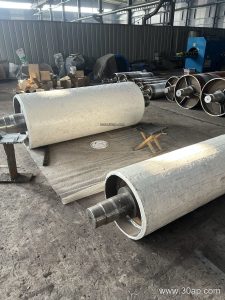
This device is often called a belt training idler or self-aligning idler in English catalogs, and the Chinese equivalent 输送带纠偏器 is widely used in procurement documents. It is a distinct component from the drive pulley, tail pulley and bend pulley: those pulleys transmit power or change belt direction, while the tracker only guides the belt path. A drive pulley cannot be swapped for a tail pulley, and neither can replace a tracking idler.
Construction and Working Principle
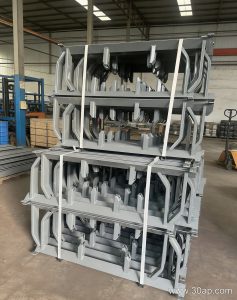
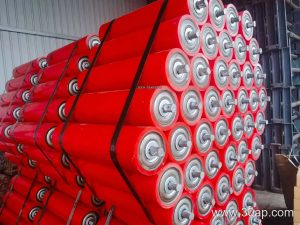
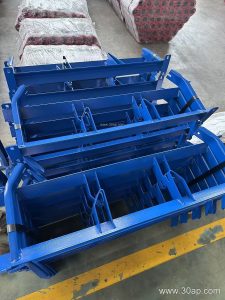
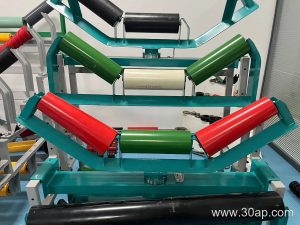
Most trackers use a pair of inclined rollers carried on a pivoting frame. When the belt edge contacts a vertical guide roller, the frame rotates slightly about its vertical axis. The skewed rollers then push the belt back toward the center line. Return-side versions use a smaller, flatter arrangement, sometimes with a rubber disc or a conical roller to sense edge position.
- Pivot assembly with sealed bearings for dusty conditions
- Guide rollers or sensing arms at both belt edges
- Heavy-duty frame with mounting brackets matched to the stringer
- Optional rubber lagging or polyurethane surfaces for grip and wear life
The steering effect depends on friction between roller and belt, belt speed and tension, and the angle of the roller axis. It is a mechanical correction, not a sensor-driven control loop, so it works without power and suits remote sections of a zinc concentrator or underground decline.
Where It Fits in a Zinc Mine Flowsheet
Trackers are commonly placed after the discharge point of a crusher, where off-center loading is a frequent cause of drift. They also appear on long overland sections, on the return strand before the tail pulley, and ahead of transfer chutes where a misaligned belt would damage the skirt rubber. In a cement plant, power plant coal yard or quarry, the same principle applies wherever a fabric or steel cord belt carries bulk material.
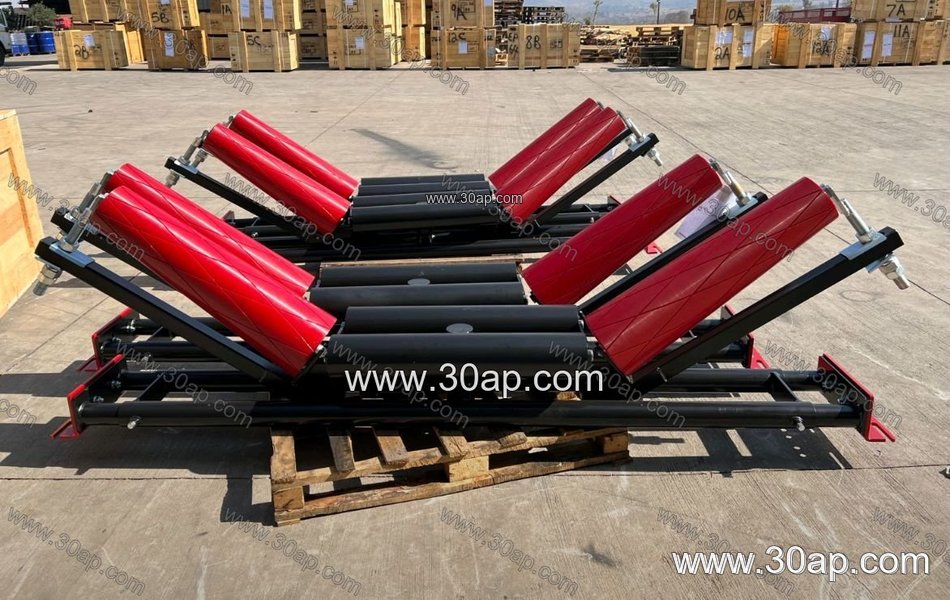
Related components include the conveyor belt itself, idler roller sets, conveyor pulley assemblies and conveyor brackets. The tracker should be selected together with these parts, because belt stiffness, trough angle and frame width all affect how the belt behaves.
Matching the Tracker to the Conveyor
Buyers should confirm belt width, belt type, running direction, load position and mounting dimensions before ordering. The table below lists reference belt widths and typical application notes; these are examples, not a universal fit chart.
| Belt Width | Typical Location | Note |
|---|---|---|
| 600 mm | Return strand, small transfer | Compact frame, light load |
| 800 mm | Carry side after crusher | Check trough angle |
| 1000 mm | Main ore conveyor | Common in concentrator |
| 1200 mm | Long overland section | Verify belt tension |
| 1600 mm | High-capacity trunk conveyor | Heavy frame recommended |
| 2000 mm | Primary haulage belt | Confirm stringer spacing |
Belt construction matters too. A steel cord conveyor belt behaves differently from a multi-ply fabric core belt, and a thick abrasion resistant conveyor belt may need a larger steering force than a thin EP conveyor belt. For underground coal or metal mines, flame retardant and anti-static grades are often specified, and the tracker frame should be compatible with the surrounding structure.
Selection and Maintenance Notes
Do not assume one belt width matches one pulley diameter, and do not derive shaft size from belt width alone. Supply the site drawing, belt speed, running direction and observed drift pattern. During maintenance, stop and lock out the conveyor before inspecting or adjusting the tracker. Check for seized bearings, worn guide rollers, bent frames and material buildup that can defeat the steering action. A tracker corrects alignment, but it cannot compensate for a badly skewed frame or an off-center chute.
For accurate quotations on a zinc mine belt tracker, include belt width, belt type, mounting hole pattern and whether the unit is for the carrying or return side.