What a Cast-Welded Pulley Is and Why It Matters
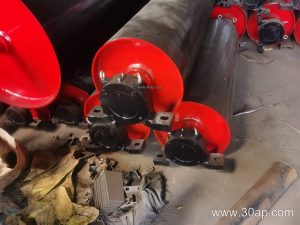
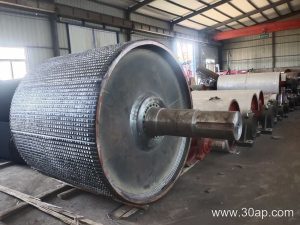
A cast-welded pulley is a heavy-duty conveyor pulley built by combining a cast steel hub or end disc with a welded steel shell and shaft assembly. This hybrid construction gives the pulley the strength of a casting at the load-bearing points and the flexibility of welded fabrication for the drum body. In bulk material handling, the cast-welded pulley often serves as the drive pulley or tail pulley, where torque transmission and belt tracking are critical. Unlike a simple idler roller, a cast-welded pulley is a powered or tensioning component that must handle high radial and axial loads. It is commonly found in quarry conveyor systems, coal mining conveyors, and cement plant material lines, working alongside a rubber conveyor belt or steel cord conveyor belt to move abrasive aggregates and clinker.
How the Cast-Welded Pulley Is Built
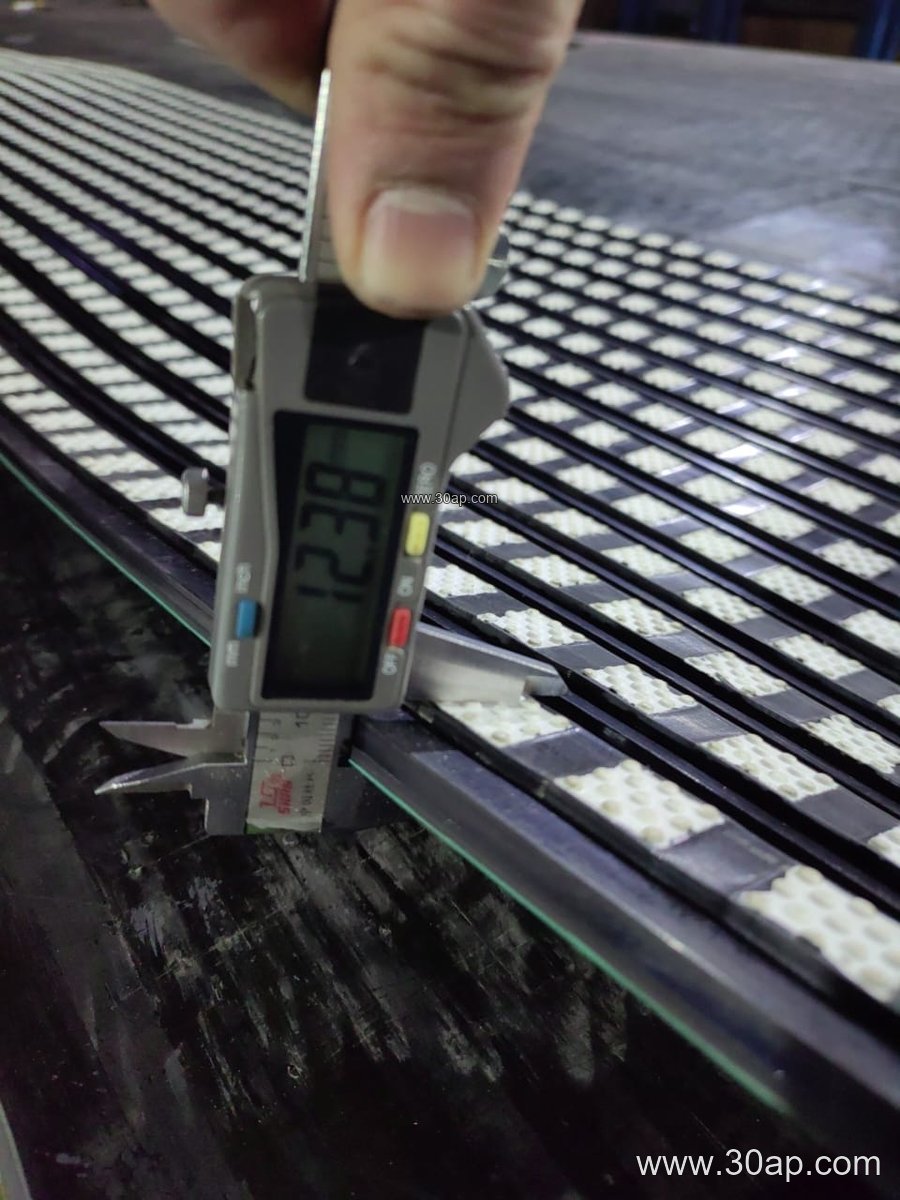
The manufacturing process starts with a cast steel hub that is machined to accept the shaft and bearing assembly. The pulley shell is rolled from steel plate and welded to the cast end discs. This cast-welded design reduces stress concentrations at the hub-to-shell junction compared with a fully welded pulley. The shaft is usually inserted and keyed or shrink-fitted, and the whole assembly is dynamically balanced for smooth rotation. Surface options include plain finish, cast rubber lagging, cold-bonded rubber, hot vulcanized rubber, diamond grooved lagging, herringbone lagging, and ceramic lagging. Lagging thickness commonly ranges from 8 mm to 20 mm depending on the duty. For a drive pulley, diamond or ceramic lagging improves grip and reduces slip when moving a heavy-duty mining conveyor belt. For a tail pulley, plain or light lagging may be sufficient, but a bend pulley in the same circuit might use a different surface to guide the belt without excess friction. Note that drive, tail, and bend pulleys are not interchangeable; each position demands specific design considerations.
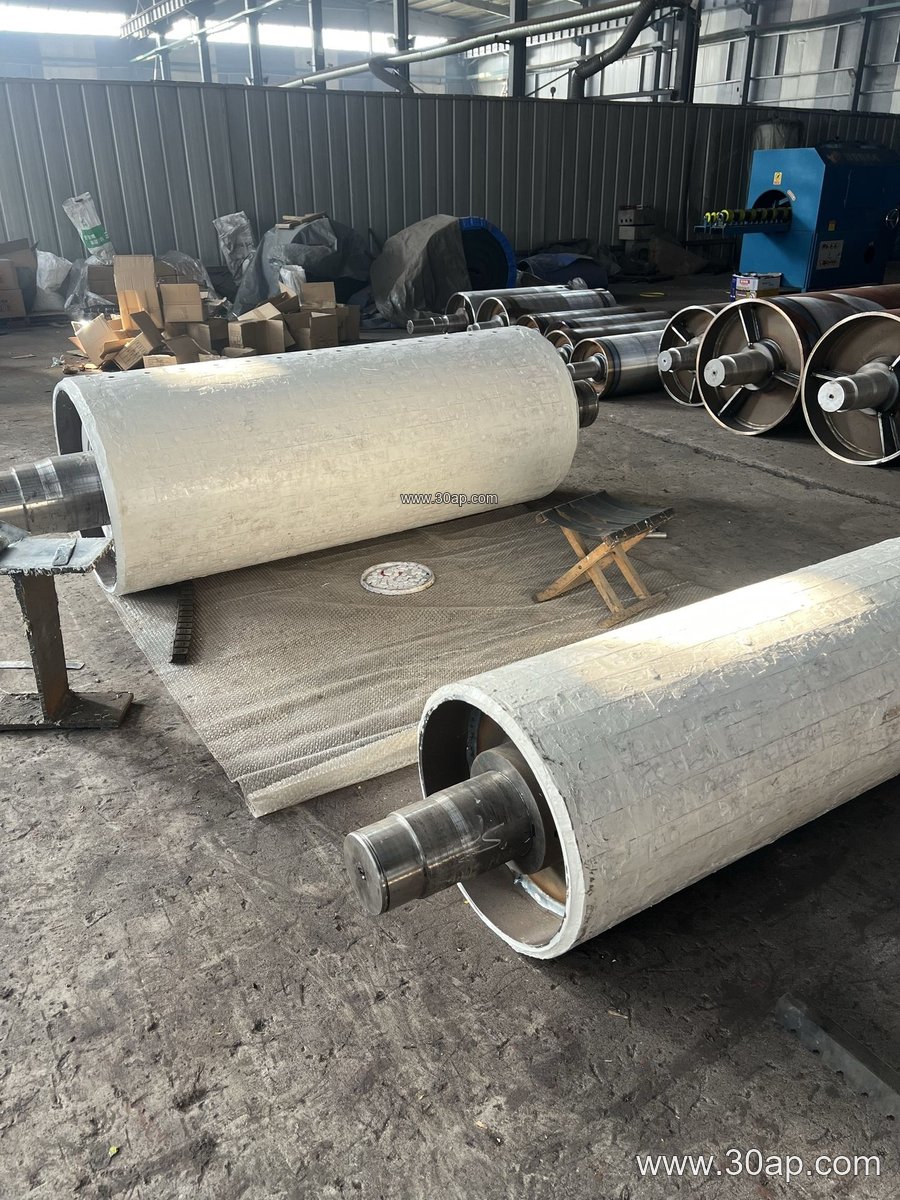
Where Cast-Welded Pulleys Are Used
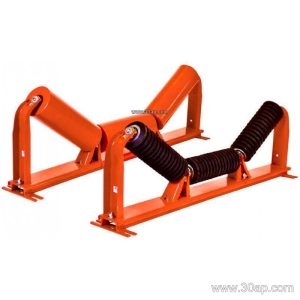
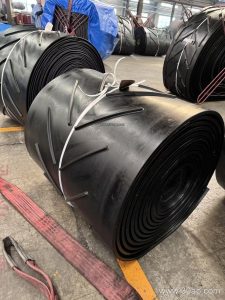
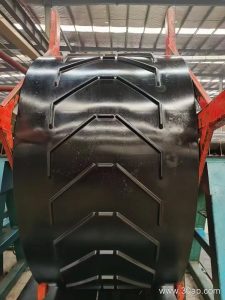
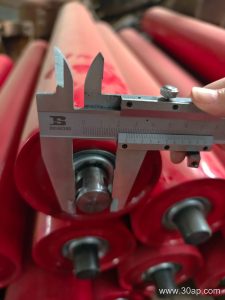
These pulleys appear in a wide range of industries. In a limestone quarry, a cast-welded pulley on the head end drives an abrasion resistant conveyor belt carrying crushed rock. In a coal washing plant, flame retardant conveyor belt runs over cast-welded tail pulleys that maintain tension in the return strand. Cement plants use them on clinker conveyors where heat resistant conveyor belt may be needed. Power plants rely on cast-welded pulleys for coal handling lines, often paired with an EP conveyor belt or NN conveyor belt. Port bulk terminals use large cast-welded drive pulleys to move ore conveyor belts at high capacity. The pulley also works with conveyor brackets and conveyor idler rollers to form a complete conveyor pulley station. While a bend pulley changes belt direction without driving, the cast-welded drive pulley transmits power, and the tail pulley provides tension—each has a distinct role and should be selected accordingly.
Key Dimensions and Selection Factors
Buyers should match pulley dimensions to the conveyor belt width and the required shaft load. Common belt widths include B400, B500, B650, B800, B1000, B1200, B1400, B1600, B1800, B2000, B2200, and B2400. The pulley face width is usually slightly wider than the belt—for example, a B800 belt often uses a pulley face around 950 mm, and a B1200 belt around 1400 mm. Diameters commonly range from Ø200 to Ø1800, with larger diameters for high-tension drives. A typical combination might be B1200 × Ø1000 for a primary drive, or B800 × Ø500 for a tail pulley. However, no single belt width dictates a fixed pulley diameter; the choice depends on belt speed, torque, and wrap angle. Shaft diameters commonly range from Ø50 to Ø200 and are determined by torque and load, not by belt width alone. The table below shows representative reference values, not mandatory pairings.
| Belt Width | Typical Pulley Face Width (mm) | Common Diameter Range (mm) | Common Shaft Diameter Range (mm) |
|---|---|---|---|
| B400 | ~500 | Ø200–Ø400 | Ø50–Ø80 |
| B650 | ~750 | Ø250–Ø500 | Ø60–Ø100 |
| B800 | ~950 | Ø315–Ø630 | Ø70–Ø120 |
| B1000 | ~1150 | Ø400–Ø800 | Ø80–Ø140 |
| B1200 | ~1400 | Ø500–Ø1000 | Ø90–Ø160 |
| B1400 | ~1600 | Ø630–Ø1250 | Ø100–Ø180 |
| B1600 | ~1800 | Ø800–Ø1400 | Ø120–Ø200 |
When selecting a cast-welded pulley, consider the conveyor belt type it will run with—an EP conveyor belt, a fabric core conveyor belt, or a steel cord conveyor belt—because tension and lagging requirements differ. Also check compatibility with the conveyor bracket and the idler roller arrangement. For high-abrasion service, specify ceramic lagging; for oil-exposed areas, an oil resistant conveyor belt may be used alongside a suitable pulley surface. Always confirm shaft size by engineering calculation, not by belt width alone.
Buyer Checklist for Cast-Welded Pulleys
- Confirm the pulley position: drive, tail, bend, or take-up. Each has different load and lagging needs.
- Verify belt width and pulley face width—for example, B1000 belt with ~1150 mm face.
- Specify diameter based on torque and belt speed, not just on belt width.
- Choose lagging type and thickness: plain, diamond, ceramic, or rubber, 8–20 mm common.
- Provide shaft diameter from torque calculation; common values are Ø50 to Ø200.
- Check compatibility with conveyor brackets and idler rollers in the same conveyor pulley station.
- For mining or coal handling, consider flame retardant conveyor belt and anti-static conveyor belt requirements.
Whether you are upgrading a quarry line or specifying a new cement plant conveyor, the cast-welded pulley offers a durable, repairable solution for high-demand drive and tail applications. Work with your supplier to confirm dimensions and lagging for your specific conveyor belt and load profile.