What a Belt Conveyor Idler Frame Actually Does
On a troughing conveyor, the belt does not float. It rests on idler rollers, and those rollers sit in a belt conveyor idler frame that holds them at the right height, spacing, and angle. This frame — also called a conveyor idler bracket or idler support frame in many workshops — is the steel backbone that keeps the belt profile stable from loading point to discharge. Get the frame right and the belt tracks well, the rollers last longer, and spillage drops. Get it wrong and you will see edge wear, belt wander, and premature roller failure.
The frame is a simple product in principle and a fussy one in practice. It carries the load of the belt and material, resists vibration, and keeps every idler roller aligned to the same trough angle. If you are sourcing frames for a quarry conveyor, a coal handling line, or a cement plant transfer, the details below are the ones that matter.
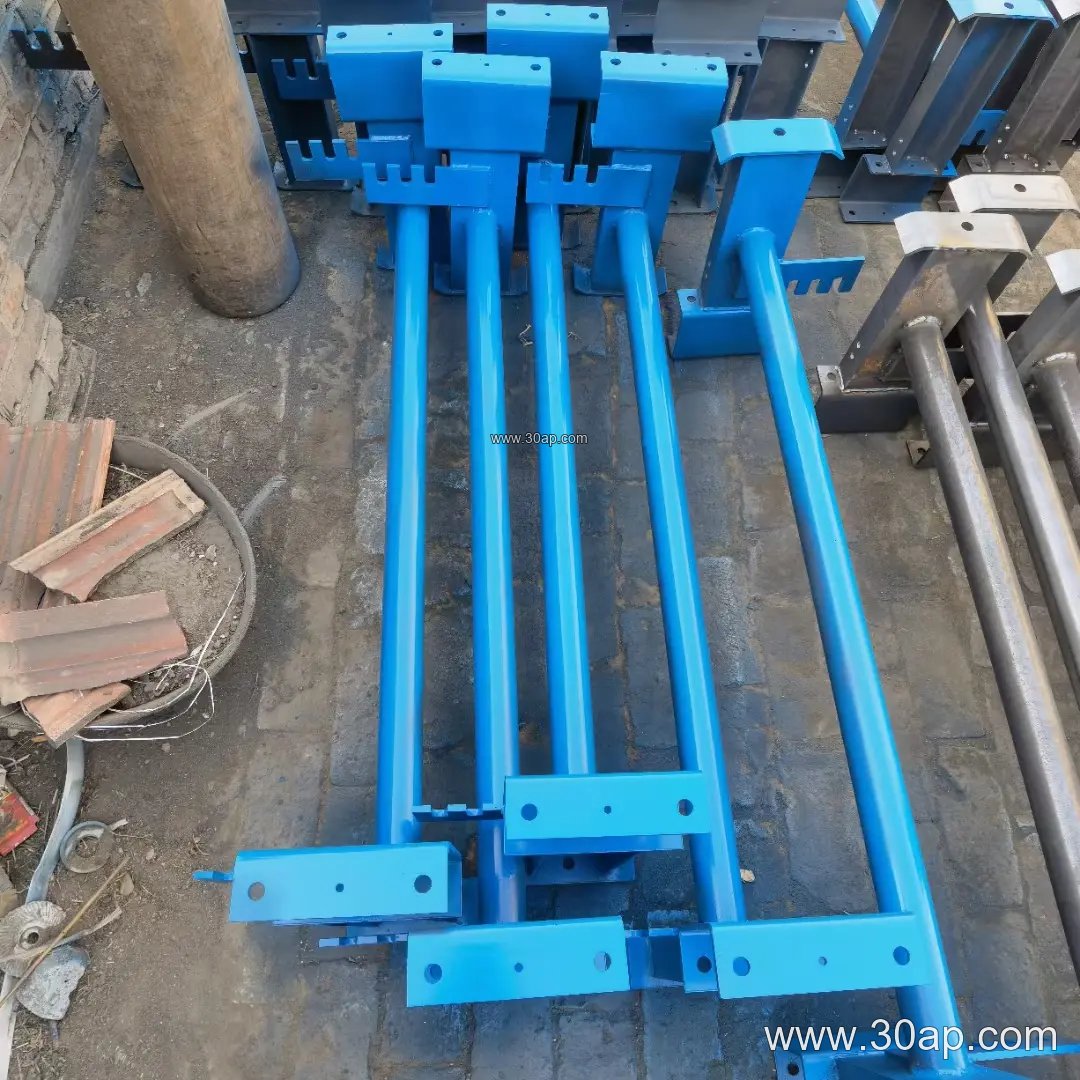
How the Frame Is Built
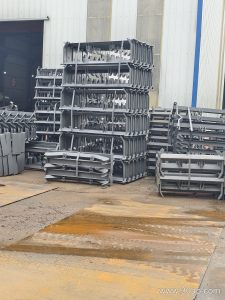
Most frames are fabricated from angle steel, channel steel, or folded steel plate. The crossbeam length and mounting hole spacing change with belt width and trough angle, so they are always made to drawing rather than picked from a single fixed size. A typical assembly has a crossbeam, two or three idler mounting brackets, and end brackets that bolt to the conveyor stringer.
Common forms include:
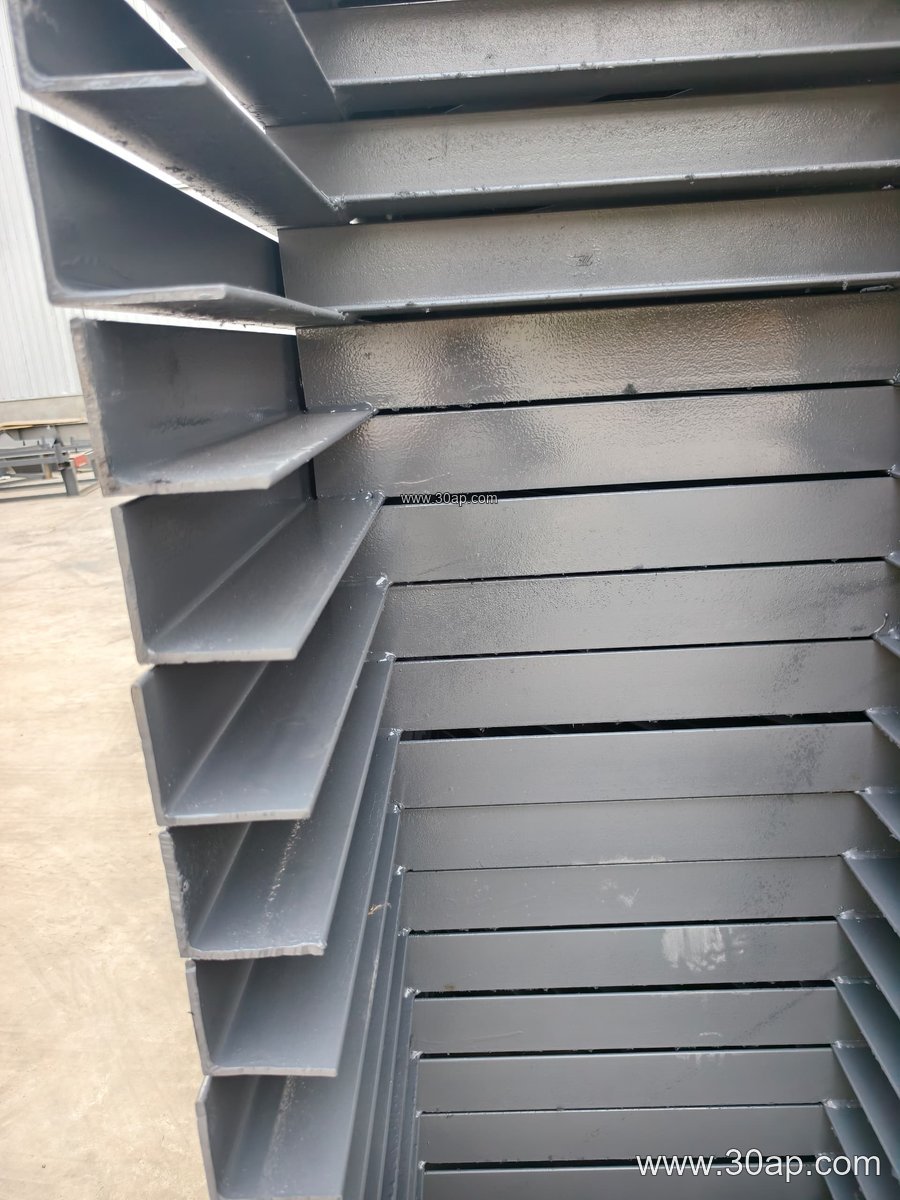
- Troughing frames for the carrying side, usually with three rollers
- Transition frames near pulleys, where the belt moves from flat to troughed
- Return frames and V-return frames on the lower strand
- Impact frames under loading points, paired with impact rollers
- Self-aligning and forward-tilted frames for belt training
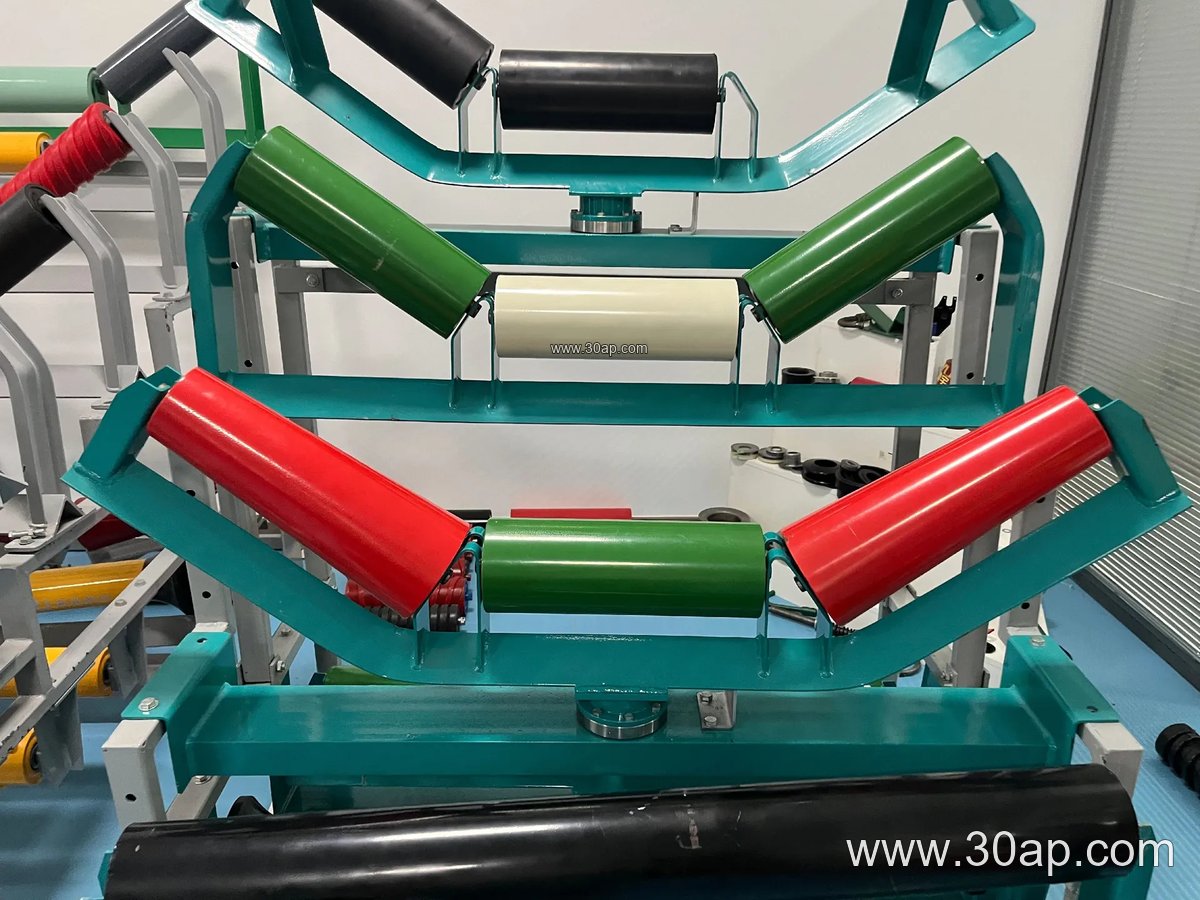
- Adjustable frames that allow the trough angle to be set on site
Surface treatment is usually painting or hot-dip galvanizing. In a wash plant or a port terminal with salt air, galvanizing is worth the extra cost.
Trough Angle and Roller Diameter
The trough angle controls how much material the belt can hold. Common values are 20, 30, 35, and 45 degrees. Adjustable frames can be set between these angles during installation, which is useful when a conveyor is being re-rated or when material characteristics change. Forward-tilted frames usually lean about 1.5 to 2 degrees to help center the belt.
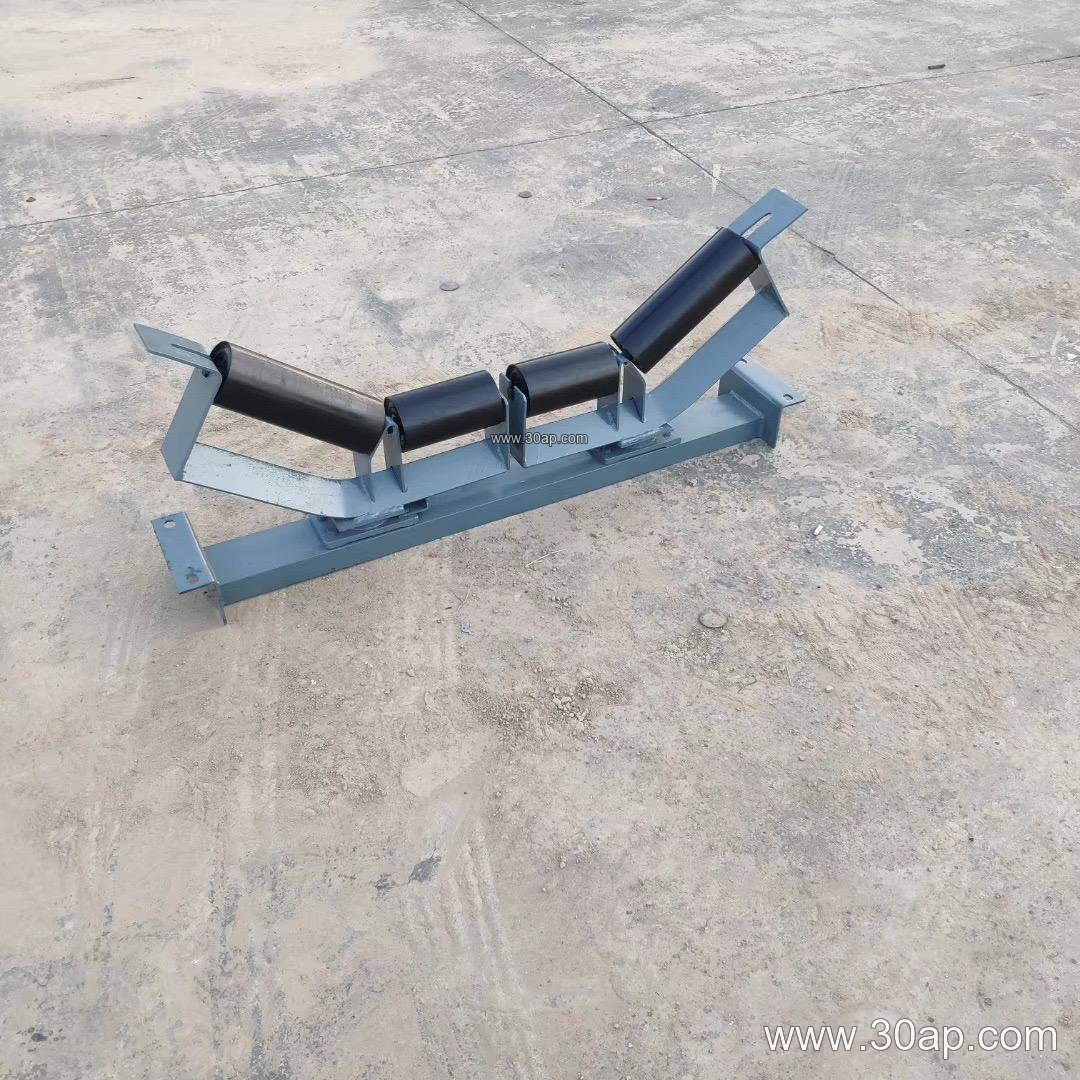
Roller diameter is selected with belt width, belt speed, and load in mind. Typical diameters are Ø89, Ø108, Ø133, Ø159, and Ø194. There is no single rule that ties one belt width to one roller size, so combinations such as B800 with 35 degrees and Ø108, or B1200 with 45 degrees and Ø133, are both normal when the design calls for them.
| Belt width | Typical trough angle | Typical roller diameter |
|---|---|---|
| B500 / B650 | 20–30 degrees | Ø89 |
| B800 / B1000 | 30–35 degrees | Ø108 / Ø133 |
| B1200 / B1400 | 35–45 degrees | Ø133 / Ø159 |
| B1600 / B1800 | 35–45 degrees | Ø159 / Ø194 |
| B2000 / B2200 | 35–45 degrees | Ø194 |
Treat these as reference ranges, not fixed pairings. Final selection is by design, based on belt tension, material density, and idler spacing.
Where These Frames Are Used
You will find them in almost every bulk handling circuit. In a limestone quarry or a stone crushing line, troughing frames carry crushed rock from the crusher to the screen. In a coal washing plant and a power plant coal yard, flame retardant and anti-static belts run on frames that must resist dust and moisture. In a cement plant, heat resistant belts on clinker lines need frames that stay aligned under thermal movement. Port terminals and ship loading conveyors use wide frames with heavy rollers, while a fertilizer or grain silo operation may use smaller B650 or B800 frames with lighter rollers.
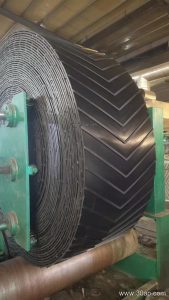
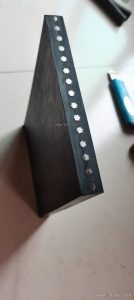
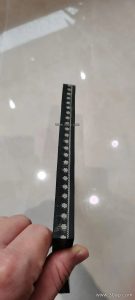
Frame choice also interacts with the belt itself. A heavy-duty mining conveyor belt on an ore conveyor belt line loads the frame differently than a thin EP conveyor belt on a packing line. Where a chevron conveyor belt or a corrugated sidewall conveyor belt is used, cleats and walls need clearance, so frame height and roller position must be checked against the belt profile. The same applies when a pipe conveyor belt or an endless conveyor belt is specified — the frame is part of a system, not a standalone item.
Buyer Checklist
- Confirm belt width, trough angle, and roller diameter as a set, not separately
- Ask for the crossbeam length and hole spacing on the drawing
- State the mounting interface to the stringer and the pulley center distance
- Match the finish to the environment: painted for dry indoor, galvanized for wet or coastal
- Check that the frame suits the belt type, including cleat height and sidewall clearance
- Order spare brackets with the frames so replacements match
A well-matched frame is quiet, cheap to maintain, and easy to align. If you are also sourcing the belt and rollers, keep the frame drawing and the belt specification on the same desk — the three parts only work well together.