What a Belt Conveyor Bend Pulley Does
A belt conveyor bend pulley is a non-driven conveyor pulley used to change the direction of the conveyor belt, most often at the tail end, in a take-up arrangement, or wherever the belt path needs to be routed around an obstruction. It is also called a snub pulley or a deflection pulley. It does not pull the belt the way a drive pulley does, and it does not set belt tension the way a tail pulley in a screw take-up does. Its job is routing: it guides the belt back into the carrying run with a controlled wrap angle and keeps the return side clear of structure.
Because the bend pulley carries only the belt and a share of the tension load, it is usually smaller in diameter than the drive pulley on the same conveyor. That difference matters, since a tight bend can shorten belt life if the pulley is undersized for the belt’s stiffness and the duty cycle.
How It Is Built
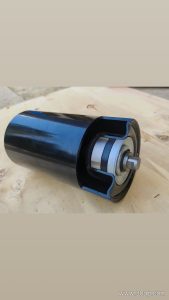
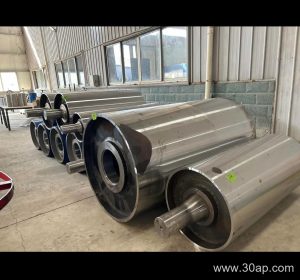
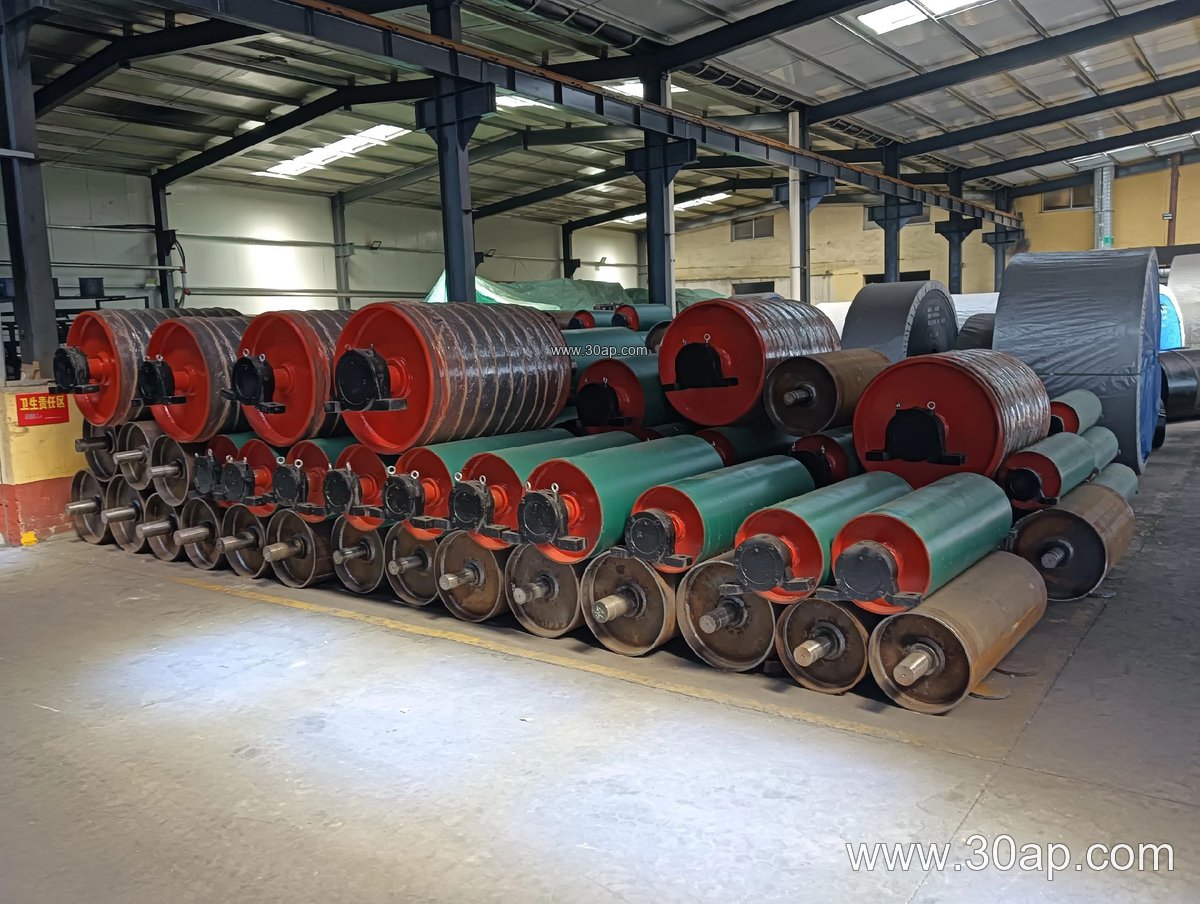
A typical bend pulley is a welded steel drum with end discs, a hub on each side, and a through shaft mounted in bearing housings. The shell may be machined smooth or covered with rubber lagging. Lagging on a bend pulley is mainly for belt tracking and protection rather than for grip, so plain or lightly lagged faces are common. Bearing selection, shaft diameter, and shell thickness are determined by the calculated tension and the load the pulley must carry, not by belt width alone.
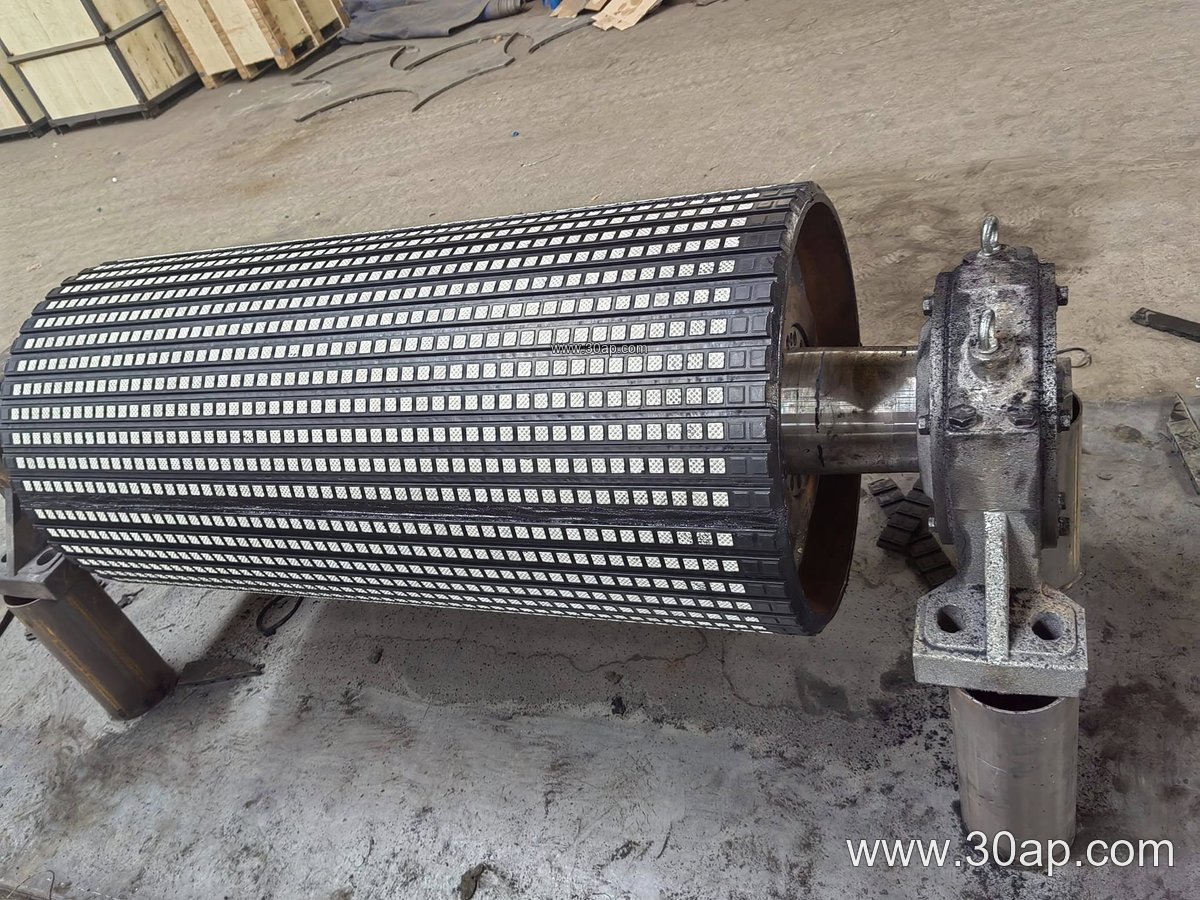
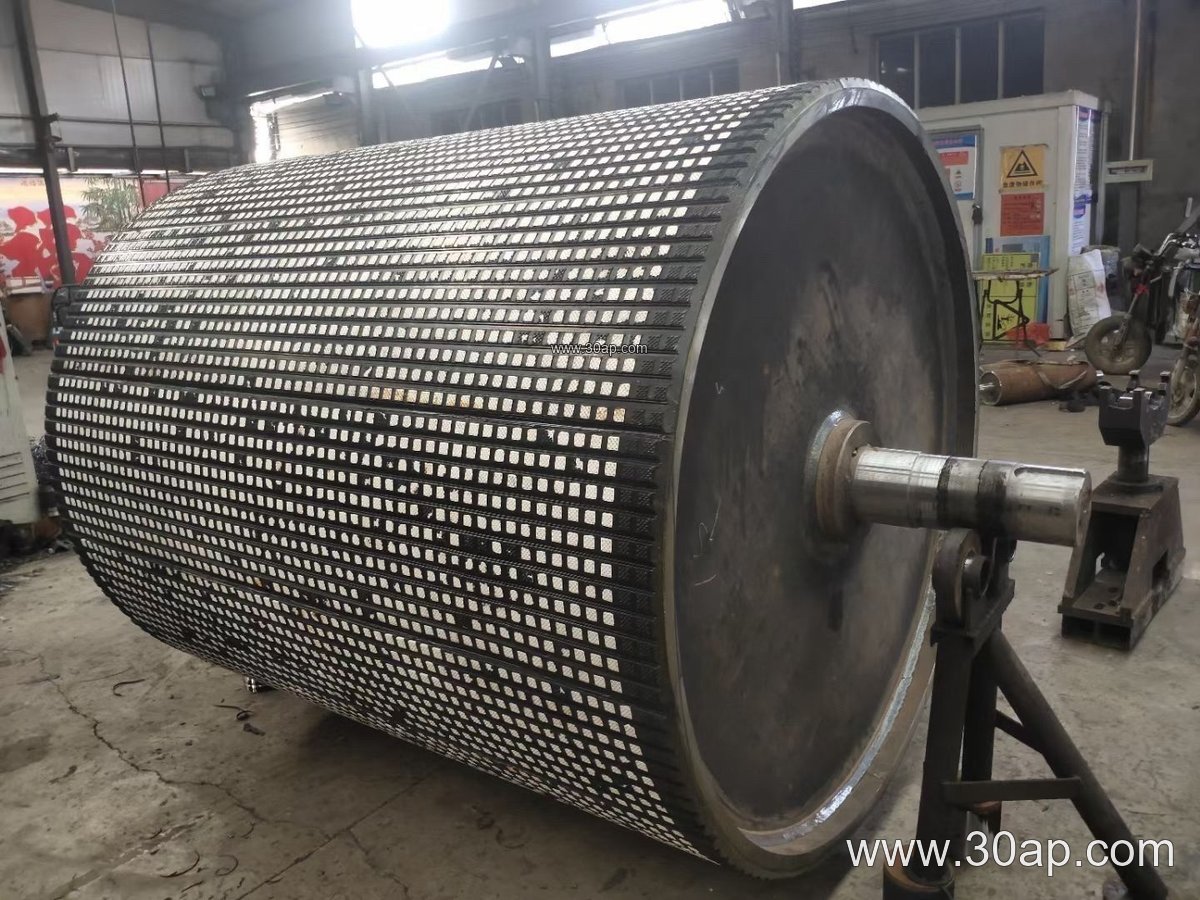
Surface options include plain finish, cold-bonded rubber, hot-vulcanized rubber, diamond lagging, and ceramic lagging where abrasive carryback is a concern. Lagging thickness is often 8, 10, 12, 15, or 20 mm depending on the application.
Where It Fits on the Conveyor
In a limestone quarry line, a bend pulley may sit near the tail to route the return belt under the loading zone. In a coal-fired power plant coal handling system, it often appears in the take-up tower, guiding the belt into the tension pulley. In a cement plant clinker transport circuit, a bend pulley can help clear a transfer chute without moving the whole conveyor frame.
Do not confuse it with a drive pulley, head pulley, or tail pulley. Those are separate subtypes with different loads and functions. A bend pulley works alongside conveyor brackets, idler rollers, and the conveyor belt itself, and it is selected after the belt path and tension are known.
Sizing and Selection Notes
Belt width and pulley diameter are related but not locked together. A B800 conveyor might use a Ø500 bend pulley, while a B1200 line with high tension may need Ø1000 or larger. The shell face is normally wider than the belt, for example about 950 mm for B800 and about 1400 mm for B1200. Shaft diameter is set by torque and bearing load; common shaft sizes range from Ø50 to Ø200, and the final value comes from the design calculation.
- Confirm the wrap angle and belt path before choosing diameter.
- Check lagging type against carryback and material abrasion.
- Match bearing housings and brackets to the conveyor frame.
- Review belt stiffness, especially with thick or high-strength belts.
For heavy-duty mining conveyor belts, steel cord conveyor belts, and high-tension EP conveyor belts, a larger bend pulley diameter reduces bending stress in the belt carcass. In dusty coal mining or aggregate service, sealed bearings and abrasion resistant lagging help extend service life.
Maintenance and Buyer Checklist
Inspect lagging wear, bearing temperature, and shaft alignment at each scheduled shutdown. A bend pulley that runs out of alignment will cause belt mistracking, edge wear, and premature cover damage. Keep the pulley face clean and confirm that scrapers or plows are not pressing against it.
Buyers should ask for the calculated tension, the required shaft size, the lagging specification, and the bearing type before ordering. Ask whether the pulley will be balanced and how the face width was chosen. A bend pulley is a small part of the conveyor, but a wrong one can shorten the life of an expensive conveyor belt.