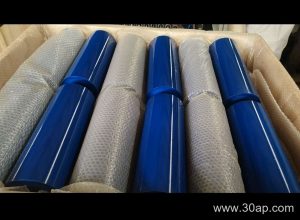
What the Head Pulley Assembly Does
A head pulley assembly is the drive and discharge point of a belt conveyor. It sits at the delivery end of the structure, grips the conveyor belt through friction, and pulls the loaded strand toward the transfer point. Because it both transmits torque and releases material, its condition affects belt tracking, wear, and the whole line’s uptime. In a quarry, a cement plant, or a power plant coal yard, this assembly is usually the single most heavily loaded pulley on the machine.
The assembly is more than a bare shell. It is a matched set of drum, shaft, bearings, bearing housings, locking elements, and often a lagged surface, mounted on a frame that ties into the conveyor bracket. Get any one part wrong and the result shows up as slippage, vibration, or belt edge damage.
How the Assembly Is Built
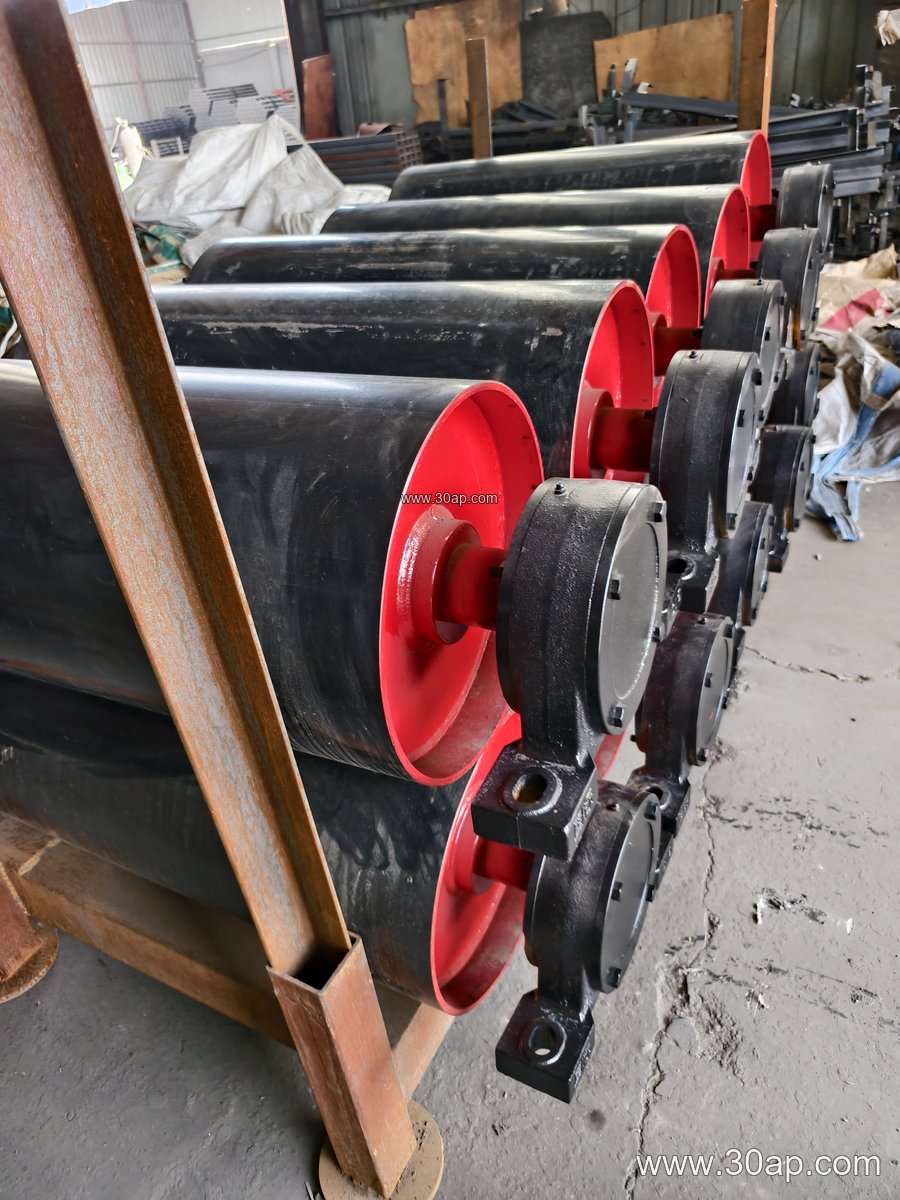
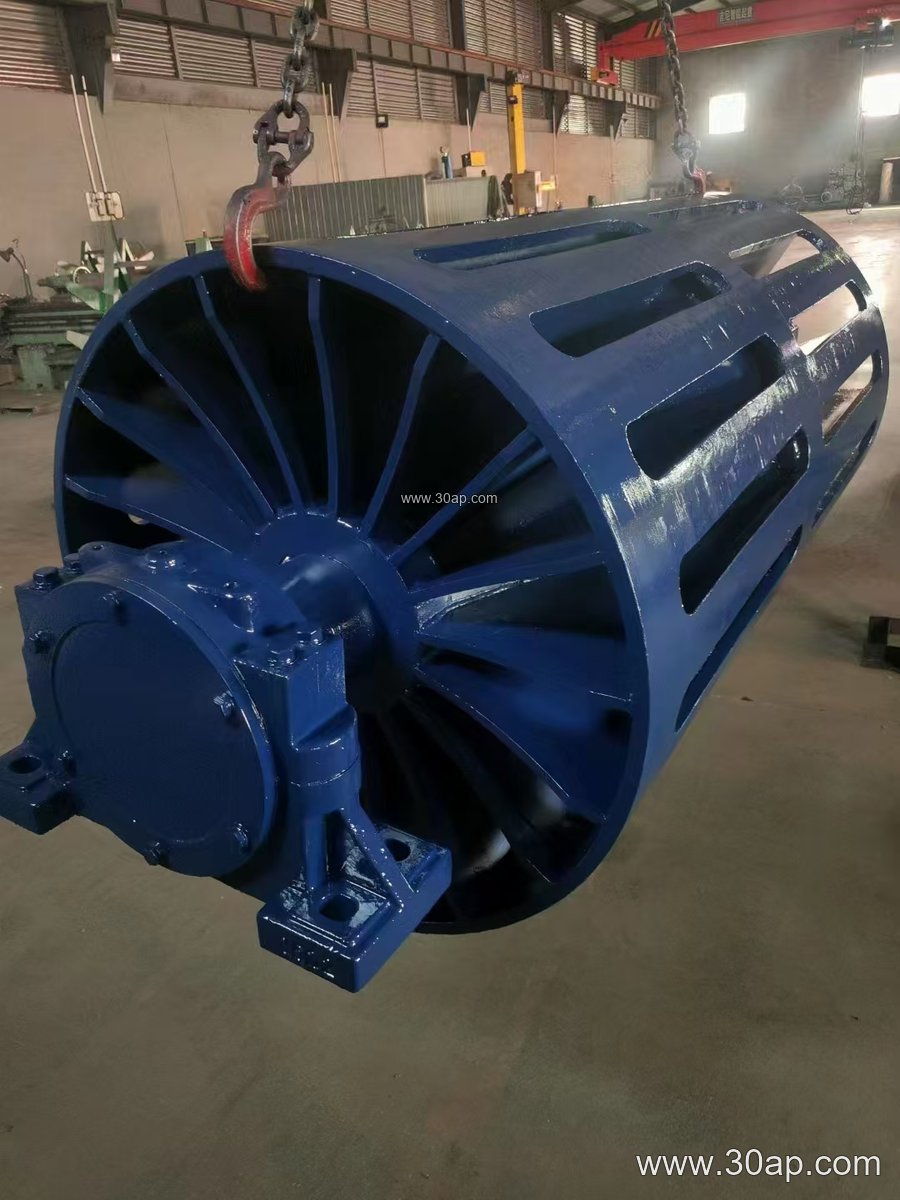
Most units use a welded steel drum with dished or flat end plates, machined hubs, and a through shaft. The shaft is sized by torque and radial load, not by belt width alone; common shaft diameters run from Ø50 to Ø200, and the final value should come from the drive calculation.
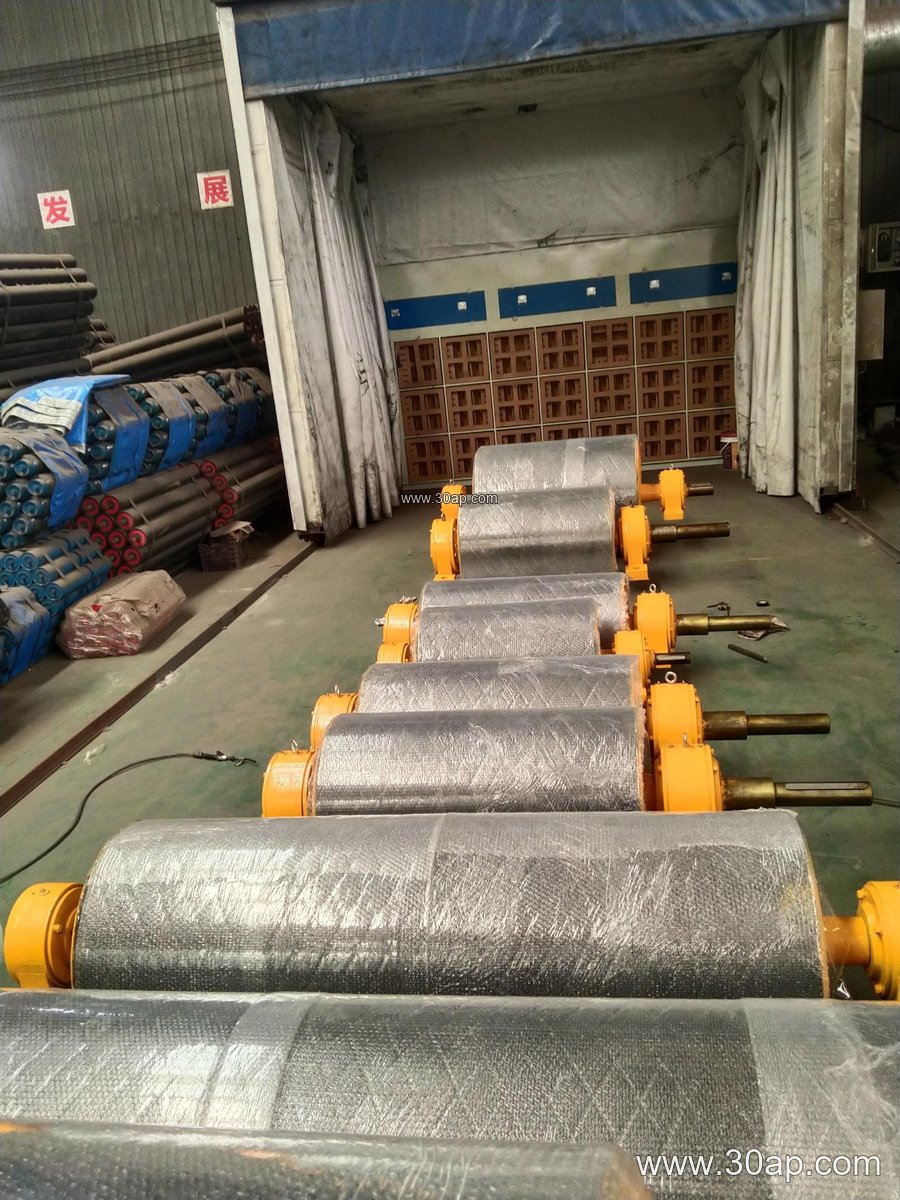
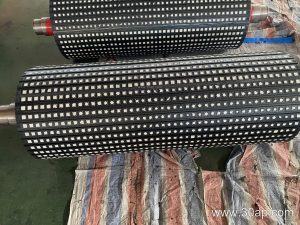
Bearing selection follows the same logic. Spherical roller bearings in cast or fabricated housings are typical for heavy bulk handling, with grease or oil lubrication chosen for the duty. The drum surface may be plain, or covered with rubber lagging applied by cold bonding or hot vulcanizing, in flat, diamond, or herringbone patterns. Lagging thickness is often 8, 10, 12, 15, or 20 mm depending on grip and wear requirements.
- Drum diameter: commonly Ø200 to Ø1800, matched to belt tension and wrap angle
- Face width: usually wider than the belt, for example about 1400 mm for a B1200 belt
- Surface: plain, cast rubber, cold-bonded rubber, hot-vulcanized rubber, diamond or herringbone lagging, ceramic lagging
- Drive options: shaft-mounted gearbox, direct coupling, or an integrated motorized drum
Sizing by Belt and Duty
Buyers often ask for a combination such as B1200 × Ø1000 or B800 × Ø500. These are sensible starting points, but no belt width is tied to one diameter. A wide, slow conveyor may use a smaller drum than a narrow, fast one carrying the same tonnage. The wrap angle, belt modulus, and starting torque all matter.
| Belt width | Typical face width | Example diameter range |
|---|---|---|
| B500 | about 600 mm | Ø250 to Ø400 |
| B800 | about 950 mm | Ø400 to Ø630 |
| B1000 | about 1150 mm | Ø500 to Ø800 |
| B1200 | about 1400 mm | Ø630 to Ø1000 |
| B1400 | about 1600 mm | Ø800 to Ø1250 |
These ranges are reference data, not fixed pairings. Confirm the drum, shaft, and bearing rating against the actual belt pull before ordering.
Matching the Belt and the Load
The head pulley and the belt work as a pair. A smooth rubber lagging suits general bulk material, while ceramic or grooved lagging helps where the belt is wet or oily. The belt itself must tolerate the drive tension: a steel cord conveyor belt handles long, high-tension runs better than a fabric core belt, and an EP conveyor belt or NN conveyor belt is common on medium-duty lines. In coal mining, a flame retardant conveyor belt or PVG conveyor belt is often specified, and the pulley lagging should be chosen to avoid slip without over-stressing the cover.
Where material is abrasive, an abrasion resistant conveyor belt reduces cover wear, and the drum face should be inspected for polishing or grooving. If the belt carries hot clinker or sinter, a heat resistant conveyor belt paired with a properly rated lagging keeps the assembly serviceable. For dusty aggregate lines, a rubber conveyor belt with good troughability tracks well over the head drum.
Installation Position and Maintenance
The head pulley assembly is not interchangeable with a tail pulley or a bend pulley. The tail pulley tensions and returns the belt; a bend pulley changes direction only. The head unit carries the drive torque and the highest tension, so its bearings, locking rings, and lagging deserve the closest attention during inspections.
Check lagging wear, bolt torque, and bearing temperature on a regular schedule. Keep the discharge chute clear so material does not build up against the drum, and confirm that the conveyor bracket and frame are shimmed correctly. A misaligned head pulley will wear belt edges quickly, no matter how good the belt specification is.
Before purchase, provide the belt width, belt type, motor power, speed, wrap angle, and material conditions. That information lets the supplier propose a balanced assembly instead of a guessed size.