What Conveyor Bracket Fabrication Involves
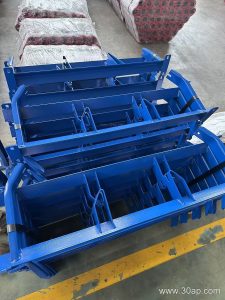
Conveyor bracket fabrication is the process of cutting, bending, drilling, and welding steel into the structural supports that hold idler rollers and shape a conveyor belt. These brackets, often called idler frames or roller stands, are the interface between the conveyor structure and the rotating components. A well-fabricated bracket keeps the belt profile stable, reduces vibration, and helps maintain proper alignment from the loading point to the discharge. In industries such as coal mining, cement plants, power plant coal handling, and quarry operations, the quality of this fabrication directly affects downtime and maintenance frequency.
The work typically starts with raw material selection. Common materials include angle steel, channel steel, and folded steel plate. The choice depends on the load, belt width, and environmental conditions. For a B800 belt with a 35-degree trough, a fabricator might use channel steel for the main crossbeam and angle steel for the end supports. Heavier belts, such as a 1200mm wide EP conveyor belt or a steel cord conveyor belt, usually require thicker sections and additional reinforcement.
Fabrication Steps and Structural Details
Fabrication follows a sequence that balances accuracy with production efficiency. Cutting and punching come first, followed by bending and welding. Jigs and fixtures help maintain consistent angles and hole spacing. The mounting hole distance and crossbeam length are not fixed; they change with belt width, trough angle, and roller diameter. For example, a B650, 30-degree, Ø89 setup will have different dimensions from a B1200, 45-degree, Ø133 arrangement. Fabricators usually confirm these dimensions against the conveyor design rather than relying on a single universal template.
Welding quality matters because brackets carry dynamic loads. Poor welds can crack under the repeated impact of lumpy material or the tension of a heavy-duty mining conveyor belt. After welding, many shops apply a primer or galvanized coating to resist corrosion, especially in wash plants or port environments where moisture and salt are present.
Types of Brackets and Their Roles
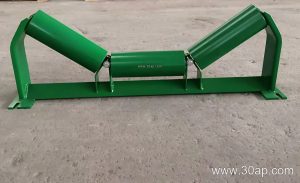
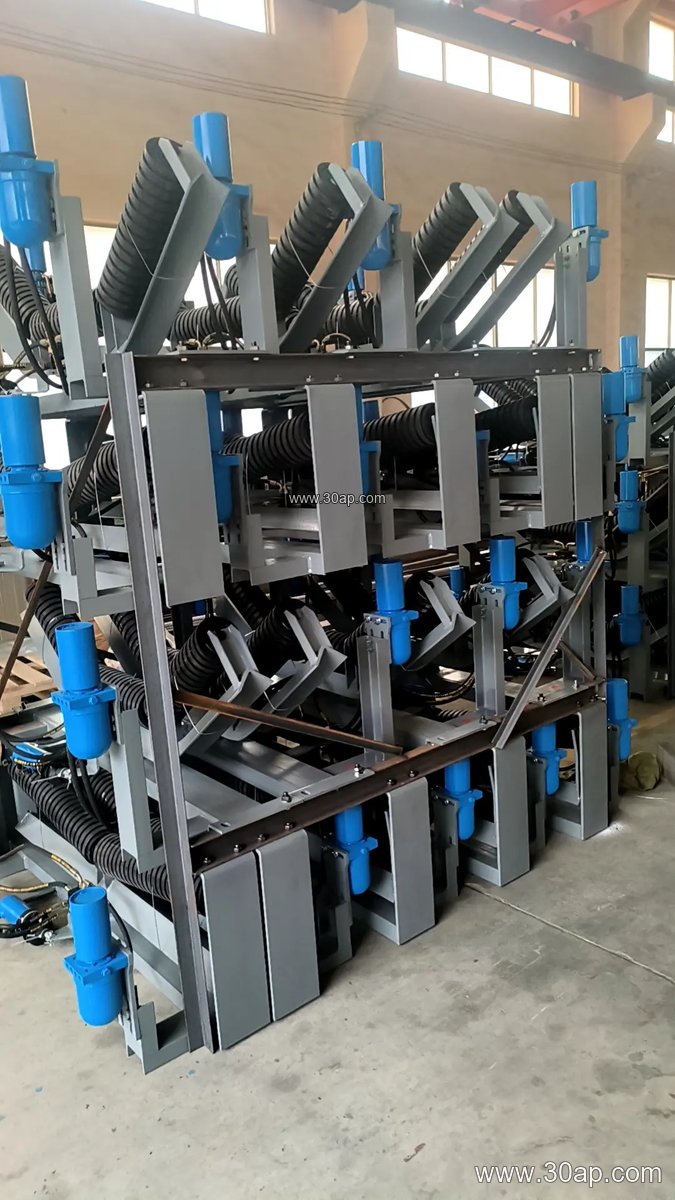
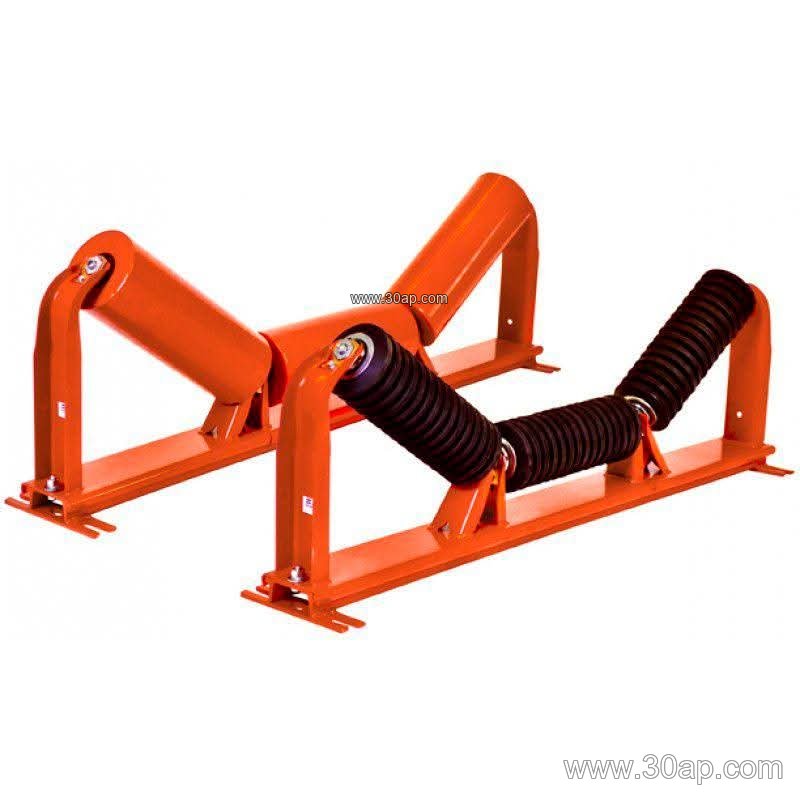
Different positions along the conveyor call for different bracket designs. Troughing brackets support the carrying side and set the trough angle, commonly 20, 30, 35, or 45 degrees. Return brackets hold the belt on the return run, and V-return brackets help center the belt. Impact brackets, often fitted with buffer rollers, are placed under loading points to absorb the force of falling material. Transition brackets ease the belt from a flat pulley into a troughed profile, reducing stress at the transition zone.
Adjustable brackets allow the trough angle to be changed within a range, which is useful when a conveyor handles multiple material types or when fine-tuning belt tracking. Fixed brackets are simpler and more rigid, suitable for stable operating conditions. Self-aligning brackets, sometimes called training brackets, use forward tilt of about 1.5 to 2 degrees to correct minor belt misalignment. Each type has a specific role; a return bracket cannot substitute for a troughing bracket, and a bend pulley bracket is not the same as a drive pulley bracket.
Where These Brackets Are Used
Conveyor bracket fabrication serves a wide range of bulk handling sites. In a limestone quarry, troughing brackets on a 1000mm belt might carry crushed rock to the screening plant. In a coal preparation plant, flame retardant conveyor belts run on brackets designed for dusty, potentially explosive atmospheres. Cement plants use abrasion resistant conveyor belts on brackets that must withstand fine, abrasive dust. Power plants handling coal rely on sturdy brackets to keep the belt aligned through transfer towers. Other applications include iron ore terminals, sand and gravel lines, fertilizer plants, and grain silos.
The bracket must match the belt and roller system. A 1500mm wide conveyor belt with a 45-degree trough and Ø159 rollers needs a bracket with sufficient span and strength. A smaller B500 belt with a 20-degree trough and Ø89 rollers uses a lighter frame. Fabricators often work from the conveyor layout to determine the exact bracket geometry, rather than assuming one size fits all.
Buyer Checklist for Bracket Fabrication
When sourcing fabricated brackets, buyers should provide clear drawings or data: belt width, trough angle, roller diameter, mounting hole pattern, and material grade. Specify the surface treatment, such as painting or hot-dip galvanizing, and the expected load conditions. Ask for dimensional inspection reports and weld quality checks. Confirm that the bracket design allows for easy roller replacement without removing the entire frame. For projects involving heat resistant conveyor belts or oil resistant conveyor belts, mention any temperature or chemical exposure so the fabricator can choose suitable steel and coating.
Finally, consider the total conveyor system. Brackets interact with idler rollers, pulleys, and the belt itself. A bracket that is slightly out of alignment can cause edge wear on an expensive EP conveyor belt or a steel cord conveyor belt. Good fabrication practice includes pre-assembly checks and clear marking of bracket positions for installation. This attention to detail helps keep the conveyor running smoothly in demanding environments such as underground mining, ship loading, or aggregate production.