What a Power Plant Conveyor Pulley Does
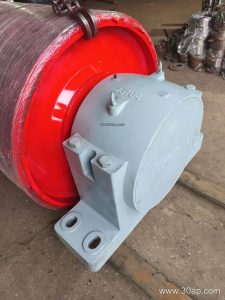
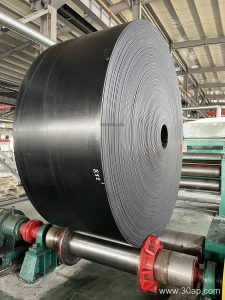
A power plant conveyor pulley is the rotating drum that turns a conveyor belt, sets its tension, and keeps it tracking through the coal handling system. In a typical coal-fired station, the belt path runs from the unloading area to the crusher house and then to the boiler bunkers. The pulley group along that route includes a drive pulley at the head, a tail pulley at the return end, and bend or take-up pulleys that guide the belt around corners and maintain tension. These are distinct positions with distinct duties, and they are not interchangeable. A drive pulley transmits torque; a tail pulley mostly redirects; a bend pulley changes belt direction without driving it.
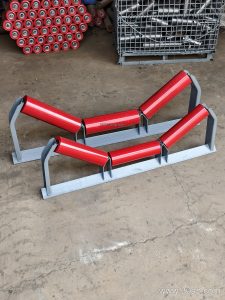
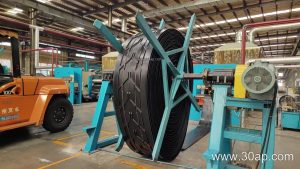
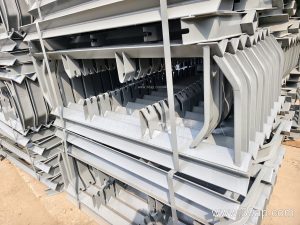
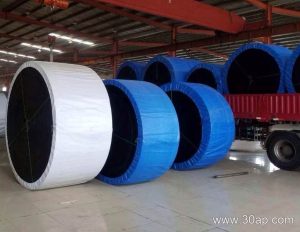
The same product appears under an accurate equivalent name, the belt conveyor drum, and plant engineers often shorten it to the conveyor drum. Related hardware on the same line includes the conveyor belt, idler roller, and conveyor bracket.
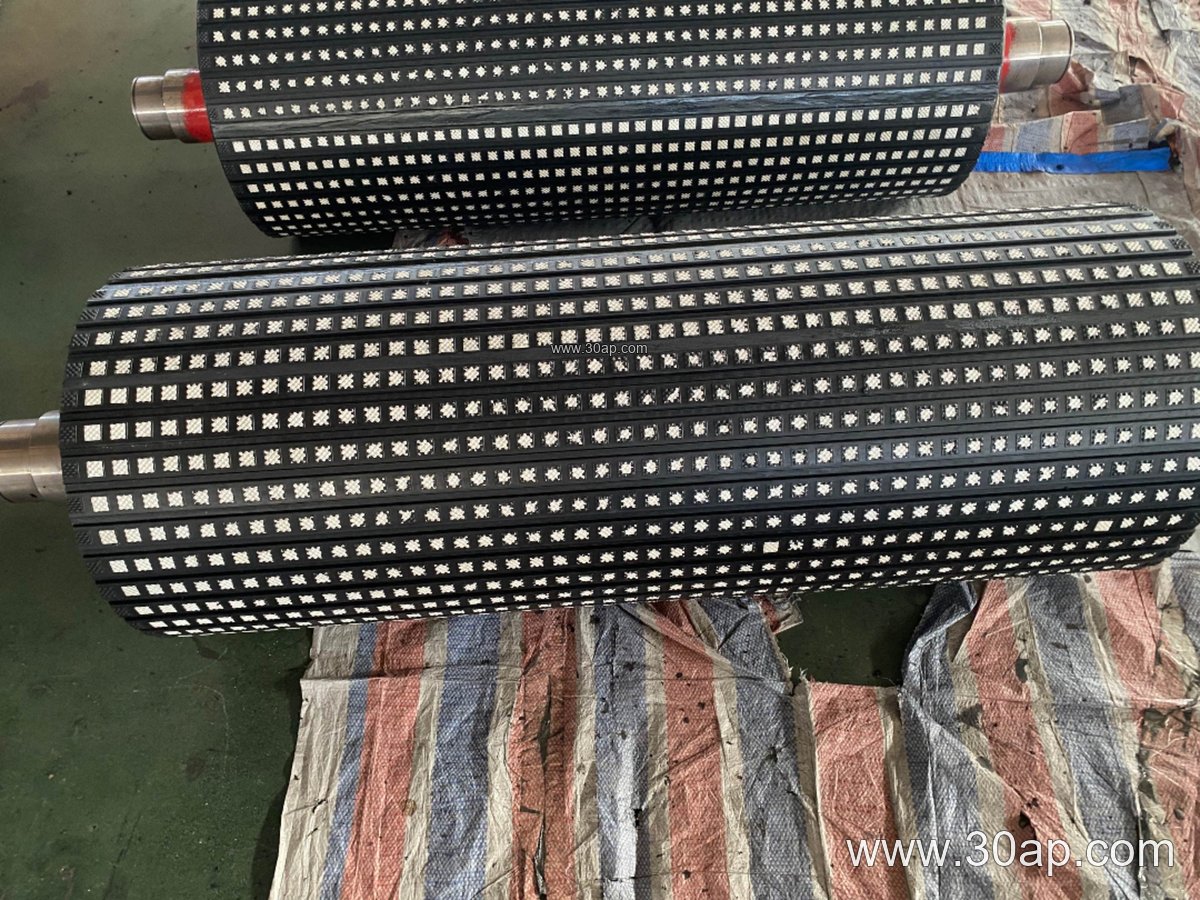
Construction and Surface Options
A conveyor drum is built around a steel shell welded to end discs, with shafts, hubs, and bearing housings on both ends. The shell must resist bending and fatigue from belt tension, and the shaft diameter is set by torque and load, not by belt width alone. Common shaft sizes include Ø80, Ø100, Ø120, Ø140, Ø160, and Ø180, but the final value follows the design calculation.
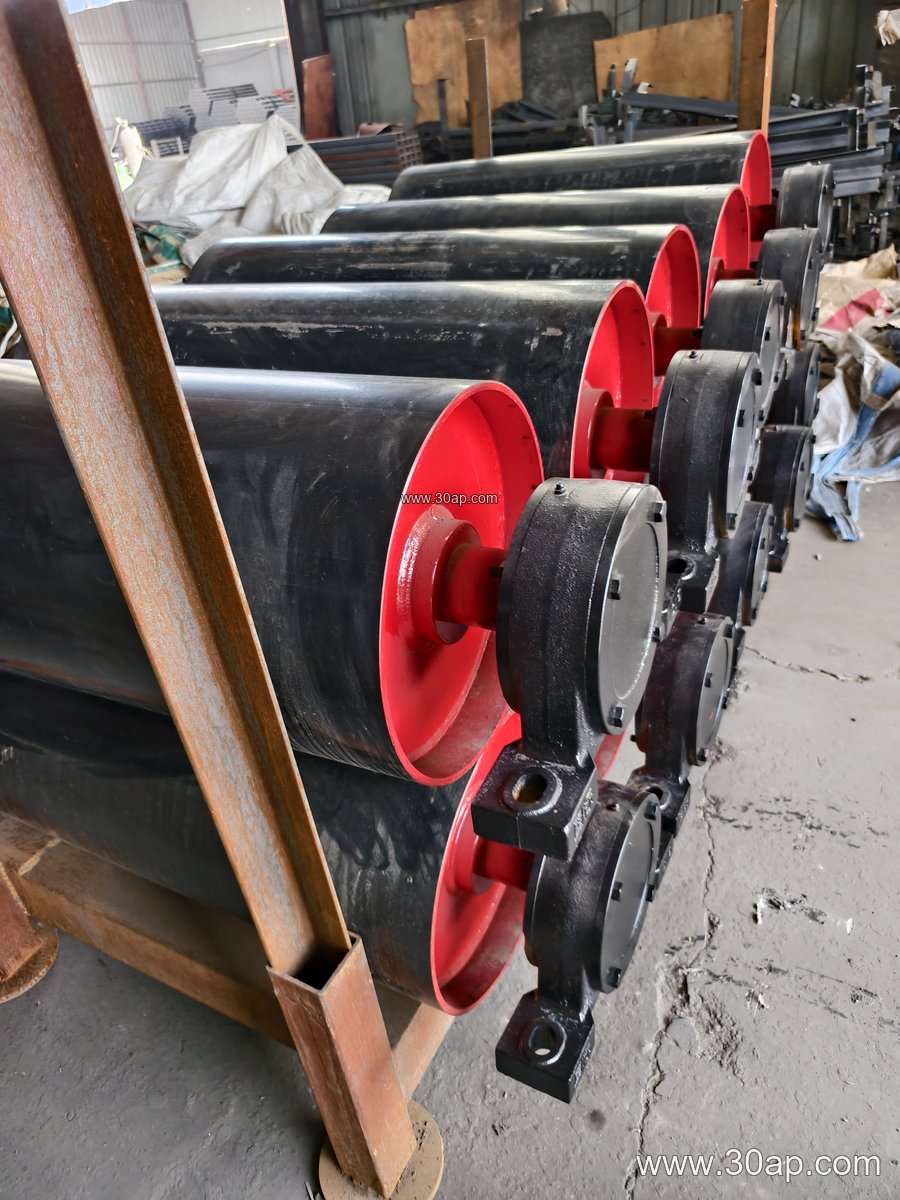
The surface form matters most on the drive pulley, where grip determines whether the belt slips under starting load. Plain face is used where friction is adequate; cast rubber, cold-bonded rubber, hot-vulcanized rubber, diamond grooving, herringbone grooving, and ceramic lagging are chosen for wet, dusty, or high-torque conditions. Lagging thickness commonly runs 8, 10, 12, 15, or 20 mm.
Typical reference data
| Item | Common reference range |
|---|---|
| Belt width | B400, B500, B650, B800, B1000, B1200, B1400, B1600, B1800, B2000, B2200, B2400 |
| Pulley diameter | Ø200, Ø250, Ø315, Ø320, Ø400, Ø500, Ø630, Ø800, Ø1000, Ø1250, Ø1400, Ø1600, Ø1800 |
| Face width | Usually wider than the belt, e.g. B400 ≈ 500 mm, B800 ≈ 950 mm, B1200 ≈ 1400 mm, B1600 ≈ 1800 mm, B2000 ≈ 2200 mm |
| Shaft diameter | Ø50, Ø60, Ø70, Ø80, Ø90, Ø100, Ø120, Ø140, Ø160, Ø180, Ø200 |
| Lagging thickness | 8, 10, 12, 15, 20 mm |
These are reference values, not fixed pairings. A B1200 belt can run with different drum diameters depending on belt speed, tension, and wrap angle. Combinations such as B800 × Ø500, B1200 × Ø1000, or B1400 × Ø800 are seen in practice, but no single size is mandatory for every conveyor.
Where It Works in the Plant
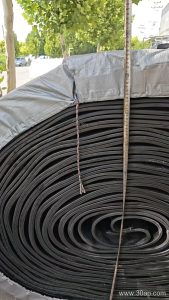
In coal handling, the drive pulley sits at the head of the main incline and is often lagged with diamond or ceramic rubber to hold grip on a damp belt. A flame retardant conveyor belt or fire resistant conveyor belt is common underground and in enclosed galleries, while an abrasion resistant conveyor belt handles coal with high ash content. A steel cord conveyor belt or EP conveyor belt may run on the same line, and the drum face and lagging should suit the belt cover rather than be chosen in isolation.
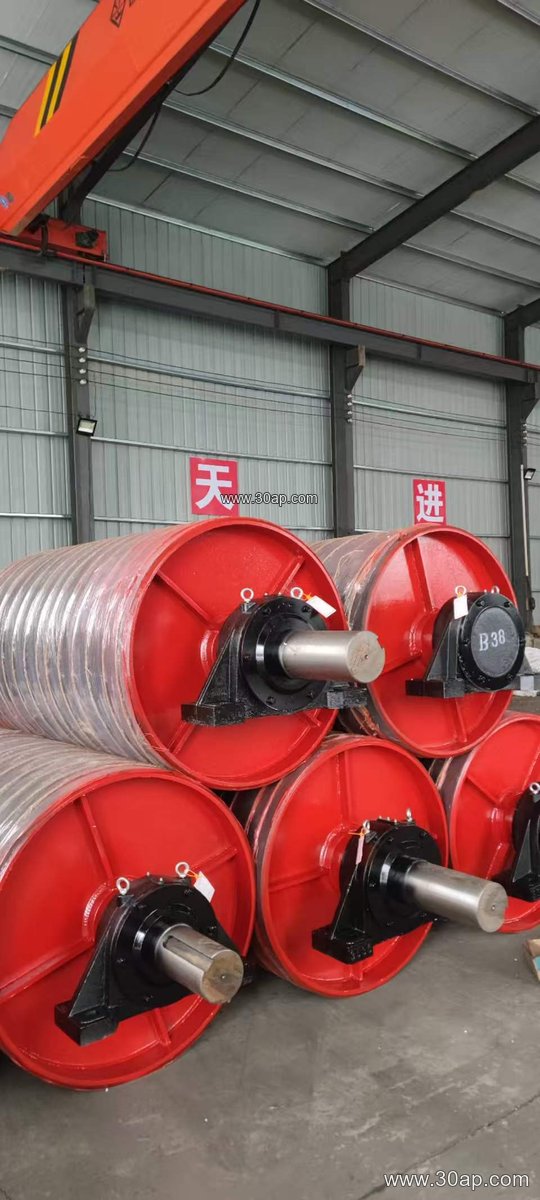
In a limestone or gypsum yard feeding the FGD system, a quarry conveyor belt or aggregate conveyor belt arrangement uses bend pulleys to route around transfer towers. In the ash handling area, a heat resistant conveyor belt may pass near hot material, and the pulley bearing selection then accounts for ambient temperature. A cement plant or steel plant with similar bulk lines uses the same drum logic.
Buyer Checklist
- Confirm the duty position: drive, tail, bend, take-up, or snub. Each has a different load profile.
- State belt width, belt type, speed, and expected tension so the supplier can size the shell and shaft.
- Choose lagging by condition, not by habit: plain face for dry clean belts, grooved or ceramic lagging for wet and oily service.
- Check face width against belt width and confirm the conveyor bracket and bearing housing fit the existing frame.
- Ask for the balancing grade and runout limits, since vibration shortens bearing life.
- Plan inspection of lagging wear, shaft seals, and bearing temperature at each scheduled shutdown.
Properly matched, a power plant conveyor pulley keeps the coal stream moving with less slip, less spillage, and longer belt life. Buyers who treat the drum as part of a system, together with the conveyor belt, idler roller, and conveyor bracket, get more predictable results than those who order by size alone.