What the ST1000 Conveyor Belt Is
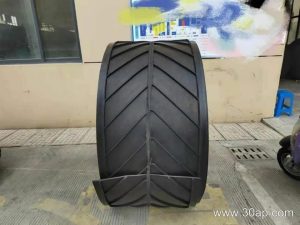
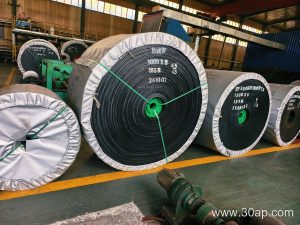
The ST1000 Conveyor Belt is a steel cord conveyor belt with a nominal tensile strength of 1000 N/mm per unit width. It belongs to the steel cord family, where high-carbon steel cables run longitudinally through a rubber matrix instead of woven fabric plies. That construction gives the belt very low elongation under load and makes it a practical choice for long conveying lines in mines, cement works, power plants and port bulk terminals. In the ST series, ST1000 sits below ST1250 and above the lower-strength grades, so it suits main haulage duties where a fabric belt would need too many plies or too many transfer points.
Because the load-bearing element is steel, the belt is often specified where take-up travel is limited and where starting and stopping loads are severe. It is not the same product as an EP rubber conveyor belt or a multi-ply fabric core belt; those use textile carcasses and behave differently in terms of stretch and splice design.
Construction and Build
A typical ST1000 belt combines four elements: the steel cord carcass, the core skim rubber that bonds the cords, the top cover and the bottom cover. The cords are spaced at a pitch chosen by the manufacturer, and the covers protect the carcass from wear, impact and moisture. Cover thickness is often quoted as a pair, for example 6+2 mm or 8+3 mm, where the first figure is the top cover and the second the bottom cover.
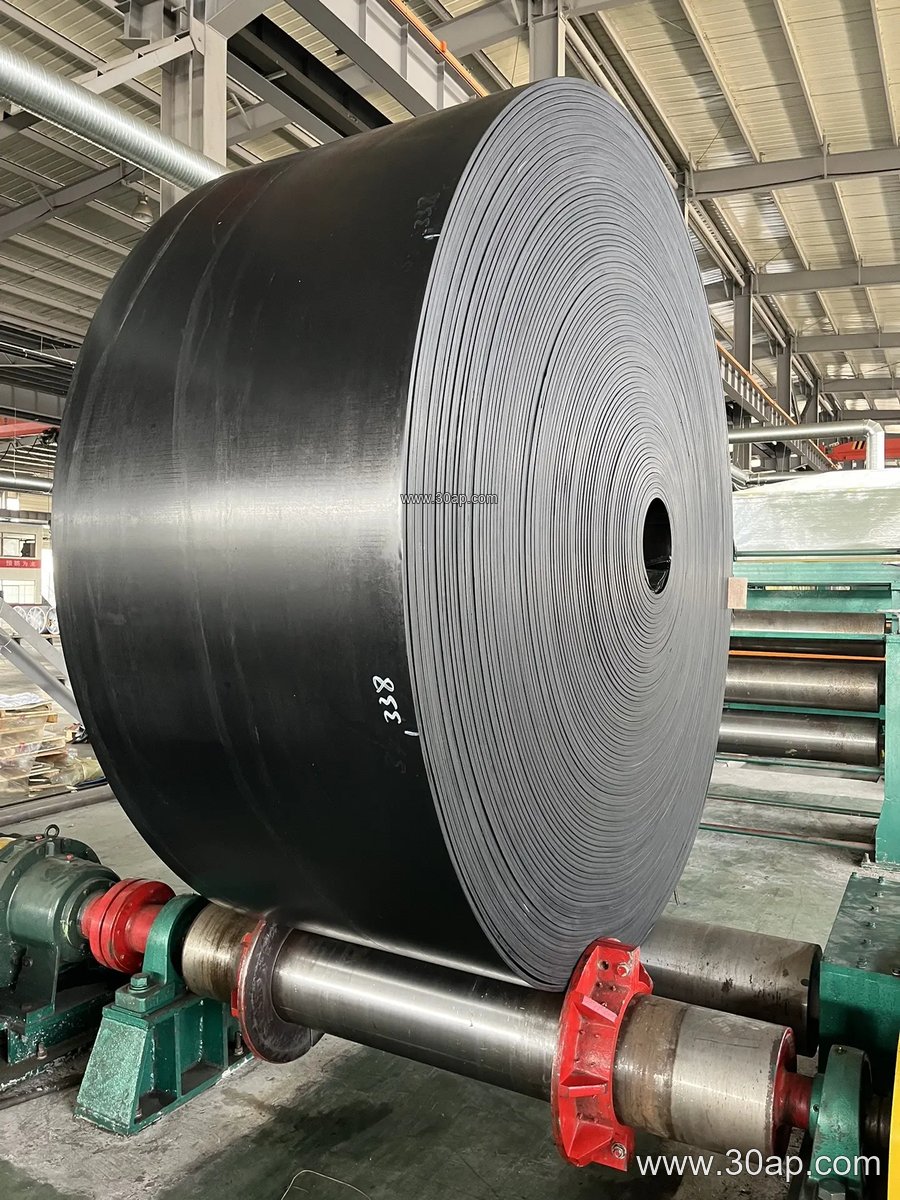
- Steel cord carcass: the strength member, with cord diameter and pitch set by the belt designer
- Core rubber: cushions the cords and transfers tension between them
- Top cover: usually an abrasion resistant conveyor belt compound for ore and stone
- Bottom cover: often a thinner wear layer running on the idler roller side
Splices are made by stripping the covers, separating the cords and vulcanising them back together in a stepped pattern. That is a different procedure from the finger splice used on a fabric belt, and it is why the ST1000 is normally installed with a permanent splice rather than a mechanical fastener.
Where It Fits in a Plant
Steel cord belts of this grade appear in quarry and aggregate conveyor lines, crusher discharge belts, iron ore and copper ore handling, coal mining conveyor systems and ship loading conveyors. In a cement plant they may carry limestone from the pit to the primary crusher, while in a power plant they move coal from the yard to the bunkers. Ambient conditions vary widely, so the cover compound can be selected as heat resistant conveyor belt, flame retardant conveyor belt, oil resistant conveyor belt or cold resistant conveyor belt depending on the duty.
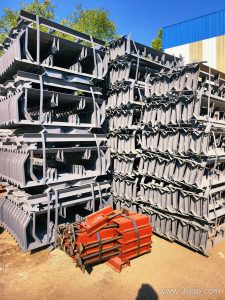
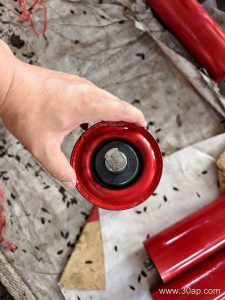
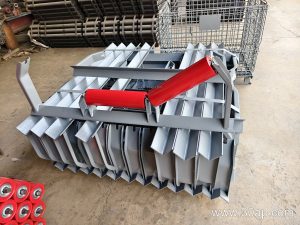
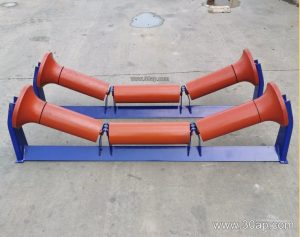
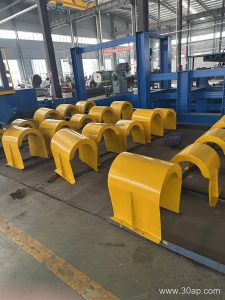
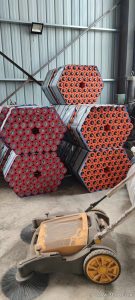
The belt does not work alone. A conveyor pulley at the head and tail, a series of idler roller sets on the carrying and return sides, and a conveyor bracket frame all influence how the belt tracks and wears. A drive pulley, a tail pulley and a bend pulley each do a different job, and none of them should be treated as a substitute for another when a layout is being checked. Belt width and pulley face width must be matched by the conveyor designer, and a wider belt does not automatically imply a larger shaft.
Reference Data and Selection Points
The figures below are common industry reference values, not a supply promise. Final dimensions follow the conveyor design and the manufacturer’s data sheet.
| Item | Typical reference values |
|---|---|
| Strength grade | ST1000 (1000 N/mm); nearby grades ST1250, ST1600, ST2000 |
| Belt width | B800, B1000, B1200, B1400, B1600, B1800, B2000 |
| Cover thickness | 4+2, 5+2, 6+2, 8+3 mm |
| Cover type | Abrasion resistant, heat resistant, flame retardant, oil resistant, anti-static |
| Splice | Vulcanised steel cord splice, stepped |
A buyer should confirm the actual duty, the maximum lump size, the belt speed and the loading arrangement before fixing a cover grade. Impact at the loading point is often the limiting factor, and an impact resistant conveyor belt cover or a reinforced chute design can matter more than a small increase in strength grade.
Buyer Checklist and Upkeep
Ask for the cord construction, the cover compound, the cover thickness and the splice method in writing. Check that the pulley diameters and the idler roller spacing suit the belt’s flexibility, and that the conveyor bracket and frame are straight, because a steel cord belt does not tolerate misalignment as well as a thin fabric belt. Keep the belt clean, watch the return side for trapped material, and inspect the splice for cord exposure. On long hauls, tracking and tension records pay off more than any single spare part.