What a Belt Conveyor Idler Frame Does
A belt conveyor idler frame is the steel structure that holds the idler rollers in the correct position under or over the conveyor belt. Also called a conveyor idler bracket or roller support frame, it fixes the trough angle, keeps roller spacing consistent, and transfers the load of the belt and material into the conveyor stringer. In a quarry, cement plant, or power plant coal yard, these frames are the quiet workhorses that decide whether the belt tracks straight and whether rollers wear evenly.
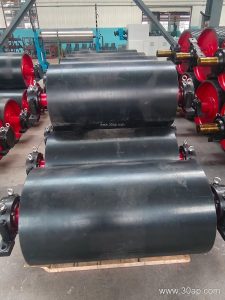
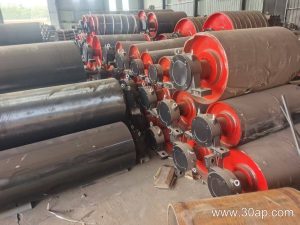
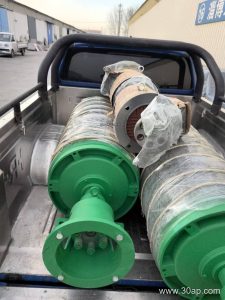
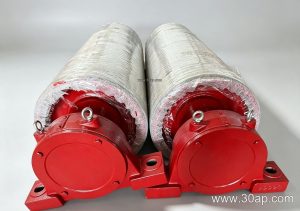
The frame is not a pulley. Drive, tail, and bend pulleys are separate components with their own shafts and bearings. An idler frame only carries the rollers that support the belt along the run.
How the Frame Is Built
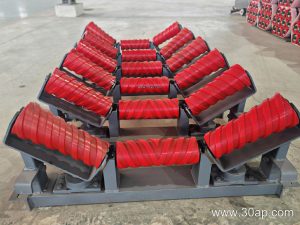
Most frames are fabricated from angle steel, channel steel, or folded steel plate. The crossbeam length and mounting hole spacing change with belt width and trough angle, so they are determined by design rather than fixed values. A typical assembly includes a crossbeam, end brackets, roller seats, and sometimes adjustable slots that let maintenance staff fine-tune the trough shape.
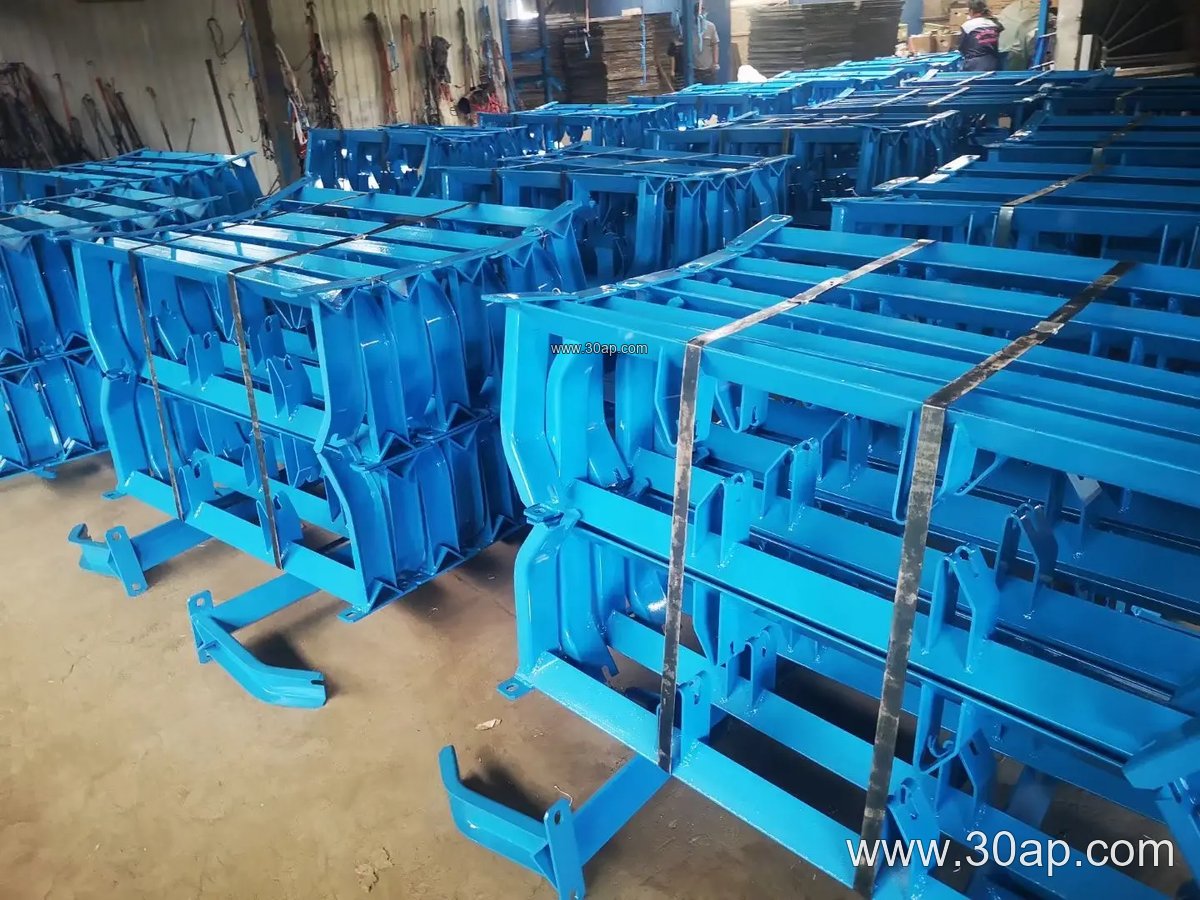
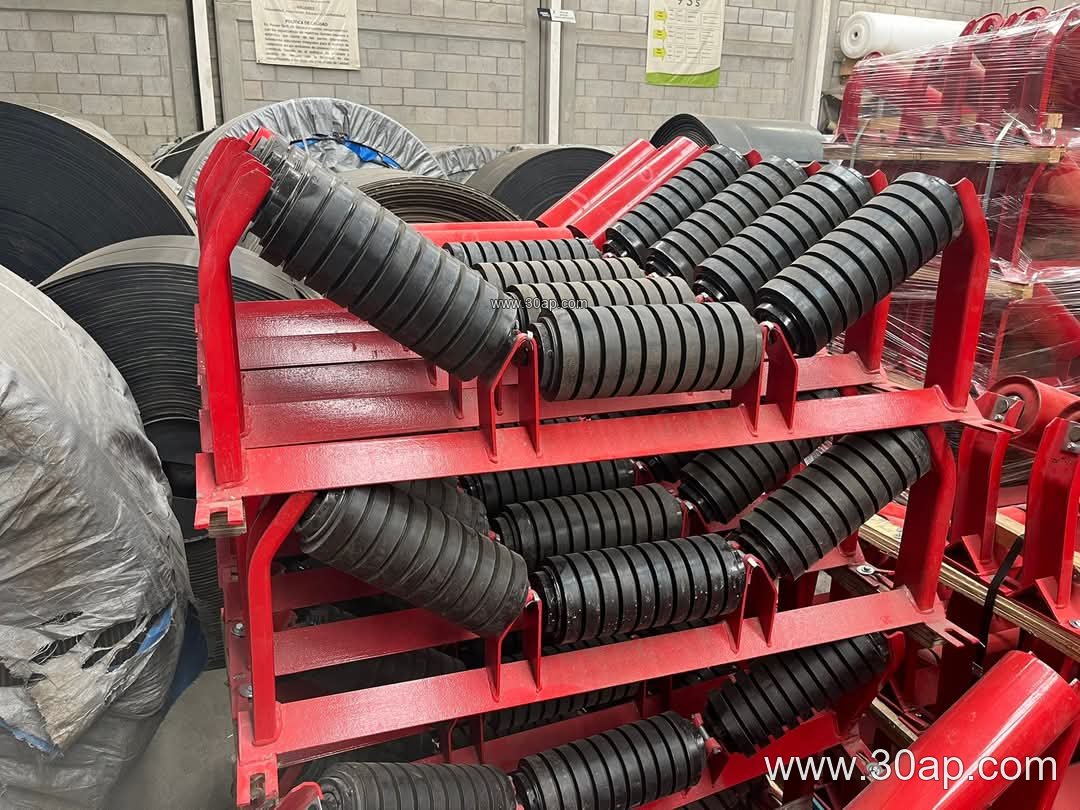
Common types include trough frames for the carrying side, transition frames near pulleys, return frames and V-return frames for the bottom run, impact frames under loading points, and self-aligning frames that correct belt wander. Adjustable frames allow the trough angle to be changed among 20, 30, 35, and 45 degrees, while forward-leaning frames usually tilt about 1.5 to 2 degrees to help centering.
Matching Frames, Rollers, and Belt Width
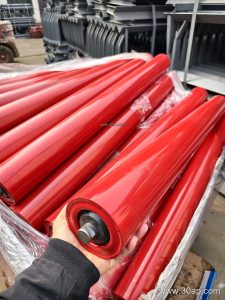
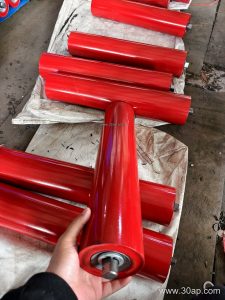
Frame selection starts with belt width and roller diameter. Typical roller diameters are Ø89, Ø108, Ø133, Ø159, and Ø194 mm, and common belt widths run from B500 to B2200. A B800 frame at 35 degrees with Ø108 rollers is a familiar combination for medium-duty service, while a B1200 frame at 45 degrees with Ø133 rollers suits heavier troughing. These are examples, not fixed rules; one belt width can work with more than one trough angle or roller diameter depending on load and speed.
The belt itself matters too. A heavy-duty mining conveyor belt or steel cord conveyor belt carrying iron ore needs stronger frames and closer roller spacing than a lightweight EP conveyor belt in a food or grain facility. Abrasion resistant conveyor belt and heat resistant conveyor belt duties also influence roller choice, because sticky or hot material changes the load pattern on the frame.
Where These Frames Are Used
You will find idler frames in limestone mines feeding crushers, in aggregate plants moving sand and gravel, and in cement works handling clinker and raw meal. Coal mining conveyor belts and underground coal mining conveyor belts rely on flame retardant conveyor belt and fire resistant conveyor belt grades, and the frames must be robust enough for dusty, damp conditions. Port ship loading systems and steel plant sinter lines use wide frames with large rollers to handle high tonnage.
Buyer Checklist
- Confirm belt width, trough angle, and roller diameter together with the conveyor designer.
- Check material and finish against the environment: wet, dusty, corrosive, or high temperature.
- Ask how mounting hole spacing and crossbeam length are set for your layout.
- Decide between fixed and adjustable frames based on how often the trough angle may change.
- Plan spare frames for impact and transition zones, where wear is fastest.
For related components, buyers often review conveyor bracket details, idler roller specifications, and conveyor pulley data at sites such as www.xinrisheng.com, where belt conveyor idler frame options are listed alongside conveyor belt and roller ranges. A well-matched frame keeps the belt centered, extends roller life, and reduces downtime in any bulk material handling line.