What an Adjustable Conveyor Bracket Does on a Belt Line
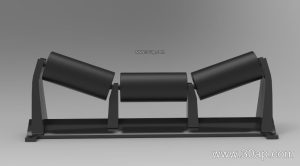
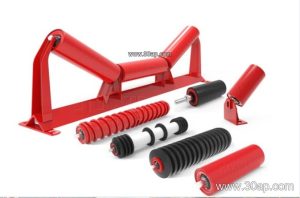
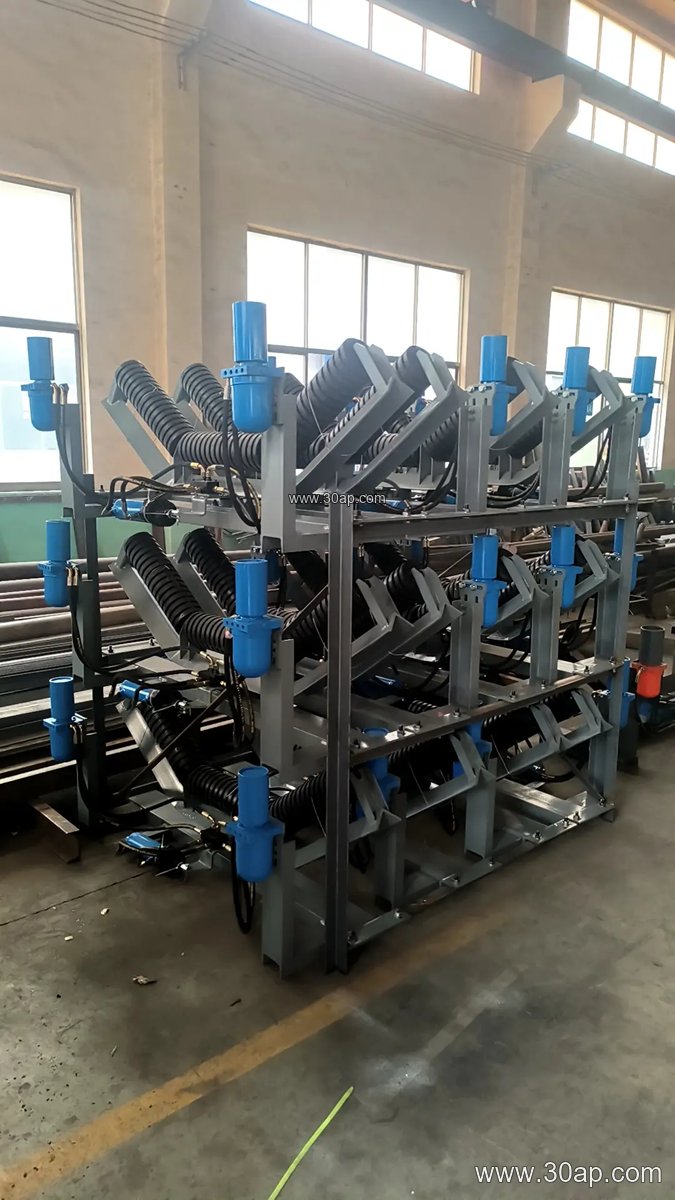
An adjustable conveyor bracket is the mounting component that holds idler rollers at a set position while leaving room for later correction. Instead of welding a fixed support to the frame, the bracket lets maintenance teams change the trough angle, the roller height, or the lateral position of the roller set. On a quarry conveyor or a cement plant transfer line, this small amount of movement often decides whether a belt tracks cleanly or keeps rubbing the structure.
The same component is also called an adjustable idler bracket or adjustable roller support frame. Both names describe the same product family; they are not different hardware types. The bracket works together with the conveyor belt, the conveyor pulley at the head or tail, and the idler roller it carries, but it does not replace any of them.
Construction and Adjustment Features
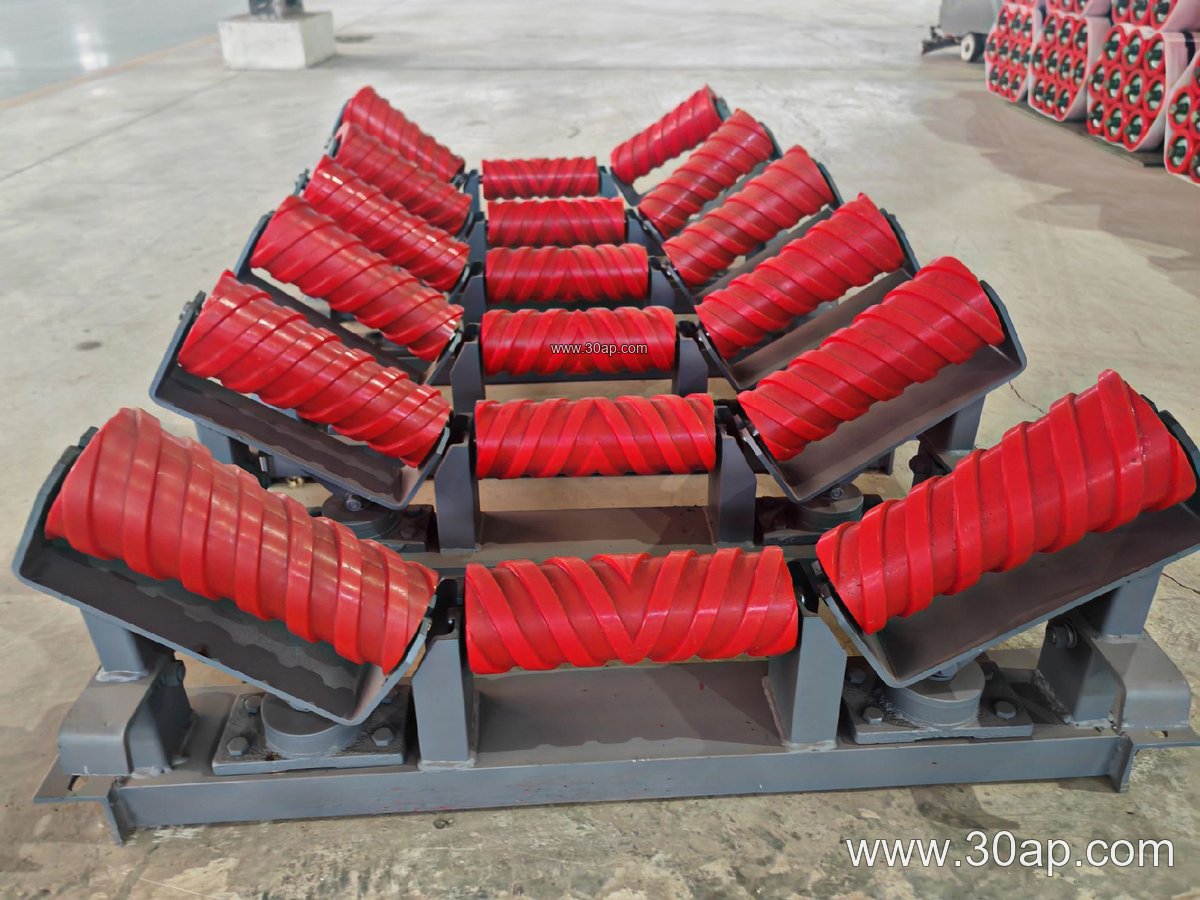
Most units are fabricated from angle steel, channel steel, or folded steel plate, with slotted holes or a pivoting arm that allows the roller to be rotated and locked. A typical build includes:
- A base plate or clamp that bolts to the conveyor stringer
- A pivoting or sliding arm that sets the trough angle
- Slotted mounting holes for fine lateral adjustment
- Locking bolts or pins that hold the setting under vibration
- Roller cradle slots sized to the shaft of the idler roller
Because the trough angle can be changed, one bracket design may cover several settings, commonly 20, 30, 35, or 45 degrees. Some designs also allow a small forward tilt of about 1.5 to 2 degrees to help belt centering. The adjustable range is set by the design, so the exact travel should be confirmed with the supplier rather than assumed.
Where Adjustable Brackets Fit Best
These brackets are common in stone crushing and screening plants, where belt loading changes between shifts and the trough angle may need tuning after a chute modification. They also suit power plant coal handling and iron ore transfer points, where a slight roller reposition can reduce spillage without rebuilding the frame.
On a limestone mine or a sand and gravel line, an adjustable bracket is often used at transition zones, near the loading point, and on the return side where a V-type return set needs alignment. In these positions the bracket is paired with a heavy-duty conveyor belt and impact-resistant rollers, so the support must be strong enough for the load, not just adjustable.
Matching Bracket, Belt Width, and Roller Diameter
Belt width and roller diameter guide the bracket choice, but they do not lock the design to one combination. A B800 belt may run with 30 or 35 degree troughing and Ø108 rollers, while a B1200 line in a copper ore plant often uses 35 or 45 degree troughing with Ø133 rollers. The mounting hole spacing and crossbeam length change with belt width and trough angle, so these dimensions are confirmed per project.
The table below lists common reference combinations only. It is not a fixed matching rule, and other pairings are possible depending on load and frame design.
Reference Combinations
| Belt width | Common trough angle | Roller diameter | Typical site |
|---|---|---|---|
| B650 | 30 degrees | Ø89 | Aggregate conveyor, small transfer |
| B800 | 35 degrees | Ø108 | Quarry conveyor, crusher discharge |
| B1000 | 35 degrees | Ø108 or Ø133 | Cement plant, clinker transport |
| B1200 | 45 degrees | Ø133 | Iron ore, power plant coal line |
| B1400 | 35 or 45 degrees | Ø133 or Ø159 | Port loading, bulk material |
| B1600 | 45 degrees | Ø159 | Mining conveyor, heavy load |
| B1800 | 45 degrees | Ø159 or Ø194 | Large ore handling |
For wider lines, a 1200mm wide conveyor belt or a 1500mm wide conveyor belt may need a bracket with a longer crossbeam and heavier locking hardware. The belt type also matters: an EP conveyor belt, a steel cord conveyor belt, or a flame retardant conveyor belt for underground coal mining all place different demands on tracking and support stiffness.
Adjustable Versus Fixed Bracket
A fixed bracket is simpler and cheaper, and it is fine where the trough angle never changes. An adjustable bracket costs more but pays back when a line is commissioned, when a conveyor is modified, or when a belt keeps drifting to one side. It also helps when a plant switches between products, for example from a rubber conveyor belt to a chevron conveyor belt with different surface behavior.
Adjustable units are not a substitute for a self-aligning idler bracket or a training idler. They set position; they do not actively steer the belt. Use each type where it belongs.
Buyer Checklist
- Confirm belt width, trough angle range, and roller shaft size before ordering
- Check the frame material and thickness against the load on the idler roller
- Ask for the actual adjustment travel, not just the nominal angle range
- Verify bolt hole spacing against the existing stringer or crossbeam
- Match coating or finish to the environment, especially in washdown or corrosive areas
- Order locking hardware as a set so settings stay fixed under vibration
For buyers sourcing through conveyor-bracket.com or a local fabricator, a simple drawing of the frame and the existing roller set is usually enough to get a correct quote. The goal is a support that holds the roller firmly, allows later correction, and keeps the conveyor belt running centered through the whole transfer.