What a Heavy-Duty Welded Pulley Is
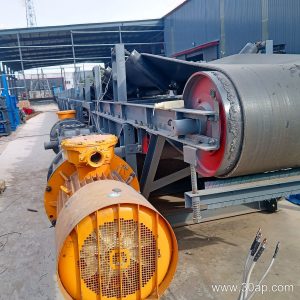
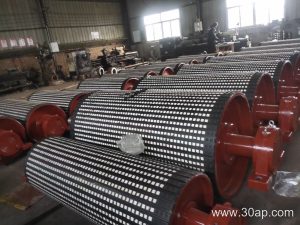
A heavy-duty welded pulley is a conveyor pulley whose shell, end discs and hub assemblies are joined by structural welding rather than a light pressed fit. In plant language it is often simply called a welded drum or welded conveyor pulley, and it sits at the head, tail, take-up or bend position of a belt conveyor. The welded construction suits drives and return points where shock loads, abrasive dust and continuous running are normal, from a limestone quarry to a coal handling section of a power plant.
Because the shell is fabricated and welded, the builder can match shell length to the belt width and choose plate thickness for the duty. That makes the heavy-duty welded pulley a practical choice when a standard light pulley would flex or wear through too quickly.
How the Pulley Is Put Together
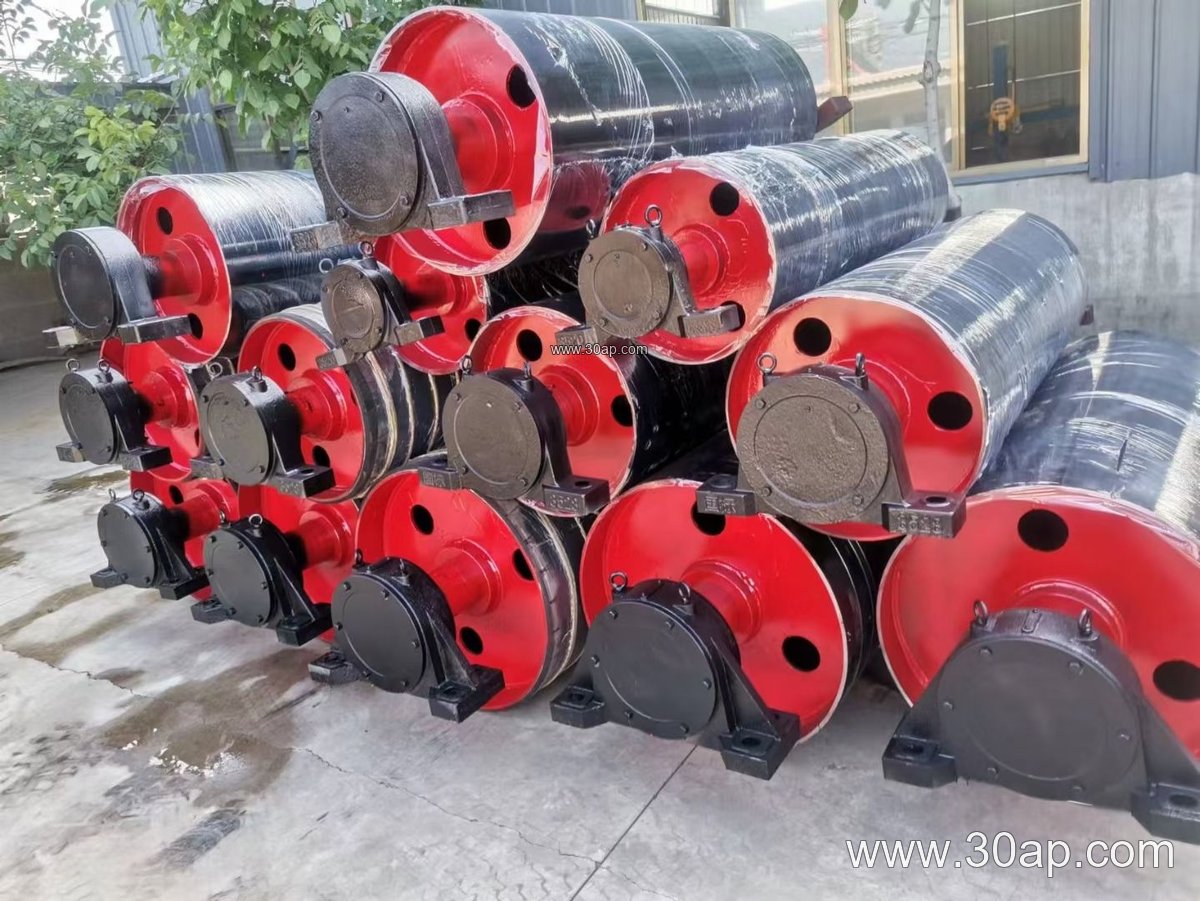
The main parts are the cylindrical shell, two end discs, the shaft, and the hub or locking assembly that ties disc to shaft. On heavier units the shaft is keyed or shrink-fitted, and the weld seams are stress-relieved where the design calls for it. Surface finish is chosen separately: plain machined shell, hot vulcanized rubber lagging, cold-bonded rubber, diamond grooving, herringbone lagging or ceramic lagging. Lagging thickness is commonly 8, 10, 12, 15 or 20 mm depending on grip and wear requirements.
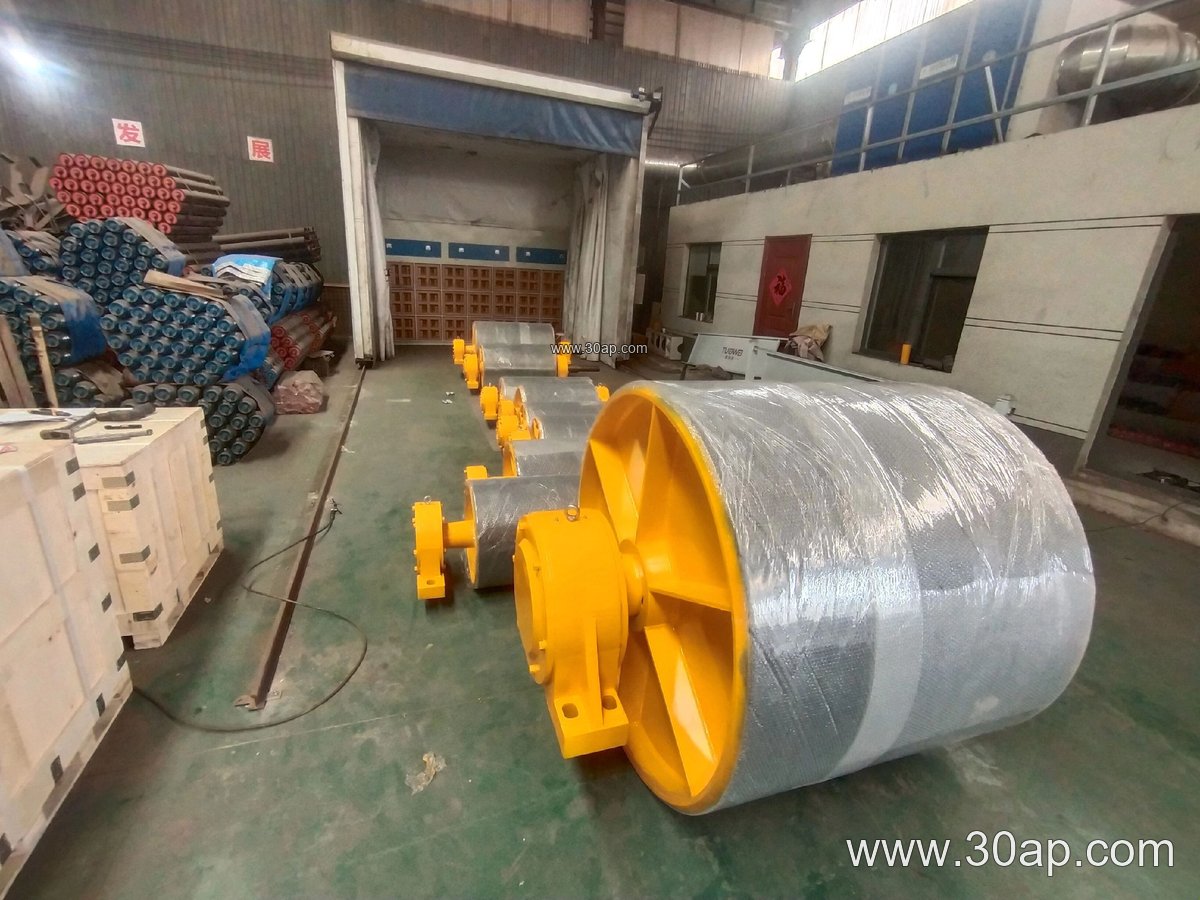
Balance and concentricity matter as much as weld strength. A pulley that runs out of true will thump the conveyor belt, loosen fasteners and shorten bearing life. Buyers should expect a runout check and a balancing report for larger diameters.
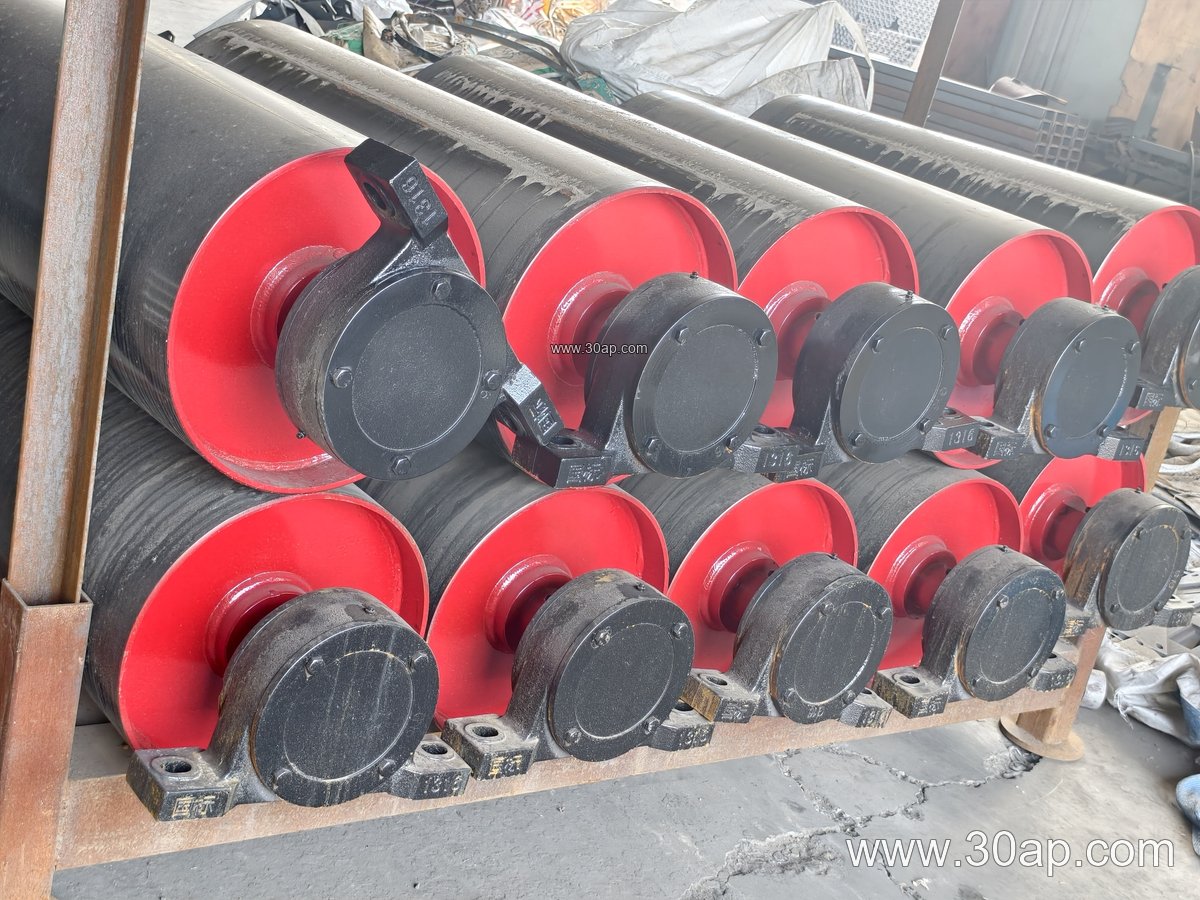
Sizes and Typical Combinations
Dimensions are set by the conveyor design, not by a single fixed table. The following reference values show how belt width, shell width and diameter are usually related in catalogues and drawings.
| Belt width | Shell face width (approx.) | Common diameter range |
|---|---|---|
| B400 | 500 mm | Ø200 to Ø400 |
| B500 | 600 mm | Ø250 to Ø500 |
| B650 | 750 mm | Ø315 to Ø630 |
| B800 | 950 mm | Ø400 to Ø800 |
| B1000 | 1150 mm | Ø500 to Ø1000 |
| B1200 | 1400 mm | Ø630 to Ø1000 |
| B1400 | 1600 mm | Ø800 to Ø1250 |
| B1600 | 1800 mm | Ø800 to Ø1400 |
| B1800 | 2000 mm | Ø1000 to Ø1600 |
| B2000 | 2200 mm | Ø1250 to Ø1800 |
These are reference ranges, not mandatory pairings. A B1200 x Ø1000 welded drum and a B800 x Ø500 unit are both realistic, but a wide belt does not force one particular diameter. Shaft diameter is calculated from torque and bearing load, with common sizes such as Ø80, Ø100, Ø120, Ø140, Ø160 and Ø200 mm appearing across the range. Never assume a shaft size from belt width alone.
Where Welded Pulleys Earn Their Place
Aggregate plants, iron ore and copper ore concentrators, cement clinker lines and port bulk terminals all run conveyors that carry sharp, heavy material. At the discharge end, the head pulley must grip a fully loaded belt; at the tail, a welded tail pulley must survive fines and occasional spillage. Take-up and bend positions see repeated tension changes, so a robust welded shell resists fatigue better than a thin fabricated alternative.
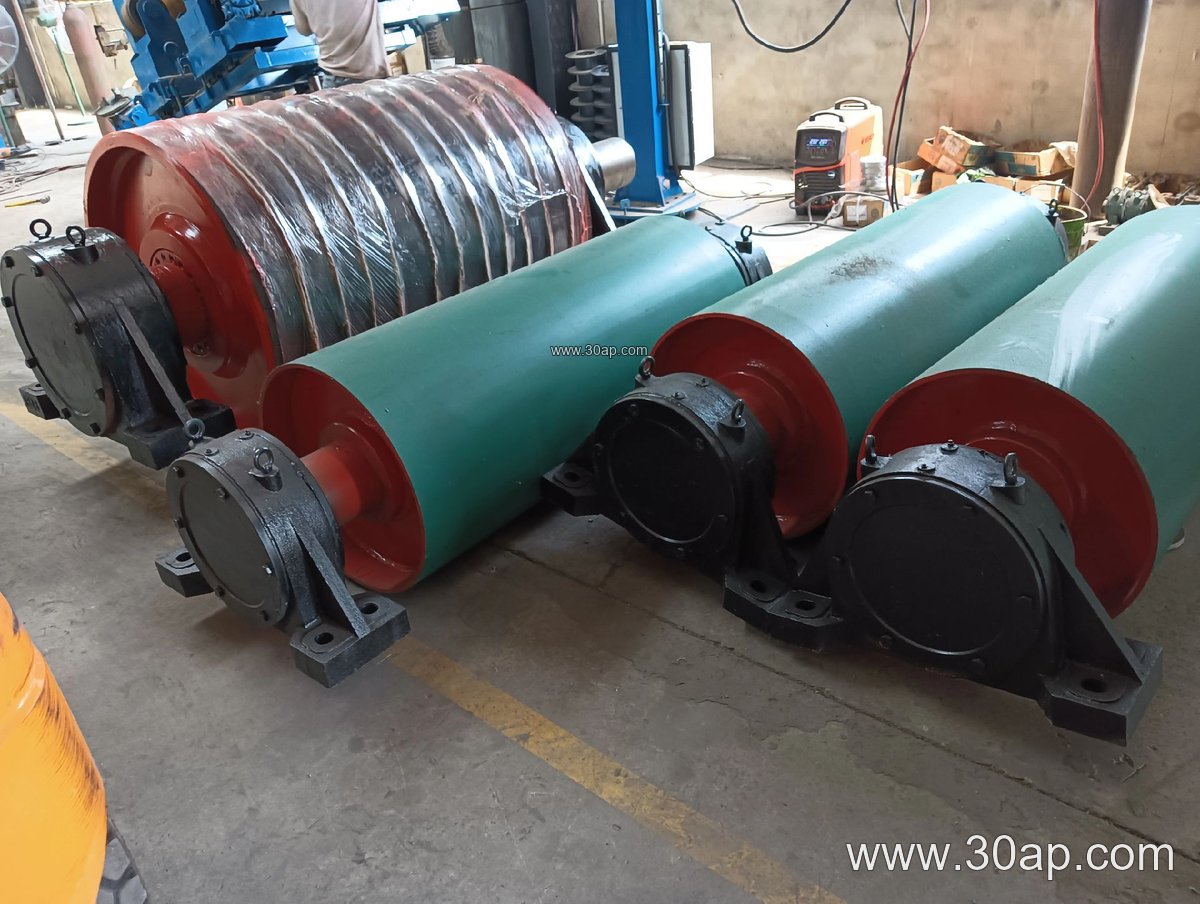
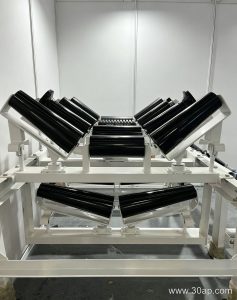
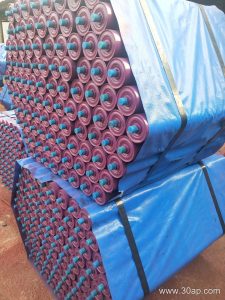
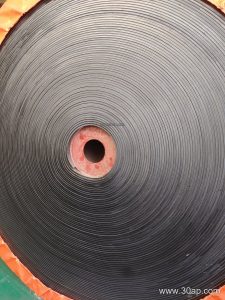
The pulley works as one half of a pair with the belt. An abrasion resistant conveyor belt handles the sliding wear, while the lagged pulley supplies traction, and conveyor idler rollers support the Load side between them. Matching lagging compound to the belt cover keeps both parts lasting longer.
Selection Points for Buyers
- Confirm the pulley position: drive, tail, take-up or bend each has different load and grip demands.
- State belt width, belt type and belt tension so the shell width and shaft can be sized correctly.
- Choose lagging by condition: plain for light duty, diamond or herringbone rubber for wet or slippery belts, ceramic for severe slip and wear.
- Ask for weld inspection, dynamic balance and runout records on large diameters.
- Check bearing housing, locking assembly and conveyor bracket interface against the existing frame before ordering.
For plant upgrades, record the old pulley’s shell width, diameter, shaft size and lagging pattern, then confirm each figure with the conveyor designer. A well specified heavy-duty welded pulley, paired with the right conveyor belt and idler roller set, keeps a bulk handling line running through long shifts in dusty, abrasive conditions.