What a Ceramic Rubber-Lined Pulley Does
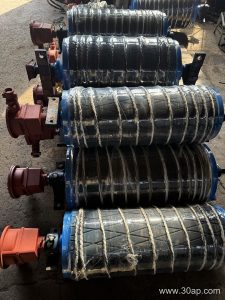
A ceramic rubber-lined pulley is a conveyor pulley whose shell is covered with rubber that has ceramic tiles embedded in it. This wear-resistant lagging protects the pulley face and improves grip on the conveyor belt. In industries such as mining, cement, and power generation, this pulley is often chosen for drive positions where slip and abrasion are constant problems. The ceramic rubber-lined pulley is also known as a ceramic lagged pulley, and both names refer to the same product.
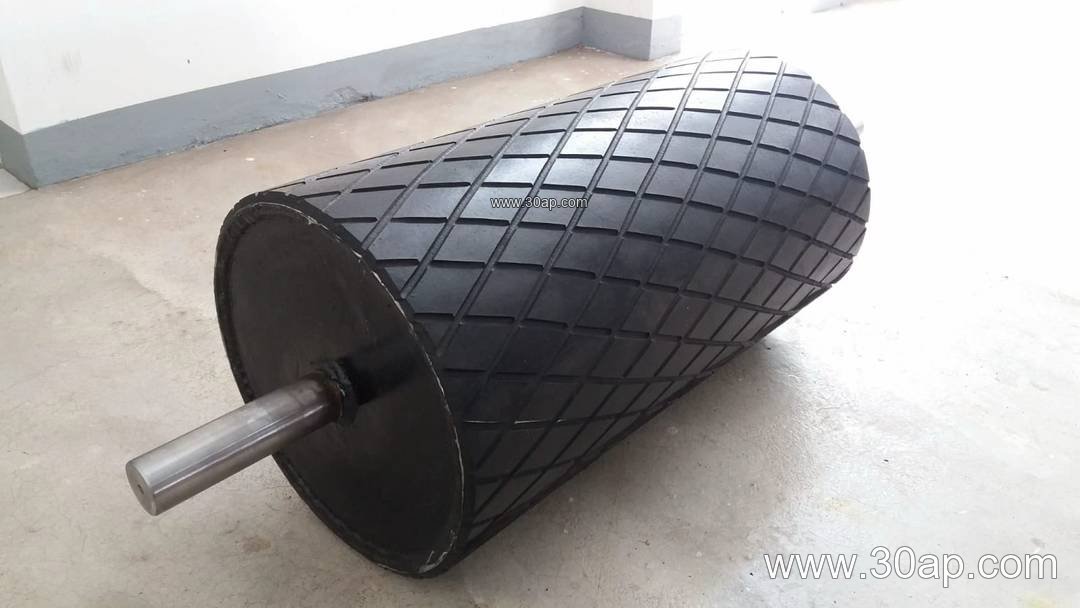
Unlike a plain rubber-lagged pulley, the ceramic tiles take the brunt of the friction and impact. The rubber base absorbs shock and seals the surface, while the ceramic provides a hard, long-wearing contact face. This combination is especially useful when the belt carries abrasive bulk material and the pulley must maintain reliable traction.
Construction and Surface Options
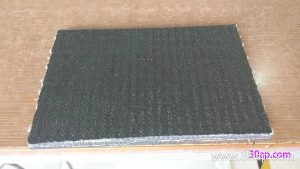
The pulley body is typically a steel drum with welded end discs and a shaft. The lagging is applied in layers: an adhesive bond, a rubber layer, and then ceramic tiles set into the rubber. Common lagging thicknesses are 8, 10, 12, 15, and 20 mm, and the ceramic tiles may be square, rectangular, or in a diamond pattern. The surface can be flat or profiled, and the rubber compound can be selected for oil resistance, heat resistance, or flame retardancy depending on the environment.
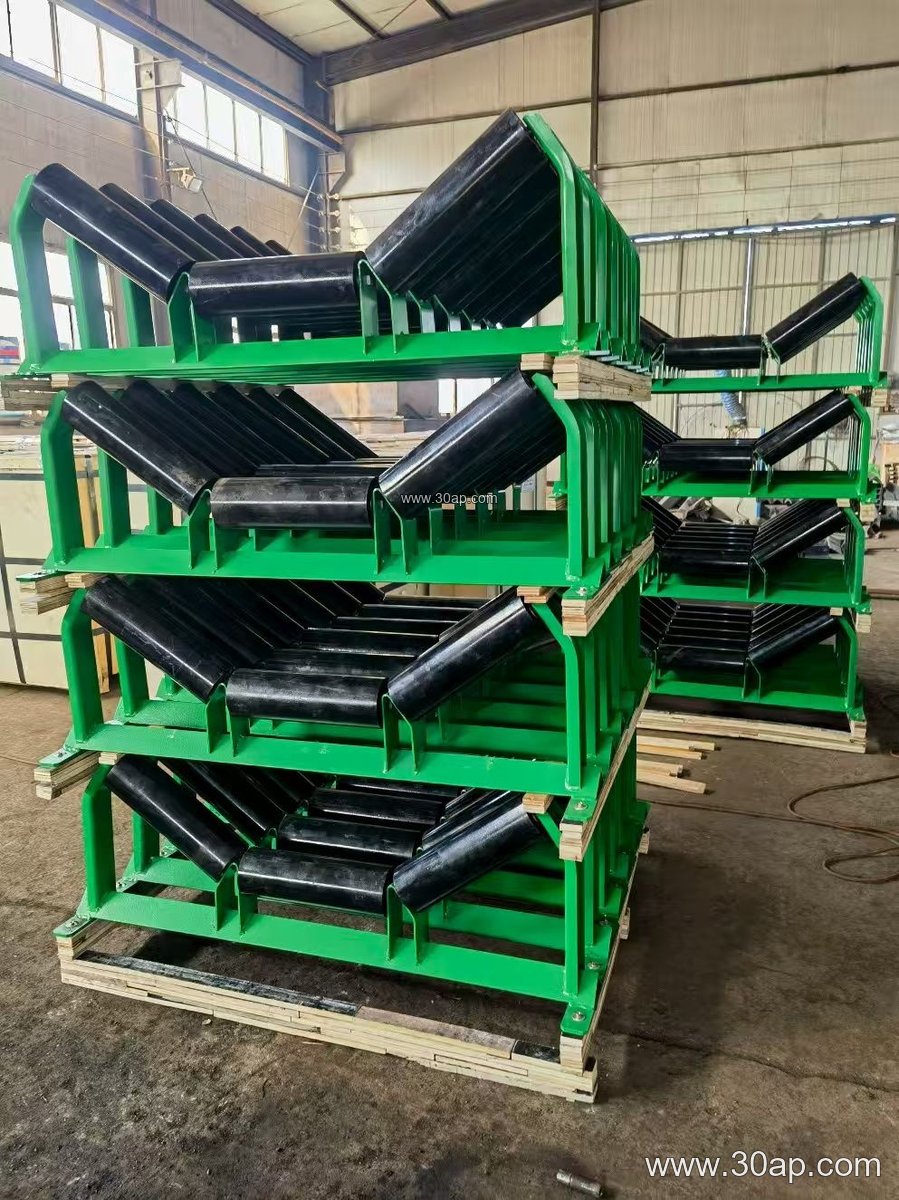
For comparison, a standard rubber lagging may be smooth or grooved, while a ceramic rubber-lined pulley offers a harder wearing surface. This does not mean every application needs ceramic; it is a choice driven by wear severity and the cost of downtime.
Where It Fits in the Conveyor System
Ceramic rubber-lined pulleys are most often used as drive pulleys, head pulleys, and tail pulleys. In a quarry or a limestone mine, the head pulley discharges abrasive rock and must resist both wear and slip. In a coal preparation plant or a power plant coal yard, the pulley may face wet, sticky material and a flame retardant conveyor belt. The ceramic lagging helps maintain grip without excessive belt tension. On a belt conveyor carrying heavy ore, a ceramic rubber-lined drive pulley can reduce belt slippage and extend lagging life.
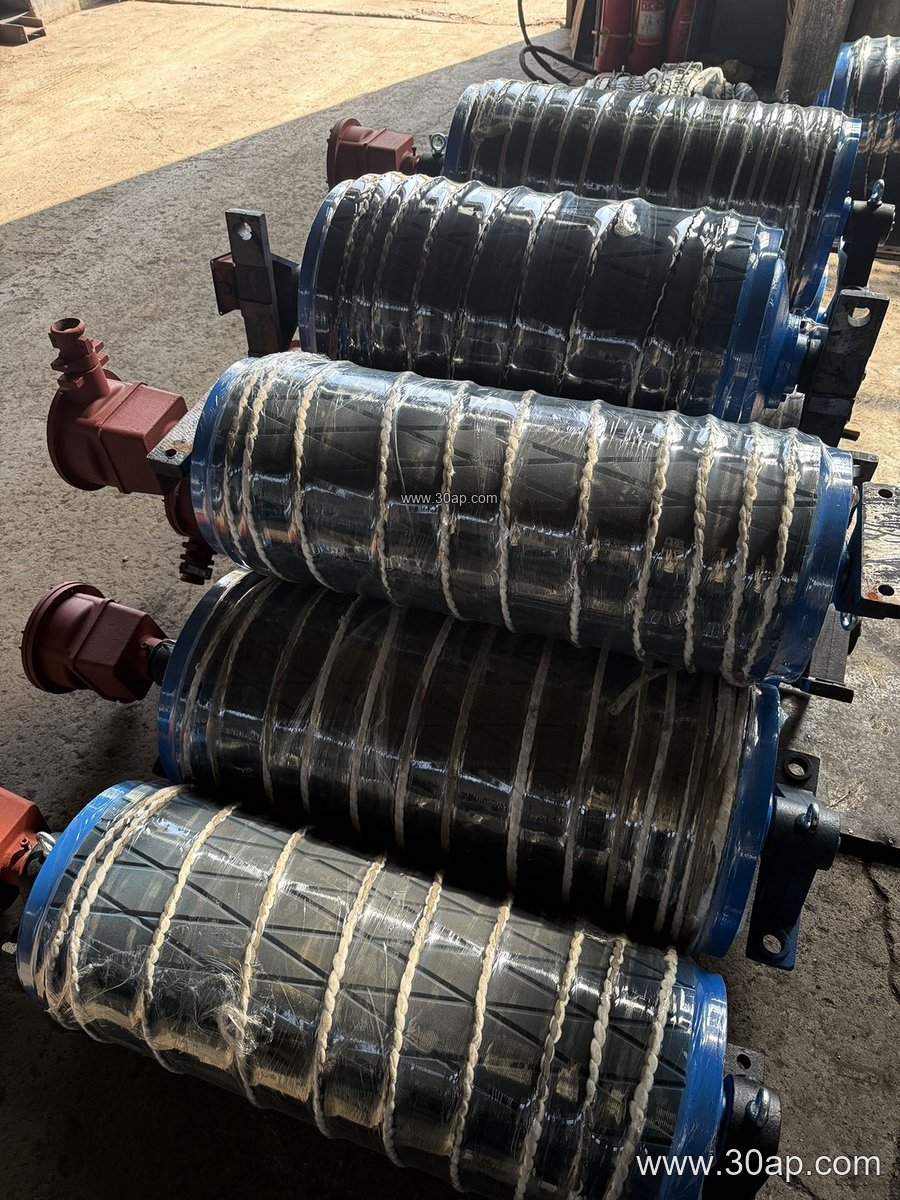
Bend pulleys and take-up pulleys may also use ceramic lagging when the belt wrap is high and wear is a concern. However, these are different positions in the conveyor and should not be confused with the drive pulley. A tail pulley with ceramic lagging is common in primary crushing circuits, while a bend pulley might use a thinner lagging. Each position has its own load and wear pattern, so the pulley type should be matched to the duty.
Typical Sizes and Configurations
Ceramic rubber-lined pulleys are made in a range of belt widths and diameters. The table below shows common reference combinations, but actual sizes depend on the conveyor design, belt tension, and shaft load. Belt width does not dictate a single pulley diameter, and shaft diameter is determined by torque and load, not by belt width alone.
| Belt Width (mm) | Common Pulley Diameter (mm) | Face Width (mm, approx.) |
|---|---|---|
| B500 | Ø250, Ø315 | 600 |
| B650 | Ø315, Ø400 | 750 |
| B800 | Ø400, Ø500 | 950 |
| B1000 | Ø500, Ø630 | 1150 |
| B1200 | Ø630, Ø800, Ø1000 | 1400 |
| B1400 | Ø800, Ø1000 | 1600 |
| B1600 | Ø1000, Ø1250 | 1800 |
| B1800 | Ø1250, Ø1400 | 2000 |
Shaft diameters commonly range from Ø50 to Ø200 mm, selected by the pulley manufacturer based on the calculated torque. Lagging thickness is often 10 mm or 15 mm for drive pulleys, and 8 mm for lighter positions. The ceramic tile size and pattern can be adjusted to suit the material being conveyed.
Buying Considerations
When specifying a ceramic rubber-lined pulley, consider the conveyor belt type and the material. An abrasion resistant conveyor belt may pair well with ceramic lagging in a stone crushing plant, while a flame retardant conveyor belt is needed underground. The pulley should be balanced and the lagging applied with a proper bonding process. Ask for the rubber compound data and the ceramic tile hardness, but avoid accepting generic claims without documentation.
Check the pulley location: drive, tail, bend, or take-up. A drive pulley usually needs the highest traction, while a bend pulley may only need wear protection. Also confirm the shaft size and keyway, and ensure the pulley fits the conveyor bracket and bearing housings. The idler roller and conveyor bracket should be compatible with the pulley dimensions.
Finally, plan for maintenance. Ceramic lagging can be inspected for tile loss or rubber cracking. Replacing a worn ceramic rubber-lined pulley before it damages the belt is more economical than emergency repairs. For more information on conveyor components, visit conveyor pulley and conveyor belt resources. Our site also covers ceramic rubber-lined pulley selection and idler roller options for complete conveyor systems.